
 By
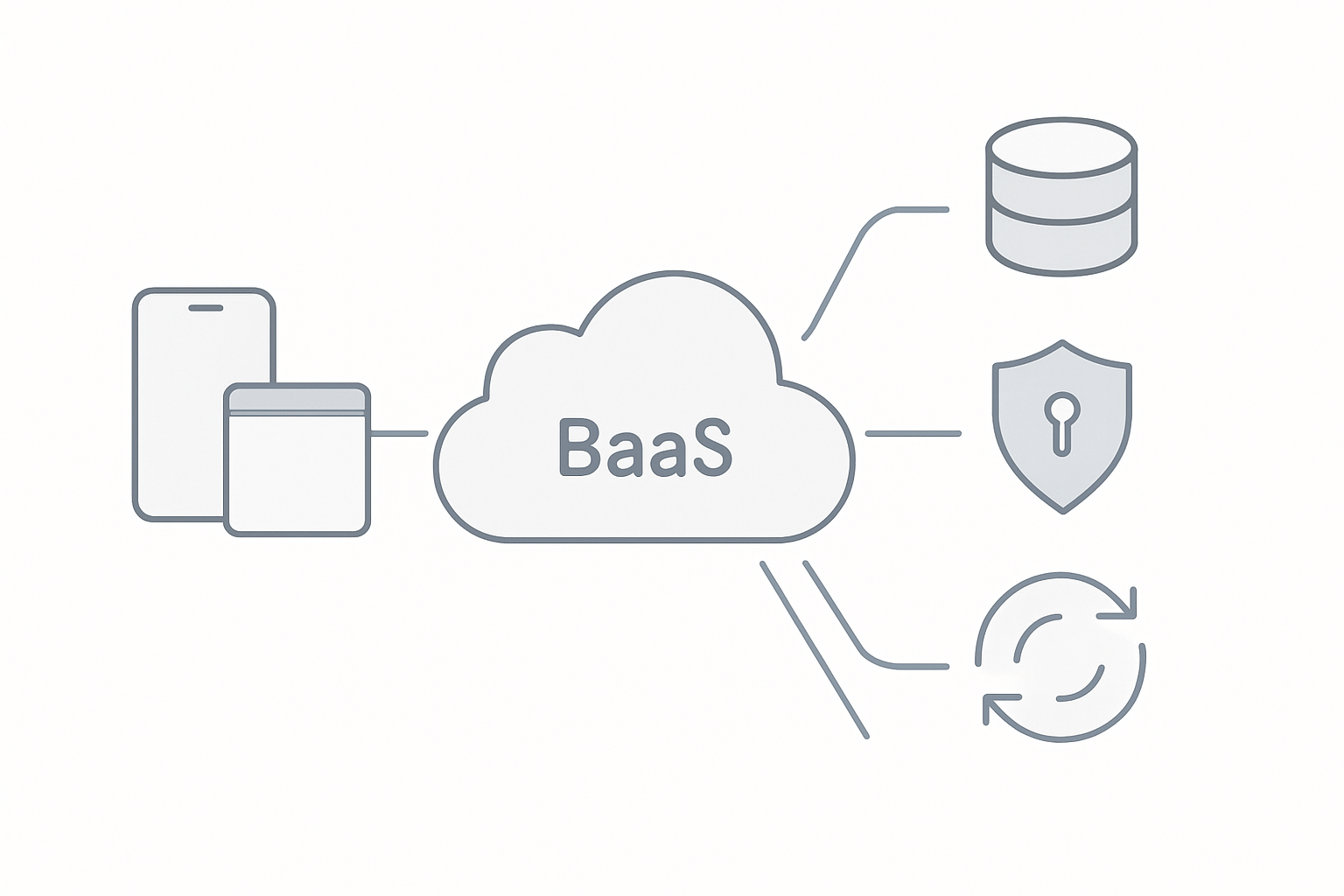
Modern app development is challenging. Developers balance intricate backend systems, user experience, and frontend design. Databases, server administration, authentication—it never stops. Backend-as-a-Service can help with that. Because BaaS takes care of the intricate backend work, developers can concentrate on what users see and interact with.
Backend-as-a A service is similar to an app’s pre-built engine. All server-side operations are managed by third-party vendors. No more creating databases from the ground up. Eliminate the struggle with user authentication systems.
BaaS companies give SDKs and APIs that connect straight to your front-end code.
The BaaS market is booming:
- Over 73,000 companies worldwide use BaaS solutions
- Market value expected to jump from $31.35 billion (2025) to $100.23 billion (2034)
- Growth rate: 13.78% annually
Popular platforms include Firebase, AWS Amplify, Supabase, Appwrite, and PocketBase. Each has its own strengths and target audience.
Here are some common misconceptions about Backend as a Service (BaaS):
- BaaS is only for small projects/startups While BaaS is great for rapid prototyping and MVPs, it can be used for scalable, long-term projects. Large enterprises and SMBs alike can leverage BaaS to manage their backend infrastructure efficiently.
- You lose all control and customization BaaS platforms abstract away server management but still allow for customization, often through serverless functions (like Cloud Functions for Firebase or AWS Amplify) that let developers run custom server-side logic in response to events or HTTP requests. However, deep control over the underlying infrastructure and software stack is limited.
- BaaS is always cheaper than a custom backend While BaaS can eliminate significant upfront hardware and maintenance costs, the pay-as-you-go or metered pricing models can become expensive with high traffic. A custom solution might be more cost-effective for applications with consistently high or predictable workloads in the long run.
- Vendor lock-in is an inescapable problem Vendor lock-in is a reality of using BaaS. However, careful planning and architecture can mitigate this risk. Many providers offer data export options, and avoiding platform-specific code in the core application logic makes migration easier, though moving an entire application will still require effort.
- BaaS handles all security for you BaaS providers implement robust security measures for their platforms, like data encryption and secure data centers. However, developers are still responsible for implementing secure application logic, validating user input, and managing authentication and authorization rules correctly within their application to prevent vulnerabilities like SQL injection or data leaks.
- BaaS has limited querying capabilities While some early BaaS databases had limited complex query options (e.g., filtering on multiple keys), modern platforms and data-modeling strategies (like denormalization) allow developers to perform complex queries efficiently by structuring the data appropriately for their application’s needs.
Ultimately, the best choice depends on the specific project requirements, team expertise, budget, and long-term strategy.
6 Common Mistakes in Backend Architecture
The foundation of any application is its backend architecture. Scalability, performance, and maintainability are guaranteed by a well-designed backend. Even seasoned coders, however, occasionally make mistakes that might lead to serious problems later on.
We’ll look at six typical errors in backend architecture design below, along with solutions.
1. Ignoring Scalability from the Start
Many developers build backend systems without considering future growth. Initially, everything runs smoothly, but as traffic increases, bottlenecks appear. Suddenly, the system struggles under load, leading to slow performance and downtime.
How to avoid it:
- Use a microservices or modular architecture to allow independent scaling of components.
- Implement caching strategies (Redis, Memcached) to reduce database load.
- Choose databases and frameworks that support horizontal scaling if needed.
2. Poor Database Design
A poorly designed database can lead to slow queries, excessive storage use, and maintenance nightmares. Common issues include unoptimized indexes, excessive joins, and improper normalization.
How to avoid it:
- Normalize data where necessary but avoid over-normalization that complicates queries.
- Use proper indexing strategies to speed up lookups.
- Consider database sharding and replication to distribute load.
3. Not Implementing Proper Error Handling
A backend without structured error handling is a recipe for debugging nightmares. Unhandled errors can crash services, expose sensitive information, or make troubleshooting difficult.
Read Also: Key Components of a BaaS Architecture
How to avoid it:
- Use centralized logging tools (ELK Stack, Logstash, or Datadog) to capture and analyze errors.
- Implement structured error responses with appropriate HTTP status codes.
- Use retries and fallbacks for transient failures in external API calls.
4. Overcomplicating the Architecture
Some developers try to implement overly complex patterns, such as premature microservices or excessive use of messaging queues. This adds unnecessary overhead and maintenance challenges.
How to avoid it:
- Start simple and evolve architecture based on actual needs.
- Use monolithic architecture initially and split services when justified.
- Avoid unnecessary dependencies that add complexity without significant benefits.
5. Not Securing APIs and Endpoints
Security is often an afterthought, leading to vulnerabilities such as SQL injection, data leaks, and unauthorized access. Weak authentication and improper validation can put the entire system at risk.
How to avoid it:
- Use authentication standards like OAuth2, JWT, or API keys.
- Validate all user inputs to prevent injection attacks.
- Implement rate limiting to prevent abuse of APIs.
6. Neglecting Observability and Monitoring
If you can’t monitor your backend, you won’t know when things go wrong. Many teams build systems without proper logging, tracing, or real-time monitoring, making it difficult to diagnose performance issues.
How to avoid it:
- Use monitoring tools like Prometheus, Grafana, or New Relic.
- Implement structured logging and log aggregation.
- Use distributed tracing to track requests across services.
Why Developers Love BaaS?
Speed That Actually Matters
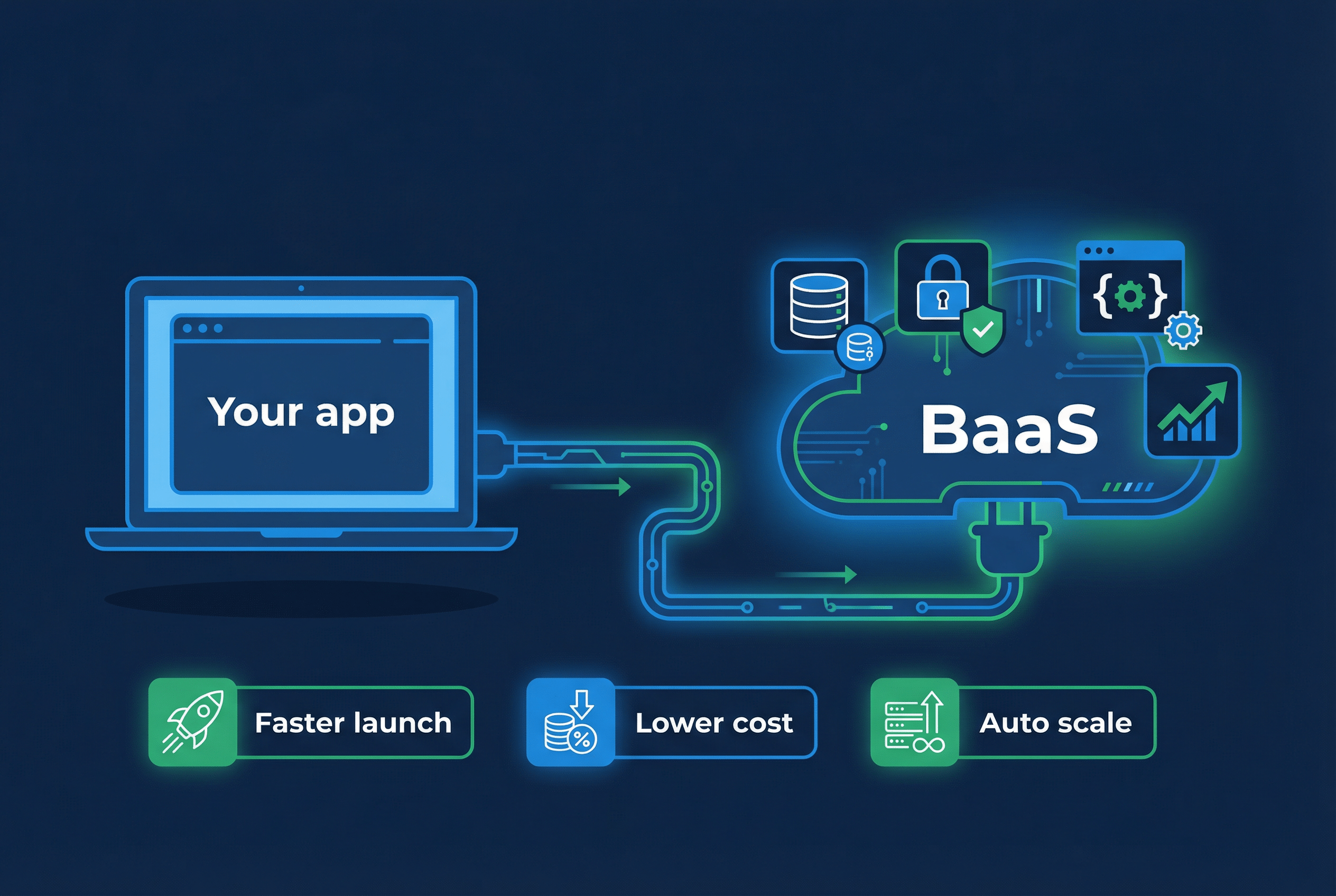
Development time drops dramatically. Ready-made authentication systems mean no more weeks spent building login flows. Pre-configured databases eliminate setup headaches.
Real example: A startup can have user registration, data storage, and push notifications running in hours instead of weeks.
Budget-Friendly for Most Projects
Traditional backend development costs add up fast:
- Server infrastructure
- Development team hours
- Ongoing maintenance
BaaS platforms use pay-as-you-go pricing. Small projects stay cheap. Growing apps scale costs with usage.
Scaling Without the Nightmares
Remember the last time a viral post crashed a website? BaaS platforms handle traffic spikes automatically. Apps go from 100 users to 100,000 without manual intervention.
Security That’s Actually Secure
Security teams at major BaaS providers focus on one thing: keeping backends safe. They handle:
- Regular security updates
- Industry compliance standards
- Encryption and secure endpoints
- Threat monitoring
Real-Time Features Made Easy
Building chat apps or collaborative tools used to require complex WebSocket implementations. BaaS platforms offer real-time database sync out of the box.
One Backend, Multiple Platforms
Build once, deploy everywhere. The same backend powers:
- Web applications
- iOS apps
- Android apps
- Desktop software
Conclusion
BaaS is excellent at swiftly resolving common issues. The BaaS ecosystem is still developing. Platforms overcome conventional constraints and introduce new functionality. BaaS offers strong benefits for many projects, particularly those that prioritize simplicity and speed.
Make an informed decision based on your own circumstances. When it meets your needs, BaaS can greatly speed up development.








Comments