
 By
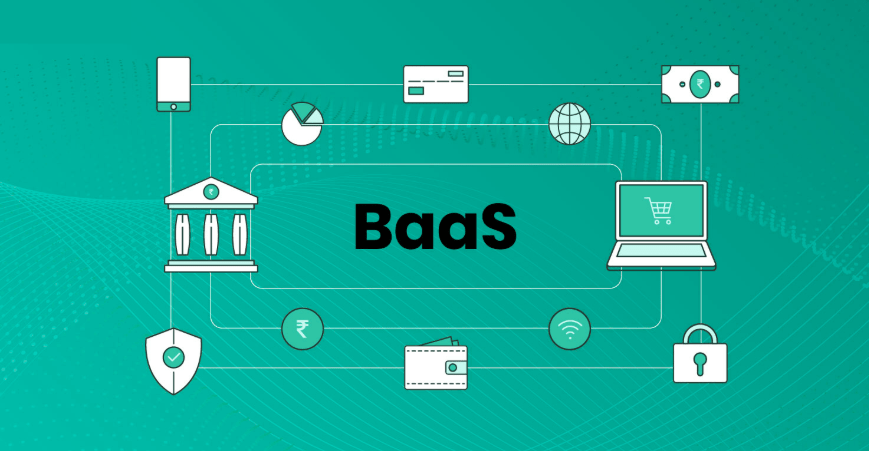
Database management, user authentication, cloud storage, push notifications, and hosting—all supplied by a third-party vendor to abstract away server maintenance—are essential elements of a Backend as a Service (BaaS) architecture. Because BaaS uses pre-built modules and APIs to handle common backend activities, developers can concentrate on frontend development.
Core Components
- Database Management: BaaS provides cloud-based databases (SQL or NoSQL) to store, organize, and manage application data without manual setup.
- User Authentication: Services for handling user sign-up, login, and access control are included, simplifying security and user management.
- Cloud Storage: BaaS offers storage for user-generated content and other files, such as images or documents, in a secure cloud environment.
- Push Notifications: Built-in services to send real-time notifications to users on mobile or web devices are a standard feature.
- Hosting: The BaaS vendor handles the underlying infrastructure, including servers and their maintenance, which removes the need for developers to manage their own hardware.
- APIs: BaaS uses APIs to allow frontend applications to easily interact with and utilize the backend services provided.
Additional Features
- Serverless Functions: Some BaaS platforms offer serverless functions to run backend logic without managing any servers.
- Real-time Data Synchronization: Enables real-time updates across multiple clients, useful for applications like chat or collaboration tools.
- Remote Updates: Allows for remote management of application content and settings.
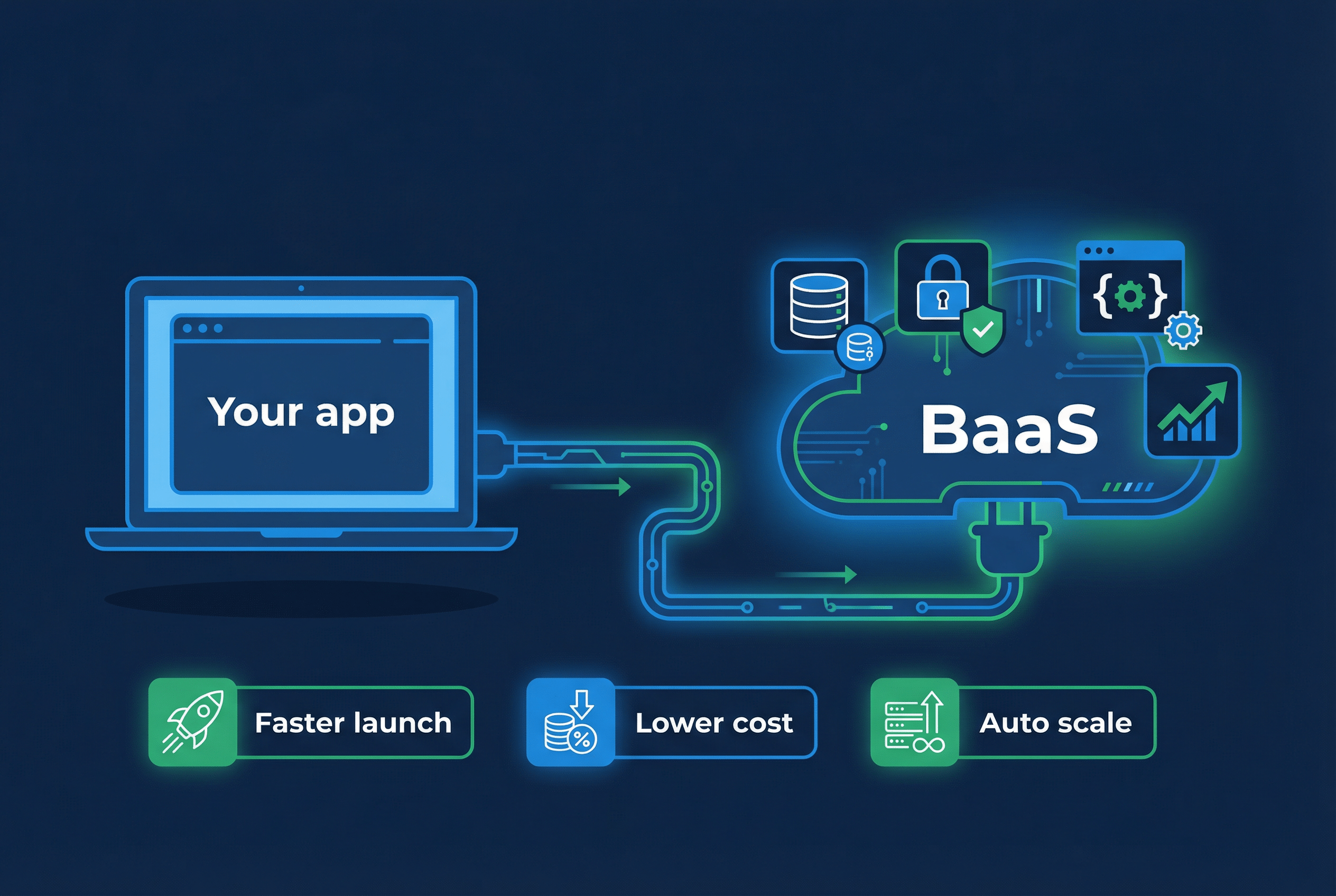
Backend as a service (BaaS) is a third-party service that enables you to create websites or apps without worrying about the backend.
Functions as a Service (FaaS), which focuses on running specific functions or code segments in response to events, should not be confused with this service.
When you use BaaS, you focus your efforts on the front-end while delegating costly and time-consuming backend operations to a BaaS provider. BaaS gives you access to a bundled infrastructure that is supported by custom SDKs and APIs. It spares you the trouble of setting up cloud storage, controlling user access, powering your work, and implementing user authentication. This is handled by your BaaS provider.
BaaS Architecture and Key Components
BaaS uses a modular architecture that combines easy-to-manage and drag-and-drop functionality to simplify the complex backend for developers.
1. Modules
Let’s overview the core modules:
- With a BaaS content-types builder, developers can manage entries and fields to frame how the data is served over the backend to users.
- A content-types data module is where you can filter queries with GraphQL or APIs and perform CRUD (create, read, update, and delete) operations. A business logic programming option helps you control app data exchange processes.
- A user-model module enables you to oversee how users log into your web or mobile app, manage what information they can access, and enable data sharing with third parties.
A BaaS platform architecture can also include add-ons for file storage, page and content builders, and state machine modeling, among other modules.
2. API
Today, BaaS platforms bet on REST APIs that help developers stay nimble with backend operations. REST APIs simplify the management and configuration of BaaS architecture modules, including authentication and database changes.
3. Data Channels
Data channels are the highways that data travel on to reach the ultimate backend destination, which is a REST API. Once the data from your app channels are fed into a BaaS API, it initiates interactions with databases, servers, and modules.
Read Also: How BaaS Accelerates MVP Development for Startups
Backend as a service meaning includes a large set of functionalities:
Data Storage
A BaaS platform provides unlimited backend storage for your app or website data. Your developers only need to set it up and watch the data flow consistently to where it can be securely kept and served upon request.
Data Manipulation Using an API
BaaS and APIs go together, even when it comes to data manipulation. This feature is vital for organizing, mapping, sprucing up, or otherwise modifying data to be further fed into the backend or delivered to users. Remember: their experience starts with how flawlessly your backend works.
User Authentication and Management
User modeling is a colossal chunk of backend functionality, allowing developers to manage roles, permissions, and groups. With this feature, you can control authorization scopes and user access to any part of your product.
File Storage
BaaS platforms take good care of file storage for mobile and web apps using specifically built modules. And you don’t even need to fret about backups. Your BaaS provider is permanently on guard against system failures so that your files are safe and sound, no matter what.
Analytics and Reporting
BaaS tools help developers gain insights into the performance and usage patterns of their applications. With these tools, you will easily collect and analyze data related to user engagement, conversion rates, and popular app features. Make data-driven decisions, identify trends, track key performance indicators (KPIs), and optimize user experiences.
With the dominance of iOS and Android among other operating systems (Windows and Linux), it is not surprising that BaaS solutions focus on features relevant to mobile apps — push notifications and social media integration.
Push Notifications and Messaging
With modern BaaS, you alert users of new messages, updates, promotions, or important events within the application. Push notifications are crucial for engaging users, providing timely information, and encouraging re-engagement with the app. You can also use messaging features for in-app chat or real-time messages.
Social Media Integration
How about incorporating social media functionalities into your solution? BaaS often includes features like social logins, sharing content on social platforms, and accessing user data from the networks. It simplifies and facilitates social sign-ins, reducing the need to create new accounts.
Finally
Because BaaS supports all web and mobile applications, it can be considered the core service of the mobile internet. Additionally, BaaS can connect cloud and developer services, offering them for free to individual users and at reduced prices to large and mid-size company users.
In order to govern the future with all necessary resources, BaaS should be linked with big data. It can use SDKs and APIs to gather data about user activity. It can provide substantial value and lower data barriers when paired with big data business intelligence.







Comments