
 By
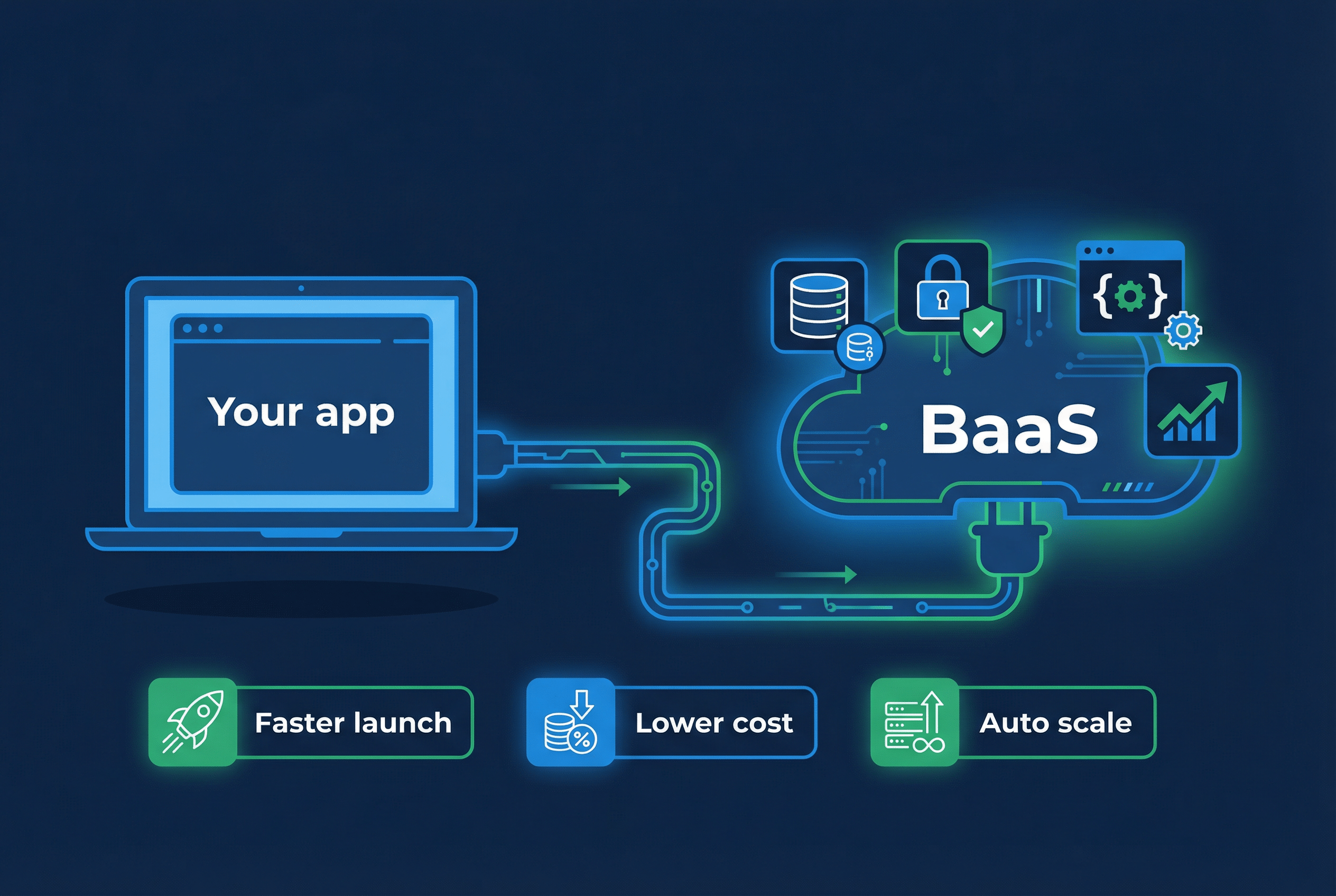
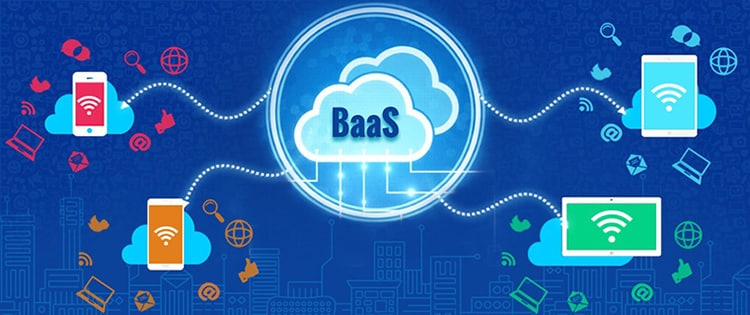
Microservices and Backend-as-a-Service (BaaS) can coexist and frequently enhance one another because they cover various application development tiers and scopes.
How They Coexist
- Different Scopes: Microservices Architecture (MSA) is an approach to designing an application as a collection of small, independent services, each with its own business capability and often its own database. BaaS, on the other hand, is a cloud service model where a third-party provider manages backend aspects like servers, databases, and authentication, allowing developers to focus on front-end logic.
- Decoupling and Integration: BaaS platforms often leverage microservices architecture internally to provide their modular services (e.g., a “payments” service, an “authentication” service) via APIs. Your own application, built using microservices, can consume these external BaaS services as needed, integrating them into a larger, cohesive system.
- Focus and Efficiency: Using a BaaS for common, non-core functionalities (like push notifications, cloud storage, or user management) can increase development speed for your teams, allowing them to dedicate more time to building the core, unique business microservices that provide competitive advantage.
- Scalability: Both models promote scalability. Microservices allow for independent scaling of specific components, while BaaS providers handle the underlying infrastructure scaling, which can be particularly cost-effective.
Practical Implementation
In practice, a common architecture might look like this:
- Core Business Logic: You develop and manage your unique business functionalities using a set of microservices.
- Third-Party Services: Your microservices or front-end applications interact with BaaS providers (like Firebase or AWS Lambda) for generic tasks via APIs.
- API Gateway: An API Gateway can sit in front of both your internal microservices and external BaaS calls to present a unified interface to the client and handle cross-cutting concerns like security and protocol translation.
The decision to use one, the other, or both should be driven by specific business and technical requirements, such as team size, required control over the infrastructure, and time-to-market goals.
The market is overflowing with possibilities these days. Businesses can now select the best tools and technology for their operations thanks to big data trends.
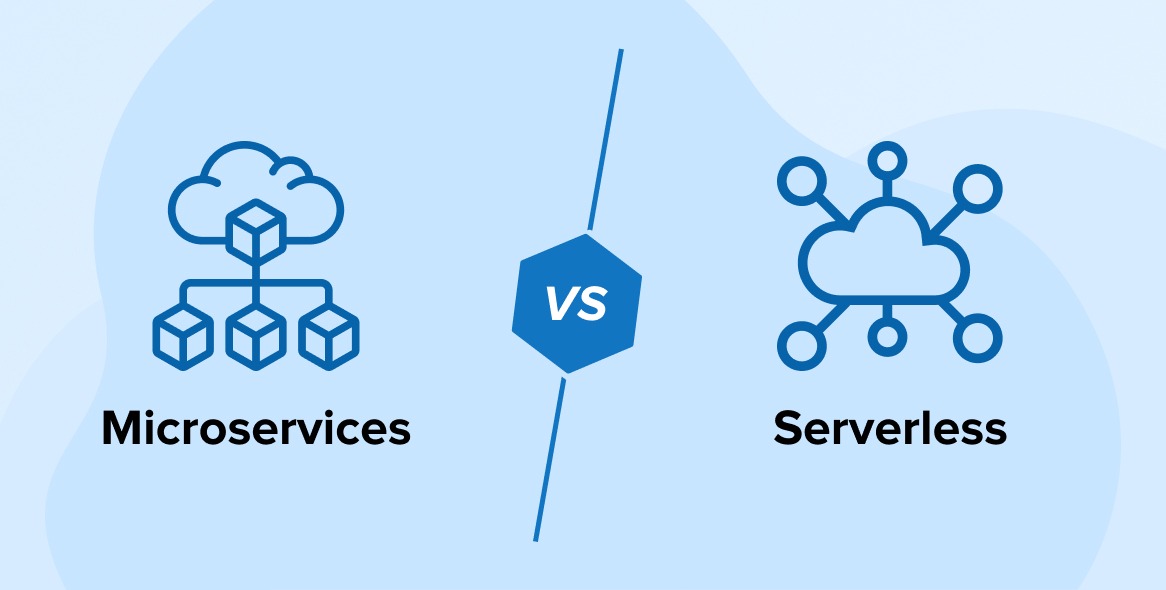
Microservices and serverless are the two architectures that have long dominated the software development industry. The use of cloud computing has increased dramatically in recent years, and this has led to numerous conversations about this technology. These are the favored methods of software development because of their dynamism and agility.
Every architecture has advantages and disadvantages, therefore companies must select the best option for their requirements. We’ll go over both architectures and the best option for businesses in this article.
What is a Microservice?
An application is organized as a group of loosely linked services using the microservices software architecture paradigm.
A microservice is a tiny, independent, self-contained component that may be created and implemented on its own. Additionally, it can be independently scaled without impacting the system’s or application’s other services. Complex applications are easier to manage and grow as needed thanks to our microservice strategy.
This kind of architectural framework is beneficial since it makes it easy to maintain or repair a corrupted microservice without affecting the other services. Consequently, this prevents the general functionality from being impacted.
A new architectural pattern that is gaining traction is microservices architecture. It’s not simply a new approach to creating applications; it’s also a fresh perspective on how applications work together.
Several types of microservices are frequently utilized:
Stateless microservices are the first kind; they don’t keep track of state information. Usually, this kind of microservice is employed for operations that don’t require persistent data.
The stateful microservice, which does preserve state data, is the second kind. Database operations and other tasks requiring data persistence are common uses for this kind of microservice.
What is Serverless Architecture?
Developers can create apps and services using serverless architecture, a cloud computing paradigm that eliminates the need for server provisioning and management. With a serverless architecture, developers just need to design and implement code because a third-party provider handles all backend infrastructure management.
Because serverless architectures are event-driven, they can be activated by a variety of events, including changes in data or user actions. Because the third-party provider can immediately spin up new instances of the code to manage rising traffic, they are also very scalable.
Read Also: Integrating BaaS with Frontend Frameworks (React, Vue, Angular)
Since developers only pay for their resources, one of the primary advantages of utilizing a serverless architecture is that it can help cut expenses. Additionally, because the third-party provider handles all infrastructure management, serverless architectures can facilitate the deployment and management of apps.
Recently, serverless architecture has become popular as a new approach to application development. Function as a Service (FaaS) and Backend as a Service (BaaS) are the two ways it operates.
You can create and execute apps using FaaS without having to worry about server provisioning or management. Your code needs to be written and deployed to a FaaS platform, such as AWS Lambda. After that, the FaaS platform will run your code and scale it as necessary.
You can leverage backend services with BaaS without having to handle their management. Storage, databases, authentication, and other services fall under this category. Easy-to-use SDKs and CLI tools are provided by BaaS providers like AWS Amplify, making it simple to get started with BaaS.
There are benefits and drawbacks to both FaaS and BaaS. However, they provide a fresh approach to creating more economical and scalable applications than conventional techniques.
Key differences between Microservices and Serverless Architecture
1. Approach
The development of microservices requires the formation of a team responsible for its deployment, support, and maintenance. This team can be composed of in-house resources or through outsourcing. The team will monitor the microservices’ architecture, computing, and safety.
Serverless architecture is a type of computing that relies on a third-party vendor instead of the company itself. With serverless architecture, the cloud vendor takes care of all internal operations, which include developing, securing, and maintaining the server space.
A serverless architecture approach can help reduce project costs because the company doesn’t have to invest in storage or hardware. There are also no expenses related to hiring and onboarding new employees.
2. Cost
Initially, developing microservices may be more costly. You need several teams to manage the project, and setting up relations between the components requires time and careful planning.
Microservices rely on in-house resources and support for development and maintenance rather than third-party resources. Thus, companies don’t have to worry about vendor lock-in with this positive approach.
On the other hand, serverless architecture can help cut business costs. When companies switch to using serverless architecture, they often find that they can save money on resources by sharing them with other clients of the same third-party vendor.
It’s possible to share resources because the vendors distribute servers among many clients, making it more affordable for businesses who subscribe to their services. You may also save on human resources expenses by not having to hire specialist server and hardware engineers.
3. Runtime
Serverless functions have a set time limit that they can run for, known as their runtime. Every provider has different limitations on how long a function can run – on AWS Lambda, for example, a function can run for 15 minutes. The reason for this is that functions are meant to be short-term processes that use up minimal RAM.
Microservices have an advantage over serverless architectures because vendors’ requirements do not limit them to runtime, storage space, and RAM. This is especially beneficial for complex, long-term operations that involve storing and manipulating huge amounts of data.
4. Technique
The microservice architecture is more distributed, where each service is its self-contained unit. This can make development and deployment more complex and provide more flexibility and scalability.
On the other hand, serverless architecture is more focused on individual functions or pieces of code that are executed in response to events. This makes it simpler to develop and deploy but can limit the flexibility and scalability of the overall system.
5. Real-World Application of Microservices
Netflix: Netflix is one of the most popular streaming services in the world, with more than 223 million subscribers in over 190 countries. It uses a microservice architecture for server maintenance, reliability, and improvement recommendations.
Amazon: Amazon is one of the biggest online retailers in the world and uses microservices to power its website and mobile app. Its platform-as-a-service (PaaS) offering, AWS Elastic Beanstalk, uses microservices to manage cloud applications quickly and easily without having to manage servers or databases.
Uber: Microservices architecture manages all business processes, such as passenger management, billing, notifications, and many more.
6. Real-World Application of Serverless:
Nordstrom: The shopping website decided to build its framework based on serverless architecture. By using serverless, the website was able to build an event-based application, allowing for more features to be added.
Codepen: A social development platform that helps front-end developers and designers build websites run by a one-person DevOps team. Codepen uses serverless technology to do the heavy lifting, so you can focus on creating a great user experience.
Figma: Serverless architecture allows users and developers to focus on their projects by taking file management out of the equation. This way, users can collaborate on one design while developers focus on coding rather than worrying about file management.
Applications with erratic or unexpected traffic patterns are best suited for serverless architectures. This architecture is particularly economical because there are no servers to maintain. Because more resources may be added or removed on demand without any downtime, it is also highly scalable.
Applications that manage high traffic volumes are best suited for the microservices architecture. This architecture can successfully manage unexpected increases in traffic because each service may be scaled individually. Because new services can be added or withdrawn, it is also incredibly versatile.
Which architecture is best for your project, then? The requirements of your project will determine this. If you require a quick, event-driven application, serverless architecture is a suitable option. If you require a highly available application that can manage a lot of traffic, microservices are a fantastic option.
Businesses may have to decide between serverless and microservices due to their increasing popularity. Small applications typically don’t have to worry about this because you may use whatever you want during the development phase. However, in order to maintain a solid platform as your app expands, it’s necessary to think about switching from microservices to serverless.







Comments