
 By
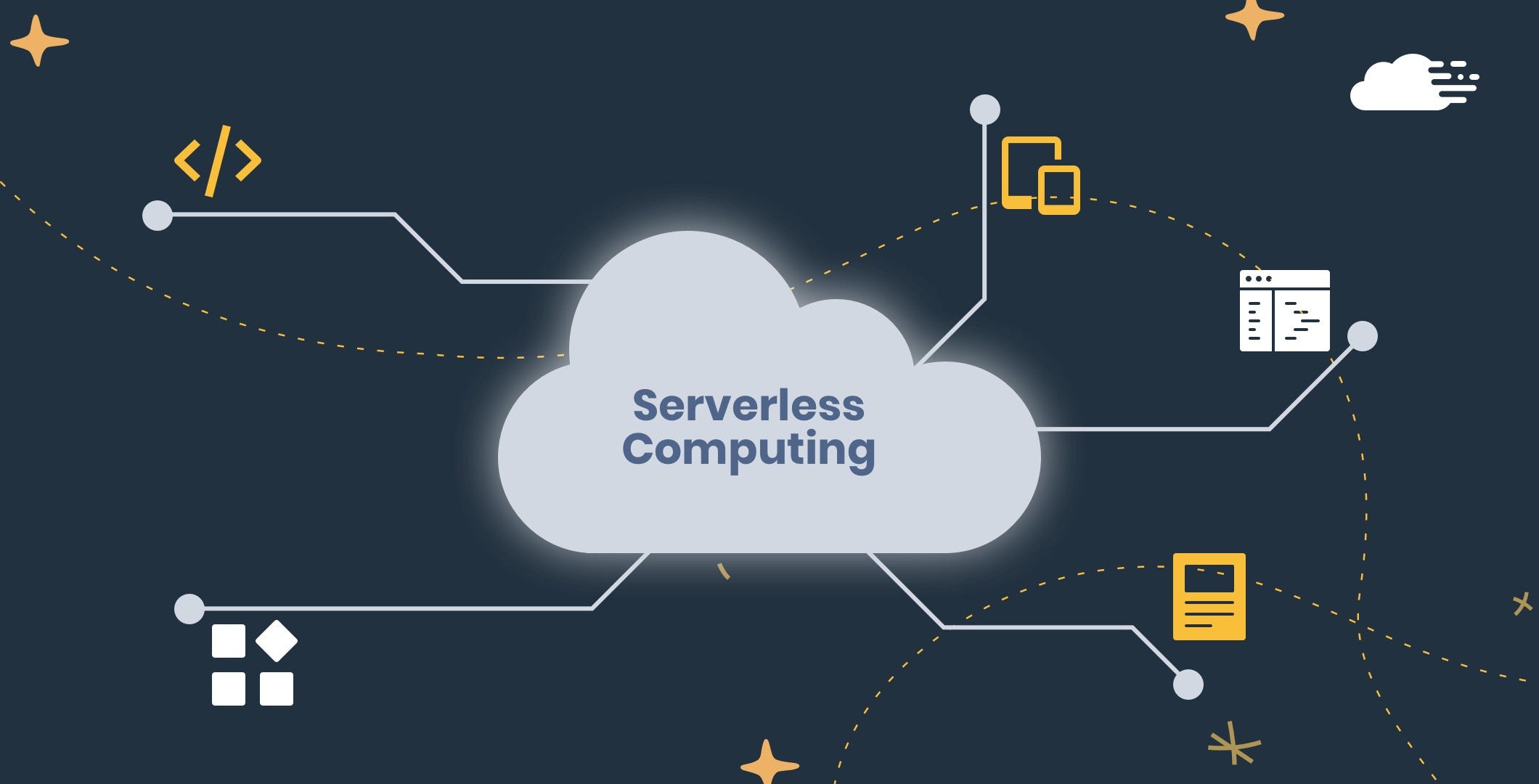
Because both methods abstract the underlying server management away from the developer, serverless architecture may be efficiently understood by looking at it through the lens of Backend-as-a-Service (BaaS).
Key Similarities
- Server Abstraction: In both BaaS and Function-as-a-Service (FaaS) (the other major serverless component), developers do not manage, provision, or maintain servers. The cloud provider handles all infrastructure management, patching, and scaling.
- Focus on Business Logic: This abstraction allows developers to concentrate solely on writing application logic and building features, rather than spending time on infrastructure concerns.
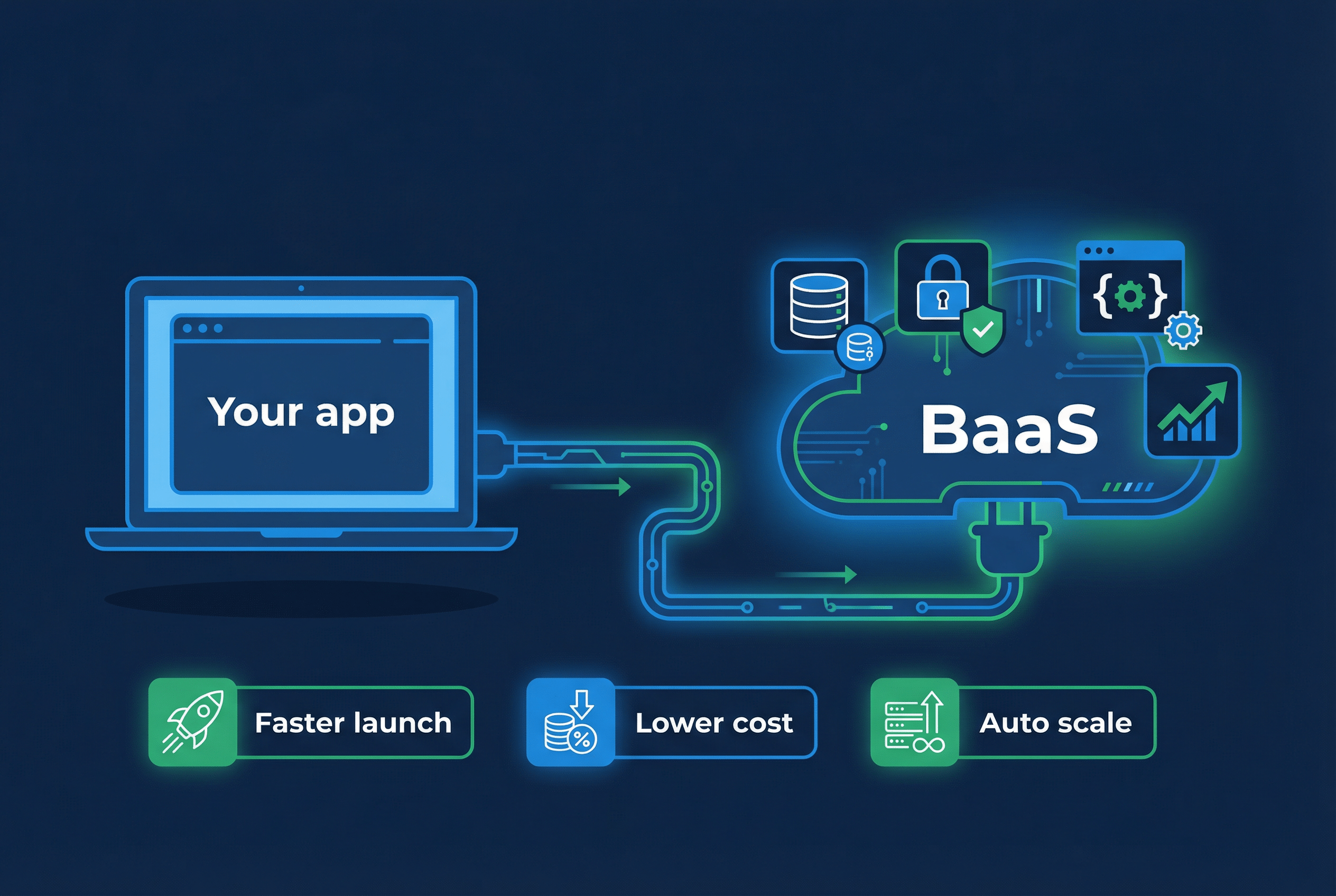
- Operational Efficiency: Both models offer a pay-per-use or consumption-based pricing structure, where you only pay for the resources consumed (e.g., API calls, function executions, storage used), leading to potentially lower operational costs.
- Automatic Scaling: Both BaaS services (like authentication or databases) and FaaS functions scale automatically in response to demand, without manual intervention
BaaS as a Subset of Serverless
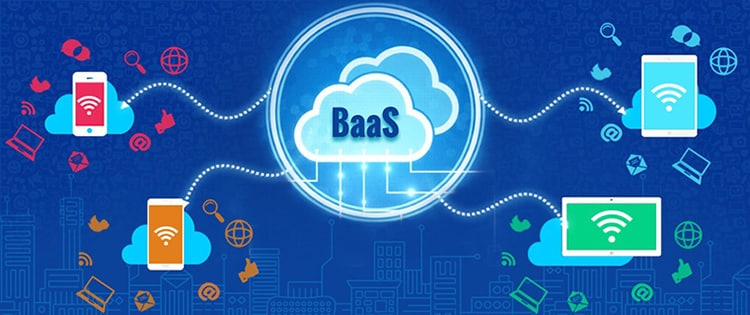
BaaS is a specific implementation of the serverless concept. It provides ready-made, third-party backend services that developers integrate directly into their frontend applications via APIs or SDKs.
Examples of BaaS services include:
- Authentication: Services like AWS Cognito, Firebase Authentication, or Auth0.
- Databases: Managed services such as DynamoDB, Firebase Realtime Database, or MongoDB Atlas.
- Storage: Cloud storage services like Amazon S3 or Google Cloud Storage.
In serverless code execution, servers and computer resource management are handled by cloud providers rather than developers. Vendors deploy them automatically in the cloud; neither virtual machines nor physical servers are present.
The serverless architecture is provisioned, maintained, and scaled by cloud providers. Additionally, you don’t have to pay for “always-on” server components to run your program while it’s not in use thanks to the serverless architecture, which enables you to start apps as needed. Rather, the resources are dynamically allocated for the app code that is triggered by an event. The moment the code is executed, you cease paying.
In summary, serverless architecture allows you to create cloud-based applications without having to worry about infrastructure management. Routine chores like capacity management, load balancing, scalability, and security fixes are no longer necessary.
However, serverless does not imply the absence of servers. The phrase is a little ambiguous. Since servers are controlled by the vendors, they are simply removed from the app development process.
This kind of application typically consists of single-purpose functions, where one function denotes the execution of one operation. A module or function that performs a certain activity is created by a developer and sent to the cloud provider. A developer uploads a new version and starts the updating process. Simultaneously, the developer incorporates serverless architecture with pre-built backend services.
Read Also: How BaaS Accelerates MVP Development for Startups
Typically serverless architecture has a few key components that make it work.
- Function as a Service. In a serverless application, developers create functions that contain basic business logic and are written in a specific programming language, such as JavaScript or Python. These functions run on a FaaS platform, a computing service offered by a cloud provider. It is a core component of serverless architecture as it allows developers to deploy the units of code in the form of functions that are executed in response to events.
- Event triggers. That is what causes the function to execute, meaning that specific events or actions trigger functions. Event triggers can come from an HTTP request, a database update, a file upload or a scheduled task.
- API Gateway. This component is an interface that enables the communication between multiple serverless functions and serves as a connector that links backend services to serverless functions. It provides a way for clients to interact with serverless functions through a common API endpoint and can be used to trigger functions. API Gateway can handle authentication, rate limiting, caching tasks etc.
- Third-party services. These are cloud services that provide pre-built backend features such as authentication, storage, and databases. This allows developers to focus on building the frontend of their application and rely on the cloud provider to handle the backend services.
- Cloud Provider. A cloud provider, such as Amazon Web Services, Microsoft Azure, or Google Cloud Platform, provides the serverless infrastructure.
- Compute Resources. The cloud provider manages the compute resources required to execute the functions, including scaling, load balancing, and server maintenance.
These components work together to provide a scalable and cost-effective way to build modern cloud applications.
Benefits of Serverless Architecture
Serverless architecture offers several benefits for businesses, making it an attractive option for building modern cloud applications.
Cost-effectiveness
The serverless architecture eliminates the need for additional resources, application scaling, server maintenance, and storage and database systems. This allows businesses to reduce the initial cost of equipment, the need to replace obsolete equipment, and the need for personnel to maintain this equipment and data centers. All this lower investment in the IT budget.
The key point is that employing serverless architecture significantly reduces infrastructure costs since you pay only for the resources used and not for a fixed amount of server capacity. You are only billed for the execution time of your function, measured to the nearest 100 milliseconds, not for the time your process is idle.
Faster development
Additionally, the serverless architecture enables faster development. Developers can focus on writing code and building applications without worrying about managing servers or scaling infrastructure. Thus, running a minimum viable product requires fewer resources. In the case of app updates, developers can upload the changes and rely on the cloud to make the necessary adjustments.
Increased scalability
Serverless architecture also offers increased scalability. The cloud provider automatically provisions and scales resources from zero to peak demand as needed. This enables applications to handle spikes in traffic without manual intervention. The cloud provider manages the underlying infrastructure, so the business does not have to worry about scaling up or down based on traffic.
Reduced time-to-market
Serverless architecture frees developers from back-end issues. This, in turn, leads to faster development cycles, allowing companies to bring their products to market faster.
Improved security
Serverless architecture can provide improved security, as the cloud provider is responsible for securing the infrastructure and handling security updates.
Our understanding of infrastructure management and application development has significantly changed as a result of serverless computing. Although it can’t handle every computing scenario, it helps businesses take use of strong advantages that make it a desirable choice for numerous applications. The significance of comprehending and utilizing serverless computing will only increase as our world continues to become more scattered.






Comments