
 By
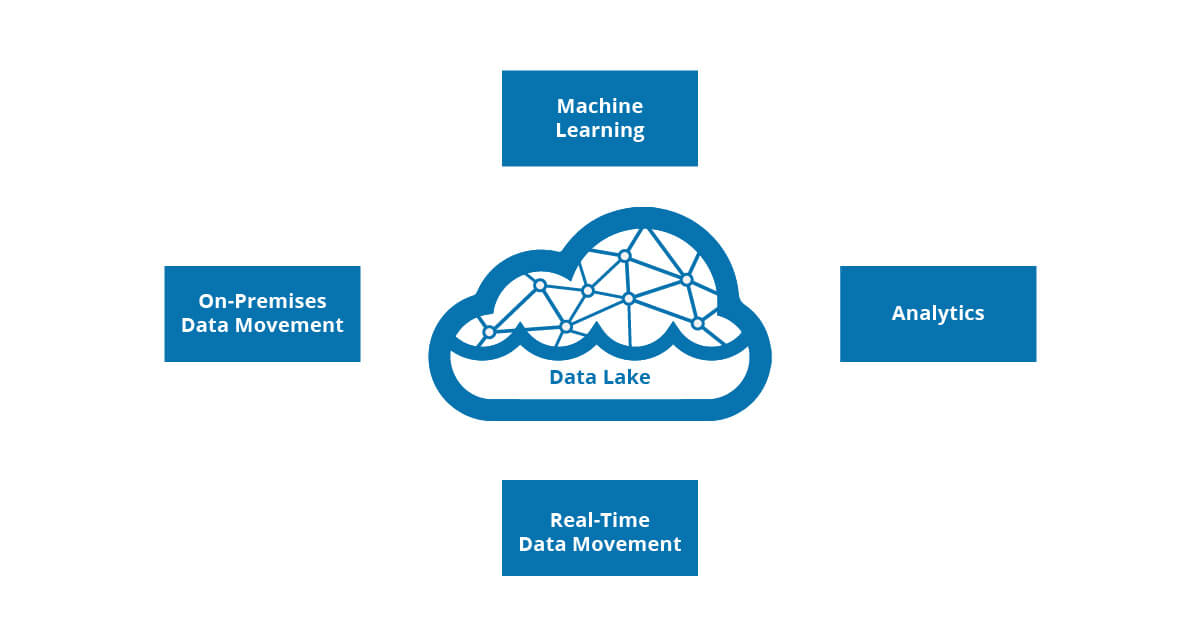
An enormous amount of data in its original, raw format, including structured, semi-structured, and unstructured data, can be stored in a centralized, scalable cloud-based repository called a Cloud Data Lake. Instead of requiring upfront structuring like typical data warehouses, it enables businesses to store data at a low cost and analyze it as needed for data science, machine learning, and advanced analytics. This provides considerable cost savings and flexibility. Elastic scalability, auto-scaling, improved security via cloud provider services, and cost effectiveness are some of the main advantages.
Traditionally, the term “data lake” refers to object storage that is focused on Apache Hadoop. In this case, data from an organization is placed onto the Hadoop platform and examined while it is stored on the commodity computer cluster nodes of Hadoop. The current tendency is to relocate and maintain data lakes in the cloud as an infrastructure-as-a-service, even though classic data lakes were constructed on HDFS clusters on-site.
Relational database structured data (rows and columns), semi-structured data (CSV, JSON, and more), unstructured data (documents, etc.), and binary data (pictures or videos) can all be found in a data lake. This shared data storage’s main benefit is that it gives all of an organization’s data a single source. After that, all of these data kinds can be combined, altered, examined, and more.
How Do Cloud Data Lakes Work?
The data journey is made to benefit from the division of computation and storage, allowing each component to grow as needed without affecting the others. The main advantage of moving a data lake to the cloud is auto-scaling. Additionally, unlike on-premises systems that silo information, cloud data lake infrastructure offers users and developers self-service access due to its centralized location.
Following the data’s journey from ingestion to analytics and reporting aids in understanding the logic and structure of cloud data lakes.
1. Ingestion: The first step in the data journey, ingestion involves the uptake of structured and unstructured data. Data is collected and collated from multiple sources and transferred into the data lake in its original format. A major benefit of data lakes is the fact that scaling can occur without the need to reconsider schemas, transformations or data structures (as you would need to do with a traditional data warehouse). Despite the ease of transfer and storage, organizations usually maintain multiple, separate data lakes to avoid any issues with data privacy or internal access privileges.
2. Storage: The second step in the data journey, storage is the controlled repository for all ingested data prior to any transformations — all data can maintain its original state, whether it’s structured or unstructured. This simplified storage system allows businesses to collect and consider endless amounts of data, using the major cloud object stores (ADLS, S3, Google Cloud Storage), and provides high availability, auto-scaling, affordability and security.
3. Processing: The third step in the data journey, where data is converted from its raw state into something compatible with multiple data types, allows for combinatory analysis through aggregation, joins and more. Once the data has been processed it’s returned to the data lake where it can be analyzed.
4. Analytics: During the final step in the data journey, the stored and processed data is made available for self-service analysis by data scientists, BI users, and more, which is ultimately the end goal for any organization.
Types of Data Lakes
Although data lakes can be constructed on-site or in the cloud, the current trend is that the cloud is the better option due to the power and capacity that can be utilized.
Read Also: What is an Email Archiving Solution?
The migration process can be extremely intimidating for businesses who now manage an on-premises data lake but are thinking about switching to a cloud-based solution. For a universal cloud service, they must figure out how to move enormous amounts of data and modify specialized technology. Finding the cloud data lake architecture that best suits their requirements is the first step.
- On-Premises: Data lakes maintained on premises are different than their cloud counterparts. They require the combined management of both hardware and software. This double duty requires greater engineering resources and expertise, and it also locks companies into a static scaling solution, where they have to be sure to maintain capacity overhead in order to avoid any downtime as they expand storage.
- Hybrid Data Lake: Maintaining both on-premises and cloud data lakes concurrently introduces its own benefits and challenges. Managing an on-premises operation requires additional engineering expertise, as does constantly migrating data between on premises and the cloud. On the other hand, this two-pronged approach does allow companies to maintain less relevant data on premises, while placing more important data in the cloud, thereby benefiting from the speed of cloud services.
- Cloud Data Lake: By maintaining a standard cloud data lake, the major benefits are availability, speed and lower engineering and IT costs. This option allows businesses to operate swiftly, without having to measure every decision against expertise. The downside can be that cloud services are paid for as a subscription model. Over time this will inevitably cost more than the “buy once” model of local storage.
- Multi-Cloud Data Lake: The final type of data lake is where multiple cloud offerings are combined, for example, where businesses use both AWS and Azure to manage and maintain the data lakes. Maintaining multiple data lakes means benefiting from the advantages of each platform, but it also requires greater expertise to enable disparate platforms to communicate with one another.
Benefits of Building Data Lakes in the Cloud
Businesses of all sizes can now move their data storage to the cloud. More immediate data-driven insights, simpler procedures, and more are made possible by the consolidated functionality and scalability.
Advantages consist of:
- Capacity: With cloud storage, you can start with a few small files and grow your data lake to exabytes in size, without the worries associated when expanding storage and data maintenance internally. This gives your engineers the freedom to focus on more important things.
- Cost efficiency: Cloud storage providers allow for multiple storage classes and pricing options. This helps companies to pay for exactly as much storage as they need, instead of planning for an assumed cost and capacity as is needed when building a data lake locally.
- Central repository: A centralized location for all object stores and data access means the setup is the same for every team in an organization. This simplifies operations complexity and frees up time for engineers to focus on more pressing matters.
- Data Security: All organizations have a responsibility to protect their data. With data lakes designed to store all types of data, including sensitive information like financial records or customer details, security becomes even more important. Cloud providers guarantee security of data as defined by the shared responsibility model.
- Auto-scaling: Modern cloud services are designed to provide immediate scaling functionality, so businesses don’t have to worry about expanding capacity when necessary, or paying for hardware that they don’t need.
Here are some instances of how businesses in various sectors use data lake platforms to maximize their expansion: media streaming. Streaming services that rely on subscriptions gather and analyze consumer activity data, which they can utilize to enhance their recommendation system.







Comments