
 By
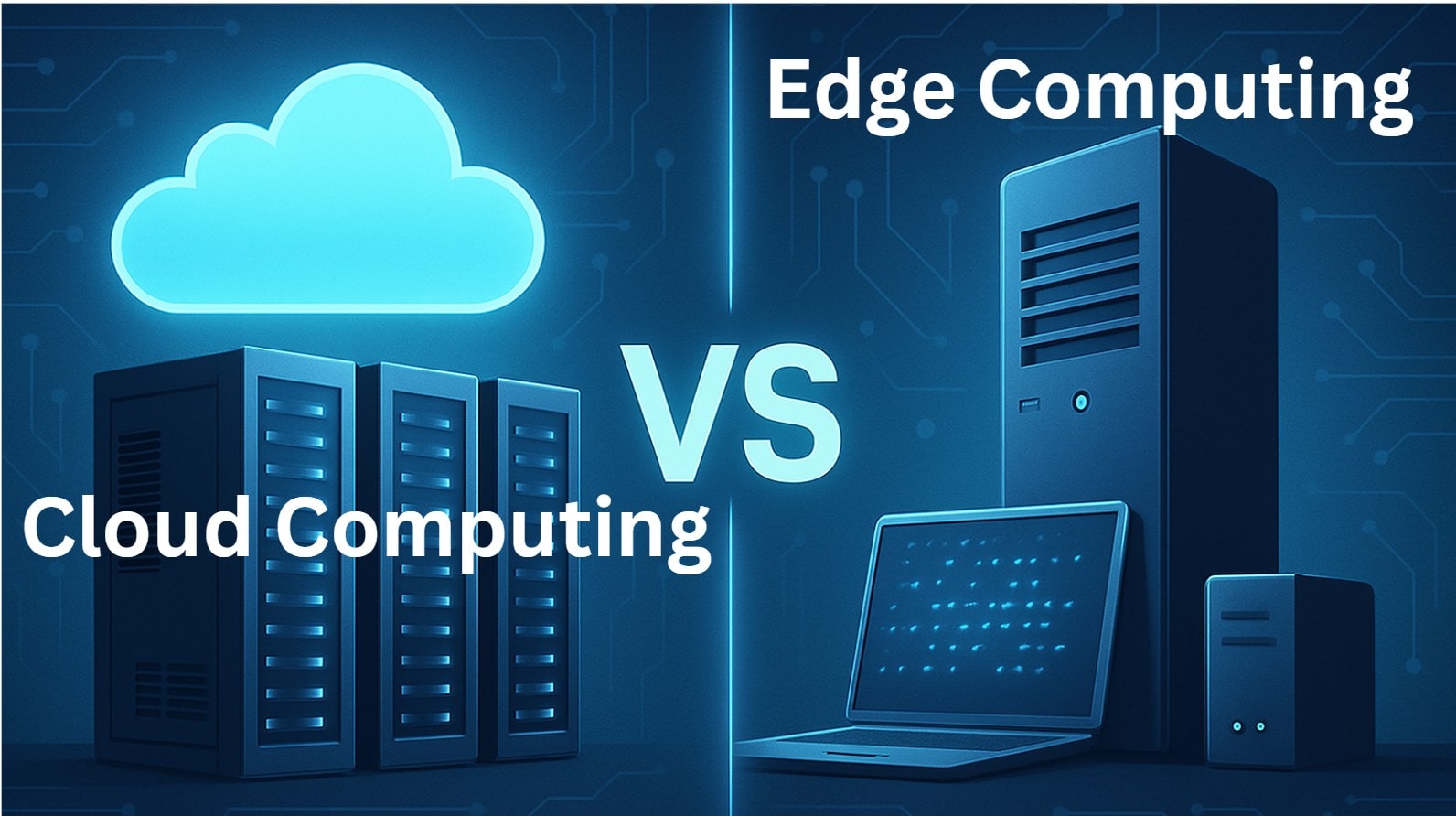
Neither cloud nor edge computing is automatically preferable; the decision is based on your company’s specific requirements, such as latency, scalability, and data protection. Cloud computing is best suited for large-scale applications that require scalability and worldwide access, whereas edge computing is better for real-time processing, low latency, and scenarios with limited internet connectivity. Many organizations believe that a hybrid strategy, which incorporates both approaches, provides the greatest overall answer.
Business technology has seen a significant shift. Companies no longer have to invest heavily in massive, on-premises IT infrastructure; instead, they may rely on flexible computing resources provided as a service. Instead of racks of local servers running in a data closet, enterprises can choose between two incredibly lightweight computing options: cloud service providers and edge computing technologies.
Cloud computing refers to the practice of executing applications, storing files, and managing workloads on remote servers managed by third-party cloud providers. This implies that instead of purchasing and maintaining expensive on-premises data centers, organizations may easily access enterprise-grade computing power and storage via the internet.
Cloud computing has transformed the way businesses work by centralizing computing resources in remote data centers. Companies can access computing power, storage, and apps over the internet through providers such as AWS, Microsoft Azure, and Google Cloud, eliminating the need for them to possess physical infrastructure. This model significantly reduces upfront costs while providing flexible scalability.
One of the cloud’s primary benefits is its elasticity. Businesses may scale their resources up or down based on demand, which is particularly helpful for organizations that encounter seasonal spikes or shifting workloads. This “pay-as-you-go” model directly links costs to usage, making it an appealing option for both startups and businesses.
Beyond cost savings, cloud computing enables advanced services like machine learning, artificial intelligence, and large-scale analytics. Companies may concentrate enormous datasets and run strong models to gain insights that would be impossible to obtain with regional resources.
Edge Computing is an important technology in information usage that emphasizes real-time performance. Although there are numerous advantages to using an Edge Computing platform, there are also obstacles that must be handled depending on how the platform is used.
Before we get into a comparison between Edge Computing and Cloud Computing, including their respective use cases, let’s first define the terms.
What is Edge Computing?
Edge computing is commonly defined as a distributed open IT architecture in which processing is conducted by IoT devices at the network’s edge. The “edge” in Edge Computing refers to the network’s edge, whereas the cloud, such as a data center, is located in the network’s core.
Edge computing and cloud computing can be viewed diametrically opposed, yet they are not mutually exclusive. Edge computing is a method that enhances processing efficiency by separating data that has to be processed at the edge from data that can be processed in the cloud.
By processing data at the edge, an Edge Computing platform reduces load concentration on network channels and data centers while achieving high-speed processing and minimizing delays.
Edge computing reverses the cloud concept by bringing computing resources closer to the network’s edge, where Internet of Things (IoT) devices, smart devices, and self-driving cars gather and generate data. Edge servers and edge devices process information directly in local servers or computing infrastructure closer to the end user, as opposed to sending it back to a central cloud for processing, thus the term edge computing.
By processing data locally, organizations gain the capacity to respond quickly. Consider automated vehicles making split-second driving judgments or augmented reality applications that provide seamless overlayed images quickly. These are driven by real-time data processing at the edge, which eliminates the delays associated with transferring each data packet across lengthy wireless networks.
What is Cloud Computing?
Cloud computing uses computer resources such as storage, applications, services, and databases that may be accessed from numerous remote servers. The cloud allows for remote access and data processing.
Having computer resources in multiple locations eliminates the need for businesses and people to create their own computing environments while utilizing them.
Cloud computing allows you to examine massive volumes of data, support multiple users, and create apps that require advanced processing. In addition to the ability to communicate information via the Internet, it also allows for the usage of systems and applications that are not controlled by the company.
Cloud computing refers to the practice of executing applications, storing files, and managing workloads on remote servers managed by third-party cloud providers. This implies that instead of purchasing and maintaining expensive on-premises data centers, organizations may easily access enterprise-grade computing power and storage via the internet.
Pros of Edge Computing
Edge Computing produces a variety of benefits through distributed processing. Among them, there are many elements that solve the challenges of cloud computing. Let’s take a look at the benefits Edge Computing brings:
Less delay and improved real-time performance
In cloud computing, a time lag of several hundred milliseconds to several seconds occurs due to sending and receiving data to and from distant cloud servers. With Edge Computing, processing that needs to avoid delays can be managed on a nearby computer, making it possible to process data without delay. This ensures the real-time nature of data utilization.
Improved security through distributed storage of data
Security risks, information leaks, and external attacks are always a concern when storing corporate and personal information in the cloud. However, with Edge Computing, the risk of a data breach is reduced because data is processed on the edge side and stored in a distributed manner at the edge and in the cloud.
Communication traffic optimization
Edge Computing processes all data at the edge without aggregating it to the cloud. This can reduce communication volume and optimize communication traffic. Traffic is less likely to be delayed when it needs to be sent to or received from the cloud. Additionally, organizations can cut communication costs by reducing the amount of data sent to the cloud and the amount of communication.
Business continuity when network trouble occurs
When all data is operated on the cloud, it can be difficult to reliably carry out business that requires data amid cloud service failures or network troubles. If the necessary data is processed on the edge side by an Edge Computing platform, it is possible to continue business even if network trouble occurs. Edge Computing is therefore also a measure for business continuity planning (BCP).
Cons with using Edge Computing
While there are various benefits, there are some challenges in optimizing the use of Edge Computing, such as:
System complexity and cost
Edge Computing requires as many edge servers as there are lines and bases. Therefore, the number of hardware increases and the system can become complicated. As hardware is required for the number of lines and bases, the initial cost and system development cost will increase.
Securing human resources and training costs
As Edge Computing is often distributed in each location, it is sometimes not possible for one person to centrally manage many multiple terminals, especially if something goes wrong on a manufacturing plant floor, for example, and there is limited IT expertise. As a result, the cost of training personnel tends to increase. Securing on-site personnel can be the biggest issue in Edge Computing operations, which is why selecting a simple, protected, and autonomous Edge Computing platform is essential.
Data storage capacity
Typically, edge computers, such as industrial PCs, do not have a large memory capacity. Because of this, it’s not possible to store all data forever. The data used for analysis is often deleted after a certain period of time or after the analysis results have been sent to the cloud server. It is necessary to select which data to keep and which data to store at the edge and in the cloud.
Pros of cloud computing
In the past, organizations typically owned, managed, and operated information systems in-house. With cloud computing, a company doesn’t have its own system, but can use the system via the Internet. Users can leverage these services and applications from anywhere. The cloud has become popular due to its low initial cost, ease of system expansion according to needs, and high convenience.
Read Also: Edge Computing vs Cloud Computing: What Is the Difference?
Below we’ll take a closer look at the benefits of cloud computing.
No time or place restrictions
With cloud computing, services and applications can be used from anywhere as long as there is a terminal – with sufficient performance – that is connected to the Internet. As there are no restrictions on time or place, the range of usage patterns expands and the degree of freedom in providing services increases.
Highly scalable
A major advantage of cloud computing is the ability to expand the system as needed. Even if a company needs more resources than they currently have, they don’t have to set up an in-house computing environment. An organization can expand resources as needed. It can also be scaled down if demand declines.
Effective utilization of hardware resources
Cloud computing also benefits service providers. Multiple users share the same hardware, maximizing resource utilization and making the most of the computing environment they provide.
Improved cost efficiency
Without overspending, users can leverage the resources they need, when they need them. Costs can be changed in response to demand fluctuations and companies can reduce fixed costs, improving financial stability. Essentially, the initial investment can be suppressed because there is no hardware purchase cost.
Easy access to latest technology
Cloud service providers have large data centers and can rapidly deploy the latest hardware and software. Cloud providers are more likely to adopt the latest technology, which means consumers can stay on top of the latest technology as well.
Cons with using cloud computing
Amid the benefits listed above, the use of cloud computing also poses new challenges, including:
Network connection requirement
To use resources on the cloud, you must be connected to the Internet. If there is a problem or trouble with the network, there is a risk that the entire system will not be available and business operations will stop.
Security risks depend on cloud servers
As critical data is stored on cloud servers, countermeasures against external cyberattacks will depend on the security of those cloud servers. If there is a security breach, all the data could be leaked.
Delays due to increased traffic
Cloud computing often involves frequent client-side communication. In addition, the amount of data to be sent and received is enormous because various processes are performed on the cloud server. When such data transmission and reception are concentrated, data congestion – or delay due to increased communication traffic – occurs. For systems that require continuous operations or real-time processing, the impact is even greater.
Factors to Consider
Latency and Performance
Latency is frequently a crucial consideration in deciding whether to use edge or cloud computing. In cloud systems, data must travel across networks to centralized servers, where it is processed and returned to users. While appropriate for applications such as email or e-commerce, this can cause delays in time-sensitive contexts.
Edge computing reduces latency by processing data locally or nearby. This enables applications such as augmented reality, industrial automation, and telemedicine to work flawlessly. Edge solutions enable millisecond responses for many use cases.
Performance is more than simply speed—it’s also about dependability. Edge devices can continue to work even when internet access is lost, ensuring that important applications stay functioning. In contrast, cloud systems are more susceptible to disruptions caused by outages or sluggish connectivity.
Cost Efficiency and Scalability
Cloud computing’s pay-as-you-go concept is extremely cost-effective for enterprises that demand flexible scalability. Companies may scale resources to match workloads, eliminating unnecessary infrastructure investments. However, the costs of moving significant amounts of data to and from the cloud can soon accumulate.
Edge computing can lower transport costs by processing most data locally. For example, only relevant or summarized data is sent to the cloud, which reduces bandwidth costs. This makes Edge a cost-effective option for businesses with large data streams, such as logistics or manufacturing.
However, establishing edge infrastructure requires upfront investments in localized hardware and management. Businesses must balance the initial costs with the long-term savings and efficiency derived from less data transfer and faster performance.
Security and Compliance Considerations
Cloud computing services often provide extensive security features such as encryption, identity management, and constant monitoring. Individual firms may not be able to match the tremendous investment in cybersecurity that these centralized systems receive. However, centralization makes it easier for thieves to target certain areas.
Edge computing spreads data across several devices and local servers, lowering the likelihood of a single point of failure. Localized processing also makes compliance easier, especially in businesses where data residency laws require information to remain inside defined geographical bounds.
However, edge computing presents additional security issues. To prevent breaches, each edge device must have strong security procedures, constant updates, and monitoring. Balancing a distributed architecture with consistent security is critical.
Use Cases
Cloud computing is appropriate for applications that demand large-scale data storage and powerful analytics but aren’t concerned with real-time performance. Examples include enterprise applications, CRM systems, SaaS platforms, and data-intensive workloads like AI training.
Edge computing performs well in real-time, low-latency environments. Healthcare, manufacturing, transportation, and retail industries rely on edge computing for patient monitoring, predictive maintenance, fleet tracking, and automated checkout systems.
Many businesses see value in combining the two. For example, a smart city may use edge computing for rapid traffic light modifications while cloud computing is used to evaluate traffic trends over time to improve urban planning.
Suitable use cases for cloud computing
Back-office procedures are necessary to increase work efficiency and minimize expenses, but millisecond speed is rarely required. For example, clerical work that supports sales is crucial, but does not necessitate millisecond-level performance for a single operation. In the same scenario, assessing collected data is critical for improving demand forecasting accuracy. In both circumstances, cloud computing is a viable option because it can store massive volumes of data while also being less expensive.
Suitable use cases for Edge Computing
Because of increased mechanical sophistication and shorter manufacturing cycles, there is a growing demand for millisecond data processing at production facilities. Latency is more important when processing in milliseconds is sought. It is extremely difficult to eliminate delays with cloud computing, and the requisite processing speed and real-time performance will not be met.
Edge Computing is appropriate for instances where accurate real-time performance is required. Meeting the needed speed allows for the automation of the production line and the improvement of the manufacturing cycle, as well as cost savings by combining IoT with high-speed data processing.
Furthermore, Edge Computing is critical for handling confidential data because it can distinguish between data that has to be sent outside and data that needs to be processed inside, such as confidential data, hence boosting cybersecurity and reducing data breaches.
Future Trends in Edge Computing
Edge computing and cloud computing are frequently viewed as opposing technologies. However, Edge Computing distributes computation over both the edge and the cloud. As a result, the advantages of cloud computing extend to edge computing. Edge computing is expected to grow in importance as data becomes more real-time. The following are some of the reasons why Edge Computing is becoming increasingly important.
Relevance to IoT/AI/5G
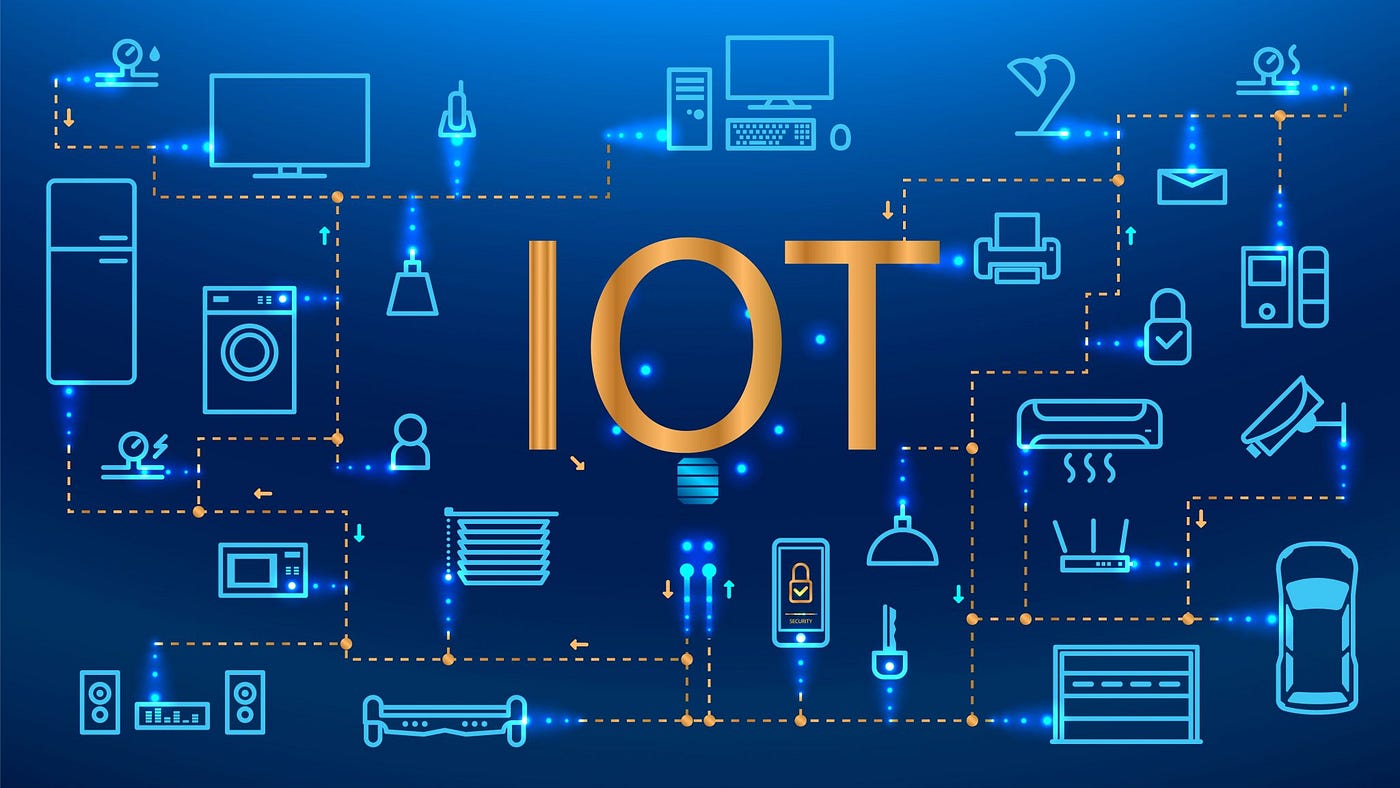
The Internet of Things is already widely used in a variety of fields. With so many devices sending and receiving large amounts of data, the demand on network routes and cloud servers is increasing.
For example, real-time data processing is critical in fields such as autonomous driving technology, where even a minor delay can pose a significant risk.
Furthermore, with the practical application of AI (artificial intelligence), it is increasingly possible to eliminate the work process of “human judgment”. As high-speed processing by AI becomes achievable, sustaining that pace will also become a difficulty.
Furthermore, 5G enables high-speed, large-capacity, low-delay communication. However, even if connectivity speeds improve, if data processing is delayed, the benefits of 5G cannot be fully realized. The combination of 5G with Edge Computing is intended to provide significantly lower latency processing.
Promotion of Society 5.0
Society 5.0 has been proposed as the fifth new society, following Society 1.0 and Society 4.0, and includes hunting society, agricultural society, industrial society, and information society. It was also launched as a Cabinet Office policy and depicts the social model that we should strive for in the future.
Society 5.0 is characterized as a society that integrates and uses both cyberspace (virtual space) and physical space (real space). IoT will connect all people and things by fusing cyberspace and physical space, making knowledge and information more easily shared. Through this, we hope to produce exceptional new value while also achieving economic development and social settlement.
To accomplish Society 5.0, all IT use, including IoT, robot technology, AI, and big data, is required. Edge computing, which allows for high-speed processing and real-time performance, is also necessary for taking advantage of these technologies to their full potential.
The government is promoting smart cities as a method to put Society 5.0 on the map. Data management is especially critical in projects that have a significant impact on people’s lives. Under these conditions, the significance of Edge Computing, which assures real-time data, improves operational continuity, and decreases security threats, is projected to increase even more.
The Hybrid Future
For most firms, the future rests in combining cloud and edge computing rather than picking one over the other. A hybrid paradigm enables real-time processing at the edge while using the cloud for storage, deep analytics, and global accessibility.
Hybrid techniques are also consistent with the emergence of 5G networks, which allow edge devices to connect more swiftly and efficiently with cloud systems. This synergy means that enterprises may retain low latency without sacrificing scale.
Ultimately, hybrid strategies offer flexibility. Organizations can improve performance and cost efficiency by determining which jobs are best suited for the edge and which should be kept in the cloud. This balance is gradually becoming the industry standard.
Bottomline
The debate over edge computing versus cloud computing isn’t about replacing one with the other; it’s about striking the correct balance. Cloud computing provides scalability, flexibility, and advanced analytics, whereas edge computing ensures real-time response, bandwidth efficiency, and reliability.
Businesses that assess their operational demands, data flows, and performance requirements can implement a model that optimizes efficiency and innovation. For many, the future will be a hybrid approach that combines the advantages of edge and cloud computing to offer unparalleled performance and resilience.
By integrating your IT strategy with your business objectives, you can future-proof your operations and preserve a competitive advantage in the digital age.



Comments