
 By
The foundation of retail media success is first-party data, which provides transaction-backed, privacy-compliant insights that enable accurate targeting, improved customisation, and closed-loop measurement. This data enables merchants to increase advertising ROI, improve customer experiences, and capture high-margin revenue as third-party cookies disappear.
Key Roles of First-Party Data in Retail Media:
- Precision Targeting & Personalization: Retailers use direct consumer insights—purchase history, search behavior, and loyalty data—to create highly tailored, relevant advertising across channels (on-site, CTV, social, and in-store).
- Closed-Loop Measurement & Attribution: First-party data connects ad exposure directly to purchase transactions, enabling advertisers to calculate exact Return on Ad Spend (ROAS) and prove incrementality.
- Privacy-Compliant Strategy: As a durable asset that does not rely on third-party intermediaries, first-party data provides a trustworthy foundation that aligns with evolving data privacy regulations.
- Higher Ad Performance & Reduced Waste: Advertisers can avoid wasteful, broad targeting, instead reaching high-value, in-market audiences likely to purchase, thus increasing campaign efficiency.
- Monetization of Supplier Relationships: Retailers leverage this data to turn their retail media networks into premium, high-margin revenue streams by selling valuable insights to suppliers
What Is First-Party Data in Retail Media?
In retail media, first-party data refers to consumer information that a retailer gathers directly from its own properties and customer relationships, such as purchase transactions, website browsing habits, loyalty program activities, app engagements, and in-store point-of-sale signals. First-party data is controlled by the store, gathered with express or tacit authorization, and represents actual consumer intent, in contrast to third-party data obtained from outside aggregators or cookie-based tracking.
This distinction matters because first-party data carries a structural advantage that no third-party signal can match: it is deterministic, not probabilistic. When a retailer knows that a specific customer purchased organic baby food three times in the last 30 days, that signal is fundamentally more reliable for targeting than a cookie-based inference that someone “appears to be a parent.” As Joe Frick, VP of Business Development at G-Comm / Goodway Group, put it: “What was once a promising add-on to broader media strategies has become a core driver of marketing performance”.
The scale of the opportunity is difficult to overstate. According to eMarketer, close to 90% of US retail media investment is concentrated with Amazon and Walmart (eMarketer, 2026), meaning every other retailer — from mid-market Indian marketplaces to Southeast Asian grocery chains to European fashion platforms — must build competitive first-party data capabilities if they want to capture their share of a market growing at 33% year-over-year in recent quarters, according to Skai’s Q4 2025 Quarterly Trends Report.
The benefits of activating first-party data in retail media extend across the entire value chain. For retailers, it transforms existing shopper relationships into a monetizable media asset. For brands, it provides targeting precision that third-party alternatives cannot achieve — 43% of B2C marketers worldwide cite improved targeting accuracy as the primary benefit of first-party data collection. For shoppers, it powers personalized ad experiences rooted in genuine purchase behavior rather than invasive cross-site tracking.
Retail media network (RMN) is the advertising business a retailer builds on top of its owned media inventory (website, app, email, in-store screens) and first-party data. An RMN lets brands pay to reach the retailer’s shoppers using targeting signals the retailer owns.
Types of First-Party Data in Retail Media
Not all first-party data is created equal. Retailers typically collect five distinct categories, each with a unique targeting value.
Transactional Data
Transactional data is the backbone of retail media targeting: purchase history, order frequency, average basket size, category affinity, and product-level purchase patterns. This data powers the most reliable targeting signals because it reflects actual purchase behavior rather than inferred intent. A beauty retailer that knows a shopper buys SPF moisturizer every 45 days can serve a sunscreen brand’s ad at precisely the right moment in the repurchase cycle.
Behavioral Data
Behavioral data captures how shoppers interact with the retailer’s digital properties before they buy: browse paths, search queries, product detail page views, dwell time, add-to-cart events, and abandonment signals. These signals reveal in-session intent and enable real-time targeting. A shopper browsing three different laptop models in the electronics category is signaling active consideration — an opportunity for a computing brand to serve a targeted ad before the session ends.
Read Also: How Brands can Maximize ROI on Retail Media Networks
Loyalty Program Data
Loyalty data is structured customer data collected through a retailer’s membership or rewards program — including enrollment details, tier status, point accrual and redemption patterns, purchase frequency, and lifetime value metrics. Loyalty programs are the single most powerful first-party data collection mechanism because members actively opt in to data sharing in exchange for rewards. According to Novus Loyalty, 60% of retail consumers initiate purchases on digital platforms through loyalty ecosystems. As the Novus research team noted: “Loyalty programmes provide a comprehensive view of the customer by combining online and offline behavior”.
In-Store Data
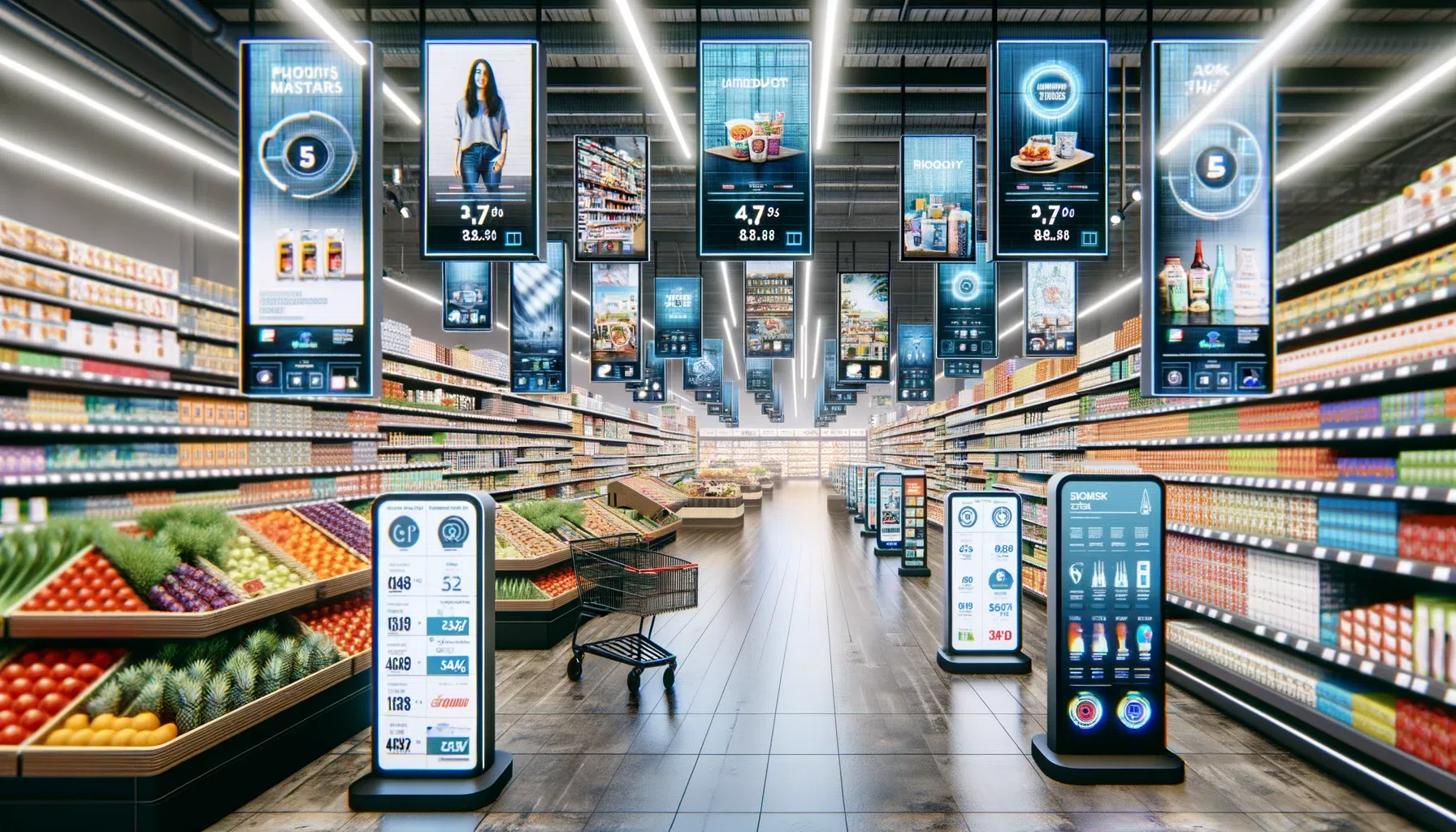
In-store data extends first-party data collection to physical retail environments: foot traffic patterns, aisle dwell time, point-of-sale transaction records, digital kiosk interactions, and QR code scans. This data is increasingly critical as in-store retail media grows. Offline first-party signals enable retailers to close the loop between digital ad exposure and physical purchase behavior. Platforms like Osmos Instore Ads use aisle-level targeting and digital screen placements to activate these signals in real time.
Zero-Party Data
Zero-party data is information shoppers deliberately share with the retailer: declared preferences, quiz responses, wishlists, product review content, and communication preferences. Unlike behavioral data (which is observed), zero-party data is volunteered. This makes it the highest-consent tier of first-party data — particularly valuable in markets with strict data protection regulations.
Bottomline
As targeting models become more automated, retailers need a combination of data engineering (to build ingestion and identity resolution pipelines), data science (for segmentation models and predictive targeting), ad operations (for campaign management and yield optimization), and privacy/compliance expertise (for consent management and regulatory adherence).
Platforms like Osmos Adscape reduce the organizational capability requirement by providing turnkey targeting infrastructure that handles the technical complexity, allowing retailers to launch with smaller teams and scale capability over time. As targeting models become more automated, the need for AI and ML literacy grows.
By offering turnkey targeting infrastructure that manages the technical complexity, platforms such as Osmos Adscape lower the organizational capability requirement, allowing merchants to start with smaller teams and gradually increase capability.






Comments