
 By
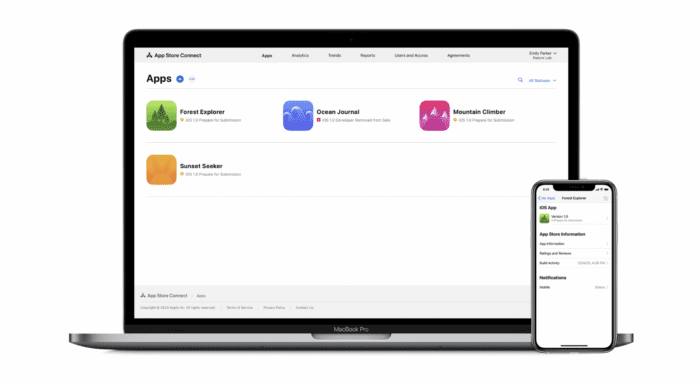
A strategic combination of brand identity, discoverability (keywords), and conversion orientation (value proposition) makes up the anatomy of an ideal app title and subtitle. The objective is to rank well in app store searches and promptly convey the features and advantages of the app to prospective customers.
We’ll explore the world of app titles in this in-depth guide by studying their significance in the context of App Store Optimization (ASO), learning some of the greatest techniques for creating attention-grabbing titles, and looking at actual cases that have perfected the trade. By the time we’re done, you’ll understand the enormous influence of a well-written app title and learn some strategies for reaching your target audience.
Understanding App Titles
It’s crucial to comprehend the basic function that app titles serve before delving into the tactics and methods that can turn an app title from just words to a potent consumer attraction. An app title is more than simply a string of characters; it’s the first point of entry into the universe of your app.
Consider the app title as a meticulously condensed representation of the function, purpose, and distinctiveness of your app. It should summarize your app’s functionality, target audience, and reasons for exploration in a few succinct words. Given the character restriction usually permitted for app titles, this can seem like a difficult task, but that’s where the difficulty and creativity come into play.
An effective app title is a promise rather than just a label. It establishes the user’s expectations for the experience they will have once they download your application. As a result, it’s critical that the title of your app accurately reflects the real user experience it offers. Although deceptive titles may first attract attention, they may eventually cause annoyance, bad reviews, and uninstallations.
An app’s title also acts as a first point of contact for prospective users. When users browse through search results or app stores, it is the first thing they see. A well-written title can make the difference between a user scrolling past your app and clicking to learn more in this era of short attention spans. This is your opportunity to create a memorable first impression, which is where the power of an engaging app title comes into play.
To get someone to download your app, you need a compelling app title. Additionally, MobileAction’s AI-powered smart ASO solutions are necessary for your app title to show up higher in app stores.
App Description
The app description allows you to explain your app further to your potential and existing users. The main goal of the app description is to share with your audience what your app is all about, how it can help your users, and why your users should use your app.
The Apple App Store allows you to write an app description, which contains a maximum of 4,000 characters. Unlike the app title and app subtitle, the app description gives you plenty of space to explain how your app is better than others.
App Titles and App Store Optimization
The key to many apps’ success and visibility is App Store Optimization (ASO). In order to increase your app’s discoverability and organic downloads, it involves improving many aspects of its listing on app marketplaces. The app title is one of the most crucial components.
Users frequently utilize particular keywords or phrases associated with their demands when searching for an app. Your app’s chances of showing up in search results can be greatly increased with an optimized title that contains pertinent keywords. But it’s crucial to find a balance between keyword optimization and keeping an interesting and user-friendly title.
Moreover, ASO is not just seen in app stores. The visibility of your app on app review websites and in external search engines can also be affected by its title. You may improve the visibility of your app on different platforms by carefully choosing keywords and matching them with user intent.
At MobileAction, they offer a range of options to increase the number of app downloads in order to improve your ASO while also saving you significant time and money. The powerful ASO Intelligence tool is one of them.
ASO information is a comprehensive information tool designed to improve your ASO performance. You may get all the tools you need to optimize your app’s exposure and conversion using its features, which include Keyword Gap, Keyword Tracking, Keyword Spy, ASO Report, and many more.
It takes a combination of strategic thinking, creativity, and in-depth knowledge of your target market to craft an effective app title. Here are some recommended practices to think about in order to help you write app titles that both grab customers’ attention and connect with them:
- Clarity and Relevance: Your app title should clearly convey what your app does and who it’s for. Avoid vague or overly abstract titles that leave users guessing. Instead, opt for titles that provide a glimpse into the app’s purpose or unique selling points.
- Strategic Keyword Placement: While creativity is crucial, don’t overlook the importance of keywords. Incorporate relevant keywords naturally into your title to enhance discoverability. However, avoid keyword stuffing, as it can make the title sound awkward and reduce its appeal.
- Length and Readability: Aim for a title that’s concise yet informative. Long titles can get cut off, especially on mobile devices, leading to confusion. Keep it within the character limit prescribed by app stores while maintaining readability.
- Localization: If your app targets a global audience, consider localization. Translating your app title and ensuring it resonates culturally can greatly improve its effectiveness in different regions.
A unique title that hasn’t been used by other apps in the app stores is what you should strive for. To avoid making a duplicate app, it’s imperative to do more than just a simple app store search. You want the name to be distinctive, but it should also be easy to pronounce and spell. Consider using one or a combination of these techniques to come up with a unique name that successfully communicates its value:
- Brand name + single keyword: Google Maps, Prime Video
- Brand name + keywords: Canva: Design, Photo & Video, Booking.com: Hotels & Travel
- Compound words to make a brand name: Facebook, WhatsApp, Dropbox
- Made up words including part of a relevant keyword: Airbnb, Letterboxd
Real-World Examples of Stellar App Titles
Let’s bring theory into practice by exploring real-world examples of apps that have mastered the art of crafting compelling titles:
- Headspace – Mindful Meditation: The title immediately conveys the app’s purpose – offering meditation and mindfulness-related content. It’s concise, clear, and resonates with users seeking relaxation.
- Duolingo – Language Lessons: Duolingo’s title leaves no room for confusion. It tells users exactly what the app offers – free language learning.
- Tinder – Dating, Chat & Friends: In just three words, Tinder’s title captures the essence of the app’s user journey. It hooks users with the promise of dating, chatting, and friendship, encapsulating the app’s core features.
- Shazam – Music Discovery: Shazam’s title is both an instruction and a promise. Users instantly know they can identify songs and access lyrics quickly. It’s a perfect blend of clarity and curiosity.
By dissecting these examples, we can see how effective app titles combine clarity, relevance, and creativity to create a powerful first impression. As you craft your app title, draw inspiration from these success stories while tailoring your approach to your app’s unique identity.
Optimizing App Title and Subtitle
One of the first things consumers notice when they encounter your app is the title and subtitle. While the subtitle gives an overview of the app’s features, the title generates brand identification. Collectively, they impact click-through rates and establish the tone for user expectations. These components are crucial for keyword ranking from an ASO standpoint. Apps with pertinent, strategically placed keywords in their titles and subtitles are given priority by both the Google Play Store and the App Store (iOS) algorithms.
Optimizing the App Title
- Include a Primary Keyword: Integrating a high-traffic keyword into your title improves your app’s discoverability. For example, instead of “FitPro,” a title like “FitPro: Workout Tracker & Fitness Planner” incorporates keywords users are likely to search for.
- Keep It Short and Memorable: Titles should be concise yet descriptive. Both app stores have character limits (30 characters on iOS and 50 on Google Play), so make every word count. A shorter title is easier to remember and looks clean on mobile screens.
- Highlight Brand Identity: If your app has a unique or well-known brand name, include it in the title. This helps with brand recognition and establishes trust.
- Avoid Keyword Stuffing: While keywords are important, stuffing multiple unrelated keywords into the title can confuse users and negatively impact rankings. Focus on relevance and clarity.
Optimizing the App Subtitle
- Use Descriptive Keywords: Subtitles allow you to elaborate on your app’s core features using additional keywords. For example, “Track workouts, set goals, and plan meals” complements the app title and covers multiple search terms.
- Highlight Unique Features: Emphasize what sets your app apart. For instance, if your app offers real-time updates or AI-driven personalization, include this in the subtitle.
- Keep It Action-Oriented: Use verbs or action-oriented phrases to make the subtitle more engaging. Phrases like “Track progress daily” or “Boost productivity instantly” convey value and encourage downloads.
- Stay Within Character Limits: Subtitles are limited to 30 characters on iOS. Be concise and avoid filler words that don’t add value.
Combining Titles and Subtitles for ASO Success
To maximize their impact, the title and subtitle should work together cohesively. While the title introduces the app and includes the primary keyword, the subtitle can expand on the app’s functionality and include secondary keywords. This approach ensures comprehensive keyword coverage without overloading either element.
Read Also: What Is App Store Optimization and Why It Matters in 2025-2030
For example:
- Title: BudgetMaster: Expense Tracker & Planner
- Subtitle: Manage your money and save smarter
This pairing effectively communicates the app’s purpose while targeting relevant search terms like “expense tracker” and “money management.”
Testing and Iteration
ASO is an ongoing process, and titles and subtitles should be tested and refined over time. A/B testing can help determine which variations perform best in terms of search rankings and conversion rates. Track metrics such as impressions, click-through rates, and downloads to evaluate the effectiveness of your chosen keywords and phrasing.
Common Mistakes to Avoid
- Ignoring Character Limits: Exceeding character limits can cause truncation, making your title or subtitle less effective.
- Using Generic Terms: Words like “great” or “amazing” add little value and don’t improve search rankings. Focus on descriptive keywords instead.
- Neglecting Updates: Regularly revisiting and optimizing your title and subtitle ensures alignment with evolving user search behavior and app updates.
How to Write the Perfect App Title?
The title of your app is typically the first thing a user sees about it. For this reason, you should give your app title a lot of thought. With millions of apps available, it’s easy to become overwhelmed by the competition.
The most significant ranking criteria is said to be the app title. When creating the title of your app, keep the following crucial points in mind:
- Maximize character limit – like what was mentioned, you need to take advantage of every character in your app title. Remember, 30 characters aren’t that much. So, you need to ensure you use all of them to your advantage.
- Add keywords – the App Store crawls through the app title and looks for relevant keywords. This means that keywords in your app title play a vital role in your app’s discoverability. When adding keywords, make sure that it looks and reads as naturally as possible.
- Avoid generic descriptions – don’t use app titles such as “world’s best app” or “fun app.” Generic descriptions fail to immediately tell your users what your app is about.
- Don’t add inappropriate content, or references to other apps, pricing, and brand names that are not yours.
- Choose an easy-to-remember and simple app title.
- Test your app title keywords regularly. You need to check your keyword pool and see which keywords you are ranking well. From there, you can strategically change your keyword usage to see which of them gives you the best results.
Here’s a good example of an app title:
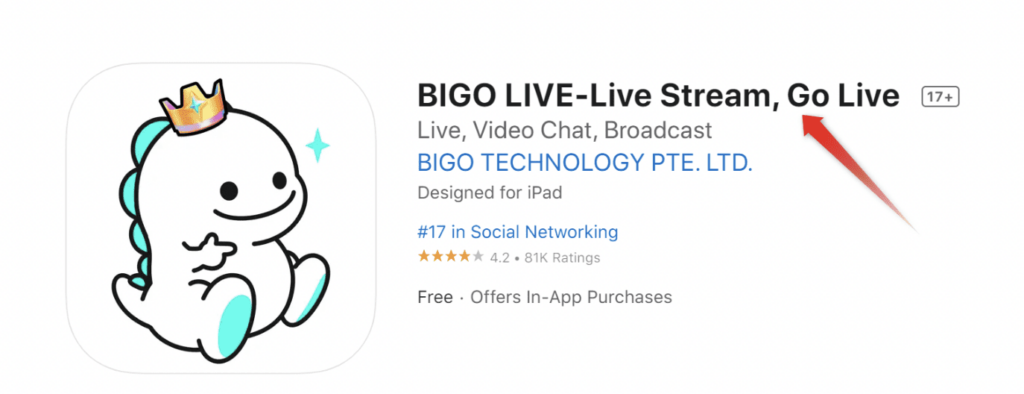
You see here that aside from the app name, Bigo included their most important keyword in the title, which is “live stream” and even “Go Live.”
How to Write the Perfect App Subtitle?
The subtitle appears below your app title. It instantly gives your users a better understanding of your app. So, make sure you also choose the right app subtitle.
Here are some tips to remember:
- Avoid generic descriptions.
- Use the app subtitle to explain the value of your app.
- Write a catchy and understandable subtitle.
- Don’t repeat keywords. If you already used a keyword in your title, no need to have them in your subtitle.
- Continuously check your keywords in the subtitle to see if it is improving your ranking or not. If yes, then continue using the keyword. If not, then look for keyword variations. Repeat the testing process until you find significant improvements.
- Use reliable and effective keyword research tools to ensure you’re getting accurate data, which you can use to determine how you’re going to create your marketing plan.
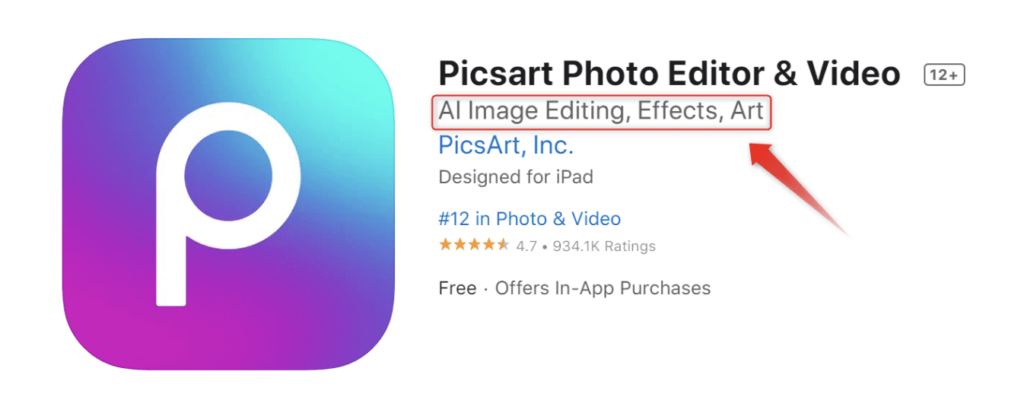
Picsart has a good subtitle. The subtitle isn’t just easy to understand, but it gives the users a quick idea of the app’s features. On top of that, these terms are keywords that the Picsart rank for.
How to Write the Perfect App Description?
The app description gives you 4,000 characters to further explain your app. It’s a great way to show your users why your app stands out from the rest.
These tips will help you to write the best app description:
- The description should be engaging and interesting.
- Write an informative but concise description.
- Highlight the core features of your app.
- Use a language that your target audience will understand readily.
- Use a marketing tone that aligns with your brand.
- Exert extra effort in writing the first and second sentences of your description. Users will see the first part of your description without clicking on the “more” button.
- Apple recommends you mention awards and accolades in the latter part of your description if you’re planning to include them.
- You don’t need to add keywords to the description. Apple does not check keywords in the description. This means that you have more freedom in writing the description in the best way you can without worrying about where to add keywords.
- Don’t include prices since pricing is already a separate part of your product page.
To give you an idea of how a great app description is written here’s an example description of the note-taking app, Evernote:
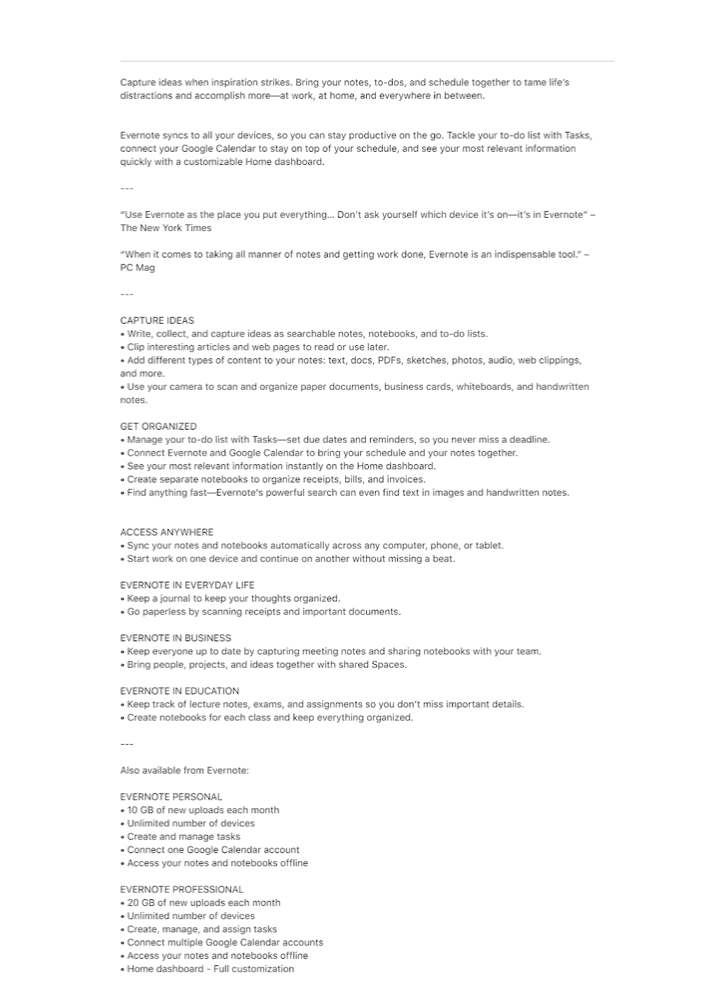
As you can see, Evernote’s app description is excellently crafted. You can see that it is easy to read. The paragraphs are divided into bullet points. Each section tells users the core features of the app and at the same time, the copy strongly persuades users to download the app.
How to Write Perfect App Title & Description On Play Store
With almost 3.5 million apps available in the Google Play Store, there is fierce rivalry for user downloads. Even if your app has an amazing design, functions flawlessly, and resolves a pressing issue, it might not be as successful as you had hoped.
In actuality, it takes more than simply a fantastic product to succeed in the Google Play Store and Apple App Store. Additionally, you need to maintain your app listings and properly optimize your solution with the right app title and description.
Understand Your Target Audience
If you don’t have a thorough understanding of the people you want to download your app, you won’t be able to choose the ideal title and description. Before attempting to write the title and descriptions for your app on the Play Store, respond to these and related questions:
- Who are your target users?
- Which countries do they live in?
- What problem will your app help them to solve?
- How do these people discover new apps on the Google Play Store?
The target market research you do at the start will enable you to reach the top of the app charts and have lasting benefits.
Do Keyword Research
After you understand your target audience, you should start researching keywords.
Look at the words or phrases users type in the Play Store search bar to find solutions to their problems. Try to include those keywords naturally in your app title and description.

For instance, US users of the Play Store may type the keyword “gourmet cooking” when searching for an app that teaches them how to cook food.
While your target audience may be searching for many queries, ensure you prioritize those keywords with high search volume and relevance.
State Your USP
Your app won’t be used by people to help you. They have an issue or a wish. They won’t download your app unless they believe it will address their issue or satisfy their need.
The Play Store’s brief description is a great way to share this information with potential customers. Tell them how your software will make their life better and help them solve their difficulties.
.

State your unique selling proposition (USPs) here. Usually, your keywords should reflect these USPs. But there can be more facts that are worth mentioning.
Ask yourself the following questions. Use the answers or some part of them as keywords in your short description:
- Which are the most useful features of your app?
- Which features does your app have that competitor apps do not have?
- Do you offer better services like 24/7 support, multi-language content, free delivery, or a money-back guarantee?
- Does your app have an extraordinary UI?
- Can people use it in flight mode?
Optimize Your App Title And Description
The Apple App Store and the Google Play Store operate differently. Google permits developers to include a maximum of 50 characters in the app title. Therefore, your brand name should come first in the app title, followed by two to four keywords. Make sure your Google Play Store title is lucrative and unambiguous.
.

The Google Play Store gives application developers access to two different description types: a short description of 80 characters and a long description of up to 4,000. Ensure both these descriptions are well organized and structured.
Try to use the entire space if possible. Remember to include keywords in both descriptions. Don’t succumb to keyword stuffing, as this can hurt your search ranking in the Play Store.

Localize Your App Title
If you wish to provide apps in different storefronts, ensure to spend some time localizing the app title and metadata. Your users are more likely to visit your app page if they see the app title in their native language in the Play Store search results.
Localization does not mean translating written words. You need to pay extra attention to the cultural background and the local keywords your local audience uses to communicate.






Comments