
 By

AI has turned App Store Optimization (ASO) from a manual, time-consuming process to a proactive, data-driven approach. Modern ASO technologies use Artificial Intelligence (AI) to automate repetitive operations, analyze large datasets, and predict trends, hence increasing app visibility and conversion rates.
Here is an analysis of the role of AI in modern ASO tools:
1. Advanced Keyword Research and Optimization
AI has shifted keyword research from manual brainstorming to data-driven discovery.
- Semantic Search Understanding: AI algorithms (like AppTweak’s Atlas AI) understand user intent rather than just matching exact keywords, recognizing that different phrases may represent the same user need.
- Keyword Clustering: Modern tools use AI to group related keywords into “semantic clusters,” allowing marketers to rank for a topic rather than just a single term.
- Opportunity Identification: AI analyzes large-scale data to identify high-volume, low-competition, and long-tail keywords that human researchers might miss.
2. Competitive Intelligence and Analysis
AI enables real-time monitoring of competitors, helping developers identify market gaps.
- Strategy Analysis: AI tools analyze competitor metadata, visual assets, and keyword strategies to reveal their strengths and weaknesses.
- Benchmarking: AI provides actionable insights comparing an app’s performance against competitors in similar categories, such as average ranking and keyword reach.
3. Content Generation and Metadata Optimization
Generative AI helps rapidly create and update app store metadata, such as titles, subtitles, and long descriptions.
- Optimized Copywriting: AI tools suggest descriptions that prioritize keyword density while maintaining readability, balancing search visibility with user engagement.
- Localization: AI streamlines the localization process by generating culturally appropriate content for different regions, moving beyond direct translation.
4. Creative Optimization and A/B Testing
AI tools analyze visual elements—icons, screenshots, and videos—to predict which assets will lead to higher conversions.
- Visual Insights: AI can analyze Millions of images to categorize them by color, mood, or subject to determine what attracts users.
- Automated Testing: Tools like SplitMetrics use AI to automate A/B testing, quickly identifying the best-performing creative elements without requiring massive traffic.
5. Sentiment Analysis and Review Management
AI processes user reviews to gain insights into user satisfaction and app functionality.
- Sentiment Analysis: AI categorizes user feedback as positive, neutral, or negative, identifying specific topics or bugs causing issues.
- Automated Responses: AI generates personalized, empathetic responses to reviews, boosting user engagement and improving ratings.
6. Predictive Analytics
Modern ASO tools use AI to forecast app performance based on historical data.
- Trend Prediction: AI identifies emerging trends and user behaviors in specific app categories, allowing developers to optimize keywords proactively for upcoming seasonal spikes.
- Impact Forecasting: AI can predict how changes in metadata or visuals will impact rankings and downloads.
AI has produced advances in content creation, keyword detection, and automation. It can quickly process large amounts of data, detecting keyword opportunities, recommending metadata, and even creating descriptions based on competitor analysis. AI-powered technologies are especially effective for repetitive chores like generating ranking reports, evaluating term activity, and forecasting search trends using historical data. This level of automation can drastically minimize the time necessary for basic ASO maintenance, freeing up marketers to focus on higher-level strategies.
While AI can accelerate some ASO processes, it cannot replace strategic decision-making. AI cannot grasp user intent, brand identity, or market fluctuations in the same way that an experienced ASO professional can. For example, AI may recommend popular high-volume terms, but it does not comprehend the strategic placement required to maximize impact. AI-generated descriptions frequently prioritize keyword density over readability, resulting in a disjointed user experience that can reduce conversion rates.
The Role of AI in ASO
The incorporation of AI into ASO is changing how app developers and marketers improve their apps for increased visibility and engagement. By automating and optimizing processes across all parts of ASO, AI is raising the bar for efficiency and effectiveness in in-app marketing campaigns.
Artificial intelligence is transforming App Store Optimization by giving tools for processing massive volumes of data, uncovering relevant insights, and automating optimization processes. These AI-powered improvements allow developers and marketers to fine-tune their plans more efficiently than ever. Let’s look further into how AI is altering ASO:
1. Providing data-driven insights
AI helps transform raw data into actionable insights. For ASO, this means analyzing performance metrics from across the app stores to identify what works and what doesn’t. AI algorithms can quickly process variations in user engagement and app performance, providing a granular analysis that helps in fine-tuning marketing strategies.
Here are some key ways you can use AI to get data-driven marketing insights in ASO:
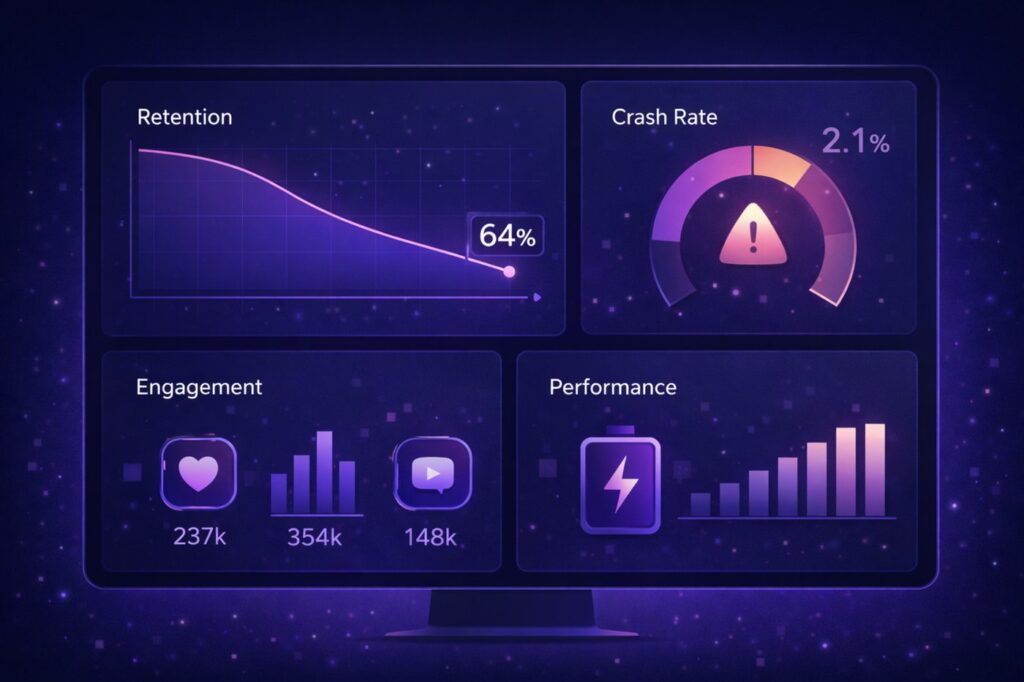
- Performance analysis: AI excels in identifying app performance metrics, from download figures and user retention rates to ratings and review sentiments. This analysis sheds light on an app’s strengths and weaknesses, guiding developers on where improvements are needed.
- User engagement insights: By evaluating how users interact with apps, AI identifies patterns that contribute to higher engagement levels.
- Metadata optimization: AI-powered tools analyze the effectiveness of app titles, descriptions, keywords, and visuals, comparing them against top-performing apps in similar categories.
- Competitive analysis: AI algorithms can monitor competitors’ performance, offering a clear perspective on market dynamics. Understanding what makes competing apps successful helps you craft strategies that capitalize on market gaps or leverage emerging trends.
2. Identifying high-value keywords
Using AI, developers can identify which keywords are likely to drive the most traffic to their app page. AI tools analyze search frequency, competitiveness, and relevance to suggest high-value keywords.
When conducting app store keyword research, relying on general AI tools may not provide the specific insights you need due to their broad focus. Advanced AI-powered tools become invaluable here, providing more accurate and effective insights to developers.
For example, you can leverage AppTweak’s AI-generated keyword list to jumpstart your analysis with keywords tailored to your app or game, as well as for competitor apps. With AI-generated keyword clusters – groups of keywords that Apple or Google identifies as closely related to your input – you can also uncover new keyword opportunities that are potentially less competitive than their seed keywords.

3. Optimizing app/game marketing efforts with AI
Google Play’s integration of AI-powered features marks a significant advancement in ASO strategies for game developers. By displaying AI-generated FAQs directly within game listings, Google Play enhances user engagement and provides crucial information at a glance. This not only enriches the user experience but also helps in decision-making and boosts download rates.
Also, Google’s introduction of immersive in-game ads and exclusive offers for Play Pass subscribers and Play Points members demonstrates a nuanced understanding of how you can use AI to create targeted marketing opportunities.
How to Incorporate AI in ASO: Practical Examples
Integrating AI into ASO makes a lot of sense on paper – but what about the real-world benefits?
AI tools in the ASO landscape are already making tangible waves, offering developers and marketers a suite of features to enhance their strategies. Let’s explore how.
1. Optimizing text metadata with AI
Traditional keyword research methods often miss the mark by not adapting to changing user interests or identifying emerging trends.
AI is crucial in addressing the gap in keyword research for app developers and marketers. It revolutionizes how text metadata – like app titles, descriptions, and keyword fields – is created. By providing relevant and high-performing keywords, AI ensures apps are more visible and rank higher in app store searches.
Read Also: Leveraging Search Ads for ASO Insights
Sophisticated AI tools go beyond the standard ones like ChatGPT, enabling you to optimize your app metadata and ensure that every piece of content is precisely optimized for maximum impact. For example, with AppTweak’s homegrown Atlas AI, it’s easy to not only identify current popular keywords but also predict future trends. Content creators and marketers can then incorporate keywords that are poised to gain popularity, and ensure their content remains relevant and highly visible over time.
AI tools like AppTweak can further recommend the inclusion of certain keywords in titles and meta descriptions, as well as provide tailored insights to accommodate regional and linguistic variations.
While AI can help identify and integrate keywords into your app’s metadata for better visibility, remember the human element. Your app’s title, description, and other metadata should not only include relevant keywords but also engage and appeal to potential users.
2. AI in app store localization
AI is reshaping the landscape of app store localization, offering developers and marketers innovative solutions to improve accuracy, speed up processes, and ensure cultural relevance. The integration of AI in localization strategies not only streamlines content adaptation across different languages, but also tailors this content to meet the specific cultural nuances of the target audience.
Google’s foray into AI-powered translation is perhaps the most recognizable example. Google Translate uses Neural Machine Translation (NMT) technology to provide translations that are not just word-for-word, but contextually accurate and culturally appropriate. This represents a significant leap from traditional translation methods, ensuring that web content and apps resonate with users worldwide by maintaining the intended meaning and tone.
- Mobile game localization with AI
Going beyond written translation, some AI models can generate new audio based on the translated text and even optimize visual elements in mobile games to align with the cultural contexts of the target audience. This includes modifying the appearance of characters and settings to be more culturally relevant, ensuring an immersive experience for players from different regions.
For example, the localization efforts for the RPG game The Witcher 3: Wild Hunt make the game feel originally developed for various markets, rather than merely adapted. The game developers used AI-driven tools to adapt the game’s vast narrative and dialogues, ensuring cultural relevance and linguistic accuracy across different languages. Given the role-playing genre of The Witcher 3, the scope of translation work, including voiceovers, was extensive.
However, the role of human translators, particularly native translators, remains critical in localization. Despite AI’s advancements, it sometimes misses the mark on cultural nuances and may deliver less than precise translations. These inaccuracies highlight the need for human intervention to ensure that the game’s content is not only linguistically accurate, but also culturally appropriate and resonant with the target audience. The goal is to avoid any misinterpretations or cultural insensitivities that could negatively impact the user’s experience.
3. Using AI to refine app store creatives
Beyond text, AI can also help optimize the visual elements of your app store listing. AI revolutionizes this process by analyzing millions of images or videos quickly. It categorizes them by trends such as mood, color, or objects, streamlining the ideation phase.
This not only speeds up content creation but also infuses your strategy with data-backed decisions, ensuring your content is more aligned with audience preferences and boosting engagement. It can fundamentally transform how developers approach app or game creatives to maximize user engagement and conversion rates.
- Create app icons using AI: AI tools such as Midjourney simplify the creation of app icons. By submitting clear, specific prompts, you can easily edit current icons or start new designs. This helps you design an app icon that not only catches the eye but also matches your brand identity closely.

- Analyze visual elements: AI algorithms equipped with image and video recognition capabilities can analyze the performance of visual elements in real-time, identifying patterns and trends that correlate with user engagement. For instance, AI can discern which colors, shapes, or themes in app icons and screenshots are more likely to catch the attention of potential users.
- Automate A/B testing: Other AI tools revolutionize creative optimization in the gaming industry. For example, by automating A/B testing, PressPlay allows game developers, like Wildlife Studios, to efficiently test different creative options for their games. This means they can quickly find out which images, videos, or metadata work best to attract users. Using AI to automate the creation, deployment, and analysis of these tests saves a lot of time and effort, making the process much more data-driven.
- Personalize content delivery: AI enables developers to personalize creatives displayed to users based on their preferences, behavior, and previous interactions with the app. This level of personalization ensures that users see visuals that are most appealing and relevant to them, increasing the likelihood of engagement and conversion.
For example, the popular streaming app Netflix uses AI to personalize thumbnails shown to users. Using AI, the app analyzes individual viewing habits to determine which type of imagery a user is most likely to respond to, and then adjusts the thumbnails of movies and series to match these preferences.
- Optimize gameplay and boost player engagement: The use of AI by Rovio shows how game developers can use machine learning to significantly improve visual elements and gameplay mechanics. AI’s ability to analyze and optimize game scenes in real-time gives players high-resolution output with improved detail and smoother textures. This not only elevates the gaming experience but makes it stand out in the competitive app stores, attracting more downloads and increasing user retention rates.
Top AI Tools for ASO in 2026
Using the proper AI-powered technologies can greatly improve your app’s visibility and performance. The following are the finest ASO tools, each with unique functionality to handle specific optimization needs:
1. AppTweak
AppTweak is a comprehensive AI-driven platform that provides detailed insights into keyword performance, competition, and market trends.
- Features: Advanced keyword recommendations, competitor benchmarking, and ad performance tracking help developers refine their strategies.
- Best For: Developers and small teams looking for actionable, data-backed insights to improve app visibility and downloads.
2. Sensor Tower
Sensor Tower combines market intelligence with AI-driven analytics to provide a holistic view of app performance.
- Features: This tool offers organic and paid growth strategies, trend analysis, and detailed competitor monitoring.
- Best For: Enterprises seeking a scalable solution with in-depth analytics to dominate app categories.
3. ASO Desk
Designed with niche developers in mind, ASO Desk specializes in keyword research and performance tracking tailored to your app’s category.
- Features: AI-powered keyword grouping, competitor analysis, and real-time performance insights make it a must-have for niche developers.
- Best For: Independent app developers focusing on targeted audiences.
4. SplitMetrics
SplitMetrics excels at improving app store visuals and metadata by leveraging advanced A/B testing capabilities.
- Features: Its AI-based experiment design helps optimize app icons, screenshots, and videos for maximum user engagement. Real-time analytics provide instant feedback on what works.
- Best For: Teams that prioritize user experience and data-driven decisions to maximize conversion rates.
5. AppFollow
AppFollow uses AI to delve into user feedback, providing valuable sentiment analysis and actionable insights for enhancing user engagement.
- Features: This tool offers features such as review management, competitor tracking, and real-time analytics. It also helps identify pain points that could deter downloads.
- Best For: Developers and marketers aiming to improve customer satisfaction and build a strong app reputation.
By leveraging these AI tools, developers and marketers can streamline their ASO efforts, enabling them to focus on creating better user experiences and staying ahead in the competitive app market.
Proven Techniques for AI-Powered ASO
AI-powered App Store Optimization techniques enable developers and marketers to refine their strategies with precision and efficiency. These methods are designed to maximize app visibility, enhance user engagement, and boost overall performance. Below, we delve deeper into the proven techniques for AI-driven ASO:
Optimize Keywords with AI
AI tools revolutionize the keyword selection process by identifying high-traffic, low-competition keywords tailored to your app’s audience. These tools analyze search volume, user intent, and regional variations to suggest the best keywords.
Best Practices:
- Continuously monitor and update keywords to align with market trends
- .Use AI to find long-tail keywords that capture niche search queries.
- Focus on localized keywords to cater to specific geographic markets.
A/B Test Creatives
Creatives such as app icons, screenshots, and promotional videos significantly impact a user’s decision to download your app. AI facilitates robust A/B testing, allowing you to test multiple variations and identify which design elements resonate most with your audience.
Best Practices:
- Experiment with different colors, typography, and layouts for icons.
- Use AI to analyze engagement metrics from A/B tests, such as conversion rates and dwell time.
- Optimize video previews by focusing on the first 5–10 seconds, which often determine user interest.
Leverage Predictive Analytics
Predictive analytics, powered by AI, helps forecast app performance based on user behavior, market trends, and historical data. This technique allows you to anticipate changes and adapt your ASO strategy proactively.
Best Practices:
- Analyze seasonal trends and adjust keywords and metadata accordingly.
- Use predictive insights to fine-tune your ad campaigns and user acquisition strategies.
Monitor Competitor Performance
AI tools can analyze your competitors’ app store listings, identifying their strengths, weaknesses, and optimization gaps. By leveraging this information, you can craft strategies that outperform the competition.
Best Practices:
- Track competitors’ keyword rankings and adapt your own strategy to target overlapping opportunities.
- Analyze their creatives to identify design trends that appeal to users.
- Monitor their user reviews to gain insights into common pain points and unmet user needs.
Automate Review Management
User reviews and ratings directly influence app rankings and conversions. AI-driven review management tools enable you to monitor, analyze, and respond to reviews in real-time.
Best Practices:
- Use AI sentiment analysis to categorize reviews as positive, neutral, or negative.
- Prioritize addressing critical issues raised in negative reviews to improve user retention.
- Leverage AI to identify recurring themes in feedback, guiding future app updates.
How to Measure the Impact of Your ASO Strategy
If you decide to add AI into your ASO approach, it will undoubtedly improve efficiency and deliver useful data-driven insights. However, it’s vital to remember that integrating AI with human experience yields the most accurate and actionable outcomes.
Here’s how to assess your app’s success and decide if your ASO copywriting and methods are producing significant results, even when adding AI:
- Keyword Movement: Tracking the ranking changes of your keywords over time is key to measuring ASO success. Monitoring fluctuations allows you to refine your keyword strategy and focus on the terms that are driving the best results.
- App Listing Traffic: Monitoring changes in organic traffic helps determine if your app is becoming more visible in the right search results. Adjusting your keyword targeting based on traffic trends ensures that you are reaching the right audience.
- App Installs: Analyzing app installs reveals how well your app’s visibility is converting into downloads. Understanding the factors contributing to these changes allows you to optimize your ASO strategy for improved install rates.
- Conversion Rates: Examining conversion rates shows how effectively your app’s listing is driving user actions. By refining key elements such as visuals, copy, and keywords, you can enhance your listing’s appeal and increase conversions.
- Organic vs. Paid Performance: Separating organic and paid traffic helps determine the impact of each strategy. Analyzing this data allows you to optimize both channels and ensure they are working together to contribute to your app’s success.
By constantly monitoring keyword performance, organic and paid results, app traffic, installs, and conversion rates, you can fine-tune your strategy for increased visibility and long-term app store success. AI can help automate data collecting and identify critical trends, but human knowledge ensures that the data is interpreted and acted on successfully.
Finally
AI’s collaboration with ASO is more of a partnership than a takeover. It is about integrating the power of artificial intelligence with human creativity and intuition. This results in an ASO strategy that is clever, efficient, and effectively engages with users.
The future of AI in ASO is more than just crunching stats; it’s about understanding what users want and delivering experiences that meet their needs. Successful apps and games will not only be discovered, but will also suit the requirements and desires of their consumers.







Comments