
 By

User behavior data provides critical insights into how people interact with your app, allowing you to fine-tune your App Store Optimization (ASO) approach using actual performance measurements. This data assists in balancing the relevance, difficulty, and conversion potential of keywords and creative materials.
Here’s how you can leverage certain types of user activity data to improve ASO:
1. Optimize Keywords and Metadata
User behavior data helps identify the exact language your target audience uses and which terms actually lead to downloads and engagement.
- Analyze Search Queries: Monitor the specific search queries users are entering in the app stores that lead them to your app page. If you notice users are finding your app through relevant long-tail phrases you hadn’t explicitly targeted, incorporate these into your app’s title, subtitle, or keyword field.
- Track Keyword Performance: Regularly monitor which keywords drive high traffic versus those that result in actual conversions (installs). Remove underperforming keywords and prioritize those that demonstrate strong install rates.
- Extract Insights from Reviews: Use natural language processing (NLP) or AI tools to analyze user reviews for frequently mentioned features, benefits, and pain points. The words users use to describe your app in reviews are valuable potential keywords for your metadata.
2. Improve Conversion Rates with Creative Assets
User interaction with your app’s visual elements on the store page directly impacts conversion rates.
- Analyze Engagement Metrics: Review metrics like tap-through rates (TTR) from search results to your app page, and conversion rates from the page view to installation.
- A/B Test Visuals: Conduct A/B tests on your icon, screenshots, and feature graphics. User behavior data from these tests will reveal which designs are most effective at convincing users to download the app. The design that receives more engagement should be prioritized.
- Refine the App Preview Video: Analyze if users are watching your app preview video and if watching it correlates with a higher conversion rate. If the data suggests the video is not effective, modify the content to highlight core features and benefits more clearly.
3. Enhance User Acquisition and Retention Signals
App store algorithms use user engagement data post-install to determine the quality and value of your app, which influences its ranking potential.
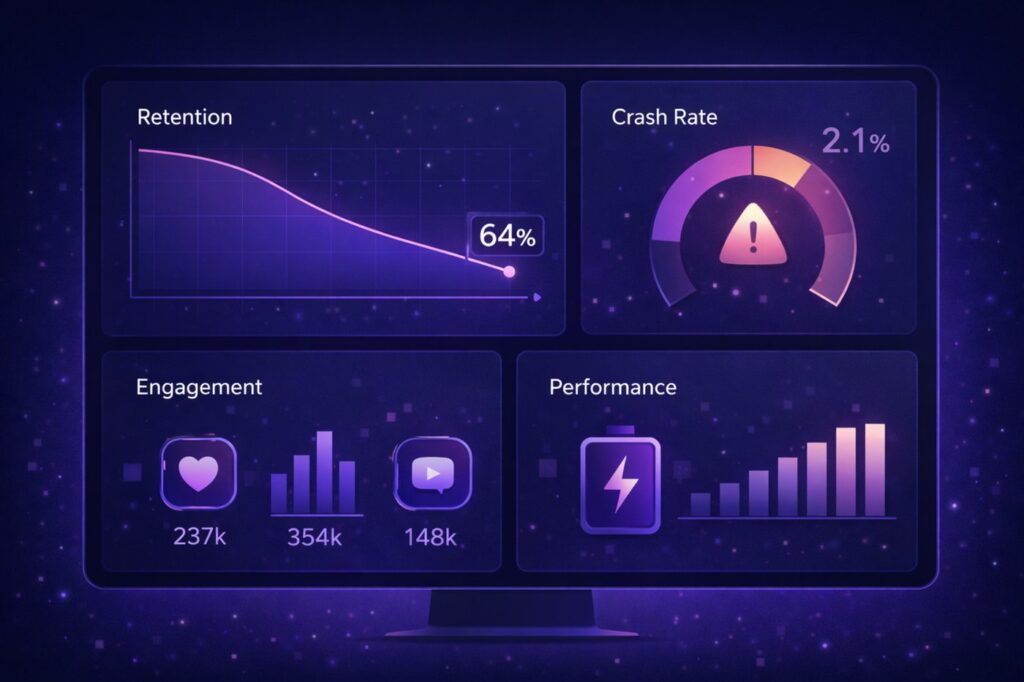
- Monitor Engagement Data: Track in-app behavior metrics such as session duration, feature usage, and retention rates. Apps with high engagement are often favored by app stores, signaling to the algorithms that users find the app valuable.
- Manage Reviews and Ratings: User feedback is a direct behavioral signal. Encourage positive ratings from satisfied users and actively respond to negative reviews to improve user sentiment and potentially boost your ranking.
- Inform Feature Development: Use user behavior within the app to identify popular features and areas of friction. Addressing these points can lead to better reviews and higher ratings, further supporting your ASO efforts.
4. Continuous Iteration and Localization
ASO is an ongoing process, not a one-time setup. User behavior can vary significantly by region and culture.
- Monitor Trends: Continuously track performance data and adapt to new search trends and competitor strategies.
- Localize Effectively: Analyze behavior data in different regions. What works in one market might not work in another. Use region-specific data to localize your keywords and store listings for global reach.
Understanding mobile user behavior is critical in the context of App Store Optimization (ASO). With the digital world continually changing, understanding the subtleties of user interactions with mobile apps can open up new opportunities for app growth and visibility.
The importance of user behavior in ASO cannot be emphasized. In an era when app stores are flooded with innumerable applications, standing out requires more than simply a memorable name or an appealing symbol.
It necessitates a thorough understanding of how users interact with your app, what motivates their engagement, and how their behavior patterns can help you develop your ASO approach. Below are some strategies that can help.
Deciphering User Engagement Patterns
The first step in using user behavior data for ASO is to examine user interaction patterns. This includes looking at indicators like session duration, app usage frequency, and user retention rates. Understanding these trends allows app developers and marketers to identify what keeps users engaged and what may be driving them away.
Read Also: Leveraging Search Ads for ASO Insights
For example, a long session time may indicate that users find the app content interesting, implying that focusing on content-rich features could be a good ASO strategy. In contrast, a poor retention rate may indicate the need for improved user experience or additional compelling elements to keep consumers returning.
- Segmenting Users for Targeted Strategies
Segmenting your app’s user base is an important step in customizing your ASO strategy. More focused and successful ASO tactics can be created by categorizing consumers based on their behavior, demographics, or app usage trends.
For example, promoting a feature in your app store listing that a specific segment of customers commonly uses may attract similar consumers.
Segmentation also enables personalized marketing initiatives. Tailoring your app store description and keywords to individual user groups’ interests and behaviors can increase conversion rates and improve app store rankings.
- Utilizing User Feedback for ASO Enhancement
ASO can glean valuable information from user feedback, such as reviews and ratings. Analyzing user comments can help you understand what people like about your app and what needs to be improved.
Incorporating this feedback into your app’s development and ASO strategy not only improves the user experience, but also shows potential users that you appreciate and respond to user input.
Positive reviews can be highlighted in your app store listing, while responding to negative feedback can boost your app’s rating, which is an important part in ASO success.
Optimizing In-App User Experience
Optimizing the in-app user experience is a critical aspect of leveraging mobile user behavior for ASO. A seamless and engaging user experience not only retains existing users but also attracts new ones through positive word-of-mouth and reviews.
Here are key areas to focus on for optimizing the in-app experience:
- Intuitive Navigation: Ensure that your app is easy to navigate. A user-friendly interface encourages longer session times and frequent returns, positively impacting your ASO.
- Personalization: Tailor the app experience to individual user preferences and behaviors. Personalization can lead to higher engagement levels, translating into better ASO outcomes.
- Performance Optimization: Regularly update your app to fix bugs and enhance performance. A smooth, glitch-free experience is crucial for maintaining high user satisfaction and favorable ratings.
- Enhancing App Features Based on User Data
Using user data to improve app features is another smart method. Analyze user interactions to see which features are the most popular and consider enhancing them further. In contrast, less popular aspects may require reevaluation or enhancement.
For example, if data indicates significant interaction with a specific tool inside your app, consider improving its functionality in the next update. Highlighting these enhancements in your app store listing may entice users interested in these specific capabilities.
- Adapting to User Behavior Trends
Stay alert to new user behavior trends. As user preferences change, so should your app. Adapting to these trends not only keeps current users interested, but also demonstrates to new users that your software is up to date and sensitive to market need.
For example, if there is a growing trend of social sharing within apps, incorporating social sharing features may be a sensible decision. Mentioning these hot features in your app store description might help your ASO by matching current user interests.
Finally
From examining user interaction patterns to incorporating market and competitive information, each facet of mobile user behavior provides a distinct viewpoint for increasing your app’s exposure and attractiveness.
The use of analytics and AI for predictive insights, combined with a focus on social proof and community building, provides a solid foundation for an effective ASO approach.
Furthermore, the value of visual and content appeal in your app store listing cannot be emphasized, as these features are critical in attracting and engaging potential consumers.
- Understanding user engagement patterns helps tailor your app to meet user needs effectively.
- Segmenting users and personalizing experiences enhances user satisfaction and retention.
- Leveraging user acquisition and retention data provides insights for continuous improvement.
- Market and competitive analysis are crucial for staying relevant and ahead of trends.
- Analytics and AI offer predictive insights for a proactive and data-driven ASO approach.
- Social proof and community engagement build trust and foster user loyalty.
- Optimizing visual and content appeal in your app store listing is key to capturing user interest.
To summarize, by efficiently integrating mobile user behavior analytics, app developers and marketers may dramatically improve their ASO campaigns.
This comprehensive approach not only boosts app store rankings but also fosters a stronger connection with users, resulting in long-term growth and success in the app ecosystem.








Comments