
 By
Real-World Asset (RWA) tokenization confronts substantial risks and problems, notably due to legislative uncertainty between jurisdictions, legal ambiguity about ownership, and security flaws in smart contracts. Other significant challenges include technological integration complexity, limited market liquidity, and the requirement for strong custody solutions to connect actual assets with digital ledgers.
Key Regulatory and Legal Risks
- Regulatory Uncertainty: A lack of standardized global regulations means tokenized assets may be treated as securities or commodities differently in various regions, hindering cross-border adoption.
- Legal Ownership Ambiguity: It is unclear in many jurisdictions if holding a digital token guarantees legal ownership of the underlying physical asset, particularly during bankruptcy or disputes.
- Compliance Challenges (KYC/AML): Implementing robust Know Your Customer (KYC) and Anti-Money Laundering (AML) procedures on decentralized platforms is complex but necessary to satisfy regulators.
Technological and Security Challenges
- Smart Contract Vulnerabilities: Bugs, coding errors, or malicious attacks on smart contracts can lead to the loss of investor funds.
- Oracle Risks: Oracles that feed real-world data (like asset prices) onto the blockchain can be compromised, leading to incorrect valuation or fraudulent transactions.
- Custody Issues: If private keys are lost or stolen, the tokenized asset cannot be recovered, highlighting the need for secure, institutional-grade custodial solutions.
Market and Operational Challenges
- Liquidity and Market Depth: Tokenized assets often suffer from thin secondary markets, making it difficult to trade, which contradicts the goal of increased liquidity.
- Lack of Standardization: Fragmentation across different blockchain platforms prevents seamless, interoperable, and efficient trading of assets.
- Valuation Challenges: Accurate, real-time valuation of specialized physical assets (e.g., real estate or art) on-chain remains difficult.
Integration Risks
- Traditional System Integration: Connecting blockchain technology with legacy banking systems and traditional asset registries (like land registries) poses significant operational hurdles.
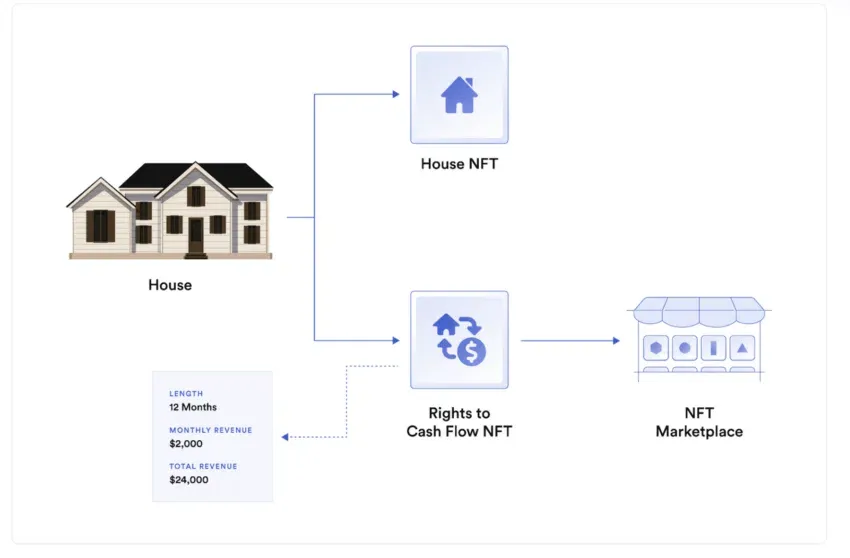
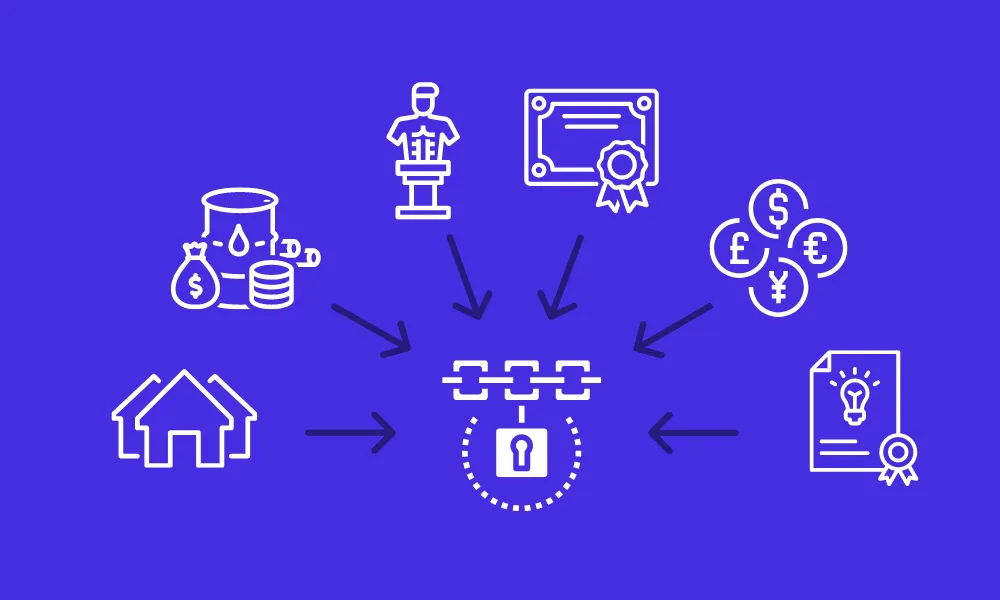
RWA tokenization is a promising topic of research in blockchain technology. In most circumstances, traditional methods of maintaining RWA ownership are inefficient, with transfers requiring a long period and incurring fees from many middlemen. Blockchains can simplify the process and create new opportunities by tokenizing these assets, such as fractionalized ownership of RWAs that would otherwise be difficult to divide.
While RWA tokenization offers great potential, there are certain hurdles to mainstream use.
The following are some of the most significant issues encountered during efforts to deploy RWA tokenization.
1. Proving Token Legitimacy
Creating an NFT is pretty easy on most smart contract platforms. In many cases, there are templates available where the deployer can fill in a few fields and have a functional token contract. Once the code is complete, deploying it to the blockchain is relatively simple as well, and, once complete, a new NFT is born.
However, in and of itself, an NFT has no inherent value. In fact, an estimated 95% of NFTs in existence have zero value. The fact that anyone can launch an NFT means that the market can be easily flooded, and NFTs have to have an external source of value to be worth anything.
For most of the NFTs launched to date, this external source of value is ownership of digital art. For example, BAYC NFTs are rare collectibles that many people want, which pushes up their values. Since an NFT records ownership of an ape, the NFT is valuable.
However, proving that an NFT confers ownership is a tricky task. There have been several cases of fake NFTs being created that claim to confer ownership of art without the original artist’s knowledge or consent. These fake NFTs are worthless once discovered but can be used to scam buyers who believe in them.
The challenge of proving ownership is exacerbated with RWA tokenization. In the case of property, art, luxury goods, etc., there are already processes in place for claiming and transferring ownership of assets. Unless NFTs are accepted as the official record of ownership for an asset, they are worthless and may be disputed.
2. Acceptance in the Courts
Beyond common acceptance of an NFT as an official method of tracking asset ownership, there is also the challenge of getting it accepted in the courts as well. In some legal proceedings, a judge may order that ownership of an asset be transferred to one of the parties in the lawsuit. For example, one party may gain the rights to property in a divorce, or a failure to pay taxes could result in land being put up for auction in a bankruptcy proceeding.
Read Also: Key Benefits of Tokenizing Real-World Assets
With traditional proof of ownership, a judge can force transfers by submitting the correct legal documents, like a court order deed for property transfers. However, compelling a transfer on-chain is more difficult. Unless that capability is built into a token contract — which can introduce complexity and security risks — the only way to compel a transfer on-chain is if the judge has access to the account’s private key or can force the account owner to perform the transfer.
3. Token Contract Security
Like any smart contract, NFT contracts have the potential to contain vulnerabilities. Numerous blockchain smart contracts have been hacked, leading to millions of dollars in lost assets. A hack of a smart contract controlling a tokenized real-world asset could create significant uncertainty about the ownership of that asset.
For example, ownership of a piece of art may be tracked on-chain. If an attacker manages to force a transfer — whether through exploiting a smart contract vulnerability or a phishing attack — is the owner of the art required to transfer the physical asset to the hacker? Or will there be some means of proving that a transfer was the result of an attack, invalidating the previous NFT, and causing a new one to be issued? If so, what does this process look like, and who acts as arbitrator for the claim of theft?
In the DeFi space, it’s often difficult to tell the difference between a rug pull and a hack, so conclusively proving that a transfer was the result of a hack will be difficult or impossible.
Challenges and Risks in RWA Tokenization
While tokenizing real-world assets (RWAs) sounds interesting, we must address the challenges. It is not all plain sailing, and if you are considering getting involved, whether as a builder or an investor, you should understand what you are getting into. This entire place is still in its early stages, and there will undoubtedly be some growing pains to go through.
Legal and Regulatory Ambiguity
Honestly, this is probably the biggest headache right now. There isn’t a clear, universal rulebook for how RWAs should be handled. What’s considered a security in one country might be treated differently somewhere else. Even defining what makes a token legally tied to an asset can be fuzzy. Is the token a direct claim on the actual thing, or just a digital representation? It really depends on where you are, which brings us to the next point.
Jurisdiction Issues
Imagine you tokenize a property in one country, using a company set up in another, and then list it on a decentralized exchange that’s managed by a group from a third country. Sounds cool, right? But what happens when something goes wrong? Whose laws apply? Where do you go to sort out a dispute? It’s a real mess, and figuring out the legal side of cross-border RWAs is still a work in progress.
Securities Law Compliance
Let’s be real: most tokenized RWAs are likely going to fall under some kind of securities regulations. That means a lot of paperwork, disclosures, identity checks, and audits. Projects that try to skip these steps or pretend they’re just selling some kind of ‘utility token’ are playing with fire. Regulators are watching this space more closely than ever.
Counterparty and Custodial Risks
When you tokenize an asset, someone usually has to hold onto the actual, physical asset. This could be a custodian, a trust, or the issuer themselves. If that entity messes up, goes bankrupt, or worse, commits fraud, the token you hold on the blockchain could suddenly become worthless. It’s like having a digital claim on something that no longer exists or is inaccessible.
Valuation Accuracy and Price Oracles
Getting the right price for a tokenized asset is tricky. For things like real estate or private equity, there isn’t always a clear, real-time market price. This is where price oracles come in, feeding data from the real world onto the blockchain. But if those oracles are inaccurate, manipulated, or just plain wrong, the token’s value could be misrepresented. This can lead to bad investment decisions and market instability.
Reputation Risks and Market Acceptance
Since RWA tokenization is still relatively new, there’s a risk that the market might not fully accept it. If a few high-profile projects fail due to regulatory issues, security breaches, or poor execution, it could damage the reputation of the entire RWA space. Building trust and demonstrating reliability is key to getting broader adoption, and any misstep can set things back significantly.
Finally
RWA tokenization shows great promise, and various initiatives are attempting to make it a reality. The ability to definitively monitor ownership of real-world assets on blockchain offers various advantages, including increased transparency and transferability of ownership when compared to traditional ways of tracking ownership.
However, RWA tokenization must overcome several obstacles before it can become a popular or default method of tracking ownership of diverse assets. Without the ability to show that NFTs represent asset ownership, as well as to safeguard the smart contracts that control these assets from assault and abuse, there will be continued reluctance to utilizing them to record ownership of high-value assets. Overcoming these challenges will necessitate the development of mechanisms for authenticating NFTs, supporting court-ordered transfers, and mitigating the possible impacts of NFT contract breaches.





Comments