
 By
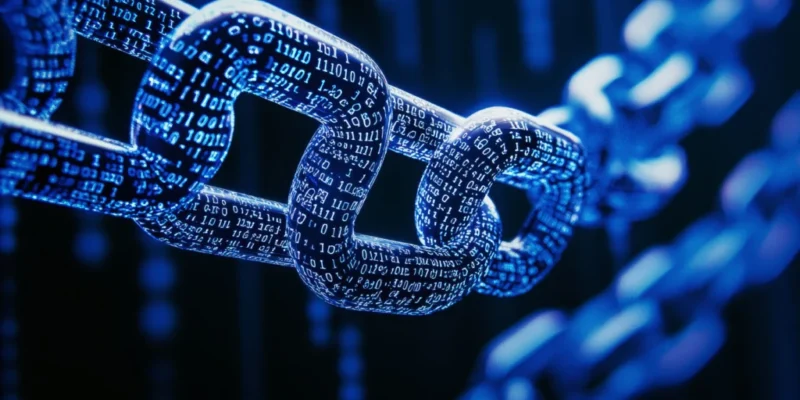
Blockchain can shift parts of the personal-data economy from centralized collection toward user-controlled, permission-based exchange. Instead of companies quietly collecting, copying and monetizing information, blockchain-based identity systems, digital wallets, smart contracts and verifiable credentials can potentially allow individuals to control access to certain data, prove specific facts without revealing everything, track permissions and receive compensation when an agreed data transaction occurs.
The revolutionary idea isn’t simply “sell your personal data for cryptocurrency.”
A more useful model is:
Individual controls access → Business requests specific information → Individual grants permission → Data or proof is verified → Smart contract records the transaction → Payment or another benefit is delivered
NIST describes blockchain as a shared, tamper-evident and tamper-resistant digital ledger, while its research into blockchain identity systems says the technology can support user custody of identifiers and credentials and enable new data-ownership and governance models with built-in control and consent mechanisms.
That could fundamentally change who captures value from personal information.
Traditional Data Economy vs Blockchain Data Monetization
| Traditional Model | Blockchain-Enabled Model |
|---|---|
| Platform collects data | Individual can control credentials/access |
| Data stored centrally | Data/proofs can use decentralized architecture |
| Broad data collection | Selective disclosure becomes possible |
| Company controls permissions | User can participate in consent |
| Data copied between companies | Verified claims can reduce unnecessary copying |
| Limited visibility | Transactions/permissions can be auditable |
| Platform captures most value | Value can potentially be shared with individuals |
| Identity repeatedly verified | Reusable verifiable credentials |
1. Blockchain Can Give Individuals More Control
Traditional digital services frequently require people to surrender information to centralized databases. The company then controls storage, access and—in many cases—how the information contributes to its business model.
Blockchain-based identity proposes a different architecture.
NIST says traditional identity systems can suffer from single points of failure, lack of interoperability and privacy problems such as mass data collection and user tracking. Blockchain identity systems can potentially give users custody of their identifiers and credentials instead.
This creates the foundation for individual data monetization.
Instead of:
“Here is all my information.”
the relationship can become:
“Here is permission to verify this specific information for this specific purpose.”
2. Verifiable Credentials Reduce the Need to Reveal Everything
One of the most important developments isn’t cryptocurrency. It’s verifiable credentials.
In May 2025, the World Wide Web Consortium made its Verifiable Credentials 2.0 family an official W3C Recommendation. The standard provides a mechanism for expressing digital credentials in a way designed to be cryptographically secure, privacy-respecting and machine-verifiable.
Imagine a company needs to know whether you’re over 18.
Traditional approach:
Upload passport → Company receives name, photograph, passport number, nationality, date of birth and more.
A privacy-preserving credential system could instead be designed to prove:
Age > 18 = TRUE
without unnecessarily sharing every other detail.
That’s important because valuable data doesn’t always need to mean selling the raw data itself.
The monetizable asset could be a verified claim.
3. Smart Contracts Can Automate Permission and Payment
Smart contracts can make permission-based data markets more practical. Consider a hypothetical research company seeking anonymous purchasing information from 10,000 consumers.
The process could work like this:
- Company publishes its data request.
- Eligible users receive the request.
- Terms specify exactly what information is required.
- User grants permission.
- Requested data or cryptographic proof is provided.
- Smart contract verifies agreed conditions.
- Payment is released automatically.
- Transaction is recorded.
Instead of relying entirely on a data broker, the individual can become a participant in the transaction. This doesn’t eliminate intermediaries completely.
But it can change their role from:
Owning people’s information
to:
Providing infrastructure that helps individuals exchange permissions and verified information.
4. Blockchain Could Create Personal Data Wallets
Imagine having a secure digital wallet containing access to:
- Identity credentials.
- Education qualifications.
- Employment credentials.
- Shopping preferences.
- Loyalty information.
- Professional certifications.
- Research preferences.
The wallet wouldn’t necessarily place the underlying personal information directly on a public blockchain. That’s an important distinction. The blockchain might instead contain identifiers, proofs, permissions, timestamps or hashes, while sensitive information remains elsewhere.
The W3C’s credential architecture uses issuers, holders and verifiers. A credential issuer makes claims, the holder possesses the credential, and a verifier can check that it genuinely came from the issuer and hasn’t been improperly altered.
That creates possibilities for individuals to reuse trusted information rather than repeatedly surrendering copies.
5. Individuals Could Monetize Research Participation
One realistic application is research. Companies already pay for:
Surveys + Focus groups + Product research + Consumer panels
Blockchain could make these transactions more granular. For example:
A retailer wants anonymized purchasing preferences from 5,000 consumers aged 25–40.
Instead of purchasing an enormous third-party database, it could theoretically offer:
$5 per qualifying participant
If 5,000 people participate:
5,000 × $5 = $25,000 distributed directly to participants
That’s only a hypothetical example, but it demonstrates the economic model.
The participant gets compensated.
The business gets permissioned information.
The system records consent and transactions.
6. Consumers Could Exchange Data for Discounts
Data monetization doesn’t always need to involve cash. A customer might voluntarily share shopping preferences in exchange for:
Discounts + Loyalty rewards + Premium access + Personalized offers + Digital tokens
For example:
“Allow this retailer to access my clothing preferences for 90 days in exchange for a 15% discount.”
The critical difference is explicit exchange. Instead of data collection being buried within lengthy terms and conditions, the economic transaction becomes more visible.
7. Blockchain Could Improve Data Portability
Control over data becomes more valuable when information can move between services. The European Commission explains that under the GDPR’s right to data portability, qualifying individuals can receive personal data in a structured, machine-readable format and have it transmitted to another organization where technically feasible.
Read Also: How Blockchain Is Reshaping Global Trade
Blockchain-based credentials could complement this broader movement toward portability.
Imagine moving between:
- Bank A → Bank B
- Employer A → Employer B
- Marketplace A → Marketplace B
without rebuilding your verified digital identity from zero every time. Portable reputation and credentials could become valuable digital assets.
8. Blockchain Can Create Auditable Consent
Another potential advantage is transparency. Suppose you permit Company A to use a specific dataset for six months. A blockchain-based system could record:
Who requested access + What permission was granted + When permission began + Applicable conditions
Because blockchains are designed to be tamper-evident, this can provide a stronger audit trail than a permission record that one organization controls entirely. NIST explains that blocks are cryptographically linked, making alterations detectable and increasingly difficult as additional blocks are added.
That doesn’t automatically guarantee privacy. It provides an infrastructure for stronger accountability.
9. Micropayments Could Make Small Data Transactions Viable
Traditional financial infrastructure can make tiny payments impractical. Imagine a company paying you:
- $0.10 for one anonymous preference
- $0.50 for completing a research question
- $2 for providing a verified consumer insight
Processing thousands or millions of tiny payments through conventional systems may become inefficient. Blockchain-based payment systems and digital tokens can potentially make programmable micropayments easier.
NIST’s 2025 Web3 report describes a proposed user-centric internet in which individuals manage personal data while digital tokens and web-native currencies can represent assets and facilitate payments. However, NIST also emphasizes that these developing technologies introduce new security challenges.
10. AI Could Make Permissioned Personal Data More Valuable
Artificial intelligence creates another dimension. AI systems depend heavily on data. High-quality, legally permissioned and accurately labeled information can therefore be commercially useful.
Individuals could theoretically participate in marketplaces for:
AI training feedback + Human preference data + Product opinions + Language samples + Professional knowledge + Consumer research
But there is an important distinction:
Monetize access—not your entire identity.
Giving permanent access to highly sensitive health, financial, biometric or location information in exchange for a tiny payment can create risks far greater than the reward.
How Could an Individual Data Marketplace Work?
| Stage | Action |
|---|---|
| 1 | Individual creates secure digital identity/wallet |
| 2 | Verified credentials are added |
| 3 | Business publishes data request |
| 4 | Individual reviews purpose and compensation |
| 5 | Permission is granted |
| 6 | Minimum required data/proof is shared |
| 7 | Transaction is verified |
| 8 | Smart contract releases payment/reward |
| 9 | Consent record is maintained |
| 10 | Access expires or is revoked where applicable |
The crucial principle is:
Minimum necessary disclosure.
The Biggest Problem: Blockchain Is Difficult to Delete
Blockchain’s greatest strength can also become a privacy weakness. Immutability is useful for financial records and proofs. It becomes problematic when identifiable personal information needs to disappear.
Under GDPR, individuals have rights including access, rectification, portability and—in qualifying circumstances—erasure.
The European Data Protection Board’s 2025 blockchain guidance specifically observes that actual deletion may be technically impracticable when personal data is stored directly on a blockchain. It therefore says erasure and objection rights need to be addressed by design.
This is why responsible systems generally shouldn’t put raw sensitive personal information permanently onto public blockchains.
A better architecture can be:
Sensitive data off-chain
plus:
Verification/proof/permission on-chain
Is Blockchain Data Monetization Safe?
Not automatically. Blockchain can reduce some centralized risks while creating others.
Potential problems include:
- Wallet theft.
- Lost private keys.
- Smart-contract vulnerabilities.
- Re-identification of supposedly anonymous data.
- Permanent blockchain records.
- Regulatory uncertainty.
- Fraudulent data marketplaces.
- Token-price volatility.
- Poor consent design.
NIST explicitly warns that emerging Web3 technologies present novel security challenges that organizations need to address. Decentralized does not mean invulnerable.
Finally
Blockchain’s most significant contribution to individual data monetization may not be helping people sell every piece of personal information. It may be changing the individual from the product into an active participant in the data economy.
NIST research says blockchain identity systems can potentially give users custody over identifiers and credentials while enabling new ownership, governance, control and consent models.
Meanwhile, W3C’s Verifiable Credentials 2.0 became a formal Web Standard in 2025, creating standardized infrastructure for cryptographically secure and privacy-aware digital credentials.
That creates a possible future model:
Own your credentials → Control permissions → Reveal only what’s necessary → Record consent → Receive value → Revoke access when appropriate
But blockchain isn’t a magic solution.
Privacy law still applies. Cybersecurity still matters. Poorly designed immutable systems can actually make privacy harder, not easier.
The most promising future isn’t:
“Put everyone’s personal data on blockchain and sell it.”
It’s:
“Give individuals stronger control over who can access their information, what they can access, why they can access it, for how long—and what value the individual receives in return.”
That is the real potential of blockchain-powered individual data monetization.
FAQ
Can I currently sell my personal data using blockchain?
Some experimental Web3 projects and data marketplaces have explored this model, but there isn’t yet a universal marketplace where everyone can safely monetize all personal information. The technology and standards are developing, and regulatory, privacy and economic challenges remain.
Will blockchain stop companies collecting personal data?
No. Blockchain doesn’t automatically change business incentives or privacy law. Its value is that it can support architectures giving individuals greater control over identifiers, credentials, consent and data sharing. NIST specifically identifies these potential capabilities in blockchain identity systems.
Should personal information be stored directly on blockchain?
Generally, putting sensitive identifiable information permanently on an immutable public ledger creates serious privacy concerns. The EDPB notes that actual deletion can become technically impracticable when personal data is directly stored on a blockchain.
Are verifiable credentials the same as cryptocurrency?
No. Verifiable credentials are digitally verifiable claims, such as qualifications or identity attributes. W3C’s Verifiable Credentials 2.0 standard is designed to make such credentials cryptographically secure, privacy-respecting and machine-verifiable.
Source: medium.com








Comments