
 By
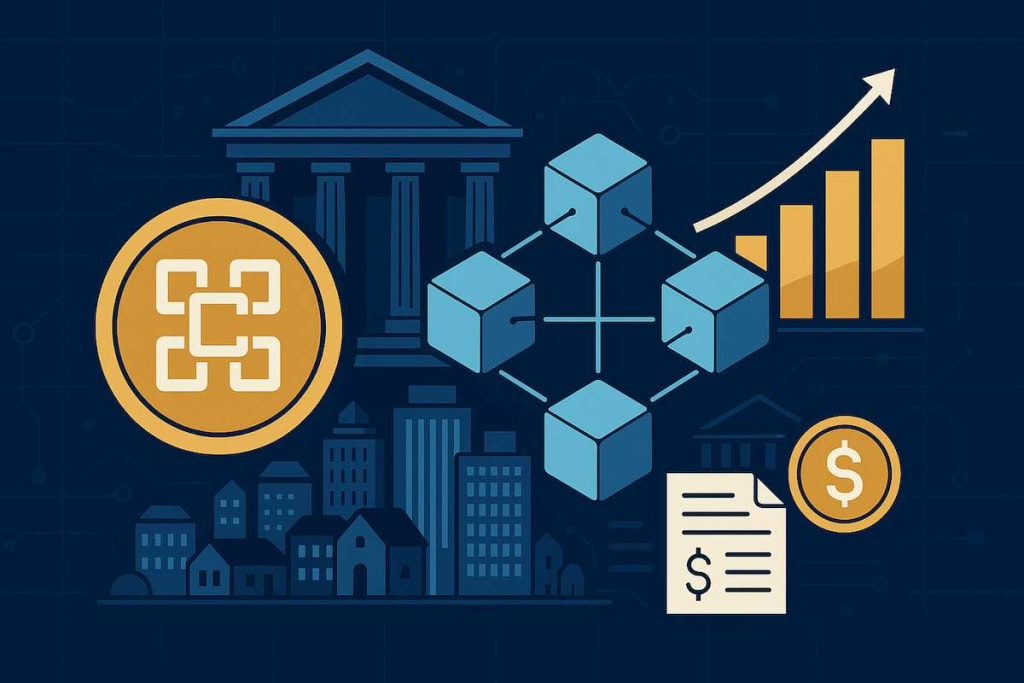
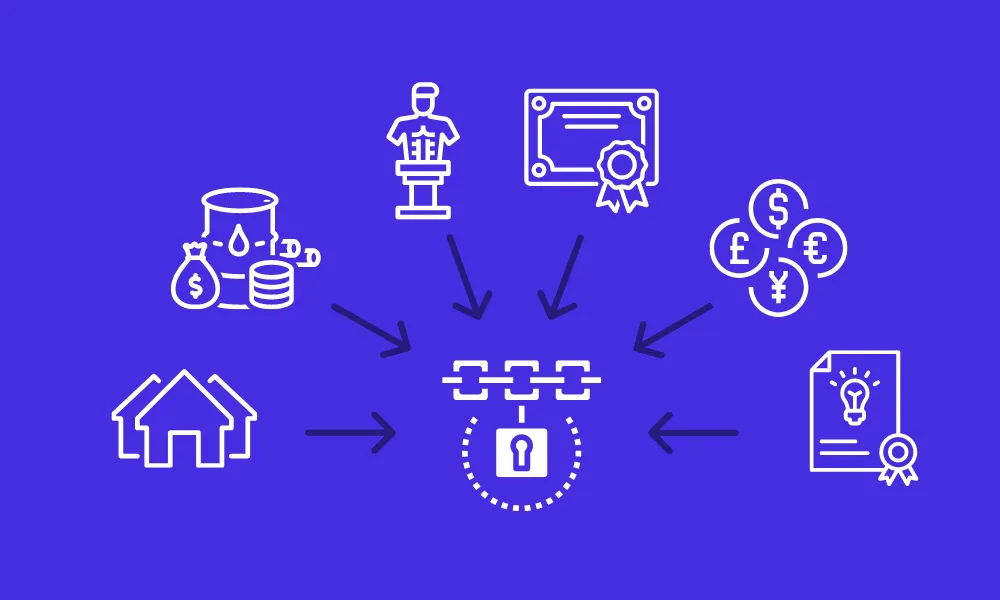
Blockchain enables Real-World Asset (RWA) tokenization by generating a safe, transparent, and immutable digital representation of physical or financial assets (such as real estate, bonds, or art) on a distributed ledger. It combines off-chain value with on-chain efficiency via smart contracts, which automate ownership, transfers, and compliance, allowing for fractional ownership and speedier, 24/7 liquidity.
Blockchain is disrupting more than just currency. It’s reshaping how we deal with physical assets. Consider owning a piece of a building or a slice of a famous art using digital tokens. This essay delves into how blockchain is changing the game through asset tokenization, including the benefits, real-world examples, and roadblocks.
Key Ways Blockchain Enables RWA Tokenization:
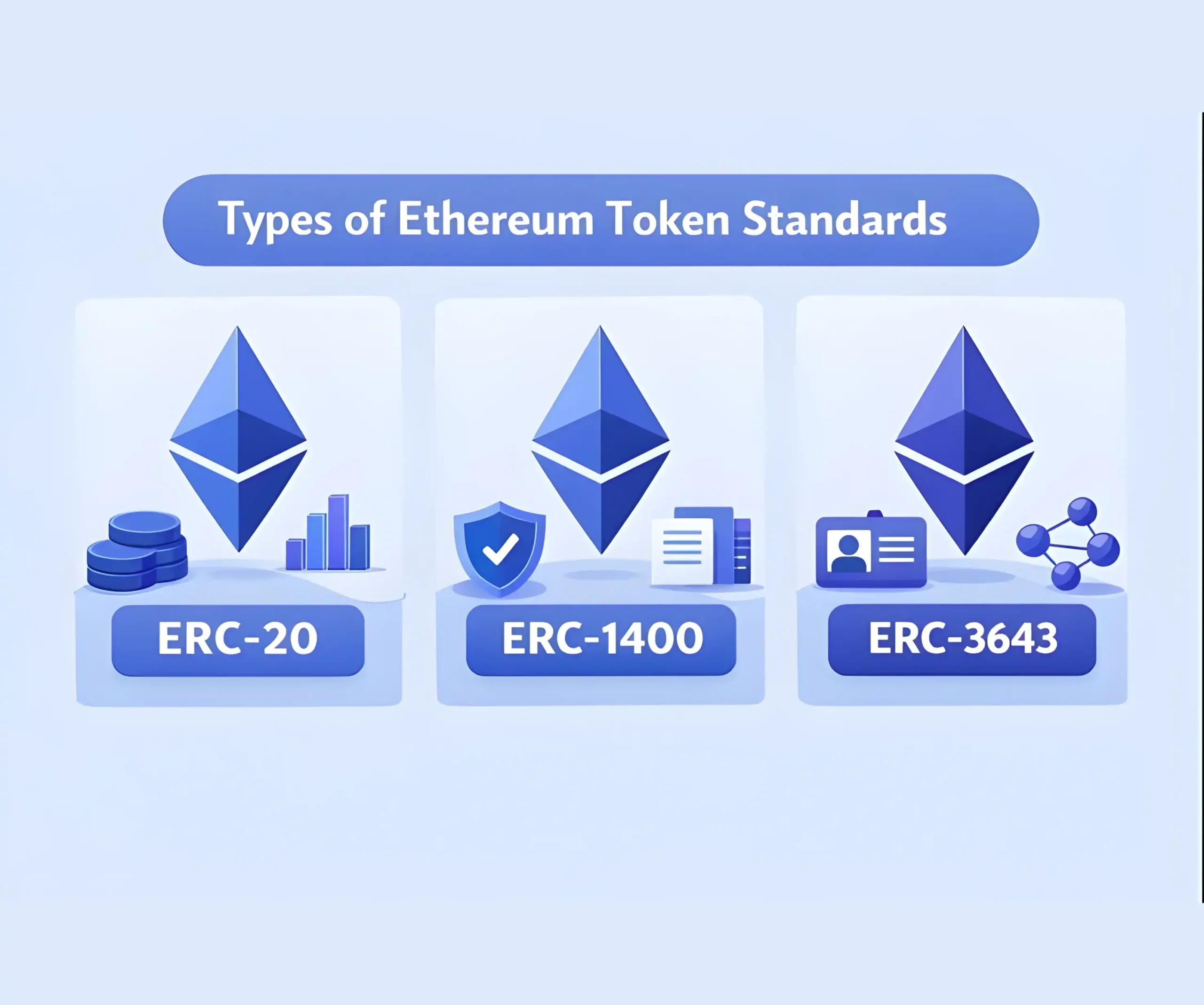
- Digitization and Ownership Representation: Blockchain allows physical assets to be represented as digital tokens (often ERC-20 or similar standards) where one token equals a specific share of the underlying asset, simplifying management and transfer.
- Fractional Ownership: By breaking down high-value assets (e.g., commercial real estate) into smaller, affordable, and tradeable units, blockchain democratizes investment, enabling more people to participate.
- Smart Contracts for Automation: These self-executing contracts automate processes like dividend payments, ownership changes, and compliance checks without human intervention, reducing fraud and errors.
- Increased Liquidity and 24/7 Trading: Tokenized assets can be traded on global, decentralized, or specialized platforms instantly, bypassing traditional market hours and intermediaries.
- Transparency and Security: A decentralized ledger ensures all transactions are immutable and verifiable, providing a transparent audit trail of ownership and reducing the risk of tampering.
- Bridging DeFi and TradFi: Tokenized assets can be used as collateral in Decentralized Finance (DeFi) lending protocols, creating new utility for traditional assets.
What Is Real-World Asset Tokenization?
Real-world assets are tangible or financial assets that are not in blockchain networks and can be measurably economically valuable. They are both physical property, such as land, buildings, commodities and precious metals and financial property, such as stocks, bonds, funds and invoices. Historically, these assets are owned and registered in centralized systems under the control of governments, banks or other institutions.
Transferring ownership of real-world assets is often slow, complex, and costly, involving legal verification, paperwork, and multiple intermediaries. These limitations reduce liquidity, increase transaction costs, and restrict access to investment opportunities. Asset tokenization in the real world is supposed to introduce these assets to blockchain networks, where they are secure, transparent, and more efficient to own and transfer.
The process of transferring ownership of a physical asset to digital tokens that are stored in a blockchain is known as tokenization. Every token signifies a claim over the underlying asset part or the entirety of the asset. After tokenization, these assets may be stored, transferred, and traded digitally, just in the same way as cryptocurrency.
Tokenization is transformative because it:
- Enhances liquidity by enabling faster and simpler transfers.
- Eliminates the use of intermediaries, reduces costs and complexity
- Opens access, enabling people across borders and income to engage in owning assets.
In brief, tokenization transforms traditionally static assets into programmable digital assets, making new possibilities for investors, businesses and markets across the globe.
How Blockchain Makes Tokenization Possible?
Blockchain provides a secure and decentralized ledger that changes the way ownership and transactions are recorded. Every transaction is permanently stored, verifiable, and cannot be altered, which builds strong confidence and transparency in the system. Unlike traditional methods that rely on central authorities, blockchain ensures that records are clear and permanent, making it nearly impossible for ownership data to be tampered with or lost. This foundation of trust allows real-world assets to be safely represented and traded digitally.
In addition, blockchain enables direct transfers between participants. Assets can be exchanged without multiple intermediaries, reducing costs, delays, and complexity. By simplifying processes and removing unnecessary barriers, blockchain not only makes tokenization possible but also opens global markets to investors of all sizes and locations, turning previously illiquid or hard-to-access assets into liquid, tradeable digital tokens.
Smart Contracts and Automation
Smart contracts are self-executing programs on the blockchain that automatically enforce rules and agreements. The real-life asset tokenization handles transfers of ownership, payment of income, compliance, and settlement automatically. Automation through smart contracts reduces human error, speeds up processes, and lowers operational costs. Where tasks used to be completed in weeks, they are now completed in minutes.
Read Also: What Is Real-World Asset Tokenization? A Beginner’s Guide
Smart contracts also make sure that transactions are completed as per the agreement without the use of third parties and that the transactions are executed clearly and reliably and all interested parties may be confident. Combined with blockchain’s transparency and security, they make tokenized assets easier to trade, more accessible globally, and fully functional across markets.
Real-World Applications of Blockchain in Asset Tokenization
Tokenized Real Estate
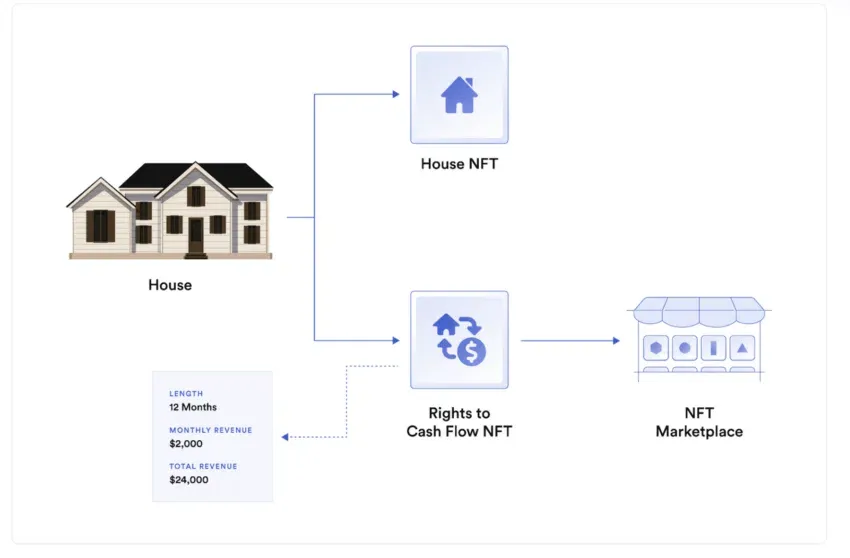
Real estate tokenization is shaking up the property market. By converting property ownership into digital tokens on a blockchain, it allows people to own a piece of real estate without buying the whole building. This means you can invest in a luxury resort or a downtown office building without needing a massive bank account. Fractional ownership makes it possible for more people to get into the real estate game. It’s not just about buying and selling property anymore; it’s about creating a more accessible investment market.
- Aspen Coin: A project that lets investors buy shares in a luxury resort in Aspen, Colorado.
- RealT: A platform offering fractional ownership of rental properties in Detroit.
- Blockimmo: A Swiss-based company facilitating real estate tokenization.
Art and Collectibles
Art has always been a playground for the wealthy, but tokenization is changing that. Now, you can own a piece of a Picasso without needing to be a millionaire. By breaking down art ownership into digital tokens, blockchain technology makes art investment accessible to more people. This also applies to collectibles like rare coins or vintage cars.
- Masterworks: Offers fractional ownership of iconic paintings, making art investment accessible to more people.
- CurioInvest: Tokenizes rare cars, allowing enthusiasts to invest in luxury vehicles.
- Maecenas: A platform for tokenizing valuable artworks.
Commodities and Supply Chain
Tokenizing commodities like gold or oil is making trading easier and more transparent. With blockchain, you can track the origin and journey of these goods, ensuring authenticity and quality. This transparency is crucial for high-value items like diamonds or luxury goods.
- Tether Gold (XAUT): Represents ownership of physical gold stored in vaults.
- VAKT: A platform for trading oil and gas commodities.
- Everledger: Uses blockchain to track the provenance of diamonds.
Advantages of Tokenizing Real-World Assets
Digitizing real-life assets opens various benefits to investors and asset owners. Asset tokenization in digital form simplifies and enhances the process of purchasing, selling, and controlling assets. It also reduces investment barriers, which means that more individuals are able to engage in markets that were previously difficult to reach. Investors and owners of assets can become more flexible, efficient and receive new opportunities by transforming the old assets into tokens in blockchains.
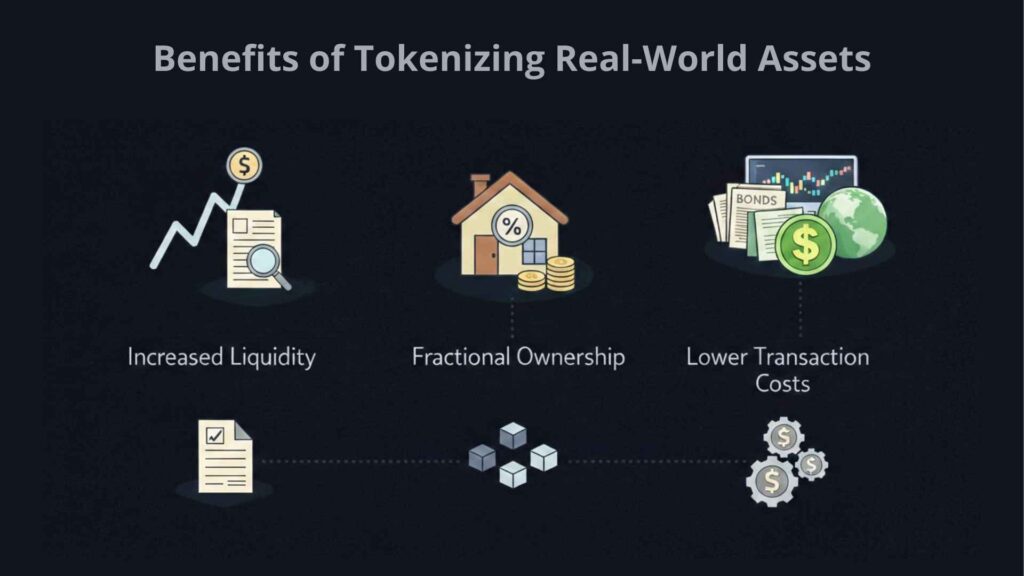
Increased Liquidity
- Enables trading of assets in smaller digital units.
- Makes previously hard-to-sell assets more accessible.
- Unlocks value for asset owners and faster entry/exit for investors.
- Supports transparent and healthy price discovery.
Fractional Ownership
- Divides assets into smaller, tradable tokens.
- Lowers the barrier to entry for investors.
- Allows portfolio diversification across multiple assets.
- Attracts a larger pool of participants for asset owners.
Lower Transaction Costs
- Reduces reliance on intermediaries.
- Automates processes via smart contracts.
- Cuts manual and administrative expenses.
- Improves efficiency and increases potential returns.
Challenges and Risks in RWA Tokenization
The possibilities of tokenizing real-world assets (RWAs) are exciting, but there are also specific challenges and risks associated with it. With regulatory uncertainty to security issues and market adoption challenges, the defining factors of this emerging space are important to understand by investors, institutions and developers trying to navigate this space.
Regulatory and Legal Considerations
One of the largest barriers to RWA tokenization is regulatory uncertainty. Asset ownership, securities and taxation laws vary greatly across jurisdictions and are therefore difficult to comply with. Clear legal recognition of tokenized assets is essential for institutional adoption. Some countries are developing a structure to regulate tokenized assets, but there is still no global uniformity, which is slowing the adoption of the market.
Security and Fraud Concerns
Even though blockchain networks are inherently secure, risks remain. Weaknesses in smart contracts, failures in custody, or wrong details about the assets can threaten the integrity of tokens. It is important to make sure that all tokens are supported by a real-life asset. Frequent audits, transparent governance and strong security infrastructure will help to establish trust and reduce fraud chances.
Market Adoption and Standardization
The absence of universal standards limits interoperability between tokenization platforms, creating friction for users and investors. Additionally, many stakeholders still require education to understand how tokenized assets function. As technical standards evolve and infrastructure matures, adoption is expected to accelerate. Increased awareness and standardization will be key to unlocking the full potential of RWA tokenization.
The Future of Real-World Asset Blockchain
Interoperability and Integration
Blockchain technology is moving towards greater interoperability, which means that different blockchain networks can communicate and work together seamlessly. This is crucial for real-world assets (RWAs) in cryptocurrency, as it allows these assets to be transferred across various platforms without losing value or functionality. Integration with existing financial systems is also on the horizon, potentially simplifying processes like settlement and clearing. As interoperability increases, it will likely lead to a more connected and efficient blockchain ecosystem.
Regulatory Developments
The regulatory landscape for blockchain and asset tokenization is still evolving. Governments and regulatory bodies around the world are grappling with how to classify and manage these digital assets. As regulations become clearer, they will provide a framework that can help protect investors and ensure fair practices. This clarity is expected to boost investor confidence and encourage more participation in the market.
AI and Blockchain Synergy
Artificial intelligence (AI) is set to play a significant role in the future of blockchain technology. By combining AI with blockchain, we can enhance data analysis, improve decision-making processes, and automate complex transactions. This synergy can lead to smarter contract execution and more efficient asset management. In the future, we may see AI-driven platforms that can predict market trends and optimize investment strategies, making blockchain-based asset management more dynamic and responsive.
How to Tokenize Real-World Assets
Tokenizing real-world assets isn’t just a tech buzzword—it’s a way to rethink how we own and trade things like property, art, or even cars. Let’s break down the process into simple steps.
Asset Selection and Token Specifications
First up, you need to pick the asset you want to tokenize. It could be anything from a piece of real estate to a rare painting. Once you’ve got that figured out, decide on the type of token. Is it going to be a fungible token, like a currency, or a non-fungible token (NFT), which is unique? You also need to choose the token standard, like ERC20 for fungible tokens or ERC721 for NFTs.
Blockchain and Offchain Integration
Next, it’s time to choose a blockchain. Public blockchains like Ethereum are popular, but private ones can work too. The key is to ensure your blockchain choice aligns with your asset’s needs and the level of transparency you desire. After that, you’ll need to integrate offchain data, which is crucial for assets that require real-world verification. This is where third-party auditors come into play to ensure everything’s legit.
Issuance and Smart Contract Deployment
Finally, you’ll deploy smart contracts on your chosen blockchain. These contracts are like digital agreements that automatically execute when certain conditions are met. Once the smart contracts are live, you mint your tokens and make them available for trade or investment.
Bottomline
Blockchain is upending the asset tokenization landscape. It is no longer just about Bitcoin; it is about making real-world assets more accessible and tradeable. Blockchain is allowing more individuals to participate, whether it’s in the form of art or real estate. Sure, there are barriers like rules and technological problems, but the potential rewards are enormous. It will be interesting to see how this technology evolves and changes our perspectives on ownership and investment as time goes on. Keep an eye on it; this is only the beginning.





Comments