
 By
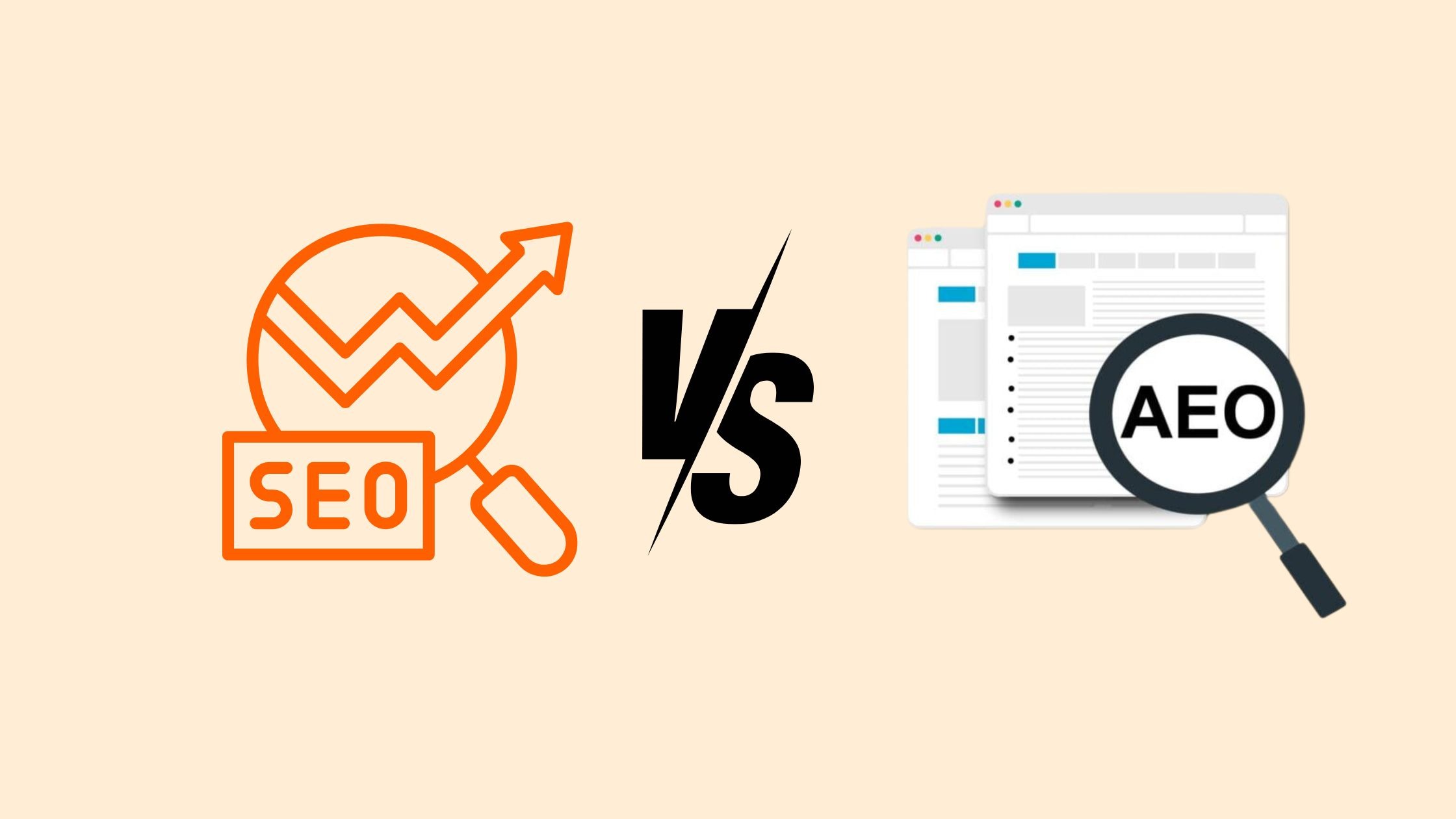
While traditional SEO aims to rank pages in standard text search results (the “10 blue links”) with in-depth articles and more general keywords, AEO (Answer Engine Optimization) concentrates on obtaining direct answers in AI/voice searches (like Google’s AI Overviews, Siri, Alexa) using succinct, structured, Q&A content with schema markup. You need both because SEO establishes the fundamental authority and traffic of your website, while AEO meets the increasing need from users for quick, conversational responses. AEO is developing as a logical progression of effective SEO for contemporary search.
Digital marketing techniques like search engine optimization (SEO) and answer engine optimization (AEO) help companies become more visible online. While AEO is a more recent tactic that has emerged with the increased use of AI, SEO has been around for decades.
It’s becoming more and more crucial to understand the distinctions between the two tactics and whether they are related in any way, given the growing propaganda that claims AEO is replacing SEO. The following subjects will be covered in this article to assist you differentiate between AEO and SEO:
What is AEO?
Answer engine optimization is a sophisticated optimization technique that aims to give search engine users clear, succinct answers to their questions. The idea is rapidly gaining popularity since various search engines give users speedy, condensed responses that keep them on one page.
Your brand will be seen on AI-powered response engines like Microsoft Copilot, ChatGPT, and Perplexity if your content and website are optimized for AEO. In order for your material to show up on Google AI overviews, voice assistants, and structured data, it also makes sure that it is in line with contemporary search behaviors.
AEO future-proofs your website to improve user experience and keep up with the transition to AI-driven search tools. Building on tried-and-true SEO best practices, such as using keywords and creating genuine, excellent content, is part of optimizing for AEO.
What is SEO?
The first optimization technique, search engine optimization, has been used for decades—more specifically, since the 1990s—to assist websites rank highly on search engines in order to increase traffic and generate leads and conversions.
Increasing a company’s organic exposure on search engine results pages (SERPs) of conventional search engines like Google and Bing is the main goal of SEO. From increasing quality traffic in the awareness stage to promoting conversions in the action stage, a clever SEO approach is effective at every level of the marketing funnel.
What are the Key Differences Between AEO and SEO?
While AEO and SEO have several similarities, they also have differences that range from their main goals and focus to how each is implemented. Below, we get a deep dive into the main differences between SEO and AEO.
This table highlights the main differences between AEO and SEO:
| AEO | SEO | |
| Focus and objectives | Provide direct and concise answers | Improve search rankings and traffic |
| User targeting | Voice-based searchers and conversational queries | Traditional text-based searched |
| Content focus | Structured and concise answers | Detailed and keyword-focused |
| Devices targeted | Voice assistants and AI chatbots | Traditional desktop and mobile search engines, like Google and Bing |
| KPIs and metrics | Visibility on featured snippets, AI overview, and people also ask sections | Boost keyword rankings, drive organic traffic, and increase click-through rate |
1. Goals and objectives
Ranking pages higher on conventional search engines and increasing organic website traffic have been the primary objectives of SEO for the past 20 years. On the other hand, AEO concentrates on providing users of AI-powered search engines with straightforward and accurate responses.
Read Also: The Role of App Ratings and Reviews in ASO Success
AEO is different from SEO in that its goal is not to increase website traffic. Rather, it optimizes information to show up on voice search results, knowledge graphs, Google AI overviews, and featured snippets. These results pages provide summaries without requiring users to navigate to other pages of the website.
Compared to SEO, which relies on organizing around particular keywords that help your web pages appear for relevant search searches, AEO places more emphasis on the user experience. By giving users prompt, straightforward responses, AEO helps you establish authority and trust while SEO helps you get visitors to your website and increase leads and conversions.
2. Optimization methods
SEO has numerous tried-and-true optimization techniques that can help capture over 40% of revenue. Websites utilize the following SEO optimization tactics to improve search rankings and online visibility:
- Strategic keyword research and placement to match user queries
- Backlinking and link building to boost domain authority
- Metadata optimization to attract relevant traffic
- User experience (UX) improvements with fast loading speeds and mobile friendliness
AEO optimization borrows a lot of optimization tactics from SEO, but has a few unique techniques that ensure your content and website appear on answer search engines. It involves optimizing content for AI language models and natural language processing in the following ways:
- Aligning content with modern search behaviors
- Structuring content to lead by providing answers upfront
- Focusing on providing users with value instead of matching keywords
- Establishing authority with clear, concise, and well-structured content
- Integrating structured data like schema markup to help answer engines index your content
3. Content formats
SEO optimization focuses on long-form content, like blogs, articles, and webinars, where you can incorporate keywords and optimize any detail to the desired degree. On the other hand, AEO favors snippets of content that AI language models find easy to summarize, like:
- Frequently asked questions (FAQs): These are a bunch of common questions and answers about a business’s product, service, or company. They minimize support requests and enhance user experience.
- Featured snippets: A short excerpt displayed at the top of Google search results pages you optimize by answering questions directly, using concise and direct language, and optimizing for readability with lists and tables.
- People also ask (PAA): The PAA section displays related questions and answers, and you can optimize to appear in this section by including an FAQ, using question-based headings, and providing concise answers.
- Schema markups: Also referred to as structured data, schema markup is a code added to a website’s HTML to help search engines understand and index your web pages.
While SEO has room for detailed content that presents many angles, AEO aims to present users with clear and concise answers. Optimizing for AEO also emphasizes the need to create short, compelling headings and scannable elements like lists and tables.
4. Search behaviors
As traditional text-based searches give way to voice searches and more conversational questions, AEO is available to adjust to these shifting search habits. AEO seeks to provide clear and succinct responses to contemporary context-based searches.
On the other hand, SEO is best suited for text-based, keyword-focused searches that target a wide audience looking for in-depth information and intend to delve deeper into a website. AEO benefits consumers that use AI-powered chatbots or mobile voice assistants like Alexa, Siri, and Google Home.








Comments