
 By

To structure content for AI answer engines, use clear headings, Q&A formats, lists, and short paragraphs with direct answers up front (inverted pyramid), focusing on E-E-A-T (Experience, Expertise, Authoritativeness, Trustworthiness) through data, citations, and author credentials, while implementing schema markup for machine readability and updating content on a regular basis to remain fresh and authoritative.
Content Structure & Formatting
- Question-Based Headings: Use H1/H2/H3s that mirror user questions (e.g., “What is X?”).
- Direct Answers First: Put the core answer in the first sentence or paragraph (TL;DR style).
- Short Paragraphs & Sentences: Keep paragraphs to 2-4 sentences and sentences concise (under 20 words) for easy extraction.
- Lists & Tables: Use bullet points and numbered lists for steps, pros/cons, or summaries to make content scannable.
- Semantic Cues: Naturally use phrases like “According to,” “Step 1,” or “In summary” to signal context.
Authority & Trust (E-E-A-T)
- Expertise & Data: Provide unique insights, first-hand experience, and data-backed claims, not vague statements.
- Citations: Cite reputable sources and link to them.
- Author Credibility: Include detailed author bios with credentials and links.
- Freshness: Regularly update content with new info and dates.
Technical Signals & Strategy
- Schema Markup: Implement
FAQPage,HowTo,Articleschema to help machines understand content. - Topical Authority: Build clusters of interconnected content on a single topic.
- Plain Language: Write for humans first; aim for an easily readable Flesch score (around 60+).
By structuring content this way, you create clear, trustworthy sources that AI answer engines can easily extract, summarize, and present as direct answers to users.
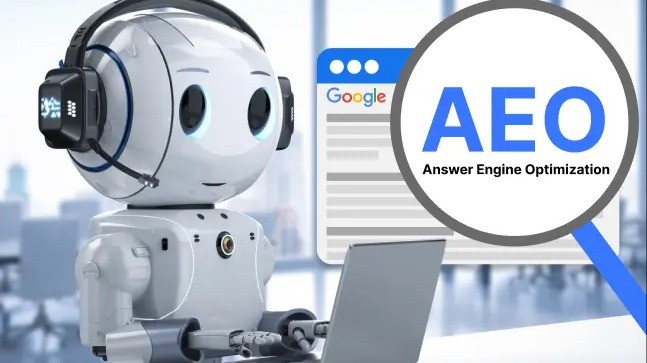
The development of AI-powered answer engines such as Google’s AI Overviews and ChatGPT has altered the criteria governing content visibility. It is no longer sufficient for your material to be discoverable by search engines; it must also be understandable by the artificial intelligence that curates and provides direct replies. This necessitates a change in strategy from standard SEO to Answer Engine Optimization (AEO).
Optimizing for search engines does not require intricate, secretive strategies. It’s all about clarity, organization, and authority. By making your material as simple for a computer to read, understand, and trust, you greatly enhance your chances of appearing in AI-generated replies. This article offers practical, concrete techniques to help you optimize your content for the new era of search.
What Are AI Answer Engines
AI answer engines do not read information as humans do. They skim, extract meaning, and look for distinct patterns that assist them in determining what your page is about and whether it adequately answers a question.
Rather of relying on fancy wording, these systems prioritize clarity, context, and structure. They want to see questions answered correctly, topics organized rationally, and supporting information placed exactly where it should be.
This explains why many traditional SEO pages suffer. They are written to rank, not explain. AI engines value information that explains things clearly, confidently, and breaks them down.
When you structure material correctly, you make things easy for both humans and machines. AI search algorithms rely significantly on headings, paragraph arrangement, and semantic linkages to determine what to display as an answer.
Poor structure causes confusion. Important elements are buried, replies are ambiguous, and AI cannot reliably extract a response. When this occurs, your material is skipped.
In my experience, changing structure can boost the frequency with which content is presented in AI-generated answers, even without establishing links or revising everything.
How to Structure Content for AI Answer Engines
1. Start With Clear Search Intent
Before you write a single word, you should grasp what the user is trying to do. AI answer engines are fascinated with intent. If we take this article as an example, the purpose is informational. The user (you) wants to understand how to arrange content so that it performs better in AI-powered search settings. This means that your page should instruct rather than sell or promote.
Every section should be related to that objective. If something does not contribute to the answer to the main question, it is unlikely to be included on the page.
2. Use Strong, Descriptive Headings
Headings are among the most critical signals for AI comprehension. Each H2 should clearly state a specific subtopic about arranging material for AI search.
Avoid ambiguous titles that seem brilliant but explain nothing. AI loves direct language because it eliminates ambiguities.
For example, headlines that explain “how,” “why,” or “what” are considerably more effective than confused titles. They inform the system exactly what the following section contains and facilitate extraction.
3. Keep Paragraphs Short and Focused
Large blocks of text are a problem. Not just for users, but for AI as well. Each paragraph should communicate one clear idea. If you try to cram multiple points into a single paragraph, you reduce clarity and increase the chance of misinterpretation.
Read Also: Optimizing for Featured Snippets vs Answer Engines: What’s the Difference?
Short paragraphs also make it easier for AI engines to pull clean answers. If a paragraph clearly explains one concept in two or three sentences, it’s far more likely to be used as a quoted response.
4. Answer Questions Early and Clearly
One mistake I see all the time is burying the answer halfway down the page. AI answer engines don’t have the patience for that. If a heading asks a question, the first sentence underneath should answer it directly. You can expand and add context afterwards, but clarity must come first!
This approach mirrors how featured snippets used to work, but it’s even more important now. Clear answers build trust with AI systems and improve your chances of being referenced.
5. Use Natural Semantic Language
You don’t need to stuff keywords. In fact, that often hurts performance with AI. AI search relies on semantic understanding. It looks for related terms, concepts, and natural language patterns to understand depth and relevance.
By naturally discussing things related to your topic, you help AI connect the dots without forcing anything. The goal is to sound like a human explaining something properly, not a robot trying to rank.
6. Create Logical Content Flow
Headings are great, but you also need an order to your content. Start with foundational concepts, then move into practical advice, and finish with refinement. This mirrors how humans learn and how AI models understand progression.
Jumping back and forth between ideas confuses readers and weakens machine understanding. A logical flow reinforces topical authority and improves extraction accuracy.
7. Use Lists Sparingly but Purposefully
While long bullet lists can feel lazy, short lists can be useful when explaining steps or components. AI engines can easily parse lists, especially when they’re concise and relevant.
Use them only when they genuinely improve clarity. If a paragraph explains something better, stick with that.
Actionable Strategies for Structuring Your Content
Optimizing your content for AI does not necessitate a thorough revamp. It entails following a set of logical principles to make your content more accessible. Here are the most effective techniques for implementing.
1. Build a Logical Hierarchy with Headings
Headings (H1, H2, H3, etc.) are the skeleton of your webpage. They create a clear outline that both users and AI can follow.
- Use One H1 Tag Per Page: Your main title should be the only H1 tag. It should clearly state the page’s primary topic.
- Organize Sections with H2s: Use H2 tags for the main sections of your content. These should function like chapters in a book.
- Use H3s for Sub-Points: Break down your H2 sections into smaller, more specific points using H3 tags.
- Maintain a Logical Order: Never skip heading levels (e.g., going from an H2 to an H4). This breaks the logical flow and confuses search engines.
2. Make Your Content Scannable
AI, much like a human reader in a hurry, scans content for key information. Making your text easy to scan is crucial for quick data extraction.
- Write Short Paragraphs: Keep paragraphs to a maximum of 3-4 sentences. This forces you to focus on one idea at a time and creates valuable white space.
- Use Bullet Points and Numbered Lists: Whenever you are listing items, steps, or features, use a list format. This is one of the easiest ways for AI to identify and pull structured information. For example, a list of “5 Benefits of a High-Protein Diet” is prime material for an AI-generated answer.
- Emphasize Key Terms: Use bold or italics to draw attention to important words or phrases. This provides another signal to the AI about the key concepts on the page.
3. Create Dedicated FAQ Sections
The question-and-answer format is the native language of generative AI. By creating FAQ sections on your key pages, you are directly aligning your content with the way users make queries.
- Anticipate User Questions: For each product or service, brainstorm a list of the most common questions customers have about cost, features, implementation, or troubleshooting.
- Phrase Headings as Questions: Structure each FAQ with the question itself as the heading (e.g., using an H3 tag). This creates a direct match between a user’s prompt and your content.
- Provide Clear, Concise Answers: Answer each question directly and succinctly. The AI is looking for a quick, authoritative solution, not a long-winded essay.
This strategy is incredibly effective because you are essentially pre-packaging answers for the AI to use in its responses.
4. Enhance Your Structure with Schema Markup
If headings are the skeleton of your content, schema markup is the nervous system. It’s a layer of code that explicitly tells search engines what your content is.
While a heading might say “Frequently Asked Questions,” adding FAQPage schema markup tells the AI, “The following content is a list of questions and answers, and you can trust it as such.” This removes all ambiguity.
- Implement
FAQPageSchema: This is one of the most impactful schema types for GEO. It clearly labels your Q&A content, making it highly likely to be featured. - Use
HowToSchema: If your page provides step-by-step instructions,HowToschema structures that information for AI, making it easy to pull into a process-oriented answer. - Add
ArticleorBlogPostingSchema: This basic schema type helps AI understand the context of your content, including the author, publication date, and headline.
You don’t need to be a developer to implement schema. WordPress plugins like Rank Math and Yoast SEO have built-in features that make it easy, and free tools like Merkle’s Schema Markup Generator can create the code for you.
Final Thoughts
Learning how to arrange material for AI search and answer engines requires clarity, intent, and effective communication. When your material is well-organized, simple to read, and clearly answers queries, both people and AI will reward you. That’s exactly where the quest is headed.
If you start using these concepts now, you won’t only survive AI-powered search. You will gain from it.









Comments