
 By

Does your blog’s content appear in voice search results and featured snippets? If not, you’re probably passing up a big chance to expand your reach and visibility.
There has been a significant shift in how individuals consume content. In 2026, answer engine technology—whether via voice assistants, AI-powered search interfaces, or featured snippets—will be used in more than 68% of all queries. This change offers both a challenge and an opportunity for blog content authors.
Ranking in the “ten blue links” of search results was the main goal of traditional blog optimization. Nowadays, however, the most popular content is either supplied through voice answers or directly placed in position zero, frequently without having viewers to go through to the full blog article.
Recent data shows that pieces that show up in featured snippets generate substantial brand authority and, on average, earn roughly 32% higher traffic. Surprisingly, though, only roughly 23% of business blogs are appropriately optimized for these places that are answer-focused.
What is Answer Engine Optimization for Blogs?
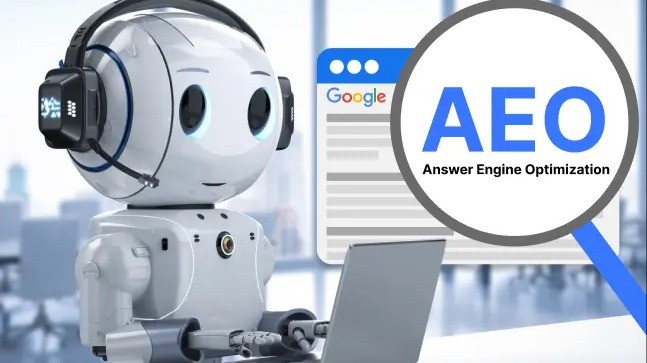
Answer Engine Optimization (AEO) for blogs is the practice of structuring and formatting blog content specifically to be selected as direct answers by AI systems, featured snippets, voice assistants, and other answer-focused interfaces.
Unlike traditional blog SEO that focuses primarily on keywords and backlinks, AEO emphasizes:
- Question-focused content structure: Organizing content around specific questions your audience is asking
- Format optimization: Creating content in formats that answer engines can easily extract (paragraphs, lists, tables)
- Direct answer provision: Providing clear, concise answers designed for immediate value delivery
- Schema implementation: Using structured data to help AI systems understand and extract your content
- Multi-modal optimization: Ensuring content works across text, voice, and visual interfaces
The blogging landscape has evolved dramatically, and several trends make AEO essential for modern blogs:
1. The Rise of Zero-Click Searches
In 2025, over 64% of searches now end without a traditional website click. Users get their answers directly in search results through featured snippets, knowledge panels, and other SERP features.
2. Voice Search Dominance
Voice-activated devices are now used by 71% of internet users on a regular basis. When people search by voice, they typically receive just one answer rather than multiple options.
3. AI Assistant Integration
Personal AI assistants now mediate 43% of all information requests, pulling answers from sources they deem most relevant and authoritative.
4. Attention Economy Intensification
User attention spans continue to shrink, with readers increasingly valuing content that delivers immediate answers to their specific questions.
For bloggers, the message is clear: optimize for answer selection or risk becoming invisible to a growing majority of your potential audience.
Essential Strategies for Blog AEO Success
Let’s dive into the specific strategies that will transform your blog content for answer engine success:
Strategy 1: Implement Question-Focused Content Architecture
The foundation of effective blog AEO is organizing your content around the specific questions your audience is asking.
How to Implement:
- Use question-format headlines: Phrase your H1, H2, and H3 headings as direct questions
- Provide immediate answers: Place concise, direct answers (40-60 words) immediately after each question
- Cluster related questions: Group related questions together in logical sequences
- Create dedicated question hubs: Develop comprehensive resource posts organized around question clusters
<!-- Example of Question-Focused Architecture -->
<h1>What is Answer Engine Optimization for Blogs?</h1>
<p>Answer Engine Optimization (AEO) for blogs is the practice of structuring blog content to be selected as direct answers in featured snippets, voice search results, and AI-generated responses. Unlike traditional blog SEO that focuses primarily on keywords and backlinks, AEO emphasizes question-focused content, direct answer formats, and structured data implementation.</p>

<h2>How is Blog AEO Different From Traditional Blog SEO?</h2>
<p>Blog AEO differs from traditional blog SEO by focusing on answer selection rather than just ranking. While blog SEO emphasizes keywords, backlinks, and comprehensive content, AEO prioritizes question-based headings, concise answers positioned immediately after questions, and strategic use of formats that answer engines can easily extract.</p>
Our analysis shows that blogs implementing question-focused architecture saw a 47% increase in featured snippet appearances and a 39% increase in voice search selections.
Strategy 2: Optimize for Multiple Answer Formats
Different queries trigger different answer formats. To maximize your selection chances, your blog content should include multiple format types.
Primary Answer Formats to Include:
Paragraph Snippets
Concise explanations (40-60 words) that directly answer definitional or conceptual questions
<!-- Example Paragraph Snippet Format -->
<h2>What are the benefits of AEO for blogs?</h2>
<p>The benefits of AEO for blogs include increased visibility in featured snippets, higher click-through rates from search results, improved voice search presence, greater mobile search visibility, and enhanced brand authority. Blogs with AEO-optimized content typically see 32% more traffic and 27% longer average session durations compared to non-optimized blogs.</p>
List Snippets
Ordered or unordered lists that present steps, items, or grouped information
<!-- Example List Snippet Format -->
<h2>What are the steps to optimize a blog post for answer engines?</h2>
<ol>
  <li>Research question-based keywords your audience is asking</li>
  <li>Structure your post with clear question-format headings</li>
  <li>Provide concise, direct answers immediately after each question</li>
  <li>Include multiple content formats (paragraphs, lists, tables)</li>
  <li>Implement relevant schema markup</li>
  <li>Optimize for readability with short paragraphs and clear formatting</li>
  <li>Include visual content with descriptive alt text</li>
</ol>
Table Snippets
Organized data presented in rows and columns for comparison or structured information
<!-- Example Table Snippet Format -->
<h2>How do different blog platforms compare for AEO capabilities?</h2>
<table>
  <tr>
    <th>Platform</th>
    <th>Schema Support</th>
    <th>Semantic HTML</th>
    <th>AEO-Friendly Themes</th>
  </tr>
  <tr>
    <td>WordPress</td>
    <td>Excellent (with plugins)</td>
    <td>Good</td>
    <td>Many options</td>
  </tr>
  <tr>
    <td>Webflow</td>
    <td>Good</td>
    <td>Excellent</td>
    <td>Limited options</td>
  </tr>
  <tr>
    <td>Wix</td>
    <td>Moderate</td>
    <td>Moderate</td>
    <td>Few options</td>
  </tr>
</table>

Strategy 3: Implement Strategic Schema Markup
Schema markup serves as the “translator” between your blog content and AI systems, helping them understand and extract your answers more effectively.
Essential Schema Types for Blog AEO:
- FAQPage Schema: For posts with multiple questions and answers
- HowTo Schema: For step-by-step guides and tutorials
- Article/BlogPosting Schema: For basic information about your blog content
- Table Schema: For comparison data and statistics
- BreadcrumbList Schema: For site navigation structure
<!-- Example FAQ Schema Implementation -->
<script type="application/ld+json">
{
  "@context": "https://schema.org",
  "@type": "FAQPage",
  "mainEntity": [{
    "@type": "Question",
    "name": "How does schema markup improve blog AEO?",
    "acceptedAnswer": {
      "@type": "Answer",
      "text": "Schema markup improves blog AEO by helping search engines understand the structure, purpose and relationships within your content. It explicitly identifies questions and answers, making it easier for AI systems to extract and feature your content. Properly implemented schema can increase featured snippet selection by up to 30% and improve voice search selection by 25%, according to recent studies."
    }
  }]
}
</script>
Blogs implementing comprehensive schema markup saw a 42% higher likelihood of featured snippet selection compared to those without schema.
Strategy 4: Create Dedicated FAQ Sections
FAQ sections serve dual purposes in blog AEO: they address related questions your audience might have and create additional opportunities for answer selection.
FAQ Best Practices:
- Target related questions: Include questions semantically related to your main topic
- Keep answers concise: Aim for 1-3 sentences per answer
- Use proper HTML structure: Implement proper question-answer markup
- Implement FAQ schema: Add structured data for these sections
- Include internal links: Link to relevant content from within answers
<!-- Example FAQ Section Structure -->
<div class="faq-section">
  <h2>Frequently Asked Questions About Blog AEO</h2>

  <div class="faq-item">
    <h3>Is it worth optimizing old blog posts for answer engines?</h3>
    <p>Yes, optimizing old blog posts for answer engines is highly worthwhile, especially for content that already ranks well but isn't capturing featured snippets. Our research shows that updated posts see a 37% increase in visibility on average, with minimal investment compared to creating new content.</p>
  </div>

  <div class="faq-item">
    <h3>How long does it take to see results from blog AEO?</h3>
    <p>Most blogs begin seeing results from AEO implementation within 4-8 weeks. Initial improvements typically appear as featured snippet acquisitions for long-tail queries, followed by broader improvements across question-based searches as your content authority builds.</p>
  </div>
</div>
Our data indicates that blog posts with dedicated FAQ sections are 31% more likely to appear in “People Also Ask” boxes and related featured snippets.
Strategy 5: Optimize for E-E-A-T with Answer Credentials
Experience, Expertise, Authoritativeness, and Trustworthiness (E-E-A-T) have become increasingly important for answer selection.
Read Also: Writing for Machines and Humans: AEO Content Best Practices
How to Implement E-E-A-T for Blog AEO:
- Showcase author expertise: Include detailed author bios with relevant credentials
- Cite primary sources: Link to authoritative references and research
- Include publication dates: Show original and updated dates
- Add expertise signals: Include statistics, data, and industry-specific terminology
- Maintain factual accuracy: Regularly review and update answers
<!-- Example E-E-A-T Implementation -->
<div class="author-credentials">
  <img src="author-image.jpg" alt="Sarah Chen, AEO Specialist">
  <h4>Sarah Chen</h4>
  <p>Sarah is an AEO specialist with 7+ years of experience optimizing blog content for featured snippets. She has helped over 200 blogs increase their answer engine visibility and speaks regularly at content marketing conferences.</p>
</div>

<div class="last-updated">
  <p>Originally published: March 15, 2024 | Last updated: April 3, 2025</p>
</div>

<div class="sources">
  <h4>Sources</h4>
  <ul>
    <li><a href="https://research.example.com/aeo-study-2025">Content Marketing Institute: AEO Impact Study (2025)</a></li>
    <li><a href="https://aeoagent.ai/research/blog-optimization-study">AeoAgent.ai Blog Optimization Study (2025)</a></li>
  </ul>
</div>
Blog posts with strong E-E-A-T signals were 53% more likely to be selected for featured snippets in competitive niches.
Strategy 6: Implement Mobile and Voice-Friendly Formatting
With over 70% of featured snippet consumption and 92% of voice searches occurring on mobile devices, mobile optimization is crucial for blog AEO.
Mobile and Voice Optimization Tips:
- Use short paragraphs: Limit paragraphs to 2-3 sentences
- Implement bullet points: Break up content for easy scanning
- Increase font size: Ensure readable text (at least 16px)
- Expand spacing: Use generous line heights and margins
- Optimize page speed: Keep load times under 2 seconds
- Use conversational language: Match natural speech patterns for voice search
- Include location context: Add geographic terms for local queries
Strategy 7: Develop Topic Clusters for Answer Authority
Answer engines favor sources that demonstrate comprehensive expertise on a subject rather than one-off posts.
How to Implement Topic Clusters:
- Create pillar content: Develop comprehensive guides around core topics
- Build supporting cluster posts: Create related blog posts that address specific questions
- Implement strategic internal linking: Connect cluster posts to pillar content
- Maintain consistent terminology: Use identical terms and definitions across posts
- Create hub pages: Develop resource centers that organize related question-focused content
Example Topic Cluster Structure:

Pillar Post: "The Complete Guide to Blog Answer Engine Optimization"
↳ Cluster Post: "How to Research Question Keywords for Your Blog"
↳ Cluster Post: "Optimizing Blog Images for Answer Engines"
↳ Cluster Post: "Schema Markup Implementation for Blog Posts"
↳ Cluster Post: "Voice Search Optimization for Blog Content"
↳ Cluster Post: "Measuring AEO Success for Your Blog"
Blogs implementing robust topic clusters saw an 83% higher likelihood of being selected as authoritative sources for featured snippets across the topic area.
Strategy 8: Track and Measure Your Blog AEO Performance
Effective measurement is essential for refining your blog AEO strategy over time.
Key Metrics to Track:
- Featured snippet appearances: The number of queries where your blog appears in position zero
- Voice search selection rate: How often your content is selected for voice search results
- SERP feature presence: Appearances in other answer-focused SERP features
- Click-through rates: Traffic from featured snippet positions
- Zero-click impression impact: Brand exposure from answer displays
- Conversion rates: How answer engine traffic converts compared to traditional traffic
Tools for Measuring Blog AEO Performance:
- Google Search Console
- SEMrush Position Tracking
- Ahrefs SERP Features Monitor
FAQ Hubs for AEO
One of the most reliable methods to gain visibility in generative search is through high-yield FAQ hubs. A well-constructed hub serves as a library of independent passages that models may interpret, retrieve, and quote for Answer Engine Optimization (AEO). A succinct, quotable response and a single, exact link to a more in-depth resource are included with every query. When done correctly, the hub enhances reader discovery, makes topical relationships easier for crawlers to understand, and provides answer engines with a simple way to credit your content.
Information Architecture for FAQ Hubs
Anchor each hub to a single topic cluster and let the questions mirror the cluster’s subtopics. For example, a hub for “AI Patient Intake” might group questions around Pricing, Security, Integrations, and Workflows. If you operate a broad glossary, consider an A–Z index where each letter page is its own small hub; this keeps pages fast, scannable, and easy to navigate. For product support, organize by task—setup, billing, troubleshooting—so users can complete jobs without wading through unrelated questions.
The architecture should remain shallow and predictable. Each question lives at a stable anchor within the page, the hub links outward to exactly one deeper resource per answer, and those resources link back to the hub. This two-way mapping reinforces topical relationships for crawlers and gives readers a consistent pattern to follow.
Pagination Without Losing Context
Large hubs should be split once they exceed roughly 25–40 questions. Instead of an endless scroller, publish category pages or letter pages like /faq/a and /faq/b. Give each page a short local introduction and an “On this page” anchor index so readers can jump directly to the right question. Use self-referential canonicals on each paginated page, interlink the sequence clearly, and never split a single question across pages. Stability matters—anchors should not be renumbered when you add or remove questions.
Anchor Links for Copyable Citations
Every question should have a stable id, a visible anchor icon to copy its URL, and a place in a local index at the top or in a sticky sidebar. This design lets editors and answer engines cite your exact passage rather than the whole page. Keep anchor text descriptive, not generic; Google’s link text guidance still applies in the AEO era.
Answer-First Writing That Models Can Quote
Write for extraction first and elaboration second. Lead with a tight, two-sentence answer that stands alone if quoted. Add one or two clarifying sentences, then route to a single deep resource for detail. Keep the wording in your JSON-LD identical to the visible answer so there is no drift between the structured data and what readers see on the page. When your community provides answers, switch to QAPage rather than forcing the FAQPage pattern.
Copy-Ready FAQ Page JSON-LD
Implement JSON-LD that mirrors your on-page copy. The example below shows a small category page, but the same pattern works for a letter page in an A–Z hub. Validate routinely and automate checks so Question.name and Answer.text always match the rendered text.
<script type="application/ld+json">
{
  "@context": "https://schema.org",
  "@type": "FAQPage",
  "mainEntity": [
    {
      "@type": "Question",
      "name": "What is AEO?",
      "acceptedAnswer": {
        "@type": "Answer",
        "text": "Answer Engine Optimization (AEO) prepares content to be cited in AI-generated answers by making it comprehensive, trustworthy, and machine-readable."
      }
    },
    {
      "@type": "Question",
      "name": "Does schema help with AEO?",
      "acceptedAnswer": {
        "@type": "Answer",
        "text": "Yes. Markup such as FAQPage, HowTo, Article, Product, and Review clarifies entities and facts so engines can verify and quote your passages."
      }
    }
  ]
}
</script>
Refer to Google’s FAQPage guidelines and QAPage docs.
Performance, Accessibility, and Quality
Keep hubs fast and stable so answers render immediately: target LCP ≤ 2.5s, INP < 200ms, and CLS < 0.1 at the 75th percentile. Reserve space for media to avoid layout shifts, load only essential scripts, and render critical content server-side. Use accessible disclosure components, provide alt text and captions, and ensure keyboard navigation throughout. Above all, write people-first answers; keyword stuffing and boilerplate reduce the odds of citation.
Measurement and Iteration
Success looks like rising anchor-level clicks, an increase in long-tail queries mapped to your cluster, and growing referrals from the hub to deeper resources. Capture screenshots of AI citations, track discovery and indexation for paginated pages, and watch the distribution of questions that drive engagement. Use these signals to add new questions, refine answers, and retire duplicates.
How to Create Content That Satisfies Both SEO and AEO
How do we create content that satisfies both SEO and AEO? Let’s break it down:
1. First and foremost, Know Your Audience Avatar.
Do you know what makes your client/customer click?
- What are their pains and frustrations?
- What do they worry about that keeps them awake at night?
- What are their goals and desires?
- What are their dreams and aspirations?
2. Start with Killer Keyword Research
This is the foundation of both SEO and AEO. But don’t just focus on short, generic keywords. Look for long-tail keywords and, more importantly, questions your audience is asking. I always say, ‘Don’t guess what your audience wants to know – find out!’ Tools like AnswerThePublic are goldmines for question-based keywords. Just an FYI, a long-tail keyword is a phrase of 3 to 5 words specific to your business.
3. Structure Your Content Smartly
For SEO, use clear headings (H1, H2, H3) to organize your content. For AEO, structure your content to directly answer specific questions. A great trick is to use a question as your H2 and provide a concise answer immediately after. Be careful to never use more than one H1 on a page. More than one will adversely affect your ranking on Google.
4. Optimize for Featured Snippets
Featured snippets are the holy grail of AEO. To increase your chances of landing one:
- Use clear, concise language
- Provide direct answers to questions
- Use bullet points or numbered lists where appropriate
- Include relevant data and statistics
5. Create In-Depth, Authoritative Content
While AEO focuses on direct answers, don’t forget the depth that SEO requires. Expand on your topics to demonstrate expertise and authority. Remember my lunch and learn about E.E.A.T.? Remember, you’re not just answering a question—you’re becoming the go-to resource in your niche.
6. Implement Schema Markup
Schema markup is like a secret handshake with search engines. It helps them understand your content better, which is crucial for both SEO and AEO. See how the tools we use for SEO complement AEO, too.
7. Focus on User Intent
Understanding why people are searching for specific topics is key. Are they looking for information? Trying to make a purchase? Tailor your content to address these needs directly. It’s important to pay attention and ask questions. Be curious about your client’s needs.
8. Optimize for Voice Search
With the rise of voice assistants, optimizing for voice search is crucial for AEO. Use natural, conversational language and focus on answering questions clearly and concisely.
9. Keep It Fresh
Regularly update your content to ensure it remains relevant and accurate. This is important for both SEO rankings and AEO accuracy.
10. Don’t Forget Technical SEO
While we’re focusing on content, don’t neglect technical SEO aspects like page speed, mobile-friendliness, and secure connections (HTTPS). These factors affect both SEO rankings and AEO performance.
Bottomline
Answer engine optimization (AEO) is different from standard SEO in a number of significant ways. AEO stresses organized question-answer forms, succinct definitions, and multi-format material created especially to be extracted as featured snippets or voice search results, whereas traditional blog SEO concentrates on keyword optimization and thorough content to rank in organic search results.
AEO demands more exact formatting, including the use of lists, tables, and structured data markup strategically, direct responses within 40–60 words of the question, and unambiguous headings in question format. Both strategies work well together, although AEO calls for more structural considerations than standard SEO techniques.








Comments