
 By

In 2025, answer engines—such as Google’s AI Overviews, Perplexity, Bing Copilot, and other LLM-powered systems—are revolutionising the way people obtain knowledge. Answer engines immediately extract, summarise, and understand content rather than displaying a list of blue links.
Maintaining exposure in 2026 and beyond therefore depends on producing material that search engines can readily access, understand, and utilise in search queries.
This tutorial explains how to produce information that is ready for answer engines and is visible in conversational search, AI-powered summaries, and quick responses.
Understanding Search Engines
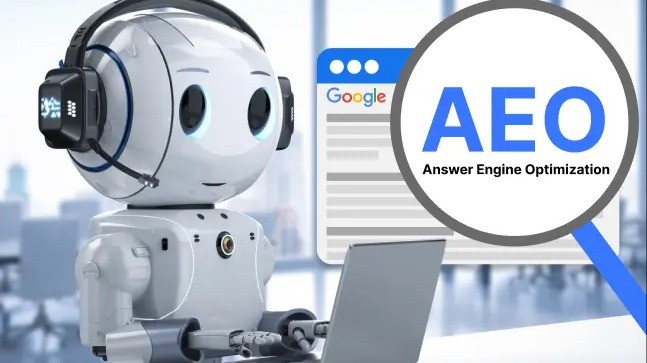
Answer engines represent the next evolution in how people find information online. Unlike traditional search engines that return a list of links for users to sift through, answer engines are AI-powered systems designed to deliver direct answers to user queries.
By leveraging advanced natural language processing (NLP) and machine learning, these platforms interpret the context and intent behind each question, providing concise and relevant answers in real time. This shift has given rise to answer engine optimization (AEO), a new approach to digital marketing and content strategy.
Instead of focusing solely on ranking in traditional search, AEO is about ensuring your content is structured and written in a way that AI systems can easily understand and cite as the definitive answer.
As user queries become more conversational and complex, optimizing for answer engines means aligning your content with the way these systems process natural language and deliver direct answers.
In today’s search landscape, mastering answer engine optimization is essential for brands that want to remain visible and relevant.
Deterministic ranking methods have long been the foundation of traditional search engines like Google. After crawling, parsing, and analysing web content, these algorithms present results on search engine results pages (SERPs) based on a number of established ranking factors, including site authority, backlinks, and keywords.
Matching user intent with the most pertinent web sites has always been the aim, letting users to click through and discover the answers.
Answer engines driven by AI, on the other hand, follow a quite different paradigm. They employ probabilistic algorithms to combine data from several sources and produce dynamic, context-aware replies rather than just ranking links.
This means that the same query can yield different results at different times, depending on the latest data and user context.
Understanding these differences is crucial for developing a content strategy that works for both traditional search engines and modern answer engines.
To succeed, brands must adapt their approach to meet the evolving expectations of both systems.
How to Create Answer Engine Ready Content That Ranks
Start With a Strong Entity Framework
Answer engines rely heavily on entity understanding – not just keywords. Content that clearly defines, supports, and connects relevant entities is more likely to be cited in AI-generated responses.
How to Build It
- Define the main entity on the page (product, concept, category).
- Add supporting entities that reinforce topical depth.
- Use structured data to strengthen your entity signals.
- Maintain consistent naming conventions across all pages.
This helps answer engines understand your topic and trust your content as a reliable source.
Prioritise Clear, Direct, and Structured Answers
AI models are trained to extract the clearest answer available. If your page buries key information under fluff or lengthy explanations, it becomes harder for answer engines to use.
How to Structure Your Answers
- Use short, direct sentences for key points.
- Write definitions, explanations, and summaries in the first 1–2 lines.
- Add scannable question-and-answer sections.
- Use bullet points for steps, features, or instructions.
Clear formatting increases the chances that answer engines will interpret your content correctly.
Optimise for Questions, Not Just Keywords
Answer engines prioritise conversational queries and natural-language questions. High-performing Answer Engine Ready pages anticipate how users phrase questions and provide structured responses.
How to Do It
- Conduct question-first research using NLP tools, People Also Ask, and internal search queries.
- Create sections built around:
- “What is…”
- “How does…”
- “Why does…”
- “What’s the difference between…”
- Add featured answer boxes at the top of important pages.
This replicates the structure answer engines rely on when extracting information.
Strengthen Topical Depth With Supporting Content
Answer engines prefer sources that demonstrate authority across the entire topic ecosystem, not just one page. A single “perfect” article won’t rank if the domain lacks depth.
Topical Depth Strategy
- Build clusters around each category or subject.
- Include guides, FAQs, comparisons, glossaries, and definitions.
- Interlink all related content to reinforce context.
- Ensure each article adds unique value – avoid overlapping topics.
Topical depth signals to answer engines that your site is a trusted authority.
Use Structured Data to Reinforce Key Information
Schema markup supports answer engines by labelling page elements in a way LLMs and crawlers understand. Well-structured schema improves answer accuracy and increases eligibility for enhanced results.
Recommended Schema Types
- FAQ
- HowTo
- Product
- Review
- Breadcrumb
- Article
- ItemList
Schema doesn’t guarantee answer engine visibility, but it strengthens your signals and reduces ambiguity.
Write With High Semantic Density
Answer engines look for content that covers a topic comprehensively but concisely. Semantic density ensures you deliver meaning-rich content without unnecessary filler.
How to Increase Semantic Density
- Use precise terminology and remove vague language.
- Include contextual details answer engines need for accuracy.
- Add synonyms and related concepts naturally.
- Avoid redundant paragraphs and empty intros.
High semantic density helps LLMs extract correct information reliably.
Keep Information Fresh, Accurate, and Up to Date
Answer engines reward accuracy. Outdated data or stale examples reduce trust signals, especially for queries involving prices, regulations, features, or statistics.
Best Practices
- Update pages every quarter.
- Add “Last Updated” timestamps.
- Refresh examples and statistics.
- Remove outdated recommendations.
Fresh content increases the chances of being selected for AI-driven summaries.
Improve Crawlability and Page Experience
Answer engines need clean, structured pages to extract reliable information. Technical issues make it harder for models to parse your content correctly.
What to Optimise
- Simplify your page structure and Section IDs.
- Improve mobile readability.
- Reduce unnecessary JavaScript that blocks crawling.
- Optimise Core Web Vitals.
Technical clarity supports better LLM interpretation and indexing.
Integrate “Helpful Content” Principles Throughout
Answer engines prioritise content that demonstrates experience, expertise, and clarity. These principles align with recent guidelines focusing on helpful, user-first content.
Key Elements
- Clear, confident explanations
- Step-by-step breakdowns
- Evidence-backed insights
- Examples that enhance clarity
- No empty statements or excessive adjective use
The more helpful the content, the more useful it becomes to answer engines.
Build Content With AI Summaries in Mind
AI systems often rely on concise, structured segments rather than full-page text. Building content with this in mind increases your chances of being cited.
Optimise for AI Extraction
- Add short summary sections (“In short…”, “Key points…”)
- Use descriptive subheadings
- Create mini-definitions throughout the page
- Stage information from general → specific for easier parsing
This structure supports consistent AI citation and improves conversational search positioning.
What to Focus on When Creating Answer Engine Ready Content
To improve visibility in answer engines, brands should prioritise:
- Strong entity frameworks
- Clear, direct answers
- Topical depth and supporting content
- Structured data implementation
- High semantic density
- Clean technical foundations
- Accurate and regularly updated information
- Conversational question targeting
These elements help answer engines rely on your content as a trusted source for fast, concise, and accurate responses.
5 Main Strategies That Drive Answer Engine Visibility
1. Use Schema Markup to Make Your Content Machine-Readable
Implement schema markup and implement structured data as foundational steps for answer engine optimization (AEO). Schema markup is the foundation of AEO. Using structured data markup enhances the visibility of content in answer engines by helping them interpret and categorize information effectively.
Read Also: The Role of Schema Markup in AEO Success
Structured data markup is crucial for enhancing content visibility across search engines. Implementing schema markup helps search engines interpret and categorize content more effectively.
Structured data markup is essential for content discoverability and citation in answer engines. Implementing comprehensive schema markup is essential for content discoverability and citation in answer engines.
The implementation of structured data helps AI engines understand content context, entities, and relationships. Using structured data increases the chances that content appears in popular spots in search results.
It tells AI systems what your content means, not just what it says.
High-impact schema types include:
- FAQPage
- HowTo
- Article
- Product
When implemented correctly, schema helps your content:
- Power AI Overviews and featured answers
- Feed voice assistants
- Enter knowledge graphs
Without structured data, AI engines struggle to extract reliable answers and skip your content entirely.
2. Turn Headings Into Questions AI Can Answer
Answer engines match questions to answers not keywords to pages. Understanding search intent is crucial: analyze what users are really asking and align your headings with the specific questions they have.
User intent should be a focal point in content creation, ensuring your answers directly address the goals behind each query. Incorporate FAQ sections to cover related queries, and anticipate follow-up questions by grouping them into thematic clusters.
To optimize content for answer engines, always lead with a direct answer in 40–60 words before expanding.
Targeting long-tail questions in your content increases the chances of being selected by answer engines. Use question-based headings structured as full questions to match user speech patterns and improve visibility.
Instead of:
Benefits of Cloud Computing
Use:
What Are the Main Benefits of Cloud Computing for Small Businesses?
Then:
- Answer the question immediately (40–60 words)
- Expand with depth and examples
This inverted pyramid format dramatically increases your chances of being pulled into AI summaries, snippets, and voice responses.
3. Build Authority Beyond Your Website
AI engines don’t trust websites in isolation. They evaluate entities across the entire web. To stand out, focus on creating authoritative content that demonstrates expertise and is recognized as a definitive source by answer engines. Emphasize E-E-A-T (Experience, Expertise, Authority, Trust) in your content to build authority and improve search visibility.
Citing original data and proprietary research increases citation rates in AI summaries. Building topical authority by creating comprehensive content that covers a subject thoroughly is key. Experiences including original photos, raw data, or personal case studies are also beneficial for establishing authority.
That means your brand needs:
- Mentions in authoritative publications
- Participation in forums and Q&A platforms
- Consistent expertise signals across channels
Digital PR, expert interviews, podcasts, and high-quality backlinks all contribute to entity authority making it easier for AI systems to recognize and cite you.
4. Optimize for Conversational and Voice-Based Queries
People don’t talk to AI the way they type into Google.
They ask questions like:
“What CRM should a small business use if it integrates with Slack?”
Your content should reflect:
- Natural language
- Real-world phrasing
- Clear, jargon-free explanations
Use simple, scannable formatting such as lists and short paragraphs for easy readability. Personalize your content with a conversational tone and simple, declarative sentences.
Optimizing content for voice search involves aligning it with the conversational tone of natural language queries.
Conversational optimization increases visibility across:
- Voice assistants
- AI chat interfaces
- Follow-up question chains
Monitor and optimize voice assistant responses to ensure your content is selected as the authoritative answer in voice search queries.
Being cited in AI responses can significantly drive brand visibility and establish your authority in answer engine results.
5. Create Deep, Interlinked Content Hubs
Answer engines favor topical authority, not isolated pages. To maximize visibility, create content specifically designed to appear in answer engines, featured snippets, and People Also Ask boxes by structuring it clearly and concisely to provide quick, accurate answers. Content updated within the last 13 weeks is significantly more likely to be cited by AI.
Use specific details and measurable facts to anchor your claims, and ensure content accuracy and freshness to maintain reliability.
Build pillar pages supported by tightly linked cluster content.
For example:
- Marketing Automation (pillar)- Platform comparisons
- Implementation guides
- ROI measurement
- Industry use cases
This structure helps AI understand:
- Subject depth
- Contextual relevance
- Source credibility
Original research, proprietary data, and expert insights make your hub citation-worthy not just rankable.
Featured Snippets and Content Optimization
Featured snippets are a cornerstone of answer engines, offering users direct answers at the very top of search engine results pages.
To optimize your content for featured snippets, it’s essential to understand user intent and the specific queries your target audience is asking. Start by using question-based headings that mirror natural language queries, then provide clear, direct answers immediately below.
Implementing schema markup, such as FAQPage or HowTo, further increases your chances of being selected for featured snippets.
Focus on delivering relevant answers that are concise and easy to understand, as answer engines prioritize content that matches user intent and search behavior.
By aligning your content with the needs of both users and AI systems, you can secure valuable featured snippet placements and boost your brand’s visibility.
Implementing Optimization Strategies
Successfully optimizing for answer engines requires a comprehensive approach that blends technical excellence, strategic content creation, and thoughtful user experience (UX) design.
Begin by implementing structured data and schema markup to ensure your content is machine-readable and contextually rich.
Next, focus your content creation process on developing high-quality, concise, and relevant answers that directly address user intent.
UX design is equally important structure content with clear headings, bullet points, and logical flow to make it accessible and engaging for both users and AI systems.
By integrating these strategies, your brand can deliver relevant answers, improve authority, and increase visibility across answer engines.
This holistic approach not only drives organic traffic but also positions your business as a trusted source in the evolving search landscape.








Comments