
 By
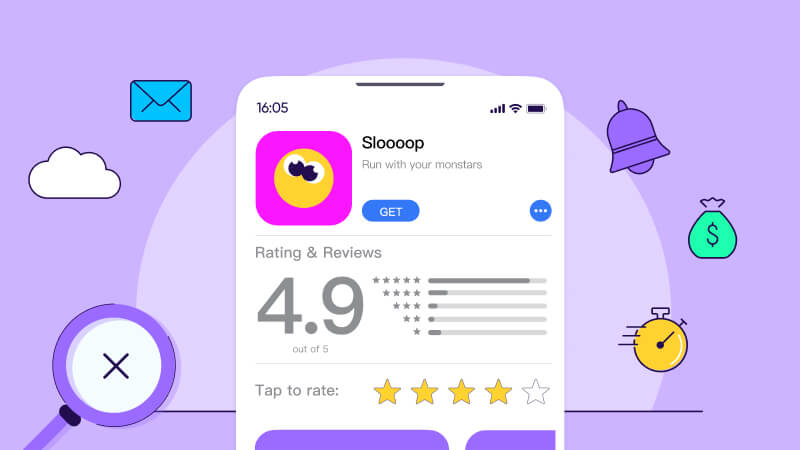
Because they increase visibility, encourage downloads, and foster user trust through social proof, app ratings and reviews are essential for App Store Optimization (ASO). They also have a direct impact on search rankings and conversion rates. High volumes and scores indicate quality to both users and algorithms, resulting in a positive feedback loop that fosters user loyalty and growth. Review management is a crucial component of ASO strategy since high ratings and favorable reviews enhance app store search positions, draw in more users by showcasing quality, and give developers crucial product feedback.
Key Roles in ASO Success:
- Improved Visibility & Ranking: Apps with high ratings and a significant number of positive reviews rank higher in search results and category lists, making them more discoverable.
- Increased Conversion Rates: A strong rating and compelling reviews act as social proof, convincing potential users to download the app over competitors, boosting your download numbers.
- User Trust & Credibility: Authentic reviews build trust, while consistent positive feedback signals a high-quality, reliable app, deterring users from low-rated alternatives.
- Product Development Feedback: Reviews offer direct insights into what users love and what needs improvement, guiding updates and enhancing user experience, which further improves ratings.
- Feature Potential: High-quality apps with strong reviews are more likely to be featured by Apple and Google in editorial placements, exposing them to millions of users.
Why They’re More Important Than Ever:
- Data Gaps: With changes like iOS’s SKAdNetwork, reviews have become a primary way to understand user experience and sentiment, as post-install tracking became harder.
- AI Summaries: Newer OS versions generate AI summaries, making fresh, positive reviews even more prominent and impactful.
Strategies for Success:
- Manage Actively: Respond to both positive and negative feedback to show engagement and build community.
- Encourage Authentic Reviews: Prompt happy users for reviews within the app at opportune moments, rather than incentivizing generic feedback.
- Showcase Positive Reviews: Feature glowing testimonials on your product page and marketing materials.
Businesses must come up with innovative strategies to differentiate themselves in the competitive digital landscape of today. Success in the realm of mobile apps depends on sustaining and expanding a favorable market presence. Leading indicators of how consumers regard your app in the marketplace are app reviews and ratings. This article explains how to build a positive presence for your app and how app reviews and ratings affect ASO tactics.
What Are App Ratings and Reviews in ASO?
It’s crucial to first question, “What is ASO?” in order to get why app ratings are vital. Enhancing an app’s exposure in app marketplaces is known as App Store Optimization, or ASO. App ratings are a crucial component of ASO since they affect search rankings and user perception. Understanding the distinction between reviews and ratings is crucial to appreciating their influence.
- A rating is the score given by the user, between 1 to 5 stars.
- A review generally has a written comment, which may or may not include a number/star-based rating.
When people search for your app, they can see the written reviews and average rating score. This provides immediate information about the app’s quality and credibility. Reviews tell new users what current or previous users think of the game or app and are displayed on the app store pages.
For app owners, not having enough reviews is a common problem. Many new app developers run without any reviews because they believe it won’t make a difference, while the majority struggle to acquire enough good evaluations. However, there are a number of reasons why app reviews and ratings are significant in ASO.
1. Social proof of value and benefits
Without any reviews, apps lack the social proof that would establish their credibility. Social proof means evidence of other users successfully using the app, deriving the value that the app makers gave out. Being able to witness other people’s experiences directly impacts a new user’s decision-making capabilities. Some of the most positive reviews are also used as social media content to draw customers from outside the app store.
2. Quick user research
App reviews help not only your audience, but they also help product and development teams to understand how their app is being perceived in the market. This can help identify new areas of improvement, growth opportunities, standout features you didn’t think about and what users love best about the app.
3. New opportunities for engagement
App reviews provide a forum for app owners and marketers to interact with their users. Positive reviews allow you to show gratitude to your users, while negative reviews give you a chance to show that you’re sad about the bad experience they have had and that you are working on improving any flaws.
App Ratings vs App Reviews
In the world of App Store Optimization (ASO), both ratings and reviews play a crucial role in influencing user perception and app visibility. While they often go hand-in-hand, they serve distinct purposes in shaping an app’s success.
| Aspect | App Ratings | App Reviews |
|---|---|---|
| Format | Numerical (usually 1 to 5 stars) | Text-based user feedback |
| Purpose | Reflects overall satisfaction at a glance | Provides detailed opinions, issues, or praise |
| Impact on ASO | Directly affects app store rankings | Supports keywords, influencing search visibility |
| User Influence | Quick indicator for download decisions | Helps users evaluate app features and performance |
| Frequency | Often submitted after brief use | Typically written after a more in-depth app experience |
| Moderation | Cannot be edited by the user post-submission | Can sometimes be updated or responded to by developers |
10 Proven Rating and Review Strategies for ASO to Boost App Presence
1. Ask for reviews at the right time
There are certain moments when user satisfaction is at its peak. That would be the best time to ask users for a quick review. Apps like WhatsApp and Teams, both calling and messaging apps, often ask for reviews right after a call is over. Gaming apps often add review prompts between bouts so that users complete that before starting the next level.
2. Offer incentives for leaving reviews
Reward users for their reviews with small rewards like discounts, cashback, exclusive feature access or in-app rewards. This shows that you appreciate your users and that you value the time and effort they put into writing the review. Apart from ratings and reviews, incorporating ASO Backlinks can also boost app discoverability by improving search rankings within app stores.
3. Streamline the rating process
The easier you make it for users to leave a review, the greater the likelihood that users will leave one. This can be done by integrating review prompts seamlessly into the app design, sending well-timed notifications and explaining clearly how users should leave the feedback. Keep the process streamlined and short, use pre-filled messages and instant links and keep the character limit clear, to minimise the effort needed.
4. Respond to all the reviews
Engage with users by responding to all the reviews you get. Respond to the negative reviews with an apology or any corrective action you have taken. For positive reviews, a simple thank you will often suffice.
5. Fix bugs fast
Regular updates can improve the user experience and address concerns, which will show users that their opinions and feedback are being heard and worked on.
6. Provide exceptional user experience
Focus on making your app experience smooth, bug-free and intuitive as far as possible. When the user experience is consistently positive, users don’t need too much motivation to leave a positive review.
7. Personalise the requests
Include review requests that are tailored according to user activity. This could mean targeting frequent users or those who have used the app for a long period in an hour, say at the end of the hour.
8. Leverage social proof
Showcase high ratings and positive reviews to users during app use so that they are encouraged to share their unique experiences as well.
9. Create a feedback loop
Use follow-up emails and in-app surveys to get more details on a user’s review. Addressing existing issues or problems could turn disgruntled users into ambassadors for your app.
10. Don’t use fake positive reviews
Resist the urge to populate your app review section and ratings with fake or paid reviewers. Today fake reviews are easy to spot and can negatively and sometimes permanently damage your reputation.
5 Reasons Why Improving Ratings Has a Huge Impact
Your business suffers from low app ratings. Forget about it. They eliminate downloads, damage your app’s exposure, and cause consumers to mistrust you. Conversely, high ratings help you stand out and promote success. Users rely on app shops’ ratings to determine which apps to download.
Read Also: Localization Strategies to Expand Global Reach for your ASO
If you’re running an app and you’re wondering if ratings are important, they are. Here are five ways that your app rating directly affects ASO and why it should be your top goal to correct it.
High app ratings work because they tap into basic human psychology. People trust crowd wisdom and rely heavily on others’ experiences when making choices. Ratings reach millions of strangers instantly, not just your close contacts.

People check ratings before downloading apps. The psychology is simple:
- Social proof. High ratings = lots of happy users.
In fact, 90% of consumers consider star ratings valuable when evaluating a new app.
- Risk aversion. Users hate wasting time on bad apps. If it doesn’t work, why would you bother?
79% of users check ratings and reviews before downloading, highlighting how much they value this reassurance.
- Herd mentality. People copy others’ choices when unsure. When an app boasts a high rating, users interpret this as a signal that it’s popular and worth downloading.
- Cognitive shortcuts. Star ratings are instant quality signals.
Moving an app’s rating from three to four stars can lead to an 89% increase in conversions.
- FOMO. High ratings make people think they’re missing something good.
Users trust ratings more than app descriptions. Higher ratings = more downloads. Simple as that!
Let’s see how working over app rating can impact your conversions now.
App Search Traffic Growth
High ratings boost your search traffic. Simple fact: app stores rank better-rated apps higher. When users consistently give you good ratings, Google Play and Apple’s App Store show your app to more people.
Here’s why this matters:
Algorithmic Favoritism
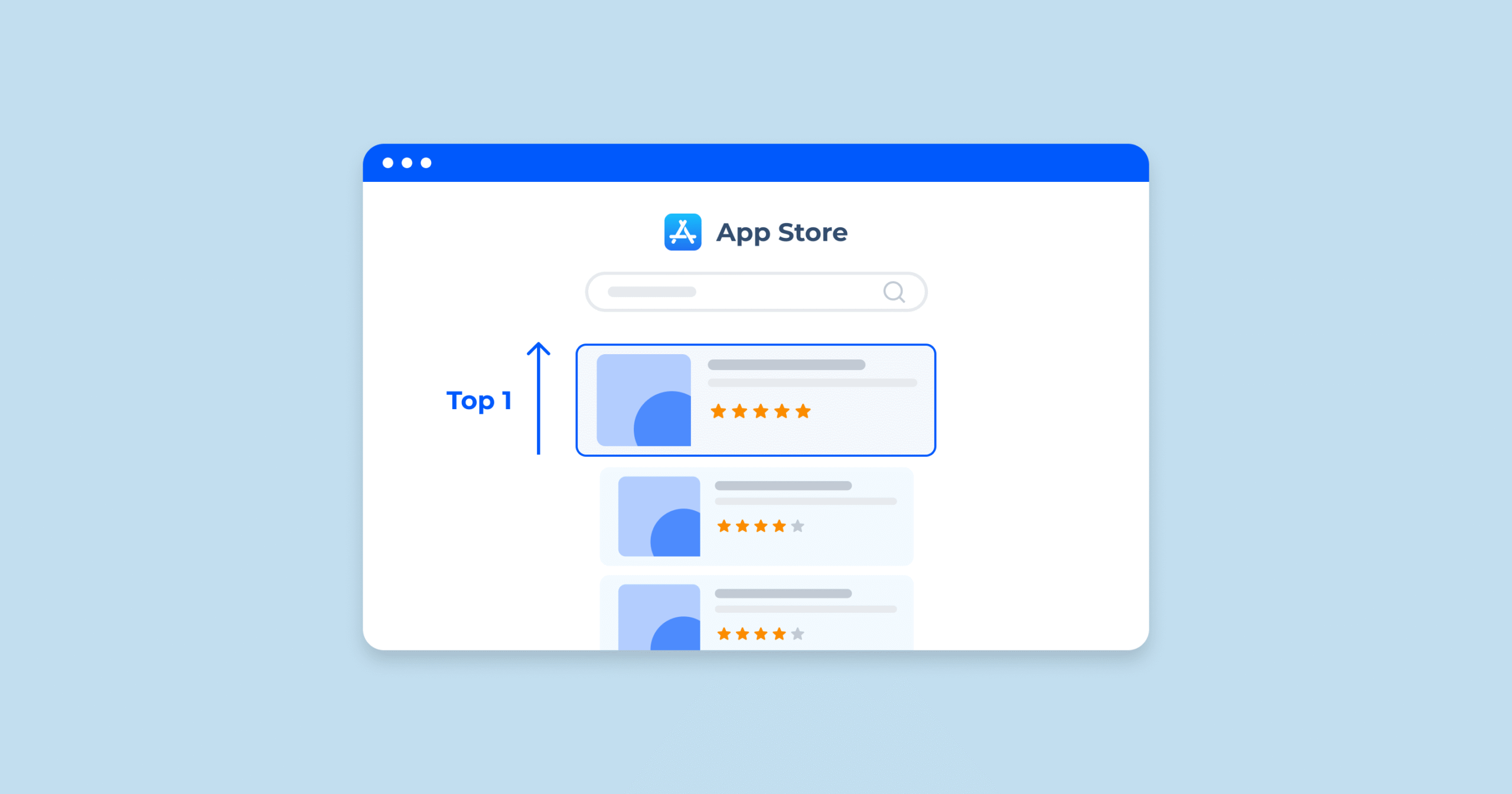
High ratings signal to the app store algorithms that users find value in your app. This positive signal makes your app more likely to rank higher in search results. Essentially, a 4-star or higher rating can make the difference between showing up on page one versus being buried in the back pages.
Keyword Indexing
Here’s a little-known fact: Google Play actually indexes keywords found in user reviews. So, if your app garners a lot of reviews mentioning relevant keywords (e.g., “best task manager” or “photo editor with filters”), it can rank for those terms — even if they’re not explicitly listed in your app’s metadata. A highly rated app naturally attracts more reviews.
To put it simply, a high star rating creates a cycle of growth: better ratings lead to higher visibility, which leads to more downloads and potentially more positive ratings. If you’re on the fence about working on your app’s ratings, know that the impact on app search traffic alone makes it worth the effort. A few tweaks to encourage user feedback and maintain quality can set off a positive feedback loop that fuels your app’s organic growth.
App Ratings Impact Your Chances of Getting Featured in App Stores
Real example: After addressing user complaints, a client’s rating increased from 3.8 to 4.5. The outcome? Improved search engine results and inclusion in “Top Productivity Apps.” Downloads skyrocketed.
The figures are evident: 92% of the App Store’s featured applications have four or more stars. 63% achieved 4.6 or above.
Here’s how the process works:
- Quality assessment. App stores like high ratings. 4+ stars are needed for featured placement consideration.
- Review volume. Review count matters – more legitimate reviews strengthen your case.
- User engagement. Active usage metrics back up good ratings.This adds weight to its case for being featured.
- Recent trends and updates. Rating must stay strong after updates.
- Editorial review. Store editors check ratings before featuring apps. High rating = safer bet for them.
The analysis of 500 top-ranked apps, showed a strong link between average ratings, the number of ratings, and app rankings. This correlation was more significant than any other factor we tested.
The takeaway here is…yes!
High ratings and a substantial volume of user reviews propel apps to the top of the charts.
The message is clear: you need both high ratings and high volume to rank well. A good score isn’t enough – you need massive numbers of positive ratings to boost visibility.
Build User Trust and Shape First Impressions
Ratings make or break first impressions. Users judge your app instantly based on stars and reviews. Here’s why:
- First impressions matter. High ratings = instant quality signal. No research needed.
- Social proof drives trust. Users trust the opinions of their peers. In fact, 90% of people check reviews before downloading an app. High ratings build immediate trust.
- Credibility boosts confidence. Reviews that share positive experiences reinforce the app’s quality. Users feel reassured when they see others have had a good time using the app.
- Comparison factor. Between similar apps, users pick the higher-rated one every time.
- Insight Through Reviews: Reviews let users see both sides – what people love and what they don’t.
99.9% of consumers read reviews at least occasionally when shopping online. This habit carries over to app downloads. A solid rating supported by positive reviews tells users, “This app is worth it.”
On the flip side, negative reviews or a low average rating can hurt trust. They highlight potential problems and even signal that the developers might not respond well to feedback. But if your app’s rating is strong, you’re already ahead in creating a positive first experience.
Increased Download Numbers

High ratings create trust through social proof. Users pick highly-rated apps without reading every review. Store algorithms push trusted apps higher in search and features. Better visibility = more downloads.
Between similar apps, users pick the higher-rated one every time.
The cycle builds on itself: High ratings → More downloads → Maintained good ratings → Better visibility → Even more downloads.
Better Conversion Rates
A high rating can drastically influence conversion rates.
High ratings drive downloads by building instant trust. Users see good ratings and make quick download decisions, skipping lengthy research. For marketers and developers, this means ratings directly impact conversion rates. If you’re not thinking about your reputation strategy, you’re already behind. Get on it.
According to research, moving from three to four stars can boost conversions by up to 89%.
Here’s the conversion flow when an app has strong ratings:
- Instant appeal. 4+ stars = immediate credibility. Users click through faster.
- No hesitation. Good ratings make apps feel like safe choices. Users download with fewer doubts. With so many apps to choose from, users are drawn to options that seem like a “safe bet.”
- Comparison advantage. Between similar apps, better-rated ones win the download. If users are torn between two similar options, the higher-rated app almost always wins.
- Encouragement to act. Strong ratings confirm users are making smart choices, speeding up downloads. This positive reinforcement can lead to a faster conversion process, as users are more confident about moving forward.
High ratings clear conversion roadblocks. Users see quality signals and download confidently.
How Do Improved App Ratings Drive Long-Term Growth?
Apps with higher ratings rank first in app stores. With more positive reviews on the Apple App Store and Google Play Store, your app will be shown to more people and boost search traffic. Take a look at the long-term benefits this will have:
1. Algorithmic favouritism
Higher app ratings indicate to the algorithm that more users consistently find value in your app. This is a positive signal that will rank your app higher in the search results.
2. Keyword indexing
Creating a high-rated app starts a cycle of growth. The rating drives more people to your app page, increasing visibility and downloads, which in turn increases the number of positive reviews your app already has. App owners need to be aware that a high rating has a significant impact on app search traffic, which in itself is worth all the effort.
3. Increased downloads
High app ratings help build trust using social proof. Users don’t read every review, but they will choose apps with a high average rating. App store algorithms tend to bump up trusted apps in search result pages and featured lists. This results in more traffic and downloads. When apps have a higher number of downloads along with a high rating, they are considered more reliable by users and the algorithm.
4. Better conversion rates
When an app’s rating moves from 3 to 4 stars, conversions increase by up to 89%! High app ratings can significantly boost app conversion rates. This can help in building trust instantly. When a user sees a high app store rating, they often make faster decisions instead of getting into a whole research process. For both developers and marketers, this translates to higher conversion rates as a direct result of a high rating.
How to Manage Negative App Reviews?
Negative feedback is a great way to discover what isn’t working on your app. By fixing these problems, you get to improve your user experience, increase satisfaction and, in the long term, boost your ASO (app store optimization) efforts.
1. Respond promptly to the reviews
Fast responses are a way of telling people that you value their feedback and are working on making their experience better.
2. Address the issues
Simply responding with ‘we are looking into it’ is not enough. Make sure you address specific problems with specific responses.
3. Follow up with users
Don’t let any interactions with users be a single response. Follow up with them once the resolution has been implemented and get a confirmation of their satisfaction.
4. Keep tracking common issues
If there are multiple reviews regarding the same problem area, make sure you note it and address it as a priority. Even after that, keep monitoring the problem to ensure it doesn’t come up again.
Conclusion
For your app to succeed in any app store, you must continuously track, evaluate, and enhance its reviews and ratings. You may achieve your objectives of higher app visibility and search traffic to your app page by using ASO services to develop an efficient ASO strategy.








Comments