
 By
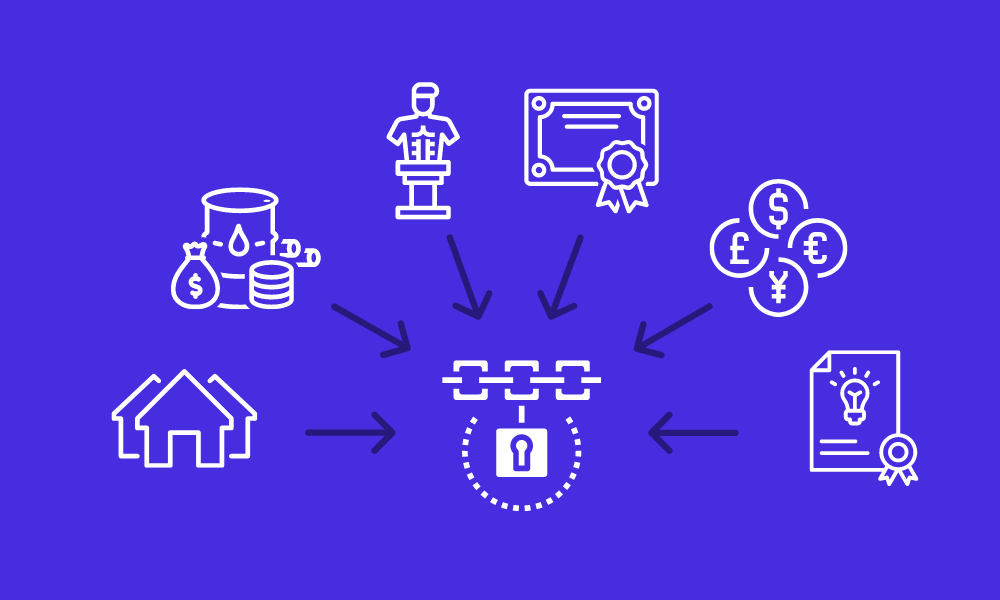
Tokenizing real-world assets (RWAs) is the process of converting physical or traditional assets (such as real estate, art, and bonds) into blockchain-based digital tokens. Key advantages include higher liquidity for historically illiquid assets, fractional ownership for lower investment barriers, 24-hour global trading, cheaper transaction costs, and improved transparency through immutable, audit-ready records.
Key Benefits of Tokenizing Real-World Assets
- Increased Liquidity: Traditionally illiquid assets like real estate or fine art are fragmented and listed on secondary markets, making them easier to buy and sell quickly.
- Fractional Ownership: High-value assets are divided into smaller, affordable units, allowing retail investors to access markets previously reserved for institutions or high-net-worth individuals.
- Lower Costs & Faster Settlement: Blockchain technology eliminates intermediaries (brokers, clearinghouses), reducing administrative fees and accelerating transaction settlement times.
- Enhanced Transparency & Security: All ownership records and transactions are recorded on a public, immutable blockchain, reducing fraud risks and improving auditability.
- 24/7 Global Accessibility: Tokenized assets can be traded globally at any time, eliminating geographical and banking hour limitations.
- Operational Efficiency: Smart contracts automate processes such as dividend payments, compliance checks, and ownership transfers, reducing manual paperwork.
- New Financing Models: Tokenization enables owners to use previously illiquid assets as collateral for on-chain DeFi loans, unlocking capital.
These benefits are driving a shift in traditional finance, creating more efficient and accessible investment opportunities.
Tokenization of real-world assets is gaining popularity among investors because it allows them to enter markets that were previously difficult or impossible to reach. Examples of RWA have demonstrated how the technology can be applied in practice to bring additional value to users.
Examples include:
- Homebase
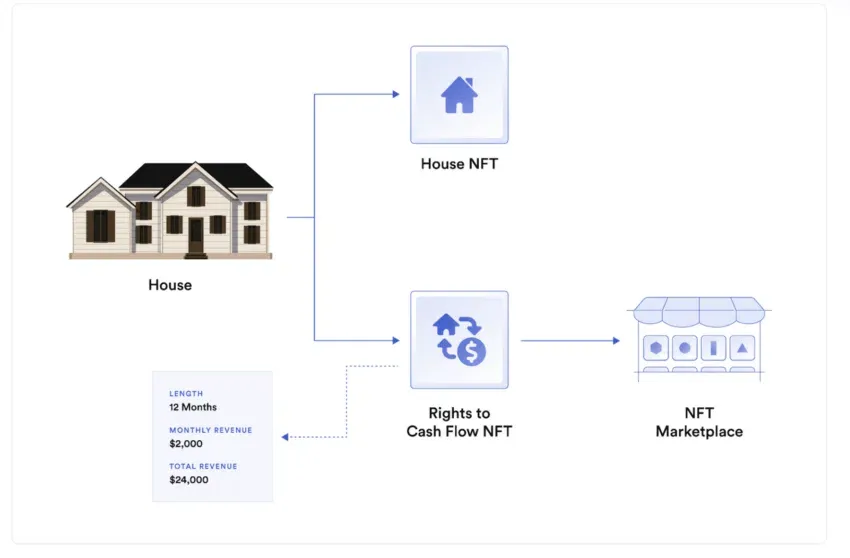
Homebase, a US-based real estate platform, recently made headlines by listing its first real-estate backed NFT (non-fungible token). The NFT represents ownership in a luxury student housing development in South Carolina, and it is being offered to accredited investors through a partnership with Republic, a crowdfunding platform. - ABN AMRO and Siemens
In recent months, ABN AMRO and Siemens have also both issued digital bonds on public blockchains, which could potentially reduce transaction costs and increase efficiency compared to traditional bond issuance methods. - Hamilton Lane
Hamilton Lane used the Polygon blockchain to tokenize its private equity fund, which can provide increased liquidity and fractional ownership opportunities for investors. - Societe Generale
MakerDAO opened an RWA collateral vault for Societe Generale, which allows real-world assets such as stocks and bonds to be used as collateral for MakerDAO’s stablecoin. This could potentially increase the stability and value of the stablecoin.
What is Real-World Asset Tokenization?
In the context of blockchain and cryptocurrency, RWAs can be used as collateral for digital assets such as stablecoins, which are designed to maintain a stable value relative to a particular asset or basket of assets. By using RWAs as collateral, stablecoins can potentially offer increased stability and value compared to purely digital assets that are not backed by any tangible assets. The use of RWAs as collateral is becoming increasingly popular in decentralized finance (DeFi) as a way to bridge the gap between traditional finance and the emerging digital asset ecosystem.
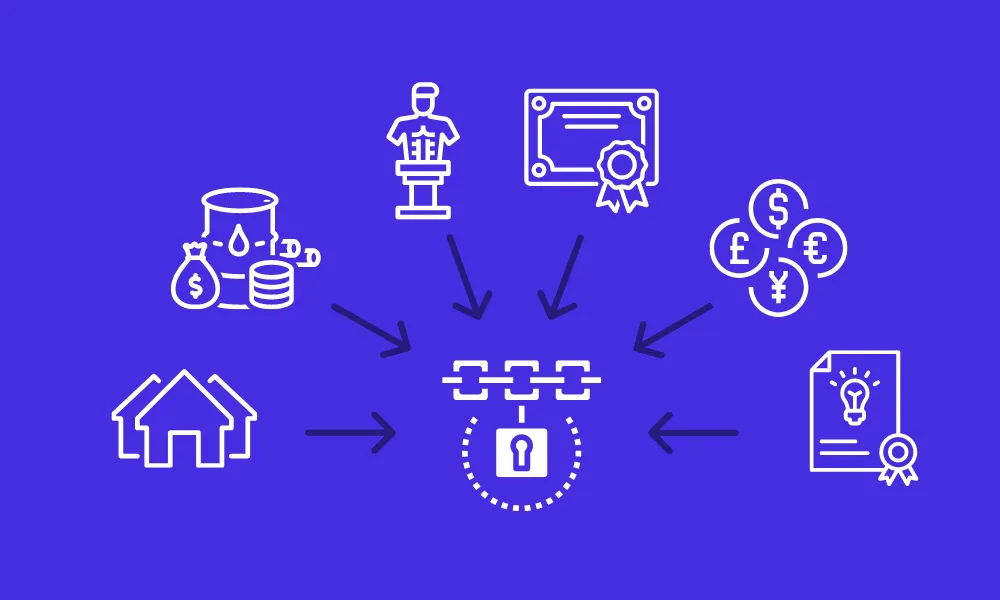
Essentially, any asset that can be represented digitally can be tokenized, allowing it to be stored, traded, and managed using blockchain technology. Assets that can mostly benefit from tokenization include real estate, art and collectibles, commodities like gold, oil, and agricultural products, potentially making it easier for investors to trade and manage these assets, assets representing intellectual property like patents and copyrights, securities like stocks and bonds, potentially increasing transparency and efficiency in the trading and management of these assets.
What Are The Benefits of Tokenized RWA?
There are several potential benefits to tokenizing real-world assets (RWA) using blockchain technology.
- Tokenization allows for fractional ownership of assets, which can increase liquidity by enabling smaller investors to purchase and trade shares of an asset that may have been previously unavailable or too large for them to invest in.
- Tokenized assets can be traded on global markets 24/7, providing greater accessibility and democratizing investment opportunities.
- Transactions are recorded on a decentralized ledger, making them secure, transparent, and auditable. This can increase trust and confidence in the asset, as well as reduce the likelihood of fraudulent activity.
- Tokenization allows for the fractionalization of an asset, meaning it can be divided into smaller parts that can be owned and traded independently. This can potentially provide greater flexibility in the ownership and management of an asset, as well as facilitate the creation of new investment products.
- Investors can diversify their portfolios and gain exposure to a wider range of asset classes by tokenizing traditional financial instruments.
- Tokenized assets are also easier to trade on crypto exchanges than their non-tokenized counterparts, making them an attractive option for traders looking for greater liquidity.
The potential benefits of RWA tokenization, therefore, make it an exciting development in the world of finance, with many institutional players jumping on board.
Tokenization is transforming the world of finance by bridging the gap between traditional and crypto markets. Tokenization, which represents real-world assets on the blockchain, makes it easier to trade these assets on cryptocurrency exchanges and opens up new opportunities for investors. Tokenized assets are revolutionizing global financial markets by diversifying portfolios and enhancing liquidity, as well as lowering transaction costs and enabling speedier settlement times.
7 Benefits of Tokenization of Assets for Institutions
Understanding the benefits of asset tokenization is no longer a niche interest for institutional investors, asset managers, and high-net-worth people; it has become a strategic requirement. Traditional financial institutions are frequently slow, fragmented, and laden with intermediaries, resulting in inefficiencies, high costs, and limited access to profitable industries such as private equity, real estate, and fine art.
Tokenization directly tackles these long-standing issues, providing a look into a more efficient, inclusive, and transparent financial future. Below, we look at the seven primary benefits of asset tokenization, which is transforming the financial industry for the digital era.
1. Unlocking liquidity & creating secondary markets
One of the most significant advantages of tokenization is its ability to unlock value from traditionally illiquid assets. Assets like real estate, private equity, and fine art often have substantial value but are difficult and slow to trade, tying up capital for extended periods.
Tokenization transforms these illiquid assets into liquid, tradeable digital units. This process allows asset holders to sell a fraction of their ownership to raise capital without needing to sell the entire asset. For instance, a commercial building owner could tokenize the property to raise funds while retaining majority ownership.
Key aspects of improved tokenization liquidity include:
- Secondary Market Creation: After an initial offering, tokens can be freely traded on secondary markets, such as decentralized exchanges (DEXs). This provides investors with flexible exit options that don’t depend on traditional events like IPOs or sales.
- Dynamic Trading Ecosystem: The ability to trade tokens on secondary markets creates a more dynamic and efficient trading environment, allowing investors to react to market changes in real-time.
Attracting a Broader Investor Base: Liquid secondary markets empower issuers to attract a wider range of investors who value the ability to trade their investments. A case in point is the Aspen coin, which tokenized the St. Regis Aspen Resort, enabling real estate investors to trade their stakes on secondary markets without waiting for the entire property to be sold.
2. Lower costs & faster settlement
Traditional finance is notoriously inefficient, weighed down by intermediaries like banks, brokers, and clearinghouses that add complexity, cost, and delays to every transaction. The process of investing in private assets often involves opaque pricing, lengthy negotiations, and complex documentation.
Read Also: The Difference Between RWA Tokenization and Traditional Asset Securitization
Tokenization leverages blockchain technology and smart contracts to streamline these processes, delivering significant tokenization efficiency. Smart contracts – self-executing agreements with predefined rules – are the backbone of tokenized systems, automating tasks that once required manual intervention.
This automation leads to several key improvements:
- Reduced friction and intermediaries: By automating processes like compliance checks, dividend payments, and ownership transfers, smart contracts reduce the reliance on intermediaries, which in turn lowers transaction costs and eliminates delays. Santander’s tokenized bond, for example, used smart contracts to automate compliance and payment processes, significantly cutting administrative costs.
- Near-instant settlement: Traditional markets often operate on a T+2 settlement cycle, meaning transactions can take days to finalize, tying up capital and introducing counterparty risk. Tokenized assets can settle in near-real-time, reducing this risk and improving capital efficiency for all market participants.
- Simplified asset servicing: Smart contracts can automatically distribute income to token holders, such as rental income from a tokenized property or interest payments from a tokenized bond. This ensures faster, more reliable payouts while reducing the administrative overhead for issuers.
3. Fractional ownership & broader market access
Historically, access to high-value asset classes like private equity, fine art, commercial real estate, and venture capital has been restricted to institutional or ultra-wealthy investors due to high minimum investment thresholds and other barriers.
Tokenization democratizes access by enabling fractional ownership, which is the process of dividing a high-value asset into smaller, more affordable, and tradeable units. This is one of the core tokenization benefits, creating a more inclusive financial ecosystem.
- Lowering entry barriers: By fractionalizing ownership, tokenization allows individuals to invest in assets that were previously out of reach. For example, instead of needing millions to purchase a Picasso masterpiece, an investor could buy a token representing a small fraction of the artwork for as little as $100. Similarly, Hamilton Lane tokenized portions of its private equity fund, reducing the minimum investment from $5 million to just $20,000, opening access to a new pool of investors.
- Global investor base: Blockchain networks are inherently borderless, enabling issuers to reach a global pool of investors without the complexities of traditional cross-border financial systems. A company in Brazil, for example, could issue tokenized debt to investors in Europe or Asia, bypassing traditional intermediaries.
- Access to new opportunities: Tokenization opens up opportunities for both retail and institutional investors to access a wider range of assets, from a luxury apartment in New York to a renewable energy project in Africa. This allows for greater diversification and participation in once-exclusive markets.
4. Enhanced transparency & auditability
A core feature of blockchain technology is its decentralized and immutable ledger, which provides an unprecedented level of transparency and security. Every transaction and ownership record is verifiable, tamper-proof, and accessible to all relevant participants, fostering trust among investors, issuers, and regulators.
This inherent transparency is a key component of institutional tokenization, where auditability and compliance are paramount.
- Immutable ownership records: Blockchain serves as an immutable ledger where ownership records are securely stored, preventing disputes and fraud. This creates a single, verifiable source of truth for every asset.
- Streamlined compliance: Smart contracts can have regulatory rules embedded directly into the token’s code. This can automate compliance with requirements like AML (anti-money laundering) and KYC (know your customer) checks, investor accreditation, and geographic restrictions, thereby enhancing trust and reducing the administrative burden.
- Full traceability: The history of an asset, from its origin to every subsequent transaction, can be recorded on the blockchain. Everledger’s tokenized diamonds, for instance, use blockchain to trace information like origin, quality, and ownership history, which builds trust with buyers and helps eliminate fraud in the supply chain. This is particularly valuable for assets where provenance is critical.
5. New collateral & financing models
Another of the important benefits of tokenization of assets is its ability to enable innovative financing models by transforming previously illiquid assets into usable collateral. In traditional finance, securing loans against assets like fine art or private company equity can be a cumbersome and inefficient process.
Tokenization unlocks new possibilities within both traditional finance and decentralized finance (DeFi) ecosystems.
- Tokenized assets as collateral: In the world of DeFi, tokenized assets can be used as collateral for decentralized loans, offering more flexible and inclusive financing options than traditional systems. This allows asset holders to borrow against their holdings with unprecedented flexibility.
- Innovative funding mechanisms: Tokenization creates new use cases for raising capital. For example, small businesses can tokenize their future revenue streams to attract investors, bypassing traditional funding barriers. Similarly, renewable energy credits can be tokenized to enable transparent trading and incentivize green projects globally.
- Bridging traditional and decentralized ecosystems: Tokenization acts as a bridge between traditional finance and DeFi. On-chain investors gain access to off-chain assets like real estate or private debt, while traditional investors are introduced to the efficiencies and innovations of decentralized ecosystems. This creates a multidimensional marketplace that leverages the strengths of both worlds.
6. Portfolio diversification & innovation
For institutional investors and asset managers, effective diversification is critical for optimizing asset allocation and managing risk. However, gaining exposure to a wide range of alternative and illiquid assets has traditionally been difficult and costly.
The RWA benefits provided by tokenization fundamentally change this dynamic by making a diverse array of assets more accessible, manageable, and tradeable.
- Access to a wider universe of assets: Tokenization brings a vast range of asset classes on-chain, from real estate and private credit to infrastructure projects, commodities, and intellectual property. This allows investors to diversify their portfolios across multiple asset classes with greater ease.
- Fractionalization for granular diversification: Because tokens represent fractional ownership, investors can allocate smaller amounts of capital across a wider variety of assets. This granular approach to diversification was previously impractical for many illiquid asset classes.
- Unlocking new investment strategies: The ability to tokenize and trade assets like music royalties, patents, or even rare collectibles creates entirely new opportunities for portfolio innovation. Investors can now participate in revenue streams and markets that were once inaccessible, allowing for more creative and sophisticated investment strategies.
7. Alignment with broader digital transformation
The shift toward tokenization is not happening in a vacuum; it is part of a broader societal and technological trend toward digitization. The COVID-19 pandemic accelerated the world’s shift to digital payments, remote work, and virtual communication, creating a widespread embrace of digital technology. In this context, tokenization feels like a logical next step in the evolution of finance and ownership.
This alignment with digital transformation is being driven by several converging factors:
- Technological maturity: Early blockchains were often slow and lacked the scalability needed for large-scale financial applications. However, modern platforms and Layer-2 scaling solutions have resolved many of these limitations, offering the speed, efficiency, and programmability necessary for institutional-grade tokenization.
- Growing investor demand: There is a rising demand from high-net-worth individuals, family offices, and institutional investors for alternative investments and greater portfolio diversification. Retail investors are also eager to access opportunities that were traditionally reserved for the wealthy. Tokenization directly meets this demand.
- Regulatory momentum: Governments and regulators worldwide are increasingly recognizing the transformative potential of tokenized assets. Frameworks like the European Union’s MiCA (Markets in Crypto-Assets) are providing clear guidelines for the treatment of digital assets, giving businesses and investors the confidence to operate in a structured and compliant environment.
This “perfect storm” of technological breakthroughs, regulatory progress, and rising market demand has made the adoption of tokenization not just possible, but inevitable.
Tokenization is far more than a mere technological upgrade; it represents a fundamental rethinking of how we interact with, own, and transfer value. The key benefits of tokenization of assets – from unlocking liquidity and lowering costs to democratizing access and enhancing transparency – are creating a more inclusive, efficient, and dynamic financial ecosystem.
For institutional players, the benefits of tokenization are especially compelling. The ability to achieve greater portfolio diversification, streamline complex processes through automation, and access a global investor base presents unprecedented opportunities for growth and innovation. While challenges like regulatory uncertainty and market fragmentation remain, the momentum is undeniable. As technology matures and adoption accelerates, tokenization is set to reshape industries and redefine the future of finance and ownership. The question is no longer “if” tokenization will revolutionize finance, but “how quickly” it will happen.
Examples of Successful Tokenization Implementations
Real Estate
For instance, last year, Ethereum made it possible for a luxury property in New York to be tokenized so that investors can buy digital shares that represent the ownership of that building. Tokenization could facilitate fractional ownership of assets, thus allowing investment by people from diverse parts of the world into a market that was earlier restricted to high-net-worth individuals.
Through the trading of such tokens on secondary markets, investors could liquidate their position far more easily than for the corresponding property itself, which may need several months or even years to be sold.
One more interesting case: tokenizing a share in a luxury hotel located in Aspen, Colorado. In that project, investors had an opportunity to purchase tokens representing a share in the ownership of the hotel, allowing them to be entitled to part of the income it generated. That project exemplified that tokenization could open up excellent opportunities and enable hospitality investment with more flexibility in managing assets.
Art and Collectibles
A classic example is the tokenization of Andy Warhol’s “14 Small Electric Chairs” artwork through a blockchain platform. A great instance of that is the program where art investors and enthusiasts could buy fractional shares in this work, which would have been otherwise prohibitive for most of the world’s population. Such tokens can then be traded in a particular market, rendering them liquid in a segment that is quite illiquid by nature.
The added innovation on the side of NFTs saw tokenization become synonymous with digital art and collectibles. New marketplaces like OpenSea and Rarible have enabled new abilities for artists to tokenize their digital creations and offer them as unique digital assets on the blockchain. Digital collectibles, from digital paintings to virtual real estate, can easily be represented by NFTs and are traceable on secondary markets, fueling a vibrant and fast-growing ecosystem.
Commodities
For example, many digital platforms now offer tokenized gold, each token being represented with a secured amount of the physical amount of stored gold kept in a certain quantity in a secure vault. Investors will thus be able to buy and sell such tokens on crypto exchanges and hence gain their exposure levels to the gold price without actual storage or physical movement of gold. This makes investment in commodities much easier, with minimal costs and risks attached.
For example, companies have tokenized barrels of crude oil. Such tokens will make trading in crude oil possible on a digital exchange for the first time and further add flexibility and liquidity to the commodities market. As explained further, tokenization means fractional ownership and 24/7 trading, meaning that now, investors from anywhere in the world can participate in a commodity market without any geographical boundaries or investment size limits.
Security and Equity Tokens
Security token issuance comes in one of the most popular forms: the STO, or security token offering. An example of an STO is tZERO, a subsidiary company of Overstock.com, which issued tokens representing equity in the enterprise and which investors would be able to trade on its blockchain-based regulated platform. This STO was one of the first of its kind to really set a precedent for how companies could use blockchain technology to go about raising capital in a compliant way.
Another example would be tokenizing a private equity fund: investors could enter by purchasing tokens representing a given interest in the portfolio of companies of that fund. This becomes a more versatile model for the investment and management of holdings, with greater liquidity in what have traditionally been very illiquid markets.
Conclusion
Tokenization of real-world assets is at the forefront of a paradigm shift in how ownership, investment, physical, and financial assets are seen. Tokenization, facilitated by blockchain technology, boosts liquidity, creates fractional ownership, provides transparency, and allows for cost savings. However, the path to becoming something widely accepted is fraught with challenges such as regulation, valuation, and technological risk. Nonetheless, successful implementations in real estate, art, commodities, and stocks demonstrate the enormous potential for asset tokenization. The prospects for digitizing assets are expected to grow as new technology and legal frameworks evolve.





Comments