
 By

AI is powered by cloud computing, which offers scalable, on-demand access to enormous volumes of processing power and data storage, including specialist hardware like GPUs that are necessary for training intricate models. This methodology lowers the time and cost of training and deploying AI applications and gives AI developers access to resources as needed without requiring significant upfront hardware investments. Additionally, cloud platforms facilitate AI development by providing pre-built tools and managed services.
Regarding AI and cloud computing, there are two perspectives. One is the intense effort being made by cloud computing companies to offer increasingly complex AI-backed services and apps on their platforms. The other is that such hyperscale cloud platforms are becoming made possible by AI and the automation and lightning-fast decision-making it enables.
The future of cloud computing and AI is fascinating and linked because both are true. What that future might bring is as follows.
To put it simply, cloud computing allows you to rent rather than purchase IT services. Businesses might choose to use the internet to access their compute power and pay for it as they use it instead of investing in databases, software, facilities, and hardware. Scalability, availability on demand, and metering are important aspects of cloud computing.
Infrastructure, including servers, storage, and databases, as well as services based on that infrastructure, such data analytics and artificial intelligence, as well as applications for business operations like human capital management and enterprise resource planning, or ERP, are all included in cloud solutions. These applications are increasingly incorporating AI-powered features. An example is the ability to convert printed documents to digital form and then classify those documents in functions like accounts payable and accounts receivable.
Adopting AI in cloud computing can be challenging, as it involves data privacy concerns, integration issues, and a talent gap in AI expertise.
- AI is integral to cloud computing, enhancing cloud services’ automation, decision-making, and scalability.
- Cloud computing provides the necessary infrastructure for AI, enabling businesses to leverage AI technologies without significant investments in hardware and software.
- AI in cloud computing boosts business efficiency by automating repetitive tasks, enhancing data analytics, and improving cybersecurity.
- The synergy between AI and cloud computing drives innovative applications like generative AI, IoT, and AI-assisted business intelligence.
AI and Cloud Computing
Cloud computing and AI are closely related. One explanation is that cloud computing companies were among the first to figure out how to employ AI to improve services. Because AI systems are so adept at making choices within the confines of an IT architecture, cloud computing companies are able to automate a variety of tasks in their enormous data centers. In a variety of use cases, AI can provide and expand technical services, identify possible faults, keep an eye out for indications of a cyberattack, and spot fraud indicators. These are just a handful of the increasing number of features that enable cloud computing firms to profitably provide hyperscale technology services to thousands or millions of clients.
The cloud is becoming as the preferred method for integrating AI into corporate applications, which is equally significant. Software-as-a-service (SaaS) products improved by various AI technologies and, more recently, with embedded LLM capabilities are examples of how providers are using AI into their own offerings. Additionally, cloud providers assist companies looking to integrate generative AI into their processes. Businesses in a variety of industries, including healthcare, logistics, law, government, and more, can use their own data to train and implement AI models tailored to their operations or, more frequently, enhance the training of an already-existing model thanks to advanced LLMs in cloud architectures. AI model developers are among the cloud’s clients since they require a lot of processing power and storage space to train their models on enormous volumes of data.
Highly advanced AI-assisted services are becoming more and more available from cloud providers. For example, application development platforms allow developers to specify the features they want in an application and have the AI platform swiftly produce the initial draft of code.
Why Is AI Important to Cloud Computing?
AI powers the automated algorithms used by cloud computing providers to deliver SaaS apps and IT services in a dependable and economical manner. AI relieves people of the burden of provisioning, batching, and fine-tuning hyperscale cloud systems. Furthermore, cloud computing providers are eager to accommodate more businesses as they seek to leverage generative AI’s growing capabilities and a wide range of AI services. To put it briefly, using the cloud is the easiest way to take advantage of AI capabilities.
It’s also true that cloud computing plays a significant role in AI. This is due to the fact that training generative AI systems, like LLMs, requires a lot of processing power, creating competition for the world’s computer capacity. Because hyperscale cloud providers provide this power on demand, AI businesses may affordably rent the GPU clusters required to execute AI applications with high performance.
Benefits of AI in Cloud Computing
Cloud computing companies that use AI in their data centers are benefiting in ways that go far beyond the short-term cost and efficiency savings. They can boost client loyalty and revenue by delivering what they’ve created as branded AI services.
The following are some benefits of AI in cloud computing:
- Automation: With AI, cloud providers and their customers can automate many of the IT processes necessary for delivering their services, including patching, securing, and scaling compute capacity. Businesses are also using AI processes, including intelligent automation, to increase speed and accuracy in functions such as document management and factory operations.
- Cost savings: AI can help lower costs by performing complex tasks faster, with fewer people involved. Tasks can include IT and data security operations as well as business functions such as help desk automation. For customers, AI can help them scale their cloud use up and down in response to their own changing needs. As customers see their own cost savings, loyalty may improve—particularly for cloud vendors that strive to keep their billing models simple and transparent. When current customers use more cloud services, that can deliver a higher margin for providers versus finding, winning, and onboarding new customers.
- Cloud management: AI lets cloud services run at scale by automating many aspects of IT management. For example, AI can provision and scale services, detect and anticipate failures, and repel cyberattacks, often with little or no human participation. Tracking service use and billing as well as providing customers with complex workload monitoring and management systems all can be simpler and more scalable with AI support.
- Data management: AI can help any organization manage its vital data better and more cost effectively. Tasks that AI can take on include moving data as required, cleansing data, and scanning networks to detect issues with data security or collection.
- Predictive analytics: AI is particularly good at this popular form of data analytics. Businesses use predictive analytics to identify trends, find correlations, and link causation, allowing them to make more informed decisions much more quickly.
- Personalization: AI’s keen observational and pattern matching abilities help companies, including cloud providers, better understand their customers’ behavior and desires. This lets firms offer personalized services and more accurate suggestions and thus increase retention and revenue.
- Increased productivity and efficiency: AI excels at jobs that people find difficult or tedious. With AI-backed processes, businesses can accomplish tasks such as managing documents, sorting packages, matching invoices, and even summarizing documents such as legal briefs faster and more accurately than humans. The added benefit of this efficiency is that it frees employees to do more complex tasks that require human experience and relationships.
- Enhanced security and threat detection: When included in a well-formed data security framework, AI can step in to monitor networks and users as it scans for patterns that signal trouble. Unlike humans, AI can closely monitor masses of data as it quickly analyzes streams that the network creates.
- Improved scalability: Because AI can help automate so many processes, it lets cloud providers run large data centers with a level of elastic scalability that would be impossible to achieve if people had to manually provision and manage services. This same efficiency works for cloud customers, who may scale up work in marketing, logistics, healthcare, and other fields faster and with fewer people involved.
5 Ways Cloud Computing Is Getting Smarter With AI
Businesses are becoming more strategic, insight-driven, and efficient thanks to AI technologies and cloud computing. While artificial intelligence enables better data management, analytics, and insights, enhancing customer experience and streamlining workflow, cloud computing offers greater flexibility, agility, and cost savings.
Read Also: Reserved Instances vs Spot Instances: Which Saves More?
Although artificial intelligence (AI) is known to operate on the premise that robots may be designed to think and behave like people and can mimic human intelligence, integrating AI with cloud computing has proven to be very advantageous for companies and organizations. Cloud computing, which is the provision of computing services such servers, storage, databases, networking, software, analytics, and intelligence, guarantees better corporate growth with faster innovation, flexibility, agility, and scalability than any other platform.
AI has the ability to completely transform cloud computing services, according to experts. Cloud computing is enhanced by AI as a service, which also creates new opportunities for creative growth. In the modern world, integrating cloud technology and AI is essential to business and trade. Its seamless, flexible environment enables improved data management, storage, organization, optimization, and real-time insights. Businesses may become more nimble, flexible, and cost-effective by significantly reducing infrastructure administration, which enhances daily operations.
There are numerous benefits to integrating AI infrastructure with public, private, and hybrid clouds, such as:
- Enhanced Data Management
- Better Security
- Intelligent Automation
- Accelerated Productivity
- Deeper Actionable Insights
- Cost-Effectiveness
- Reliability
The future belongs to AI and cloud computing. In many ways, it will revolutionize data management, storage, and processing. The five ways artificial intelligence enhances cloud computing are listed below:
AI Powers a Self-Managed Cloud
Cloud computing uses artificial intelligence to automate repetitive operations. AI solutions turn routine chores into more intricate, autonomous processes by monitoring and managing both public and private cloud services. The prediction and accuracy both increase when more data is input into the Cloud Computing model through the use of AI. In order to support the AI infrastructure and produce better technology and results, cloud computing provides advanced processing techniques that enable extremely powerful GPUs.
AI Improves Data Management
AI integration improves database query performance and accuracy while conserving resources in data management processes. Furthermore, the flexibility of cloud computing is increased by the database built and accessed via a cloud platform. AI solutions make it easier for firms to stay organized as they handle bigger volumes of digital data. Additionally, it helps businesses handle risks and harmful activity by streamlining data to ingest, update, and manage finances over real-time information.
AI-SaaS Integration to Increase Productivity
AI and SaaS (Software-as-a-Service) help businesses with security, personalization, and customer service. Businesses are able to provide clients with greater usefulness and value when these two factors are combined. AI and SaaS integration allow businesses to monitor customer demand and behavior, improving customer service. Having all of the data in the cloud makes it easier for organizations to access and use it as needed, and the Saas model simplifies complex software requirements and data hosting.
AI Reduces Errors & Costs
Using AI in cloud computing significantly improves task automation. As a result, the tasks are automated and there is limited possibility of human interaction. By reducing human intervention and creating a self-learning model, businesses can benefit from faster decision-making and fewer participants. This could have a direct effect on expenses by lowering errors. By assessing demand, resource availability, competition, and market trends without the need for central human intervention, combining a cloud module with AI guarantees the greatest service assistance.
AI Offers Enhanced Security
Data and resource security is automatically enhanced by the cloud’s connection with AI. AI techniques improve mistake detection and data processing. It reduces human error and unauthorized access in addition to detecting and stopping anomalous events or interference. Cloud security automation driven by AI reduces the visibility of security breaches by identifying and thwarting threats. AI’s contribution to the cloud computing business is notable because of these key aspects, which have led to a noticeable growth in cloud security automation.
AI and cloud computing are transforming organizations on all fronts. From deep learning to the automation of crucial procedures, the possibilities of AI in conjunction with the cloud are virtually endless. This environment and its utilization are growing every day. In other words, AI adds the Midas touch by collaborating with cloud computing to scale business functionality and integrations and help firms grow exponentially.
Artificial intelligence and cloud computing are not mutually exclusive, despite what many people think. Combining the two technology innovations is highly profitable for corporate entities. Adoption of AI is facilitated by cloud computing. Through cloud computing, the general public now enjoys the advantages of AI that previously only benefited a select few!
Applications of AI in Cloud Computing
The numerous ways that AI and the cloud may work together to improve business operations and free up time for more creative pursuits provide inspiration to overcome the aforementioned obstacles. The following are some well-liked and fascinating applications:
- Chatbots: Chatbots were one of the first software programs designed to simulate human communication and step into customer service roles. Unfortunately, before AI, they didn’t do a very good job and were more likely to annoy customers than solve problems. With AI and cloud computing, companies can now use APIs to tap into large language models, giving them powerful chatbots that can understand spoken or written human language and detect the intent of a user’s query.
- Business intelligence (BI): Cloud computing providers have long offered BI solutions, which gather, analyze, and interpret data from internal and external sources to help businesses make decisions. These cloud services as well as earlier packaged software have depended on machine learning algorithms to parse and analyze data. With newer AI models, however, businesses can go from understanding what happened in the past to better predicting future outcomes.
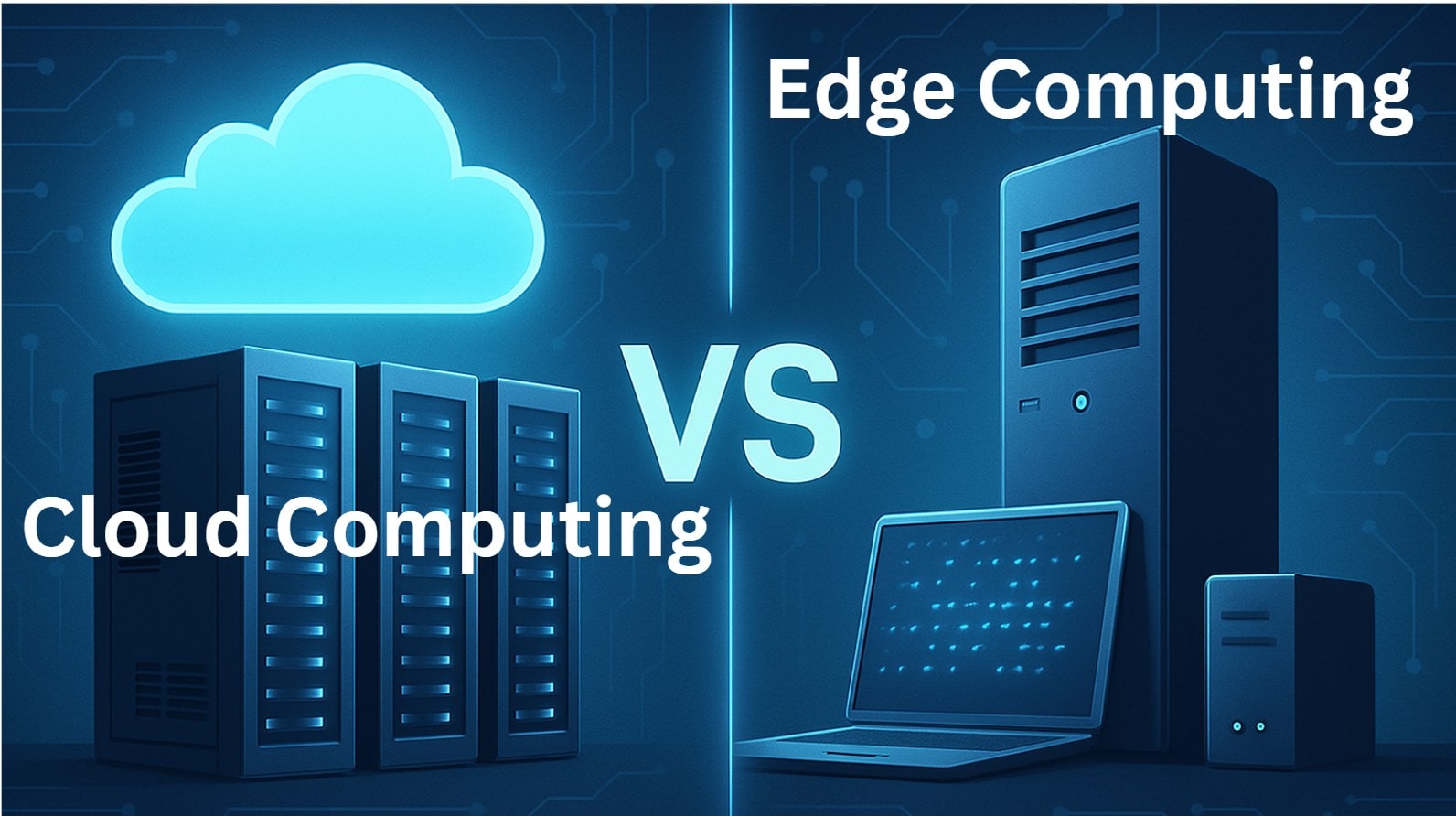
- The Internet of Things (IoT): The IoT is made up of devices connected to the internet and to one another. IoT devices are used in many industries, including trucking, farming, and manufacturing, and require “edge computing” systems that place some key decision-making capabilities close to the devices under management, not back at the cloud data center. Now, businesses using sophisticated AI cloud services or AI built into SaaS applications can enable their IoT devices to learn from their data and their experiences over time, improving or suggesting improvements as they go.
- Generative AI: With cloud computing, powerful generative AI models with LLMs at their core are now just an API away. Businesses can use generative AI to expedite research, brainstorm creative ideas, enhance customer service or help desk applications, and many other tasks. RAG helps cloud providers make generative AI even more useful by augmenting the LLM’s knowledge base with a customer’s recent and securely stored enterprise data.
The Ups and Downs of AI Cloud Computing
AI cloud computing offers remarkable advantages, but they come with tradeoffs. Like any powerful tool, it solves some problems while introducing new considerations.
Here’s a quick look at both sides of the coin:
| What Works Well | What Needs More Thought |
|---|---|
| Instant scalability: Need 100 GPUs for a week? The cloud provides them instantly, then scales back down. No buying hardware that sits idle 80% of the time. | Data sensitivity: Patient records or financial data in the cloud raise valid privacy concerns. Even with encryption, you’re trusting a third party. |
| Lower costs: You pay for what you use. No massive upfront investments in servers, cooling, or physical space. | Latency: A self-driving car can’t wait for a cloud server 500 miles away to decide whether to brake. If data has to travel long distances, lag becomes a real issue. |
| Faster experimentation: Cloud platforms offer pre-trained models (like OpenAI’s GPT) so you can test ideas in days, not months. | Hidden biases: Cloud-based AI tools often run as “black boxes.” If a model makes a flawed or biased decision, it’s hard to trace back what went wrong or why. |
| Global reach: Deploy an AI chatbot worldwide in minutes, with automatic translations for 100+ languages. | Vendor lock-in: Each cloud provider has unique tools and processes. Switching from AWS to Azure, while possible, can be demanding. |
| Continuous updates: Cloud AI models improve automatically (like your phone’s keyboard predictions getting smarter). No manual upgrades needed. | Regulatory gray areas: If a cloud-based AI denies someone a loan, who’s accountable? Is it the bank, the AI developer, or the cloud provider? |
| Wider access: Small teams can now use tools that once required full departments. That’s because the cloud removes the need for high-end infrastructure. | Ethical concerns: Just because AI can do something doesn’t mean it should. Cloud AI brings up real questions around surveillance, consent, and accountability. |
Many technical obstacles are eliminated by AI cloud computing, but careful planning about data and ethics is still necessary. Every significant advancement is accompanied by some worries. Knowing which ones you’re ready to accept is crucial, as is designing your systems with those options in mind.
Although cloud computing providers are working to lower the barriers to using AI, challenges remain, mostly around managing data and hiring personnel with the right expertise.
- Data privacy: When it comes to data security and privacy, AI brings its own set of challenges. For example, there’s the potential for AI models to “leak” details from sensitive data sets used to train them. Customers will prioritize cloud vendors who offer strong controls over data governance and security.
- Integration: AI runs on clean, well-organized data. And it gets smarter when data originates from many different sources. The challenge, then, is to integrate and standardize data from different internal business units or partner sites as well as external sources, such as weather feeds or open government data.
- Talent gap: People with the expertise needed to design, train, and deploy AI models take time to find and are expensive to hire and retain. Even with AI model developers and cloud services providing the building blocks, companies often need experienced data managers and data scientists to make AI work for them.
Final Words
Artificial intelligence is rapidly becoming a part of many human endeavors. The availability of AI on potent cloud computing platforms is largely responsible for that increase. Internally, cloud providers can eventually go beyond using AI to automate and monitor IT infrastructure and start providing AI-driven services that support the development and debugging of applications, assess and enhance business processes, and even supply the edge services and back-end computing for highly autonomous robots and drones. In the future, cloud-based services will be able to employ AI to think creatively and profoundly about social and corporate difficulties.







Comments