
 By
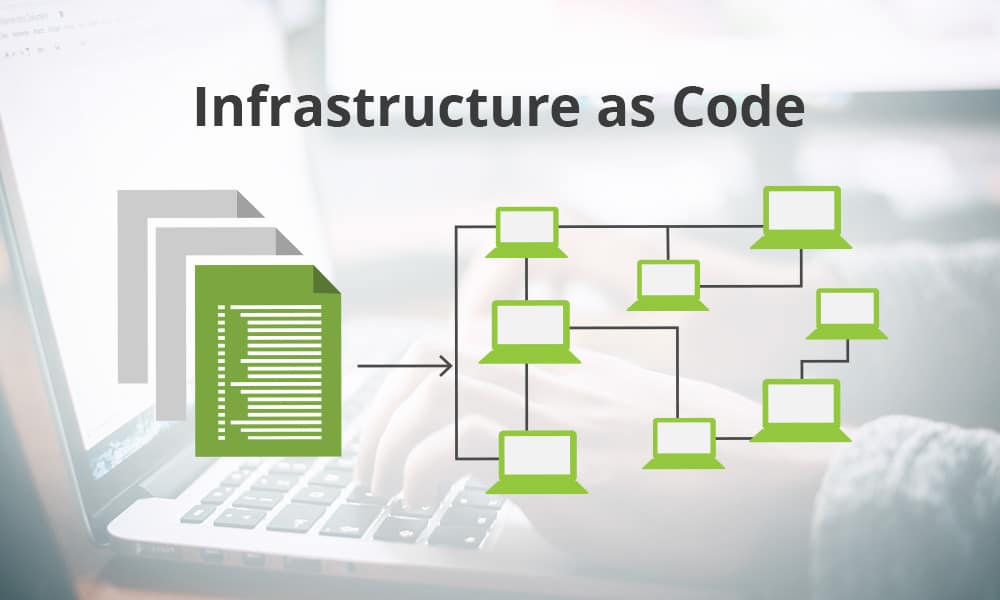
Infrastructure as Code (IaC) automates the development and maintenance of resources such as servers, networks, and storage by controlling and providing IT infrastructure using code rather than manual processes. By removing manual errors, facilitating version control and collaboration, and enabling repeatable, automated deployments, it improves efficiency, consistency, and reliability.
Infrastructure as code (IaC) uses code rather than human procedures to automate the provisioning and maintenance of computing infrastructure, including servers, virtual machines, operating systems, networks, and storage. IaC enables you to cut expenses and human error by automating the manual process of setting up, configuring, and maintaining infrastructure each time you build, test, and deploy an application.
In order to consistently produce the same environment, IaC generates configuration files that include your infrastructure specs and uses them like source code. This prevents undocumented changes by making it simple to manage and share your chosen configurations.
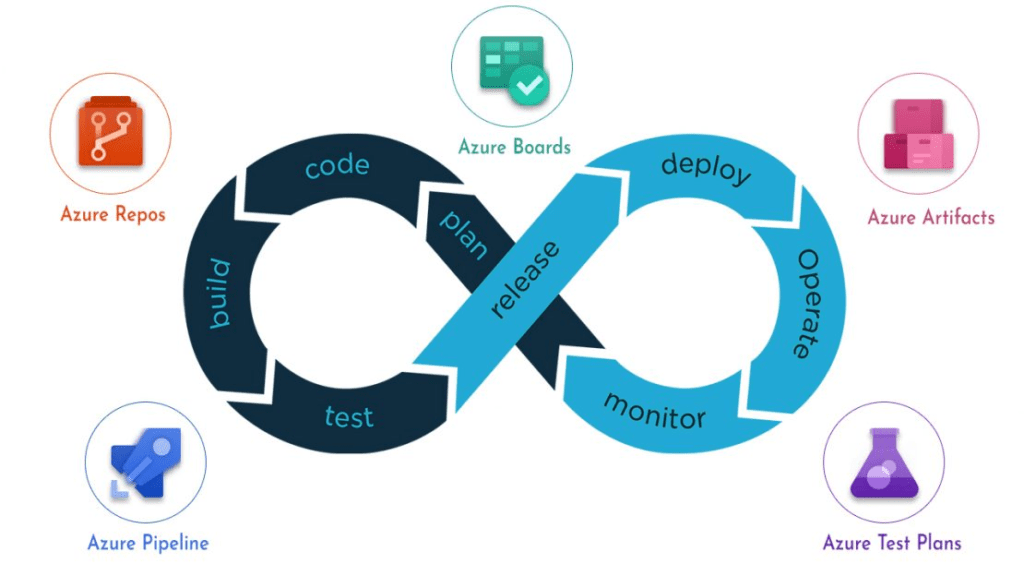
Because it makes the CI/CD process easier to automate, IaC is a crucial component of DevOps. IaC helps prevent configuration drift, maintain consistency in IT environments, and reliably scale your infrastructure based on demand by ensuring that development and operations teams utilize the same deployment and configuration template. According to the State of Infrastructure-as-Code Report, 27% of IT professionals ranked environment consistency and drift prevention as the top benefits of IaC in 2025.
How Does IaC Work?
Writing code to express the intended state of infrastructure resources, like servers, virtual machines, and networks, is known as infrastructure-as-code. In order to comprehend and run the code and communicate with underlying APIs to develop or alter the infrastructure components, organizations usually use IaC tools or platforms like Terraform and AWS CloudFormation. To set up your IaC strategy, you can do the following:
- Infrastructure definition: The first step involves writing code that specifies which resources you need and their corresponding configurations. A developer typically uses a domain-specific language, such as YAML or JSON, to write these specification files.
- Versioning: You’ll need to store this infrastructure code in a version control system or code repository, such as Git, so that you can track changes and revert to previous versions in case of issues.
- Automated provisioning: Automation tools interpret the infrastructure code and execute it to provision the specified resources, like creating databases or setting up virtual machines. The tool compares the current infrastructure with the configurations specified in the code, identifies any discrepancies, and works to align the infrastructure with the defined specifications by creating, modifying, or deleting resources as necessary.
- Deployment: Teams deploy the infrastructure across different environments by executing the same scripts, ensuring consistent infrastructure provisioning across all environments. Before deployment, you can test the infrastructure code in a virtual environment that mirrors the actual environment to verify compliance, identify errors, and more.
A declarative versus imperative approach, idempotency, version control, automation, and consistency are the key tenets of IaC. Examine these in further detail below.
Declarative vs. imperative approach
In a declarative approach, you describe the final state of the system, including the resources and properties required, and the IaC tool configures and provisions your infrastructure according to your specifications. In contrast, an imperative approach requires you to specify all the steps needed to achieve the desired infrastructure, and you must execute these steps in the correct order. While the declarative approach is generally preferred due to its ease of use, an imperative approach might be necessary for complex infrastructures where the order of events is important.
Version control
Similar to software source code, you’ll want to store your configuration files in a version control system like Git. Version control enables your teams to track changes, identify who made them, work on the same code simultaneously, and revert to a previous version if needed.
Idempotency
Idempotency means that the script produces the same result every time it’s executed. In IaC, idempotency ensures that applying the same configuration settings multiple times does not change the final state of the infrastructure, which maintains consistency, prevents drift, and enhances reliability.
Automation
By codifying infrastructure management, you eliminate the need to manually provision resources and apply configurations every time you deploy an application. Automating infrastructure management enables you to consistently generate environments, scale your operations, and expedite deployments.
Consistency
As IaC uses the same code for infrastructure provisioning in every stage of the DevOps life cycle, you can reduce environment-specific errors and easily replicate environments for disaster recovery or troubleshooting.
You can apply an IaC framework in several areas of your workflow, including the following:
- Web application deployment: Using IaC, you can specify and provision all the resources necessary for a web application as a reusable template, reducing errors and ensuring consistency throughout the development life cycle.
- CI/CD pipelines: With IaC, you can automate, version control, and test infrastructure changes like source code. IaC allows developers to test code in environments that mirror the actual production environment, resulting in faster and more reliable deployments.
- Disaster recovery: Since infrastructure configurations are stored in version control repositories, you can quickly and consistently reproduce environments and settings in case of a failure.
- Multicloud deployments: Infrastructure as code tools allow you to specify and manage resources consistently across different cloud platforms.
- Microservices: IaC helps maintain consistent settings and networks across microservices environments, where multiple teams work on different services that need to function optimally together.
Top 9 Benefits of Infrastructure as Code
Developers and business owners can profit from the many capabilities of infrastructure as code. The top nine advantages of IaC for both groups are listed here.
1. Cost reduction
Every task completed adds to each constructing team’s substantial financial budget. Usually, the length of time required to finish the task leads to expensive prices. However, because IaC automates important processes, such as laborious infrastructure configuration, the engineers or IT specialists may quickly complete these jobs and concentrate on other mission-critical duties. This would assist reduce expenses associated with essential duties and raise wages for other functions in accordance with their needs. The group may even choose to set aside this cash for future significant choices.
2. Speed
Building, monitoring, and controlling infrastructure structures involve numerous processes, but since IaC has made it feasible to automate nearly all of them, the task may be completed twice as quickly. Automation encompasses anything from major processes like virtualization to user account management, databases, network administration, and even small tasks like adding environments and resources when necessary or shutting down when not. Faster and easier processes are promised by this automation capability. Because minimal code increases clarity and, consequently, efficiency and speed, this speed benefits the entire team, not just the coders.
3. Low risk of human errors
There are two ways to describe human mistake on this benefit. The first is the face meaning, which suggests errors committed during the manual infrastructure development process by engineers or IT staff. The second aspect of human error is how new hires adjust to the infrastructure created by the old IT specialist. These two problems are resolved by IaC since automation shortens lengthy operations and lowers the possibility of human error.
Read Also: Cloud Cost Management Tools Compared: AWS, Azure, GCP
Additionally, IaC standardized and recorded every step of the constructing process. This produces thorough reports and documentation of the infrastructure’s operation, management, and deployment, as well as how new hires may continue to oversee it without encountering any difficulties.
4. Improved consistency
Regarding human error, infrastructure as code promotes consistency by preventing human mistake and incompatibility in tasks like deployment and setup that are vulnerable to the aforementioned. Ironically, these inconsistent tasks need to be completed as quickly as possible. Because of this, it is nearly impossible to perform tasks like deployment and configuration by hand without at least one inconsistency.
By avoiding resource waste, unneeded downtime, and setbacks that could lead to configuration discrepancies, IaC enhances consistency during these tasks. When these discrepancies are found, they might be difficult to eliminate.
5. Eliminate configuration drift
The idempotence of infrastructure as code is another important advantage. This suggests that the code can be deployed again, with the first deployment serving as the actual deployment and any subsequent deployments having no significant impact.
The most notable of this idempotency feature’s many benefits is its ability to stop configuration drift. If someone modifies a resource outside of your IaC pipeline, you must make the necessary corrections and return the resources to their original condition as quickly as you can. However, with IaC, the code already contains the environment configuration specifications. This suggests that if the modification is put into practice, the correction will occur automatically.
6. Improved security strategies
One-way deployment is one of the elements of IaC that can aid in enhancing security tactics. Computing, storage, and networking services are all provisioned with code and delivered in the same manner with IaC, frequently utilizing a private or public cloud. Security standards may also be an example of this. They are simple to develop and implement. By avoiding security gatekeeper assessment and approval for nearly all security changes, this would improve other tactics. Infrastructures that need strict security and multiple security passes would benefit most from this.
7. Accountability
This advantage is the culmination of several infrastructural elements, including source control, self-documentation, and code. These capabilities allow you to view the source code and record configuration operations. Because of these features, the configuration’s source code is readily available and sufficiently clear to explain why users made particular changes at particular times and the outcomes of those changes. As a result, IaC increases team member accountability and visibility of automated configuration and deployment techniques, which boosts team output.
8. Stable and scalable environment
Using IaC, teams can configure their environments according to their specifications rapidly and at scale. As stated earlier, they can also create these environments with sure consistency as they can deploy the configuration several times. These several deployments also make the environment stable, preventing incompatibility caused by configuration drift or missing dependencies. In conclusion, working with best practices and IaC tools to create environments is a sure bet to make a stable one due to the impressive features of IaC.
9. Self-documentation
Remember that IaC creates detailed reports and documentation of every process. This is another impressive feature of IaC that holds multiple benefits. When employees leave a company or a person is setting up the code model for another person, IaC documents every action, process, and change. IaC also tracks and tests every configuration like a code. This documentation can be a yardstick for a new employee or configuration manager.
Top 8 Best Practices of Infrastructure as Code
Infrastructure as code was created to automate resource provisioning as well as the construction, administration, and monitoring of IT infrastructure components. But only when IaC is carried out in accordance with best practices will these goals be realized.
1. Employ immutable Infrastructure
In IaC, immutability means that each component is constructed strictly in accordance with the original specifications. This generally means that after a component has been deployed, it cannot be changed or edited. What makes this a best practice? There is no possibility of contradictions between configuration items and environments if an immutable infrastructure is put into place.
If you use immutability and want to change an environment or configuration, you would have to remove the current component and start again using the IaC templates. This guarantees component security and uniformity.
2. Use version control for IaC
One cannot update IaC files alone. They need to be updated alongside the environment that they manage. Version control involves keeping different IaC files of updates to a particular configuration and environment. This practice can help you trace, manage, and restore former updates. This is helpful as it allows the team to debug and diagnose issues easily or even go back to the previous version. Version control also helps to trigger security actions when a change is made to the environment.
3. Protect the “secrets”
Some IaC files can only configure resources with sensitive information like passwords or encryption keys. This sensitive information is called secrets. Although it is easier to define secrets in IaC files, they are written in plain text, and anybody with access can obtain this sensitive information. This means that the individual can configure the resources in any manner.
To protect the secrets, keep them in a secrets manager where they would be stored safely and only accessed by IaC tools when necessary. In addition, do not put secrets in files that one would use for web-based services, like version control files.
4. Conduct multiple testing, integration, and deployment
The importance of running multiple testing, integrations, and deployment in IaC files for quality work cannot be overemphasized. This reduces the risks of inconsistencies that might cause issues during deployment. This is because developers can run different types of tests, and by implementing continuous integration and continuous deployment, you would be able to provision templates in different environments. This would improve collaboration and cause errors to be discovered in the early stages of the development cycle.
5. Use modularity in IaC
Modularity involves making changes and updates to small sections and places instead of big or bulky ones. It usually breaks the bulky code modules into different files for more efficient changes or updates. This is because it is easier, faster, and more efficient to change, fix and even reverse a small unit change than a single file.
6. Correct environmental drifts
Drifts are configurations of an IT environment that are not in sync with their template. Correcting environmental depicts and fixing misconfigurations is a best practice that is almost mandatory for quality work and security. Drifts can be caused by careless human errors and be difficult to fix. To identify a drift, compare IaC to the actual production configurations. This is time-consuming and would cost businesses significant downtime if done manually. You can quickly identify a configuration drift with IaC security scanning tools.
7. Be careful of code leaks
When a source code is published publicly, there is a chance of intellectual property theft. It is best practice to release source code in an intelligent manner that would prevent mishaps. In source code release, secrets and feature announcements become vulnerable; attackers might also parse the code for secrets, vulnerabilities, or misconfiguration.
It is best practice to employ protocols to prevent code leaks and develop a contingency plan in case of any code leakage. Also, regularly check to ensure source code is not published in public repositories, and deal with code leaks quickly because the longer they stay public, the higher chance of being available to malicious actors.
8. Always scan the IaC code
For early identification of IaC code misconfigurations, scan the code regularly with IaC scanning tools. Misconfigurations can be of various forms, majorly as insecure default configurations; others are publicly accessed S3 buckets or unencrypted databases. These security scans hedge the code against inadvertent misconfigurations that might lead to security vulnerabilities and cause breaches and exposure. Also, by scanning, you can detect and correct infrastructures that are not coherent with the template. Scanning is a best practice as it assures the security of your code modules and everything accomplished using other best practices.
Infrastructure as Code Tools
Infrastructure resources can be created, deployed, and managed automatically with the use of infrastructure as code technologies. The following is a list of IaC tools along with the functions they can carry out:
| IaC Tool Type | Use Cases | Examples |
| Configuration Management Tools | Automates provisioning and/or configuration of servers. | Puppet: Enforces desired state on servers with agent-based configuration management. Chef: Uses Ruby DSL for complex configurations. Ansible: Uses YAML playbooks for agentless automation of infrastructure configurations. |
| Orchestration | Coordinates multiple services or resources into complex workflows. Manages dependencies between resources. | Bolt: Lightweight orchestration tool for automating ad hoc tasks and complex workflows across systems. Kubernetes: Manages containerized applications. Terraform: Manages cloud and on-prem resources. AWS CloudFormation: Orchestrates AWS resources. |
| Provisioning | Automates the creation of infrastructure resources. Efficiently manages the lifecycle of resources. | Terraform: Multi-cloud infrastructure as code. Pulumi: Code-based cloud infrastructure management. CloudFormation: AWS-native provisioning. |
| Immutable Infrastructure | Promotes the creation of immutable server images. Enhances reliability and security by reducing configuration drift. | Docker: Containerization for consistent environments. Packer: Builds machine images for multiple platforms. Kubernetes: Manages immutable containerized apps. |
| Version Control Systems (VCS) | Manages changes to infrastructure configurations over time. Facilitates collaboration and rollbacks. | Perforce Helix Core: Enterprise-grade VCS known for high performance with large assets, and strong security and compliance features. GitHub: Popular VCS with extensive integration options. |
| Secrets Management | Securely stores and manages sensitive data like passwords, tokens, and API keys. Ensures secure access to sensitive data across environments. | HashiCorp Vault: Comprehensive secret management. AWS Secrets Manager: Manages secrets in AWS. |
| Container Management | Manages containers and their orchestration at scale. Enables microservices architecture. | Docker: Leading container platform. Kubernetes: Orchestrates containers in clusters. OpenShift: Kubernetes-based container management platform. |
| Monitoring and Compliance | Ensures infrastructure adheres to policies and monitors its state.Automates auditing and reporting. | Puppet Enterprise: Contains Security Compliance Management, which assesses configurations for compliance and generates automated reports. Splunk: Enterprise platform for searching, monitoring, and analyzing machine-generated data. Datadog: Cloud-scale monitoring. Prometheus: Open-source systems monitoring. |
Here’s a hypothetical situation where a company uses infrastructure as code to launch a web application to offer you an even clearer understanding of how IaC operates.
- Infrastructure as Code Development: First, the organization needs to define the desired configurations of the relevant components. That includes the web servers, app servers, and databases.In this case, they write Puppet scripts (which we call modules) to ensure all servers will be configured with the right software, patches, and dependencies before anything gets provisioned. Then they commit those code changes to a repository (Perforce Helix Core, Git, etc.).
- CI/CD: The team’s continuous integration/continuous delivery (CI/CD) pipeline uses Terraform to provision infrastructure, with Puppet applying consistent configurations. They use Puppet Bolt used to execute one-off deployment tasks or apply Puppet manifests.
- Deployment: Next, the organization builds Docker containers and pushes them to a container registry. Kubernetes deploys and manages these containers across the previously provisioned infrastructure.
- Configuration Management: Puppet uses the infrastructure code developed in step 1 and applies it across all those new resources. This part of IaC is sometimes called configuration as code. That includes standing up web servers, application servers, and databases with the right operating systems, software, security patches, user privileges, services, and more.
- Monitoring: Puppet can report on system state to tools like Splunk, Datadog, and Prometheus, providing insights into the performance and security of applications and infrastructure maintained by Puppet.
Conclusion
A fundamental idea in IT, infrastructure as code enables infrastructure administrators to rapidly and easily set security, provision resources, and alter the environment from any location. These days, almost all cloud environments—including AWS, Google, and Microsoft Azure—support the usage of IAC through their own resource management interfaces. To get started, you can utilize third-party IAC platforms like Terraform or Pulumi or declarative templates created from scratch.





Comments