
 By
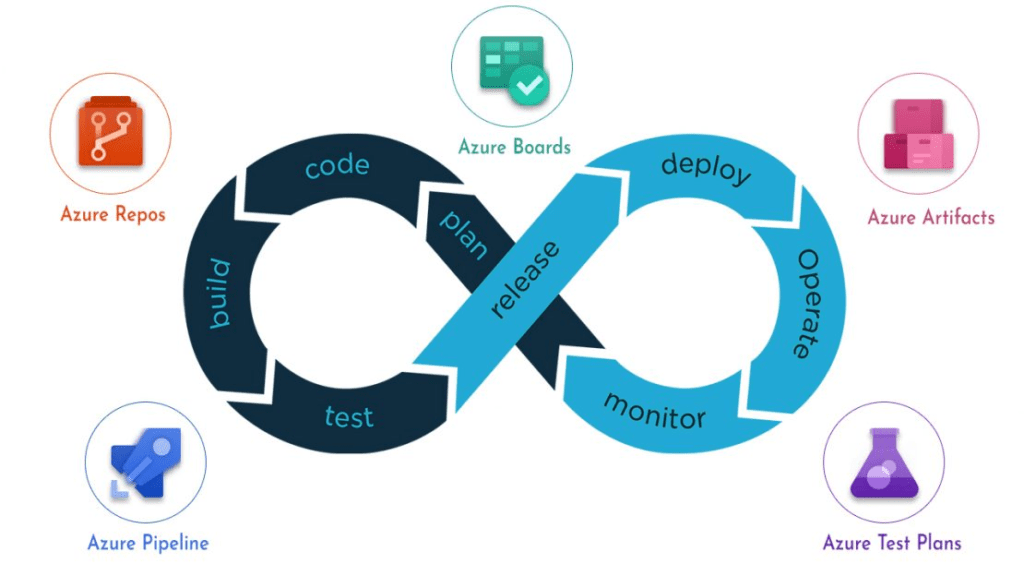
By leveraging code to automate infrastructure provisioning, configuration, and administration, Infrastructure as Code (IaC) connects with DevOps and CI/CD pipelines and enables infrastructure to be treated like application code. This automation ensures that development, testing, and production environments are identical and reduces manual work and errors by making infrastructure modifications uniform, repeatable, and auditable. This enables IaC to be automatically tested and deployed in a CI/CD pipeline, resulting in quicker and more dependable software delivery.
How IaC fits into DevOps and CI/CD
- Automation: IaC automates the entire lifecycle of infrastructure, from initial provisioning to ongoing updates, eliminating manual processes and the associated risk of human error.
- Consistency: By using code to define infrastructure, teams can ensure that development, staging, and production environments are identical, which helps prevent issues that occur because of environment drift.
- Version Control: IaC code is stored in a version control system (like Git), which provides a history of all infrastructure changes and allows teams to collaborate effectively using the same practices as for application code.
- Testing: IaC enables the rapid creation of test environments that mimic production. These can be spun up on demand, tested, and then torn down, allowing for more thorough testing earlier in the development cycle.
- Speed and Reliability: The automation and consistency provided by IaC speed up the delivery of both applications and their supporting infrastructure, making the entire software delivery process faster and more reliable.
Example workflow in a CI/CD pipeline
- Code Change: A developer commits a change to the application code and/or the IaC code repository.
- Continuous Integration (CI): The CI server detects the change and triggers a build. This includes running tests on the application and linting/validating the IaC code.
- Deployment to Staging: A successful CI build can automatically trigger a deployment pipeline to provision or update the staging environment using the IaC code.
- Testing: Once the staging environment is ready, automated tests are run against the application.
- Approval and Production Deployment: After the tests pass and a manual approval (if required) is given, the CI/CD pipeline automatically provisions or updates the production environment using the same IaC code.
- Rollback: If an issue is found in production, the pipeline can be used to redeploy the previous, known-good version of the infrastructure code to roll back the changes.
The Role of IaC in DevOps and CI/CD
The core tenet of DevOps and CI/CD methodologies is Infrastructure as Code (IaC). It provides a number of benefits that successfully address the typical problems that businesses face when developing and deploying software. Let’s examine the vital functions that IaC performs in various domains:
1. Consistency and Reproducibility
IaC guarantees the foundation of infrastructure environments in a uniform and reproducible manner. By determining infrastructure configuration as code, you can eliminate the issues arising because of manual setup, reducing the number of errors and a highly efficient deployment environment. However, it is important to implement uniformity to prevent complications arising from inconsistencies between development, testing, and production environments.
2. Infrastructure Automation
Automation is a principal aspect of IaC, serving as the core principle. It offers the seamless and efficient provisioning, configuration, and administration of infrastructure resources. This results in efficient deployment processes and decreased dependence on manual tasks. As a result, teams are empowered to prioritize more valuable resources such as coding and optimization.
3. Version Control
IaC leverages the power of version control systems, allowing you to track the changes made to your infrastructure configurations in real time. This empowers you with the capability to effortlessly revert to earlier versions in the event of any complications. It facilitates transparency, and accountability, and fosters collaboration within your infrastructure management workflow.
4. Scalability and Flexibility
IaC enables organizations to seamlessly scale the size of their infrastructure as needed. This capability is of utmost importance in a dynamic environment where workloads can rapidly be changed. By incorporating IaC, businesses can easily adapt to changing demands, optimizing resource utilization and enhancing cost-effectiveness.
5. Testing and Validation
It facilitates automated testing and validation for infrastructure configurations. By transforming tests and checks into code, it becomes possible to detect potential issues at an early stage in the development process. Thereby, it ensures the dependability and uniformity of the infrastructure. This approach is essential in delivering higher-quality software and reducing system downtime.
Read Also: Declarative vs Imperative IaC: What’s the Difference?
6. Security and Compliance
Security and compliance play a major role in the realm of software development. The implementation of infrastructure as Code (IaC) empowers businesses to codify and enforce stringent security policies and compliance requirements, thereby mitigating the potential risks associated with other issues.
7. Collaboration and Communication
IaC promotes effective collaboration among various stakeholders engaged in the software delivery process, including development, operations, and other teams. It improves communication by utilizing shared, version-controlled code, which serves as a common language for all involved parties. This seamless integration of IaC facilitates efficient teamwork and the exchange of valuable information.
8. Immutable Information
It promotes the concept of immutable infrastructure, where infrastructure elements remain unchanged and are replaced whenever changes are required. This approach improves security and predictability and simplifies the rollback process, thereby facilitating the management and resolution of issues.
5 Benefits of Using IaC in DevOps and CI/CD
IaC usage in DevOps and CI/CD pipelines offers several advantages that are crucial for contemporary software development and deployment procedures. Let’s examine these benefits below.
1. Improved Collaboration
Through the incorporation of IaC in DevOps and CI/CD you can foster a collaborative atmosphere among diverse teams, encompassing development, operations, and quality assurance. Through the utilization of code to articulate infrastructure, all individuals consume in a shared language and possess a clear understanding of the environment’s prerequisites. This inclusive environment cultivates effective collaboration, diminishes impediments, and accelerates decision-making processes.
2. Efficiency through Automation
Greatly enhances productivity by automating the provisioning and management of infrastructure. Time-consuming and repetitive tasks can now be executed efficiently with rapid infrastructure deployment, mitigating the risk of human error and liberating substantial time for the pursuit of development and optimization objectives.
3. Quality Software Development Cycle
IaC can optimize the software development lifecycle by providing faster accessibility to the necessary infrastructure. It empowers developers to focus on coding and testing, eliminating the inconvenience of slow environment setup. This enhances efficiency resulting in accelerated development cycles and faster time-to-market for products and features.
4. Standardized Environment and Security
It is an important framework that promotes uniformity and enhances security throughout the entire development and deployment process. By defining infrastructure through code, it eliminates the chances of ad-hoc, and unreliable configurations. This standardization approach effectively reduces vulnerabilities and compliance-related risks, guaranteeing all environments, whether in the development or production process, strictly adhere to industry best practices and security standards.
5. Improved Scalability
One of the key advantages of implementing IaC is its ability to effortlessly scale infrastructure resources. By leveraging IaC, enterprises can adapt their resources based on changing workloads, leading to enhanced performance optimization and reduced operational experiences. This inherent scalability proves to be an invaluable asset in today’s rapid environment, where demand can fluctuate rapidly.







Comments