
 By

With declarative tools like Terraform and configuration management systems like Puppet and Chef, infrastructure management has advanced from manual setup and simple scripting to Infrastructure as Code (IaC). Infrastructure may now be version-controlled, tested, and managed like software thanks to this change, which was prompted by the requirement for consistency, speed, and scalability. More recent methods even permit management in well-known programming languages.
1. Manual setup and basic scripting
- What it was: Infrastructure was provisioned and configured manually using graphical interfaces or command-line tools.
- Challenges: This process was slow, error-prone, and inconsistent, especially as systems scaled. Basic automation was introduced via shell scripts, but these often managed individual tasks in isolation.
2. Configuration management tools
- What it was: Tools like Puppet and Chef emerged to allow infrastructure to be defined using declarative code.
- How it worked: Developers could define the desired state of a system, and the tools would ensure the infrastructure matched that state, improving consistency.
- Limitations: While powerful for server configuration, these tools were not always designed for full-scale provisioning of networks and other resources.
3. Declarative IaC and provisioning
- What it was: Tools such as Terraform and AWS CloudFormation introduced a new level of abstraction, allowing users to describe entire environments (servers, networks, storage) in code.
- How it worked: These tools use a declarative approach, where you define what you want, rather than how to build it, making infrastructure management more streamlined and enabling version control of the infrastructure itself.
- Benefits: This automation simplified management and made it possible to reliably create, destroy, and recreate entire environments programmatically.
4. Modern IaC with familiar languages
- What it is: Today, tools like Pulumi and CDK for Terraform allow developers to write infrastructure code using familiar programming languages like TypeScript, Python, and Go.
- How it works: This enables developers to leverage modern programming concepts like abstraction, testing, and code reusability to manage their infrastructure.
- Benefits: It makes the code more reusable, testable, and maintainable, integrating infrastructure management more deeply into the software development lifecycle.
For systems administrators, provisioning, configuring, managing, and reconfiguring infrastructure has long been a challenging and time-consuming procedure. Even while system administrators have attempted to make setup easier by writing scripts, frequently two or three system administrators keep them locally rather than in a library, so each of them ends up writing a distinct version of the same script to accomplish the same task. Additionally, the powers of scripts are constrained. They might be able to assist you with customizing an operating system once it has been installed, but it is improbable that a single script could install the operating system, construct a virtual machine, and then carry out the customisation. You can only accomplish a portion of what you want to do with scripts.
However, you can automate your infrastructure from beginning to end with configuration tools like Ansible and Puppet. Although the tools may use the script as part of the process, they are capable of much more, such as consistently provisioning a virtual machine in the same manner each time. Any process that is repeatedly carried out by hand has the potential to introduce inconsistency.
When a server goes offline due to a mistake or accident, users still need to reconfigure each server individually, even if this process is carried out successfully. But with automation, no one ever has to configure or reconfigure servers individually as that is taken care of automatically once you connect the server to a configuration tool. Although you could create such a tool yourself, it would likely require hundreds of hours of your time.
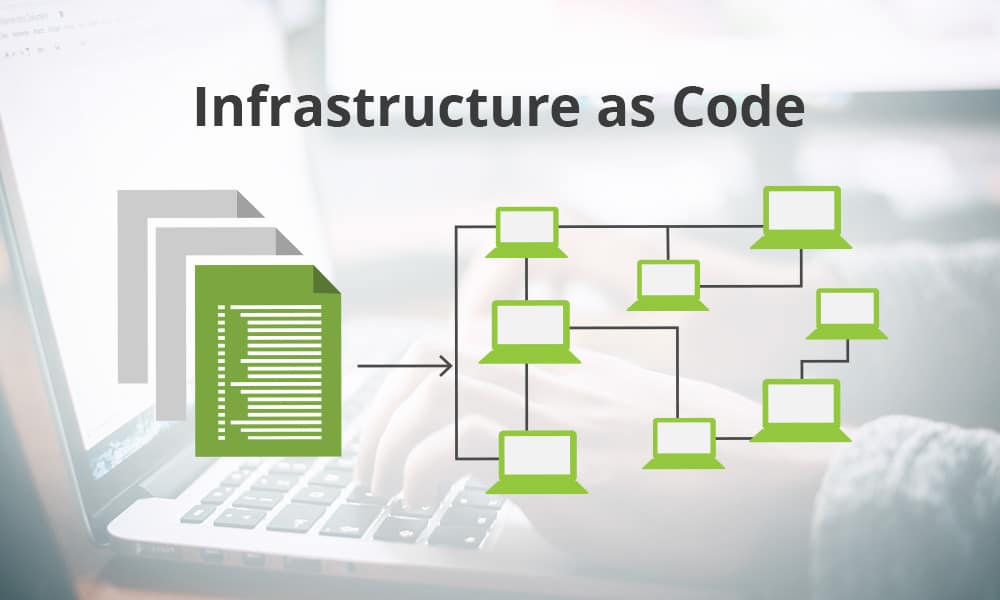
Infrastructure as Code (IaC), a configuration management technique that employs code and code development techniques to automate infrastructure configuration, is another name for automated hardware and service setup. Development, testing, and production environments can use servers, load balancers, databases, firewalls, storage, services, and rights. IaC, which was founded on DevOps principles, automates procedures for both DevOps and system administrators. By defining resource configurations that you can version, reuse, and share, IaC enables you to create, modify, and manage your infrastructure in a secure, consistent, and repeatable manner.
Teams must separately maintain deployed environment settings in the absence of IaC, which is time-consuming and expensive. Additionally, over time, each of those environments develops a distinct configuration known as drift that is unable to replicate reliably, leading to deployment and security issues as well as discrepancies across environments.
Read Also: What Is Infrastructure as Code and Why It Matters
Impact of Infrastructure Automation via IaC
Below is a list of the strategic business value that infrastructure automation presents:
- Helps to stop inaccuracies and inconsistencies in the creation and documentation of your architecture
- Provides an accurate picture of your infrastructure at any given moment
- Enables and enhances version control
- Reduces reliance on undocumented or poorly shared tribal knowledge that may be held by just a few people in your organization
- Minimizes the risk of human error
- Reduces technology costs, driving savings on expenses such as server compute and storage space ion
- Reduces the time needed to manage technology infrastructure, freeing up staff to focus on higher-value tasks
Who benefits from IaC?
- Software Developers
- Technical Managers and Leads
- System and Cloud Administrators
- Network Engineers
Despite the apparent need for all businesses to implement IaC, many choose not to due to the initial time commitment. However, if you take your time and make appropriate plans, once IaC is integrated into your system, it creates identical and repeatable environments for any one device or set of devices in a matter of minutes, giving you the same environment each time it deploys and avoiding configuration problems. Infrastructure automation code needs to be built first, but once you have it, you can utilize it throughout the company and group devices so you can automate them all at once.
Bottomline
Infrastructure as Code has become a game-changer in cloud infrastructure management. By treating infrastructure like software, IaC enables organizations to achieve higher levels of automation, scalability, and dependability, which eventually leads to shorter development cycles and increased overall efficiency. As companies continue to use the cloud, Infrastructure as Code will remain an essential tool for building and managing the infrastructure of the future.
In summary, Infrastructure as Code presents a novel approach to cloud infrastructure management with numerous benefits, including increased security, scalability, cost-effectiveness, speed, and consistency. As businesses embrace the cloud and look to optimize their operations and development, IaC has developed into a crucial process for accomplishing these objectives.




Comments