
 By
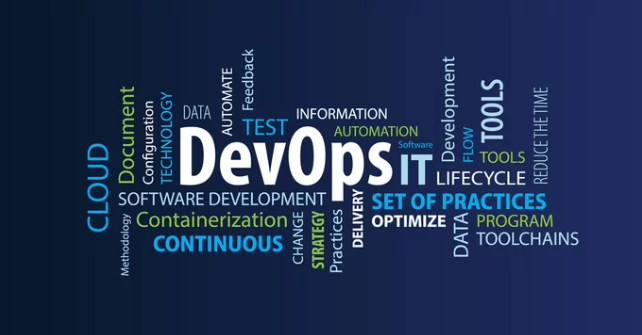
Using automation technologies and techniques like CI/CD, containerization, and infrastructure as code, DevOps in the cloud combines development and operations to speed up software delivery, increase scalability, and foster better teamwork. Git for version control, Jenkins or GitLab for continuous integration and delivery, Docker and Kubernetes for orchestration and containerization, and Terraform or Ansible for infrastructure management are important tools. Strategies emphasize cost control, cloud-native architecture optimization, pipeline automation, and security.
DevOps is a collection of procedures used to integrate and automate activities between IT and software development teams. The goal of this approach is to produce features, fixes, and updates more regularly while reducing the development lifecycle.
In the past, DevOps arose in response to the shortcomings of conventional software development techniques. The introduction of agile methodologies, which ultimately developed into the all-encompassing DevOps architecture we see today, was prompted by the demand for software that was more dependable and delivered faster.
DevOps Tools
For DevOps implementations, a large variety of technologies are available, and new solutions are constantly being created. The most popular tool categories used by DevOps teams are listed below, along with some instances of the particular tools being used.
| Function | Examples of tools |
|---|---|
| Automated deployment: Automate deployment to staging or production environments. | Spinnaker, ArgoCD, Octopus Deploy |
| Public cloud platforms: Provide scalable computing resources with rich automation capabilities. | Amazon Web Services, Microsoft Azure, Google Cloud Platform, DigitalOcean, IBM Cloud |
| Containerization: Enables you to deploy services in a consistent way on any platform, with orchestration tools to manage, scale, and deploy a large number of containerized resources. | Docker, Kubernetes |
| Collaboration: Enable teams to communicate on tasks transparently with full accountability. | Slack, Jira |
| Infrastructure as code: Automates system configurations and standardizes resource provisioning. | Puppet, Chef, Ansible, Terraform, CloudFormation, Azure ARM |
| Logging: Enables you to collect and analyze event and operational data for troubleshooting and optimization. | Fluentd, Logstash, Filebit, Elasticsearch, Splunk |
| Observability, monitoring, and alerting: Enables the collection, analysis, and visualization of system metrics, logs, and traces to optimize performance, detect anomalies, and respond to production issues as they arise. | Logstash, Elasticsearch, Splunk, Prometheus, Sensu, Datadog, NewRelic, Dynatrace, AppDynamics, PagerDuty |
| Security: Scans and secures applications and resources to remediate vulnerabilities and prevent cyber attacks. | Snyk, WhiteSource, Snort, Veracode, Sonatype |
| CI/CD systems: Enables automatically building and testing code in a CI/CD pipeline. Related product offering: Codefresh: GitOps software delivery platform. Related technology updates in The pains of GitOps 1.0 and Jenkins Pipeline Generator. | Codefresh, Jenkins, Gitlab, CircleCI, TravisCI, Weaveworks, Azure DevOps |
| Application mapping: Application mapping is a process that involves identifying and documenting the interactions between various software applications within an organization. | AppDynamics, Dynatrace, New Relic, Faddom |
| Documentation tools: These tools can create, manage, and update technical documentation, including system overviews, developer guides, API documentation, and more. | Confluence, ReadTheDocs, Swimm, Sphinx |
| Configuration management Configuration management is the process of systematically handling changes to IT systems to ensure consistency, efficiency, and reliability. It involves defining, maintaining, and auditing system configurations to prevent configuration drift and enable automated provisioning, deployment, and rollback. | SaltStack, CFEngine, Otter, Configu |
| Caching and in-memory data stores Enable low-latency data access by storing frequently-used data in memory. Suitable for reducing load on databases, speeding up API responses, and handling high-throughput systems. | Memcached, Redis, Upstash, Apache Ignite, Hazelcast |
| AI code generation AI code generation tools leverage machine learning to automate code writing, review, and even refactoring. These tools help speed up development, reduce errors, and improve code quality by providing suggestions or generating code snippets based on input prompts or patterns in existing code. | Tabnine, GitHub Copilot, Codeium, CodeT5 |
Key DevOps Strategies
Any firm can apply a few basic DevOps implementation techniques to make DevOps possible. Let’s examine some of the DevOps strategies.
1. Infrastructure-as-a-code and Automation
For IT managers, infrastructure-as-a-code, or IaC, is a hidden gem. IaC is a powerful technique to automate your IT infrastructure, whether it is for provisioning, configuration management, or infrastructure management.
Keeping the infrastructure in the desired condition is the major goal of IaC implementation. The IaC solution need to manage any departure from the existing steady-state automatically.
Tools: Terraform, Amazon CloudFormation, Ansible, Puppet, and Chef are some popular IaC tools to enable infra-level automation in your organization.
2. Continuous Integration
CI is a reliable technique for automating development’s operational activities. Code build and code change integration can be automated with CI. The fundamental tenets of a DevOps deployment method are automated and quick systems. Developers may create and merge code more regularly and integrate code more frequently thanks to continuous integration.
Read Also: Microservices vs Monoliths in the Cloud
Saving a lot of time during the development cycle is one of the major advantages of implementing CI. It’s also an excellent method to prioritize high-quality development and cut down on the time spent correcting regression errors. All things considered, a promising CI pipeline aids in your comprehension of the codebase and the features you are creating for clients.
Tools: Jenkins, Gitlab, TeamCity, CircleCI.
3. Continuous Delivery
A strong software delivery methodology that helps teams create high-quality software quickly is continuous delivery, or CD. With the least amount of manual labor, continuous delivery pipelines guarantee that the software is supplied on time. CD is a potent DevOps release technique designed to increase the speed and frequency of software development, testing, and release.
Tools: Continuous Delivery is not dependant on tools but a set of tools. Below is the list:
- Container: Docker
- Build: Ant, Maven
- CI: Jenkins, Bamboo
- Code Quality: SonarQube
- IaC: Terraform, AWS CloudFromation
- Monitoring: Nagios, Kibana (ELK)
- Testing: Cucumber, JMeter
4. Microservice architecture
A recent development in the software industry is microservices. These are deployable, tiny services that are based on sophisticated applications. Simply put, a microservice is a more recent iteration of service-oriented architecture, or SOA. Microservices have the benefit of being technology agnostic and can communicate with one another in a variety of ways.
5. Kubernetes Clustering/Container Management System
Containerized applications are becoming the new standard DevOps release approach as products shift from virtualized to containerized platforms. DevOps engineers may build containers with Docker, a well-liked platform, and orchestrate with Kubernetes. One powerful tool for controlling the infrastructure’s containers is Kubernetes. One of the best cloud models that has been embraced by many sectors is SaaS. A key component in enabling multi-tenancy for SaaS platforms is Kubernetes.
Adding scalability elements to the infrastructure is another important function of Kubernetes. You can quickly scale your infrastructure both horizontally and vertically with Kubernetes.
6. Rapid Feedback
DevOps is not a job; it’s a culture. Furthermore, DevOps techniques facilitate rapid feedback loops between IT operations, testing, development, and business. Teams may work more quickly and nimbly thanks to DevOps. Feedback loops are an essential component of the process, and this rate of development and operations eventually results in a fantastic output. Quick feedback enhances both the processes and the final goods.
Let’s use an example to illustrate this: A straightforward illustration of a rapid feedback loop is a CI/CD pipeline. Any modification can be instantly implemented in the appropriate context. The feedback loop is strengthened when testing is incorporated into this CI/CD workflow. Defects can be closely monitored and fixed by developers while they are on the go. Eventually, this helps in reducing the overall turnaround time in the product delivery.
Final Thoughts
If modern organizations want to remain competitive, they must learn DevOps in cloud computing. Using techniques like automation, CI/CD integration, and micro-services, organizations can attain speed, efficiency, and scalability.
Keeping up with developments in technology, such as edge computing and artificial intelligence, will increase the advantages of DevOps in the cloud.








Comments