
 By

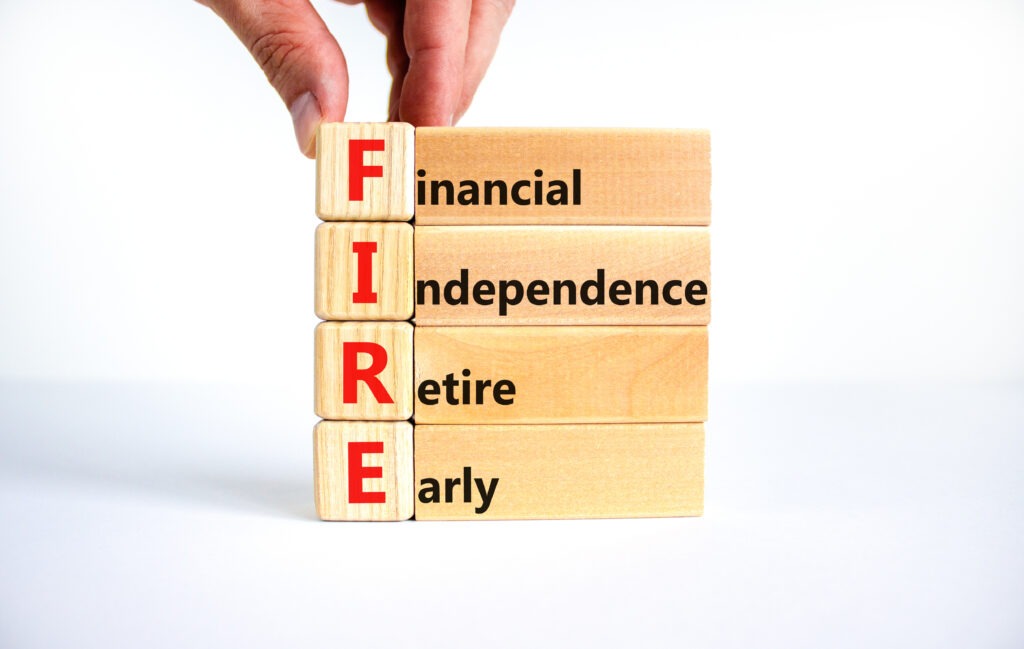
The FIRE movement (Financial Independence, Retire Early) is a lifestyle and investment strategy focused on extreme saving—often 50% or more of income—and disciplined investing to build a portfolio (typically (25\times ) annual expenses), allowing for retirement decades earlier than the traditional age. It focuses on reducing spending and producing passive income, allowing and affording the option to leave regular employment. Common versions include Lean FIRE (frugal), Fat FIRE (high income/high spend), and Barista FIRE (part-time job).
Key Principles of the FIRE Movement
- Aggressive Saving & Investing: Followers often save 50% to 75% of their income.
- The 25x Rule: A commonly used benchmark is to save 25 times your annual expenses, allowing for a 4% withdrawal rate to sustain retirement.
- Drastic Expense Reduction: Involves extreme budgeting, such as downsizing homes, reducing discretionary spending, and avoiding debt.
- Income Generation: Focuses on investing in low-cost, income-generating assets like stocks, bonds, and real estate.
Common Variations of FIRE
- Lean FIRE: Living a very frugal lifestyle with minimal expenses to achieve financial independence faster.
- Fat FIRE: Aiming for a more luxurious or traditional lifestyle, requiring a larger, more substantial savings goal.
- Barista FIRE: Achieving partial financial independence, where savings cover part of the expenses, allowing for part-time work or “barista-style” jobs to cover the rest.
- Coast FIRE: Saving enough early on so that, even if you stop adding to your portfolio, compound interest will grow it to a sufficient amount by traditional retirement age.
Key Considerations and Challenges
- Early Retirement Risks: Requires careful planning for 40+ years of expenses, including healthcare costs, inflation, and market volatility.
- Lifestyle Sacrifices: Extreme saving requires significant, long-term compromises on current lifestyle, which can be challenging.
- Social Impact: A strict FIRE lifestyle can conflict with social life and family, often requiring strong discipline and communication.
The movement is about gaining control over time, allowing for pursuits like volunteering, traveling, or switching to more meaningful, lower-paying work.
FIRE—Financial Independence, Retire Early—is a lifestyle movement dedicated to gaining control over your time via effective money management. While FIRE is commonly associated with millennials and Gen Xers, its ideas may be applied to anybody seeking financial independence. With a combination of high savings rates, deliberate spending, and clever investment techniques, FIRE enables individuals to accumulate enough passive income to retire from regular 9-to-5 occupations.
Though it is frequently associated with extreme frugality, the key concepts of FIRE—high savings rates, intelligent investments, and financial discipline—provide useful insights for anybody working toward retirement, particularly high-net-worth individuals.
The Math Behind Early Retirement
Popularized by the FIRE blogger Mr. Money Mustache, the basic principle of early retirement is simple—it all comes down to your savings rate. The more you save relative to your income, the fewer working years you’ll need to reach financial independence.
- 100% Savings Rate
If you save your entire income and can maintain this lifestyle, you can theoretically retire immediately. - 0% Savings Rate
If you spend everything you earn, your working career becomes infinite.
Mr. Money Mustache developed an illustrative chart showing how the savings rate affects the number of working years until retirement. For example, saving 50–70% of your income can dramatically reduce the time needed to achieve financial independence to just one or two decades.

*Assuming 5% investment returns after inflation and a 4% safe withdrawal rate.
While hitting these aggressive savings rates may not be feasible for everyone, the underlying concept is worth noting—your savings rate directly impacts how quickly you can retire, which puts the power in your hands to reach your goals sooner.
What FIRE Means for High-Income Individuals
1. Retirement Is a Number, Not an Age
Many people believe that retirement is determined by age, but the FIRE movement emphasizes financial independence—accumulating enough passive income to pay living expenses. If you reach this age, you can choose to retire or pursue other pursuits.
Read Also: How Much Money Do You Really Need to Be Financially Independent?
Begin by calculating your “financial independence number” using the 4% Rule. To calculate how much you need to save for early retirement, multiply your annual expenses by 25. For example, if your annual expenses are $250,000, your financial independence score is $6.25 million.
While the 4% Rule is a helpful guideline, the withdrawal rate may need to be adjusted for higher-income households with a longer retirement horizon or increased spending needs.
2. Increasing Savings Shortens Your Working Career
The relationship between savings rate and working career length is pivotal. Assuming a conservative investment return of 5% and a 4% annual withdrawal rate, consider these timelines:
- Saving 10% of your income equates to a working career of roughly 51 years.
- Boosting your savings rate to 40% can cut that down to just 22 years.
Understanding this relationship allows you to take control of your financial future by adjusting your savings strategy based on your retirement goals and timeline.
3. Managing Money Is Freedom Over Time
Financial independence is more than just earning riches; it is also about taking control of how you spend your time. Best-selling novelist Morgan Housel famously stated, “Controlling your time is the highest dividend that money pays.”
You do not have to follow an extreme version of FIRE to reap its benefits. Small changes, such as lowering lifestyle inflation, raising savings rates, or investing properly, can gradually free up your time. This flexibility may enable you to switch to part-time job, take a professional break, or pursue more meaningful endeavors without financial constraints.
Putting FIRE Strategies into Action
High-income households often have unique opportunities to accelerate their path to financial independence. Here are actionable strategies tailored to affluent individuals:
Investment Opportunities
- Diversify Your Portfolio
Balance risk and return by including stocks, bonds, private equity, and real estate. - Tax-Efficient Investing
Use Roth IRAs, tax-deferred accounts (e.g., 401(k)s), and taxable accounts to optimize returns. - Alternative Investments
Explore options like real estate syndications or venture funds for higher returns suited to your risk tolerance.
Tax Planning
- Tax-Loss Harvesting
Offset gains and reduce taxable income by selling poorly performing assets. - Charitable Contributions
Set up donor-advised funds or other tax-efficient tools to support causes and lower taxes. - Roth IRA Conversions
Convert traditional IRAs to Roth IRAs during lower-income years to lock in lower tax rates.
Estate Planning
- Create Trusts
Protect your wealth with tools like living or irrevocable trusts tailored to your estate goals. - Maximize the Gift Tax Exemption
Transfer wealth to heirs during your lifetime to minimize estate tax burdens.
Lifestyle Adjustments
- Intentional Spending
Focus your spending on what genuinely adds value to your life while curbing unnecessary costs. - Relocation Strategies
Consider moving to states with no income tax or lower costs of living to maximize your wealth’s longevity.
Conclusion
The FIRE movement, while first perceived as radical, provides timeless principles for achieving financial independence, particularly for high-income individuals. Whether you want to retire early, pursue your passions, or simply have more flexibility, FIRE principles can help you get there.
You may construct a future that corresponds with your values and aspirations by making sensible savings decisions, understanding tax implications, and carefully arranging your investments.









Comments