
 By
Which high-dividend stocks can keep paying when a downturn puts pressure on earnings and cash flow? A high yield can look reassuring, but it doesn't tell you whether a company can afford its dividend. In some cases, a falling share price has pushed the yield higher because investors are worried the payout may be cut.
A safer approach starts with dividend sustainability: compare the dividend with free cash flow, examine debt and interest obligations, and judge whether the business can generate dependable cash across economic cycles. Dividend-growth history is useful evidence of management's priorities, but it isn't a promise about future payments. The S&P 500 Dividend Aristocrats, for example, require a long record of annual increases, yet investors still need to check each company's finances and valuation. S&P Dow Jones Indices explains the Dividend Aristocrats' approach.
The eight companies below offer different traits to investigate: a Dividend King's record, consumer demand, contracted or recurring cash flow, monthly REIT income, and the risks that can accompany a higher yield. None is risk-free, and inclusion here isn't a buy recommendation. Before investing, verify current yield, payout coverage, debt, and company disclosures. You can also track upcoming dividend payments as part of your income research.
Table of Contents
- 1. Johnson & Johnson (NYSE: JNJ)
- 2. Procter & Gamble (NYSE: PG)
- 3. The Coca-Cola Company (NYSE: KO)
- 4. PepsiCo (NASDAQ: PEP)
- 5. Chevron Corporation (NYSE: CVX)
- 6. Realty Income Corporation (NYSE: O)
- 7. Enbridge Inc. (NYSE: ENB / TSX: ENB)
- 8. Verizon Communications (NYSE: VZ)
- Dividend Safety Snapshot of the 8 Stocks
- Build Your Dividend Watchlist the Right Way
1. Johnson & Johnson (NYSE: JNJ)
Johnson & Johnson is a healthcare business with major pharmaceutical and medical-device operations. Its long record of dividend increases makes it a useful example of why consistency matters more than a yield screen alone. A company that has repeatedly raised its payout has shown a willingness and, historically, the financial capacity to return cash to shareholders. That record deserves attention, but it can't replace an up-to-date review of earnings, cash generation, and debt.
The business has changed over time. The separation of its consumer health business into Kenvue reshaped Johnson & Johnson around pharmaceuticals and medtech. That kind of restructuring can clarify a company's focus, but it also changes the mix of revenue and risks that investors need to evaluate. Pharmaceutical products face patent and development risks, while medical devices bring their own competitive and regulatory pressures.
What to verify beyond the streak
Start with the free-cash-flow payout ratio: annual dividends paid divided by free cash flow. Compare it with the earnings payout ratio, because net income and cash available for distributions can diverge. Look at both measures across several years, then check whether debt is rising and whether litigation disclosures identify possible cash claims that could affect the company's flexibility.
A practical scenario is a long-term investor deciding whether to reinvest dividends or use them as income. If the cash flow supports the payout and the valuation is reasonable, a DRIP can help build a position over time. If free cash flow is weakening or litigation exposure is changing, pause and investigate rather than assuming the dividend history settles the question.
Before buying: Verify the latest yield, payout coverage, credit rating, and litigation disclosures in company filings.
For a broader foundation on building an income-focused portfolio, read this guide to long-term dividend investing. A strong history is a useful starting point, not a substitute for current verification.

2. Procter & Gamble (NYSE: PG)
Procter & Gamble's dividend case starts with products households buy repeatedly, including Tide, Pampers, and Gillette. Demand for consumer staples can be more resilient than demand for expensive discretionary purchases, giving the company a relatively steady operating base. That stability is a reason to research PG, not proof that its dividend can't come under pressure.
The trade-off is that everyday demand doesn't insulate the company from costs. Commodity prices, manufacturing expenses, currency movements, and consumer reactions to price increases can all affect margins. If customers switch to cheaper alternatives, a company may have less room to pass higher costs through without sacrificing volume.
Test whether growth pays for growth
Compare dividend growth with the growth in earnings and free cash flow. If the dividend rises faster than the cash available to fund it for an extended period, the payout consumes a larger share of the business's resources. That may be manageable for a time, but it leaves less room to invest in brands, manufacturing, or debt reduction.
A worked example: suppose Procter & Gamble reports solid sales but weaker cash conversion because input costs and working capital absorb more cash. Don't treat the sales figure alone as evidence that the payout is safe. Check operating cash flow, capital spending, free cash flow, and the dividend together, then read management's discussion of pricing and commodity costs.
A steady product category helps only if the company can turn sales into cash after operating costs and necessary investment.
Investors seeking diversified income might pair a consumer-staples holding with assets exposed to different economic drivers, rather than owning several companies that depend on similar household spending. Before purchasing PG, confirm the latest dividend, free-cash-flow coverage, and payout trend in current company filings. Dividend records can change, and today's coverage matters more than a familiar brand.

3. The Coca-Cola Company (NYSE: KO)
Coca-Cola's business model offers a different safety trait from a manufacturer that owns every part of production. The company markets beverage brands and concentrate through a global bottling network, with bottling partners handling much of the production and distribution work. That structure can limit the capital required to reach consumers and support cash generation, but it doesn't remove demand, currency, or brand risks.
The company has also worked to address changing preferences through lower-sugar drinks and other beverage categories, including water. That evolution matters because a dividend investor isn't just buying a past record of increases. The investor is relying on the business to keep competing for consumers and generating enough cash to fund both operations and shareholder distributions.
Separate brand strength from cash coverage
An asset-light model can still face pressure if sales mix shifts, bottlers encounter problems, or currencies weaken reported results. Review operating cash flow and capital spending, then compare free cash flow with dividends paid. Read quarterly reports for currency effects and for evidence that product changes are supporting the business rather than adding complexity.
Consider a portfolio already heavy in packaged goods. Coca-Cola may add a beverage-focused revenue stream, but it won't automatically diversify away all consumer-spending exposure. Evaluate how the holding fits with existing positions, and don't buy solely because a familiar brand has raised its dividend over a long period.
For context on how established companies can influence market performance, see this discussion of well-known stocks and the broader market. That's background, not a substitute for analyzing Coca-Cola's current financial statements.
You can also explore KO's dividend yield, but treat any quoted yield as a moving figure. Share price and declared dividends affect yield, so verify both before making a decision. Coca-Cola's long-term appeal depends on the cash the business generates now and its ability to keep adapting, not only on the length of its dividend record.
4. PepsiCo (NASDAQ: PEP)
PepsiCo combines snacks and beverages, giving investors exposure to more than one product category within a single company. Frito-Lay snacks, Gatorade, and other beverage brands contribute to a diversified consumer-staples business. This mix is the main safety trait to examine: different products may respond differently to consumer preferences and cost pressures, but diversification within one company doesn't eliminate company-specific risk.
Check cash conversion, not just the brand portfolio
The dividend is sustainable only if PepsiCo produces enough recurring cash after running the business and funding necessary investment. Compare dividends paid with free cash flow over several years. A single year can be distorted by timing, working capital, or unusual expenses, so focus on whether coverage remains credible through changing operating conditions.
Commodity costs are an important part of the review. Ingredients, packaging, transportation, and other expenses can narrow margins; pricing actions may help, but consumers can resist increases or shift to less expensive products. Read earnings materials for management's discussion of costs, volumes, and pricing, then test whether cash generation supports both the dividend and the company's investment needs.
Say an investor is comparing PepsiCo with a beverage-only company. PepsiCo's snacks add another source of sales, but the investor should still ask whether the company's cash flow is growing quickly enough to support dividend increases. If distributions keep rising while free cash flow stagnates, the payout becomes less flexible.
PepsiCo can suit an investor looking for a consumer-staples holding with multiple product lines, especially when the rest of the portfolio is concentrated elsewhere. It shouldn't be treated as a low-risk cash substitute: input costs, currency changes, consumer behavior, and valuation still matter. Verify the current yield, payout ratio, free-cash-flow trend, and debt before buying, and compare dividend growth with the company's capacity to fund it.
5. Chevron Corporation (NYSE: CVX)
Chevron illustrates the difference between a long dividend record and a stable underlying business. It operates across oil and gas production, refining, and chemicals, so different parts of the company can respond differently to commodity prices and economic conditions. Its integrated operations and balance-sheet discipline are reasons income investors examine the stock, but the dividend remains exposed to energy cycles.
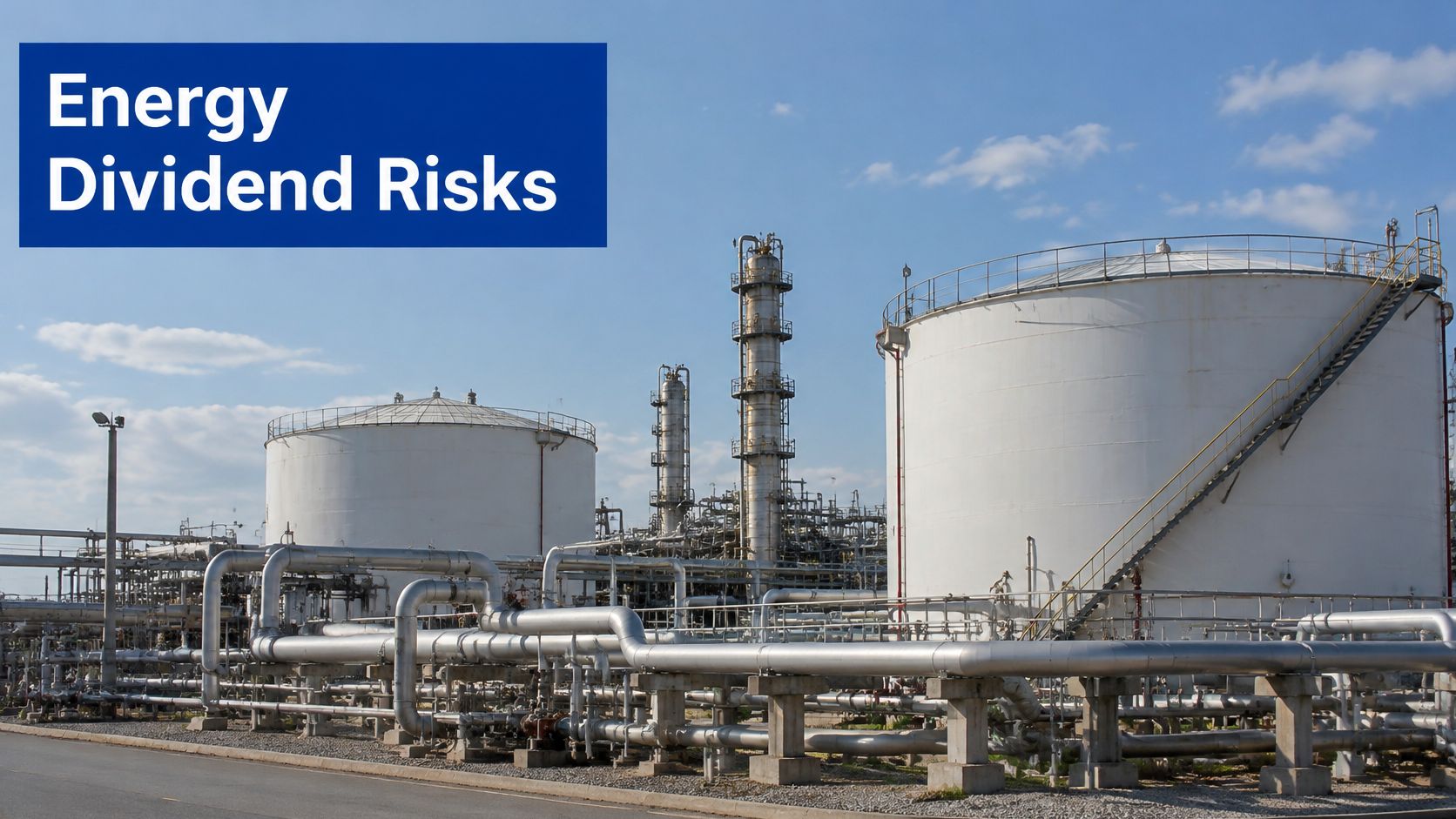
The central test is whether cash flow can cover the payout when oil and gas prices weaken. Don't base the decision on a favorable price environment alone. Review cash flow, capital spending, debt, and the dividend under more cautious commodity assumptions, and consider whether management has enough flexibility to maintain distributions without borrowing heavily or postponing necessary investment.
Treat energy income as cyclical
Chevron's production assets, including its Permian Basin operations, are part of its growth strategy. Growth can strengthen the business over time, but projects also require capital, and spending plans compete with dividends for available cash. Check the company's quarterly reports for investment plans and debt changes rather than assuming that production growth automatically means stronger dividend coverage.
A useful scenario is an income investor who wants energy exposure but depends on portfolio distributions for regular expenses. That investor should avoid making the entire income plan contingent on one commodity-sensitive company. A partial allocation can provide sector exposure while leaving room for steadier businesses and other asset types.
Stress test: Ask whether the dividend remains affordable if energy prices fall and planned capital spending continues.
Energy stocks can diversify a portfolio, but they're not usually a replacement for a broad, lower-volatility core. Before buying Chevron, verify current commodity conditions, free-cash-flow coverage, capital spending, debt, and dividend data. The safety question isn't whether the company has paid through past cycles. It's whether its present balance sheet and cash generation can support the payout in the next one.
6. Realty Income Corporation (NYSE: O)
Realty Income is a real estate investment trust that leases commercial properties under long-term net lease agreements and pays dividends monthly. That payment schedule may suit investors who budget around recurring cash distributions, but monthly income isn't automatically safer income. A REIT needs reliable property-level cash flow, access to financing, and tenants able to meet lease obligations.
REIT analysis also requires different payout measures from those used for ordinary corporations. Start with funds from operations (FFO) and adjusted FFO, then compare those measures with dividends paid. Net income can be less useful for a property owner because depreciation affects reported earnings differently from cash available to distribute. Still, FFO coverage is only one part of the assessment.
Look through the rent roll
Review tenant concentration, lease terms, upcoming expirations, and the financial health of major tenants. A diversified portfolio can reduce reliance on any one renter, but it can't protect every property from weak demand or a tenant's inability to pay. Also examine debt maturities and refinancing costs, since REITs often rely on capital markets to support acquisitions and operations.
For example, an investor who wants monthly cash flow should compare Realty Income's adjusted FFO coverage with its borrowing needs and lease profile. If coverage is tight while debt costs are rising, the payment frequency shouldn't distract from the underlying risk. Consider holding REITs in a tax-advantaged account where appropriate, but check the tax treatment applicable to your own situation.
For a practical introduction to account considerations, review this guide to tax-deferred investing. Tax rules depend on the account and investor, so verify them before acting.
Realty Income's monthly schedule may fit an income plan, but its property exposure and interest-rate sensitivity belong in the risk analysis. Check current adjusted FFO, dividend coverage, tenant information, debt maturities, and valuation before buying. A monthly payment is a feature, not a guarantee.
7. Enbridge Inc. (NYSE: ENB / TSX: ENB)
Enbridge is an energy infrastructure company with pipeline, utility, and renewable-energy operations. Its safety case differs from Chevron's: rather than relying primarily on commodity-sensitive production, investors can examine the cash flows associated with long-term contracts and regulated operations. Those features may make revenue more predictable, but they don't make the company immune to operating, financing, regulatory, or project risks.
Use the right coverage measure
For Enbridge, review distributable cash flow (DCF) and compare it with the dividend. Confirm how the company defines DCF, examine the trend across reporting periods, and check whether the payout leaves enough cash to fund maintenance, planned projects, and debt reduction. A high dividend can be less comfortable when a company must depend on borrowing or asset sales to meet both investment commitments and shareholder distributions.
Balance-sheet analysis is especially important for an infrastructure business with substantial assets and capital requirements. Track net debt relative to earnings measures, debt maturities, refinancing needs, and credit-rating commentary. Also examine project approvals and construction commitments, since delays or higher costs can change the timing and amount of cash available.
A worked example: an investor living outside Canada compares Enbridge's quoted dividend with a domestic holding. The quoted yield is only part of the decision. The investor should check applicable withholding tax, account treatment, and currency conversion, then consider whether exchange-rate changes could materially alter the income received at home.
Long-lived infrastructure and utility operations can appeal to income investors seeking cash-flow visibility. The trade-off is that the business remains exposed to financing conditions, regulatory decisions, and execution on capital projects. Verify current DCF coverage, debt measures, project plans, tax treatment, and payout details before investing. A long dividend history is evidence of past decisions, but cash flow and balance-sheet capacity are the tests that matter now.
8. Verizon Communications (NYSE: VZ)
Verizon provides wireless, broadband, and enterprise services. Its recurring subscriber revenue and essential connectivity services are the main arguments for studying it as an income stock. Yet a high yield should prompt closer scrutiny, not a quick conclusion that the dividend is a bargain. Heavy investment needs and debt can compete directly with cash available to shareholders.
Let free cash flow and debt set the tone
Compare the dividend with free cash flow after capital expenditures. Telecommunications companies must keep investing in networks, including fiber and 5G, to maintain service and compete. A payout that looks manageable before network spending may be less comfortable after required investment, so use cash flow after capital spending rather than relying on earnings alone.
Then assess debt. Review net debt, upcoming maturities, interest costs, and management's debt-reduction plans. Verizon's planned expansion of broadband reach through acquisitions such as Frontier adds another reason to inspect financing and integration commitments. An acquisition may support the strategy, but investors should verify how it affects borrowing and the company's capacity to fund the dividend.
Consider a retiree choosing between Verizon and a lower-yielding company with less debt. Verizon may offer more current income, but the retiree should ask whether the added yield compensates for debt, capital requirements, and slower financial flexibility. A higher headline yield doesn't resolve that trade-off.
If you can't explain how a company will fund its dividend after interest, capital spending, and debt obligations, the yield isn't enough to justify a purchase.
Use Verizon as a high-yield caution case: the recurring revenue base matters, but so do investment demands and debt management. Verify current yield, free-cash-flow coverage, debt levels, credit-rating updates, and any acquisition-related obligations before buying. Keep a high-yield holding sized to the risks you can accept, and don't let one stock become the foundation of an income plan.

Dividend Safety Snapshot of the 8 Stocks
| Stock | Sector | Dividend Track Record | Standout Safety Trait | Key Risk to Watch |
|---|---|---|---|---|
| Johnson & Johnson (JNJ) | Healthcare: pharmaceuticals and medical devices | More than 60 consecutive years of increases | Diversified healthcare business and strong balance sheet | Talc litigation and drug patent expirations |
| Procter & Gamble (PG) | Consumer staples | Increases for nearly seven decades | Everyday household brands support steady demand | Input-cost inflation can pressure margins |
| Coca-Cola (KO) | Consumer staples: beverages | More than 60 consecutive years of increases | Asset-light model supports strong cash flow | Health concerns and regulation affecting sugary drinks |
| PepsiCo (PEP) | Consumer staples: food and beverages | More than 50 consecutive years of increases | Diversified snacks and beverages generate multiple revenue streams | Commodity-cost volatility can pressure margins |
| Chevron (CVX) | Energy: integrated oil and gas | Increases for nearly four decades | Integrated operations and balance-sheet discipline | Cash flow is sensitive to oil and gas prices |
| Realty Income (O) | Real estate investment trust (REIT) | Monthly dividends and regular increases | Diversified tenants and long-term net leases support rental income | Rising interest rates can pressure valuations and borrowing costs |
| Enbridge (ENB) | Energy infrastructure and utilities | Dividend growth for roughly three decades | Contracted and regulated cash flows | High debt and pipeline regulatory uncertainty |
| Verizon (VZ) | Telecommunications | Increases for nearly two decades | Recurring wireless and broadband subscription revenue | High debt and substantial network investment needs |
Build Your Dividend Watchlist the Right Way
A watchlist is useful only if it records the measures that can change your decision. For each candidate, compare payout ratio, free-cash-flow coverage, debt levels, business stability, and dividend-growth history. Don't reduce those checks to a single score: a low payout can coexist with rising debt, and a long streak can't guarantee the next payment.
Start with the dividend's funding source. For most companies, compare dividends paid with free cash flow after capital expenditures, then review the earnings payout ratio as a second lens. For a REIT such as Realty Income, examine FFO and adjusted FFO coverage instead of treating net income as the definitive measure. For Enbridge, assess DCF coverage and the company's definition of that measure. Use the metric that fits the business, and read the financial statements behind it.
Next, judge the balance sheet. Identify debt maturities, interest costs, refinancing exposure, and the company's capacity to fund essential investment without stretching its finances. A dividend may be covered in the current period but still vulnerable if debt comes due when financing is expensive or if the business must make large capital investments. Compare management's stated priorities with the actual cash left after those needs.
Business stability deserves its own review. Consumer staples can have recurring demand, but input costs and pricing still affect cash generation. Energy companies face commodity cycles. Telecom operators need ongoing network investment. REITs depend on rent collection, tenant health, and access to capital. Diversify across sectors and cash-flow drivers rather than assembling several holdings that appear different but face the same underlying pressure.
Dividend history helps you judge management's behavior, not predict the future with certainty. Historical evidence also shows why cuts deserve attention: Saxo's review of S&P 500 companies from 1973 through 2024 found annual returns above 10% for dividend growers and initiators, compared with negative 0.89% for dividend cutters or eliminators. Those historical outcomes aren't a forecast, but they reinforce the practical value of examining a company's ability to maintain or grow its distribution.
Finally, assess the income you'll receive. Taxes, currency movements, inflation, and payment schedules can change the value of a quoted yield. S&P Global's dividend outlook highlights how payout trends can differ by region and sector, a reminder not to assume that one market's income pattern applies everywhere. Check withholding-tax rules and whether payments are regular or variable before treating a foreign dividend as dependable spending money.
Yields and payout data change with each quarterly update. Before you buy, verify the latest filings, earnings releases, dividend declarations, debt disclosures, and valuation. Then revisit the holding when the business or its funding conditions change. Verification before purchase is essential, and regular monitoring is part of owning dividend stocks.
Mega Income Stream's Investing and Finance coverage discusses dividend stocks, Dividend Aristocrats, dividend ETFs, and other ways to build investment income. Its portfolio guidance also encourages diversification across stocks, exchange-traded funds, bonds, real estate, and business assets. Readers who want to continue their research can explore the publication's free ebooks and newsletter.
For more dividend investing education, explore the stocks, ETF, and portfolio diversification coverage at Mega Income Stream. Its Finance and Investing articles can help you compare income approaches and continue researching risks beyond a headline yield.










Comments