
 By

The highest paying affiliate niches for beginners can include finance, pets, home improvement, gaming, and travel, but the right fit depends on commission terms, audience demand, and your ability to create useful content. A niche is the focused topic and audience your affiliate content serves. Choosing one is not simply about chasing the biggest payout. It means matching products people need with content you can produce consistently.
Comparing earning potential is a sensible starting point when deciding where to invest your time. But a high commission is of little use if the offer is hard to explain or your audience does not trust it. This guide compares beginner-friendly options, including finance and pet care, alongside home improvement, gaming, and travel. You will see how each niche works, what shapes its earning potential, and how to weigh commission opportunities against competition and content fit before choosing a direction.
Key Takeaways
- Niche fit: Assess a niche by balancing commission structure, recurring revenue potential, audience fit, and competition, not by headline payouts alone.
- Offer comparison: Compare pet, home improvement, gaming, and travel offers by the content you can produce and the products your audience is likely to consider.
- Health and wellness: These topics can span products, technology, and digital tools, but require clear, careful content that earns audience trust.
- Finance offers: Finance and FinTech offers can use referrals, qualified leads, or funded-account payouts, each with different conversion requirements.
- Scoring framework: Use a consistent scoring framework to rank niches, then build a focused content and monetization plan around the strongest fit.
How to choose the right high-paying niche?
A viable niche combines audience demand, purchase intent, and commissions that can support continued content production. Start with a specific audience and problem, such as freelancers choosing accounting software. Then compare affiliate programs by payout type, recurring terms, approval rules, and product fit. A large commission means little if an offer rarely converts or your content cannot reach likely buyers.
In the United States, finance, software, travel, pets, and home improvement can attract buyers researching products or services. Intent becomes clearer in searches about comparing credit cards, choosing pet insurance, or finding travel gear. Look for a focused topic where useful reviews and comparisons can answer those purchase questions. Competition matters too: assess whether a new site could build visibility within 6-12 months. Google’s guidance on helpful, people-first content can inform how you develop useful pages.
Compare the actual commission model, not just its percentage. Finance, SaaS, travel, and digital marketing programs can offer 20-50% commissions and recurring payouts, but terms differ by program. Membership programs can pay 20-40% monthly on a recurring basis. Check whether a payout applies to a sale, qualified lead, approval, or subscription, and account for refunds or cancellations in your forecast.
Finance offers can pay $100-250 per sign-up or approval, while investing programs may pay for qualified leads or funded accounts. These offers involve financial decisions, so accuracy and clear explanations matter. Avoid unsupported claims about returns or outcomes. Explain eligibility criteria and product mechanics plainly, and disclose when content may earn a commission. The FTC’s endorsement guidance explains disclosure expectations for endorsements and affiliate relationships.
AI and automation software can support recurring revenue: programs may offer 20-50% recurring commissions, paid monthly or annually. Compare the commission duration, eligible plans, and whether renewals count. Online courses can pay 30-50% per sale or more, while recurring platform subscriptions use a different payout model. Choose offers that fit content you can maintain, such as workflow tutorials or course comparisons.
Startup costs depend on your publishing format and tools. A focused site calls for research, writing, and basic publishing skills; video promotion also involves recording and editing. Begin with one format and a narrow topic, then expand as you learn which pages attract qualified clicks.
Risks include commission changes, reversed transactions, and program closures. Review program terms, track conversions and reversals, and avoid depending on one brand. Keep your content useful without relying on a single offer, so you can replace a program without rebuilding your entire niche.
Pet, home improvement, gaming, and travel niches
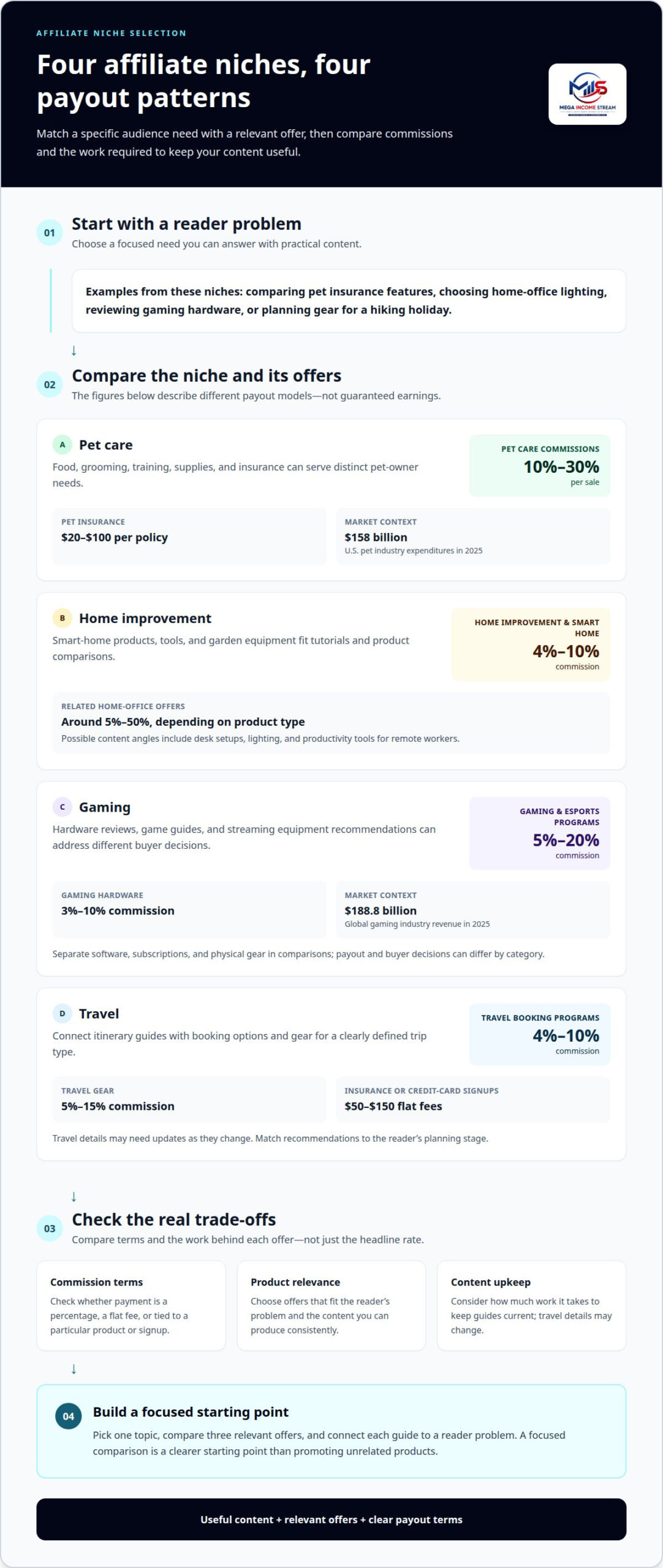
These niches pair tangible products or bookings with specific audience needs, but their commission models differ. Pet content can target food, grooming, training, and insurance. U.S. pet industry expenditures reached $158 billion in 2025, while pet care affiliate commissions can range from 10% to 30% per sale. Pet insurance programs may pay $20-$100 per policy. Build useful guides around a defined need, such as comparing insurance features or choosing supplies for a new pet.
For home improvement, smart-home products, tools, and garden equipment support tutorials and product comparisons. Home improvement and smart-home affiliate programs typically pay 4-10% commissions. Home-office offers span a wider range: commissions can run around 5-50%, depending on product type. A practical content angle might compare desk setups, lighting, or productivity tools for remote workers. Personal development adds courses and coaching, with commissions ranging from 20% to 70% per sale.
Gaming can attract audiences through hardware reviews, game guides, and streaming equipment recommendations. The global gaming industry generated $188.8 billion in revenue in 2025. Gaming and esports affiliate programs can pay 5-20% commission rates, while gaming hardware programs typically pay 3-10%. Separate software, subscriptions, and physical gear in your comparisons; each category can have a different payout and buyer decision process.
Travel content can connect itinerary guides with booking and gear recommendations. Travel booking programs typically pay 4-10% commissions, while travel gear programs typically pay 5-15%. Travel insurance or credit-card signups may pay flat fees of $50-$150. Create content for a clear trip type, such as packing for a hiking holiday, then match each recommendation to the reader’s planning stage.
Choose based on the content you can produce consistently, not the largest advertised commission rate. Compare program terms, product relevance, and the work required to keep guides current. Pet care and home-office topics can support evergreen advice; travel content may need updates as details change. A focused comparison of three offers within one topic gives you a cleaner starting point than promoting unrelated products. For a practical affiliate niche strategy, connect each guide to a reader problem and a relevant offer.
What is a niche in affiliate marketing?
A niche is a focused subject and audience that connects useful content with relevant affiliate offers. “Health” is broad; “digital tools for people tracking sleep” is more specific. In affiliate marketing, that focus guides the products you promote, the questions your content answers, and the readers you aim to reach. A clearly defined niche also helps readers see why a recommendation fits their needs.
Health and wellness can be divided into distinct areas, including nutrition, fitness, longevity products, health technology, and digital wellness subscriptions. One publisher might focus on wearable devices, another on meditation apps, and another on healthy-aging education. Choose an area, identify a specific audience problem, then build guides and comparisons around it. This keeps product selection and content planning connected.
Commission structures vary by offer. Health and wellness affiliate commissions can range from 15% to 40% per sale; physical products may pay 8% to 20%. Some health-tech programs pay around $100 per subscription as a flat fee, or a percentage on device sales. Compare each program’s qualifying action, payout model, and product fit. A higher commission rate does not automatically produce more revenue if the offer does not convert.
Digital wellness programs may involve recurring subscriptions, while physical products usually generate a commission from each qualifying sale. Recurring revenue depends on the program’s terms and whether renewals earn commission. For example, a guide comparing sleep-tracking wearables serves a different intent from a meditation-app review. Match the format to the reader’s decision: compare features in a buying guide, or explain how a digital tool fits a particular routine.
Health content calls for careful claims. Keep descriptions factual, distinguish product features from medical outcomes, and avoid promising that a product treats or prevents a condition. Explain what an offer does and who it may suit. Trust can affect conversions, especially when content covers health or longevity; transparent recommendations give readers a clearer basis for evaluating products.
In the United States, the Federal Trade Commission requires affiliate marketers to disclose that they may earn a commission from recommendations. Make the relationship clear where readers encounter the recommendation. A disclosure helps readers make informed decisions and keeps affiliate marketing transparent.
To shape a health niche, define the audience, choose a specific need, and compare relevant programs. Then create useful content around real decisions, such as choosing a fitness tracker or comparing wellness subscriptions. Track clicks and conversions by topic. The data can show whether search traffic brings potential buyers or mostly casual readers, helping you refine the niche without losing focus.
Personal finance and FinTech affiliate offers
Finance and FinTech offers can pay through referrals, qualified leads, or funded accounts. Match each payout event to the content you can produce. A budgeting tutorial can explain app features, while an investing comparison can clarify account types and platform tools. Readers need accurate, balanced information before making financial decisions, so avoid claims that suggest guaranteed returns.
Finance and investing programs may pay $50-$500 per qualified lead or newly funded account. Credit card referrals can pay $100-$250 per approval. These amounts reward completed actions, not clicks alone. A lead program may require an eligible application, while a funded-account offer depends on a user depositing money. Read the program’s conversion terms before estimating potential earnings.
Software and FinTech programs often use a percentage of revenue. Most SaaS affiliate programs, including finance apps, pay 20%-30%; top-tier affiliates may earn up to 40%. Some software programs offer recurring commissions, which can continue monthly or apply only during the first year. Compare those terms with a one-time referral payout before choosing which offers to promote.
Insurance programs can use a flat payout per policy or qualified lead. For example, pet insurance referrals may pay $20-$100 per policy. Education offers use another model: e-learning programs may pay 15%-45% per course sale, while platform referrals can pay recurring commissions. These ranges show why comparing the action required matters as much as comparing the commission rate.
Demand alone does not determine earning potential. Build tutorials around a defined question, such as how a budgeting app categorizes spending or how an investment platform handles account funding. Use social media to distribute those guides, then measure qualified clicks and completed referrals separately. A high volume of visitors may lead to few conversions if the content attracts readers without purchase intent.
For a practical comparison, record each program’s payout event, commission structure, recurring terms, approval conditions, and reversal policy. Then estimate revenue using actual performance data, not headline payouts. For example, a 30% recurring rate has different value from a flat referral payout when customers stay subscribed. Keep recommendations grounded in product features and clear explanations, especially for financial products.
Beginner-friendly affiliate niche rankings
For beginners, the strongest starting niches balance clear buyer intent, useful content opportunities, and manageable competition. This ranking prioritizes practical execution, not the biggest headline payout. Personal finance ranks first for high-value actions, followed by SaaS and AI tools for recurring revenue. Digital education ranks next, then focused product niches such as pets, home improvement, travel, and gaming.
Personal finance ranks highly because credit cards, investing accounts, and finance apps support comparison guides and tutorials. Qualified finance leads can pay $50-$500, depending on the action. That potential comes with a higher content burden: readers need accurate explanations of eligibility, fees, and product functions. For beginners, narrow topics such as budgeting tools are easier to explain than broad investing advice.
SaaS and AI platforms offer strong recurring potential when content solves a specific workflow problem. Digital marketing and SEO programs can offer 30%-50% recurring commission. Compare the actual program terms, including whether renewals qualify and how long payouts continue. A tutorial showing how an automation platform handles a real task can attract a more qualified audience than a generic software roundup.
Digital education can fit publishers who explain a skill through reviews, course comparisons, or learning guides. Online courses can pay 30%-50% per sale or more. High-ticket products typically cost more than $1,000, but ticket size alone doesn’t establish beginner suitability. Focus on a subject you can cover accurately, then compare course relevance and commission structure before promoting an offer.
Pets, home improvement, travel, and gaming suit focused review content. Products can be demonstrated through buying guides, setup walkthroughs, or gear comparisons. Commission rates vary by offer and product type, so assess the actual payout alongside buyer intent. A narrow angle, such as smart-home setup for renters, gives a new site a clearer content plan than covering every product category.
Use a consistent comparison across platforms: score beginner fit, competition, startup effort, time to first commission, and payout model from 1 to 5. Then select the niche with the strongest combined fit, not the highest score in one category. Track clicks, approved actions, reversals, and monthly revenue separately. This reveals whether the niche produces real conversions or only attention.
Turn your niche comparison into a focused affiliate growth plan before building more content.
Mega Income Stream
Compare affiliate niches by audience fit, content demands, commission terms, and competition before choosing one. List options such as finance, software, pets, and travel, then assess each against the same criteria. Consider whether you can produce useful content for the audience and explain how the offers address its needs. A finance comparison site, for example, requires a different content plan from a pet-care guide.
Audience and Content Start by defining the audience for each niche and the problem your content would solve. Then list the formats you could create, such as tutorials, workflow comparisons, destination guides, or gear guides. Compare how well each format matches the audience’s needs and your content strengths. This helps distinguish a niche you can cover consistently from one that only looks attractive at first.
Commission Terms For each offer, record how it pays, which action qualifies for a commission, and whether repeat purchases or subscriptions affect the revenue model. Compare these terms across candidate niches. Then map each offer to a relevant content format, such as a product comparison, buyer’s guide, or step-by-step tutorial. Track clicks and approved actions by page to assess which content supports the offer.
Competition and Positioning Compare the content already available in each niche. Identify a specific audience need your site could address and how your content would differ. For example, when comparing AI tools with home-office products, assess the audience, content you can produce, and relevant offers for each. Use the same criteria for every option to make the comparison consistent.
Prepare a comparison brief with your niche candidates, intended audiences, content strengths, offers under consideration, and the main decision you need to make. If you already publish, include which pages attract clicks and which generate approved actions. Use these details to identify gaps in your comparison and decide what to evaluate next.
Choose the niche that best fits your audience, content capacity, and offer terms. Then build a content plan around audience needs and track clicks and approved actions over time. Revisit the comparison as you gather performance data.
Turn your niche choice into a working plan
The next step is to turn your preferred niche into a focused publishing system. With the highest paying affiliate niches for beginners, opportunity becomes useful when you connect a clear audience need to relevant content and measurable affiliate actions. Choose an audience, identify the decision they need help making, and plan a small set of pages that address it from different angles.
Before expanding, use those first pages to learn which topics attract qualified readers and which recommendations lead to action. Keep your approach adaptable: refine the content, offers, and positioning as performance data accumulates. Mega Income Stream helps entrepreneurs evaluate market opportunities and shape practical business strategies, making-money insights, and consulting direction around sustainable income streams.
If you’re ready to develop your next steps, contact Mega Income Stream to discuss your affiliate business goals. Start with a clear question, build with purpose, and let each decision strengthen the next.
Frequently Asked Questions
What is the highest-paid niche?
No single niche is always the highest-paid. The potential payout depends on the specific offer, its qualifying action, and its commission terms. A percentage of a large sale differs from a fixed payment for an approved lead, so headline payouts are not directly comparable. Evaluate each program’s actual conditions and audience relevance rather than treating one niche as a permanent winner.
Which Affiliate Program Should You Start With?
Start with a program whose application requirements and promotion rules fit your publishing setup. Check whether it permits your planned channels, such as a website, newsletter, or social media account. Review how the program attributes referrals, reports conversions, and handles rejected transactions. A clear dashboard and useful product information can make early testing easier, even before your site has a broad catalog.
What are the highest-paying affiliate marketing niches for beginners in 2026?
There is no fixed ranking for 2026 that applies to every beginner. Finance, software, digital education, and specialized product topics can all support affiliate content, but program terms and audience needs shape the opportunity. A useful starting point is a narrow editorial angle with several related questions to answer. That lets you test content demand without building a site around unrelated offers.
Which affiliate niches offer the highest commissions per sale or lead?
Digital products may use percentage-based commissions, while finance offers often reward a completed lead, approval, or account action. Software programs may include recurring payments while customers remain subscribed. In these models, what counts as “highest” depends on the conversion event and payment duration. Compare terms using the same measure, such as payout per approved action or commission over a stated period.
Which high-paying affiliate programs accept beginners with low traffic?
Acceptance rules vary by program. Some applications focus on the publisher’s topic, promotion plan, and content quality rather than traffic volume alone. Prepare a clear description of your audience and explain how your content will present the offer accurately. Read the program’s channel restrictions before applying, then prioritize offers that naturally fit the pages you plan to publish.
How difficult is it to compete in the most profitable affiliate niches?
Competition is tougher when a site targets broad terms already covered by established publishers. A narrower topic can create room for distinctive coverage, especially when it addresses a specific use case or overlooked audience. Build original tutorials, comparisons, and decision guides rather than repeating generic product summaries. Look for recurring unanswered questions in search results, then focus your content on those gaps.











Comments