
 By
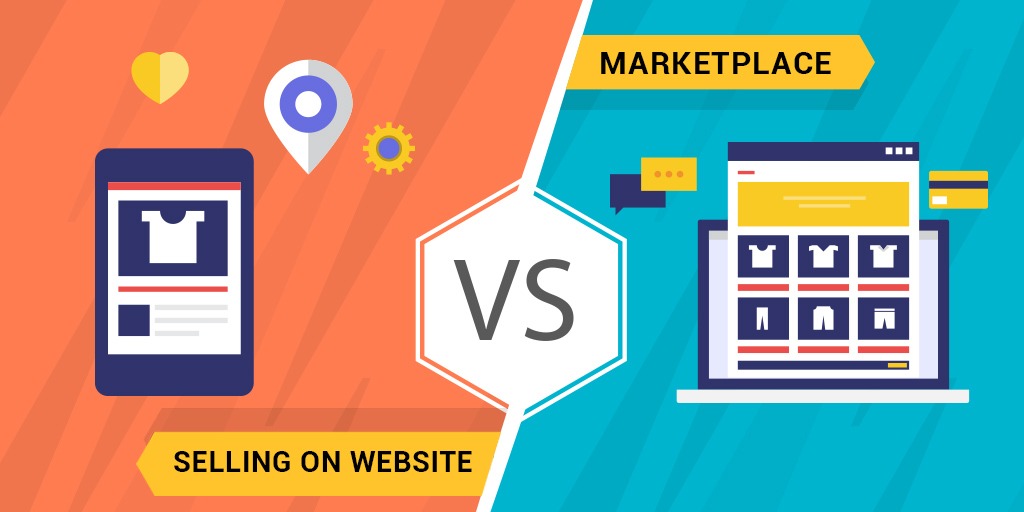
The decision between a digital storefront and an online marketplace is based on your priorities for brand management, upfront costs, and customer ownership.
Quick Comparison
| Feature | Digital Storefront (Own Website) | Online Marketplace |
|---|---|---|
| Best For | Building a long-term brand | Quick sales and beginners |
| Control | Full control over design and UX | Limited; must follow platform rules |
| Customer Data | You own all data for marketing | Limited access; marketplace “owns” the customer |
| Fees | Platform subscriptions (e.g., Shopify) | Commissions per sale (often 5–20%) |
| Traffic | Must drive your own (SEO, Ads) | Built-in, massive audience |
Digital Storefront (The “Long-Term Brand” Route)
A digital storefront is a standalone website dedicated solely to your business, often built on platforms like Shopify, WooCommerce, or BigCommerce.
- Pros:
- Total Branding: Customize every aspect of the shopping experience to reflect your values.
- Direct Relationships: Collect email addresses and purchase history to build loyalty programs and targeted campaigns.
- Higher Margins: Once established, you keep 100% of revenue minus small transaction fees.
- Cons:
- Marketing Heavy: You are responsible for attracting every visitor via social media or search engines.
- Setup Costs: Requires more initial time and investment for design and hosting.
Online Marketplace (The “Instant Visibility” Route)
A marketplace is a multi-vendor platform where your products appear alongside competitors, such as Amazon, eBay, or Etsy.
- Pros:
- Plug-and-Play: You can list items and start selling almost immediately without technical skill.
- Huge Audience: Benefit from millions of shoppers who already trust and frequent the platform.
- Reduced Risk: Lower upfront capital needed to test if a product will sell.
- Cons:
- Fierce Competition: Your product is displayed next to similar items, often leading to price wars.
- High Fees: Success can be costly, as referral fees and commissions eat into your profits.
- Rule Dependency: The platform can change algorithms or policies (or suspend your account) at any time.
Which is right for you?
- Choose a Storefront if: You have a unique, niche product and want to build a “legacy brand” with high customer retention.
- Choose a Marketplace if: You have common consumer goods, a limited budget, or want to test a market quickly.
- The Hybrid Model: Many successful businesses start on a marketplace to generate initial cash flow and then launch a storefront to capture their most loyal customers.
Explore the advantages and disadvantages of digital storefronts compared to online marketplaces for your business
With the boom of ecommerce, every business is either planning to enter the online selling space or has already stepped in. But ecommerce is a rather bigger term that includes:
- E-commerce Marketplace – like Amazon, eBay, Etsy, and others, which replicate departmental stores, just in online spaces. These marketplaces give you access to a huge audience base and a ready-made platform to list your products.
- E-commerce Stores – like Shopify, WooCommerce, and others, allow for the building of one’s own website and online store. These stores give you complete control over the branding, marketing, etc. Also, the scope of expansion is endless.
Both options come with their own set of pros and cons. Careful analysis and understanding of every aspect leads to an informed decision. Such a decision results in better outcomes in terms of sales and business growth. The next 7 minutes of reading will give you a clear understanding of what’s best for your business, online store, or selling on e-commerce websites.
Differences Between E-commerce Store and E-commerce Marketplace
A complete understanding of the difference can help you know what works for you and what doesn’t, depending on the current requirements of your business. Here’s a clear distinction between online stores and marketplaces based on certain parameters:
1. Traffic
As mentioned earlier, online marketplaces present the sellers with a pre-build audience of shoppers who trust the marketplace, hence easily convertible into customers. On the other hand, self-run online stores have to drive their traffic.
2. Digital Infrastructure
As physical infrastructure is required for selling offline, digital infrastructure like shipping, payment processing, and customer service are required to be sold online. Marketplaces like Amazon, Etsy, etc. have a built-in infrastructure for shipping, payments, and customer support, so sellers need to build any of that. Online stores, on the contrary, are not provided with any of these, so the sellers need to build them on their own.
Read Also: How to Choose the Right E-commerce Platform for Your Digital Storefront
3. Brand Building and Marketing
Building a customer for a product is much easier than building a customer for a brand. With online marketplaces, sellers do not get much control over branding. However, they can market their goods with paid promotions, but there are very few chances of the customer actually remembering the brand. Conversely, online stores get complete control over their marketing and branding. Stores can be personalized and presented as per the brand and its consumers, making them more memorable.
4. Targeting Audience
The target audience and its tapping by the business define the success of a business. Listing on online marketplaces does not give much insight into the minds of customers or the target audience. Sellers might not even get the basic information regarding their buyers to connect with them later. Online stores have every detail of their customers, and they can connect with their consumers on any given day.
5. Competition
Competition must be taken seriously if you wish to stay in the market for longer. Online marketplaces put you in the middle of cut-throat competition where everyone else is selling similar products at a highly competitive price, making it difficult to build a loyal consumer base. However, once the buyer lands an online store, there is no competition in that particular space. Also, defining the USPs and building a consumer base becomes easy.
6. Investment and Finance
Investments are made into business to establish it and grow it further. Investments made in the case of online marketplaces are listings and a little entry-free (depending on the platform). Also, there can be a commission on each sale. In another case, with online stores, investment has to be made to develop websites, handle stocks, and deliver. However, the launch or addition of products does not add to any cost.
7. Cash Flow
Cash flow is dependent on sales and the flow of money thereafter. E-commerce marketplaceshelp improve cash flow as no marketing and consumer attraction are required here. Ecommerce stores require time and effort to attract consumers and hence get cash flow. But the cash flow is rather consistent here as the product is liked by the consumers because they can become repeat customers.
Challenges of Selling on Marketplace vs Online Store
After having a thorough understanding of differences, challenges need to be addressed so there is no fear of the unknown. Here are the challenges faced by sellers selling on the marketplace vs Online stores:
1. Marketplace
- High Fees: Marketplaces tend to cut sales profits with referral fees and fulfillment costs.
- Fierce Competition: As mentioned earlier, the competition is a little too much to handle. Competition also kills profits.
- Unforeseen Risks: Marketplaces, at times, remove accounts or listings without prior notice.
- Limitations with Branding and customization: Branding and customization are near to none. The entire marketplace page is displayed similarly, allowing no brand differentiation.
2. Online Store
- Higher setup and maintenance costs: Investment at the time of establishment is high. Costs have to be incurred for web development, hosting, and upkeep.
- Soaring marketing costs: Unlike marketplaces, online stores do not have a ready-made audience; they have to make an effort to attract an audience, leading to increasing marketing costs.
- Responsibility: the entire website and store are the responsibility of the seller, and there is no assistance in case of breach.
Conclusion
Given the presence of a consumer base, it is always recommended that a newbie start with an ecommerce marketplace. It might be tough to attract consumers at the start of a firm. However, if you want to establish your own brand and customer base, an internet store is the place to start. It will enable the development of a brand and its customer base.





Comments