
 By
Writing for Answer Engine Optimization (AEO) necessitates a shift away from traditional keyword-centric content and toward an answer-first strategy that satisfies both human curiosity and machine extraction. By 2026, AI-powered tools such as ChatGPT, Perplexity, and Google’s AI Overviews will only select content that is “structurally legible”.
1. Adopt the “Inverted Pyramid” Structure
AI engines typically prioritize the first few lines of a section.
- Direct Answer First: Start every H2 or H3 section with a concise, 40–60 word answer that can stand alone.
- Elaboration Follows: Use the remaining section to provide the “why,” including data, examples, and nuances for human readers.
- Question-Based Headings: Phrase your headings as the exact questions users ask (e.g., “How does AEO differ from SEO?”) to help machines match intent.
2. Optimize for Machine Extraction
Machines “read” structure before substance. Use these elements to make your data easy to pull:
- Semantic HTML: Use proper H1→H2→H3 hierarchies and avoid skipping levels.
- Lists and Tables: AI systems extract tabular data up to 40% more effectively than prose. Use
<ul>for lists and<table>for comparisons. - Schema Markup: Implement JSON-LD, specifically FAQPage, HowTo, and Article schema, to provide a machine-readable blueprint of your content.
- Clean DOM: Ensure high-value content is in raw HTML rather than trapped behind complex JavaScript or accordions, which can be invisible to some AI scrapers.
3. Focus on “Entities” Over Keywords
Modern AI maps relationships between concepts (entities) rather than just counting words.
- Define Your Brand: Use Organization and Person schema to establish your brand and authors as recognized entities.
- Entity Density: Naturally mention related topics to build “topical authority” (e.g., an article on AEO should naturally include “schema,” “LLMs,” and “zero-click search”).
- Factual Clarity: Use precise terminology and factual statements over marketing adjectives.
4. Fortify E-E-A-T and Freshness
AI engines prioritize safe, reliable, and recent information to avoid “hallucinations”.
- Verified Expertise: Include detailed author bios with links to professional profiles like LinkedIn.
- Cite Primary Sources: Link to authoritative domains (.gov, .edu) and industry reports every 150–200 words to ground your claims.
- Update Regularly: Content for AI answers is often ~25% fresher than traditional search results. Audit and refresh key pages every 3–6 months.
5. Write for Spoken Language (Voice AEO)
Since many AI answers are read aloud, your content must sound natural when spoken.
- Natural Phrasing: Avoid overly formal jargon; write as if you are explaining a concept to a peer.
- Brevity: Target an average of 30 words for voice-ready responses to increase the chance of being used by assistants like Siri or Google Assistant.
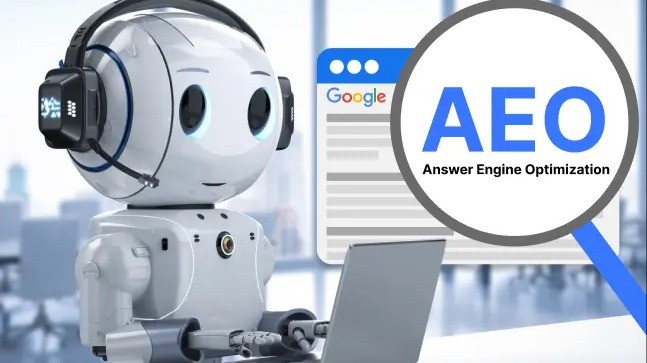
Answer Engine Optimization (AEO) improves digital content providers’ chances of connecting with their target audiences. AEO is a response to the changing online search climate, which favors answer engines such as ChatGPT above search engines such as Google. Here are some of the best practices for using AEO on digital content:
- Create original, first-party content with strong E-E-A-T signals
- Maintain strong crawlability.
- Implement semantic alignment
- Structure content for conversational search
- Provide direct answers to key questions
- Target keywords that are answer-focused
The search world is shifting from supplying links to giving answers. Content producers need AI-driven tools that will help them boost user engagement and efficiency. This article will provide techniques for AEO implementation.
What are Core AI Practices for Effective AEO?
Answer engine optimization (AEO) is a new digital marketing method that responds to changes in online search. It goes beyond typical SEO to optimize content for AI-powered response engines. Traditional SEO focuses on achieving high positions in search engine results pages and attracting visitors to a website. AEO strives to satisfy answer engines by providing straightforward responses to inquiries in a conversational style.
Read Also: How to Build an AEO Strategy from Scratch
The foundation of this shift is natural language processing. NLP enables response engines to detect context, intent, and conversational complexity in ways that differ significantly from keyword matching.
Answer engines have various AI underpinnings and offer a unique user experience. It stands to reason that content creators must take several ways to achieve the intended results from their content. Nonetheless, some of the tactics used for SEO are equally applicable to AEO.
Answer engines and search engines can provide personalized results that are specific to each user. This personalization requires marketers to generate content that appeals to a wide range of user intents and situations. Search engines are increasingly relying on machine learning algorithms to determine what specific consumers are looking for at any given moment.
The rise of automation in content creation and optimization has dramatically changed how marketers organize and write content. Almost 45% of marketers who use AI say they use it for content creation.
AI is frequently used to speed up production, but much of AEO focuses on authority, depth, and AI-friendliness. Content must satisfy both human readers and AI agents.
One way to do that is to structure information in ways that make it easily discoverable and citable by automated systems. Another is to create content that delivers expertise and original information to thoroughly and accurately answer user questions.
How to use data analysis and user intent mapping for AEO implementation
To build an effective AEO strategy, marketers need to dive into how users search, what they ask, and how AI delivers answers. Here are some ways to harness data and AI tools to map user intent and optimize content accordingly:
- Use AI tools to analyze search patterns and user behavior. Google Analytics 4 uses AI to offer predictive metrics and personalized insights. It analyzes user behavior to help marketers anticipate future trends. Specialized AI visibility tracking tools like Profound monitor how often and in what context brands appear in AI answers. They provide visibility scores and brand mention metrics.
- Identify question-based keywords and conversational search queries. AEO success requires shifting from traditional keyword targeting to understanding natural language patterns. Users ask complete questions rather than using fragmented keyword phrases. Tools like AlsoAsked and AnswerThePublic help find conversational questions people ask, so marketers can structure content that answers them directly and clearly.
- Leverage technology for competitor analysis and gap identification. AI-powered competitor analysis tools have evolved to track AI visibility and citation patterns so marketers can identify content gaps. Platforms like Search Atlas, Site Explorer, and Keyword Gap have features that provide a 360-degree view of competitors’ strategies. Scout by Yext monitors branded and unbranded queries within answer engines while surfacing trends and specific question patterns where businesses appear.
Content strategy optimization for AEO
To succeed in the age of answer engine search, marketers need to rethink how content is created, structured, and presented. The following best practices focus on optimizing content so that it aligns with how AI systems function:
Create content that directly answers specific questions. Effective AEO content must lead with clear, immediate answers rather than building toward conclusions. AI engines prioritize content that provides direct responses to user queries without requiring additional context or navigation.
Marketers should structure content using the inverted pyramid approach. Place the most critical answer at the beginning and supporting it with detailed explanations. That way, AI algorithms can quickly extract and present the key information as authoritative responses. This requires a shift from keyword-focused writing to question-focused content creation. Each piece addresses specific user intents and provides comprehensive answers that AI engines can confidently cite.
Structure information for AI algorithm comprehension. AI algorithms favor content with clear hierarchical structure, logical flow, and semantic relationships that make information easily digestible and contextually understandable.
Marketers must organize content using descriptive headings, bullet points, and numbered lists that create clear information pathways. Incorporate relevant entity relationships and topical authority signals that help AI systems understand the content’s expertise and relevance within specific subject domains.
The goal is to create content that reads naturally to humans while providing the structural clarity that AI systems need to extract, process, and present information accurately in response to user queries.
Implement schema markup and structured data for better visibility. Schema markup acts as a detailed blueprint that helps answer engines see exactly what content exists and how each piece fits together. It significantly improves the chances that content will be interpreted and directly presented as an answer.
By adding schema markup for FAQs, how-tos, and products pages, marketers increase their visibility in AI search results. The structured data provides search engines and AI models with explicit information about content context and meaning.
Focus on content freshness. Fresh content boosts credibility, engagement, and trust. It indicates that the content has E-E-A-T (Experience, Expertise, Authoritativeness, Trustworthiness), which improves its chances of being used, and possibly cited, by answer engines. With regular content audits, structured updates, and intent alignment, content can stay relevant as algorithms and search habits evolve.
Advanced AI Tools and Techniques for AEO
Since AEO is still evolving, let’s look at three advanced tools and techniques you can use to get the most of your content.
- Predictive analytics powered by machine learning can identify emerging search trends before they peak, allowing marketers to proactively create content that anticipates user intent.
- Automated A/B testing takes the guesswork out of optimizing answer formats. Machine learning algorithms can test different headlines, structures, or snippet styles at scale and determine which versions are most likely to be selected for featured snippets or answer boxes.
- Additionally, real-time optimization is now possible as machine learning tools analyze live performance data and adjust content strategies on the fly. That may involve tweaking keyword usage, refining answer clarity, or shifting content placement to improve visibility and engagement.
Industry-specific AEO Best Practices
No industry is the same, and AEO can differ depending on the context and competitiveness. For example, B2B and B2C businesses require different approaches to answer optimization. A B2B company might focus on in-depth, jargon-friendly answers tailored to specific buyer roles (e.g., “What is enterprise data integration?”). Meanwhile, a B2C brand might prioritize clear, simple answers to product or lifestyle queries (e.g., “How do I clean my white sneakers?”).
For local businesses, AEO should include optimizing for “near me” queries, updating Google Business Profiles, and including geographic keywords. Think of a dentist optimizing for “best family dentist in Austin.” (This is one of the areas in which AEO and SEO overlap.)
In e-commerce, product pages can be optimized to answer specific shopper questions like “Is this jacket waterproof?” or “What size should I order?” by using structured data and FAQ sections.
Finally, for professional services (like legal, financial, or medical), demonstrating expertise is critical. Answer engine content must highlight credentials, cite reputable sources, and address sensitive or high-trust queries clearly and authoritatively. That way, it can build trust and appear in answer-focused results.









Comments