
 By
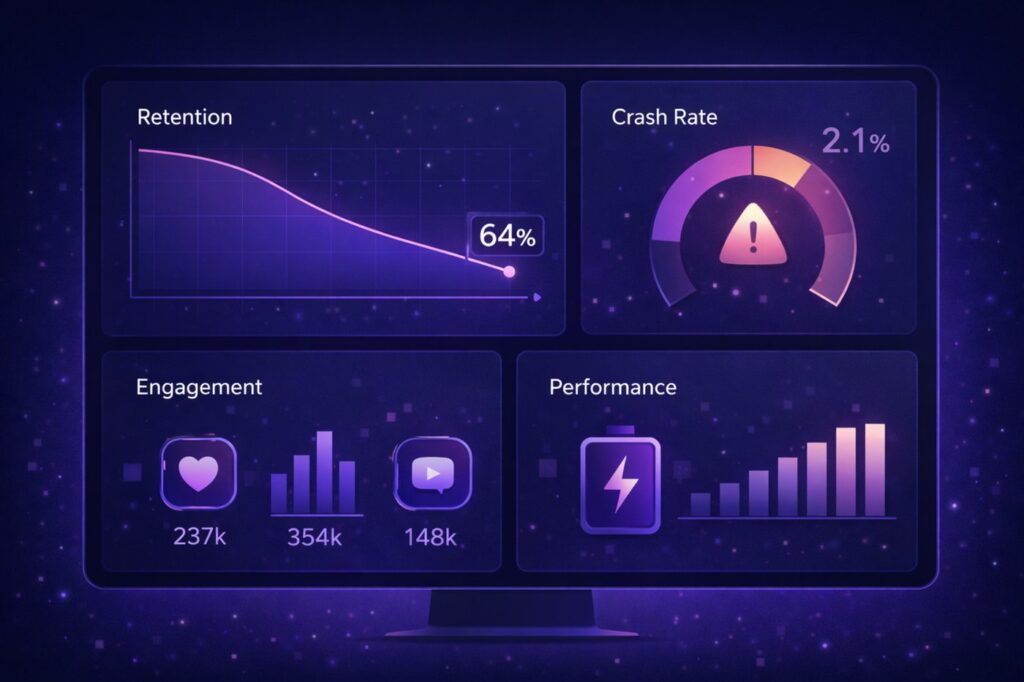
Search visibility and user conversion rates are strongly impacted by app size and performance, which are important but frequently disregarded drivers of App Store Optimization (ASO). App stores are progressively favoring lightweight, stable, and fast-performing apps in their ranking algorithms as they have evolved to focus user experience.
Here is a detailed breakdown of how app size and performance impact ASO:
1. The Impact of App Size on ASO
App size directly correlates with the likelihood of installation, particularly in emerging markets where users may have limited storage or high data costs.
- Lowering Barriers to Entry: Smaller apps (ideally under 150MB on iOS, and even smaller on Android to avoid mandatory WiFi-only downloads) are more likely to be installed instantly, reducing drop-off rates.
- Improved Conversion Rates: A smaller app size means a faster download, which increases the conversion rate (install rate) from the store page, a key signal for ASO algorithms.
- Reduced Uninstalls: Large apps that take up too much storage are more likely to be deleted, increasing uninstall rates and hurting app ranking.
2. The Impact of Performance (Speed & Stability) on ASO
App performance, including load times and crash-free rates, significantly impacts user retention and sentiment, which in turn drive ASO.
- Higher Rankings via Stability: App stores favor apps with high stability. Frequent crashes lead to negative user reviews, which directly reduce an app’s visibility in search results.
- User Retention is a Key Signal: In 2025-2026, app stores are increasingly using in-app behavior and retention signals for ranking. A high-performance app that is fast, efficient, and reliable keeps users engaged longer, boosting its ranking.
- Positive Reviews and Ratings: A smooth, lag-free user experience generates positive reviews, which are a major factor in ASO and conversion. Conversely, a slow app will receive negative reviews, forcing the app down in search results.
3. Key Performance Metrics for ASO
To optimize ASO, developers should focus on the following performance benchmarks:
- App Launch Time: Ideally under 3 seconds.
- Frame Rate: Smooth scrolling (60fps).
- Memory Usage: Reasonable usage (e.g., under 100MB for simpler apps).
- Crash Rate: As close to 0% as possible.
- Battery Consumption: Minimal impact on device battery.
Summary Checklist for ASO Success
- Optimize App Size: Remove unused code, compress images, and use app thinning techniques.
- Regular Updates: Frequently updating your app indicates to the app store that it is well-maintained, which can positively impact rankings.
- Monitor Reviews: Promptly address negative reviews related to bugs or slowness to maintain a 4.0+ rating, which is critical for visibility.
- Prioritize Speed: Optimize the app to load quickly, as this prevents user frustration and reduces the “back” click-through rate in the store.
Benefits of Using the Right Services for ASO
In the current digital era, mobile applications have become an essential component of enterprises. It is now more difficult for developers to promote their products and draw in new consumers because there are millions of software products available in app stores. App Store Optimization (ASO) is a strategy that can assist entrepreneurs draw in more customers and improve the visibility of their products. There are numerous advantages to using the appropriate ASO services, which can aid in the success of app promotion.
- Increased App Visibility
The main objective of mobile app optimization is to increase the visibility of an application on the app store. By using the right ASO services, you can optimize the app’s title, description, and keywords, making it easier for users to find. Also, you can use the right tools to optimize the visual elements of the software, such as the icon and screenshots, which attracts more users and increases the chance of a download.
- Higher App Rankings
Using ASO services helps improve the mobile application’s ranking on the app store. As a result, it becomes more visible to users and attracts more downloads. Special App Store Optimization tools can help optimize the keywords, description, and other metadata for better ranking. Additionally, ASO services can help developers identify their product’s strengths and provide recommendations on eliminating weaknesses.
- Improved User Engagement
User engagement is one of the most critical factors for the success of an application. Using the correct App Store Optimization services, you can improve metadata to help users understand what the application does and how it can benefit them. People are more interested in software with clear and concise descriptions of its features. Visual elements like screenshots and videos help users better understand the app’s capabilities and functionalities.
- Increased App Downloads
The ultimate goal of App Store Optimization is to increase downloads. ASO services can help developers identify the best keywords to target a specific audience and optimize their app’s description and title to make it more attractive to users. The same services can provide recommendations on improving user experience with the application, which results in a higher user retention rate, better user reviews, and, thus, more downloads. All the above improvements should lead to users’ decision to download the app.
- Better Return on Investment (ROI)
Investing in the right ASO services leads to a better return on investment (ROI). An optimized mobile application reaches its intended users quicker, works better, and generates more revenue. Besides, well-established ASO services can identify areas for improvement and provide recommendations for further app optimization resulting in better user retention rates and higher revenue.
As you can see, choosing the right ASO services that can provide you with the tools and recommendations to optimize your mobile product and achieve success on the app store is essential.
Steps to Do for App Store Optimization
If you want to increase your app’s downloads and revenue, you can follow these steps and perform successful app store optimization:
Conduct Keyword Research
The first step in ASO is conducting keyword search. Dedicated keyword optimization app store research tools can help identify specific words you should include in your mobile application’s or game’s title and description. These terms or phrases should describe the app’s functionality. It helps identify the most relevant and popular keywords users enter when searching for new software.
Optimize Title and Description
For the Apple App Store, you optimize the app’s name and subtitle and add keywords to a dedicated panel. Once you identify relevant keywords, add them to optimize the title and description. In a perfect scenario, the application’s title should include the most relevant keywords while describing what the software does. Write an attention-grabbing description that explains the app’s work and how it can solve users’ problems.
Focus on Visual Elements
The design of the app’s icon, screenshots, and videos are also essential for ASO. These are the first things that users see on an app store page. Make the images eye-catching and accurately represent the application’s features and functionalities. Emphasize your product’s benefits, and use text elements to encourage users to download your application.
Stimulate Positive Reviews and Ratings
It would be best to encourage users to leave positive reviews and ratings by providing a seamless user experience and requesting feedback. Channel all negative feedback to a direct chat with developers or a support center, for quick problem mitigation and to keep the positive rankings intact. The more reviews the app gets, the higher it ranks. The app store will promote popular applications and games.
Improve User Engagement
Software download numbers, app usage, and user retention are essential factors for a successful ASO. You can improve user engagement by providing a seamless user experience, adding new features, and using in-app messaging to inform users about upcoming positive changes. It is easy to tailor those messages to target different gender or age groups of users.
Regularly Update the App
Regular updates can significantly impact your product’s ranking in an app store’s search results. Both Google Play and Apple App Stores consider the “freshness” of the software and update regularity as major ranking factors. Update your application with new features and fix bugs to maintain its relevance.
Monitor Performance and Optimize
Continuous testing and performance monitoring provide valuable data for revealing areas for further improvements. You can use analytics services such as SimilarWeb or AndroidRank to monitor the app’s rankings, downloads, ratings, and more.
Expand to International Markets
People use Android and iOS App Stores worldwide, enjoying mobile products in dozens of languages. Invest in the localization of your app to expand your user base. Take your time to perform comprehensive research to consider cultural differences and adjust visual design and service approaches accordingly.
How to Measure the Impact of ASO
Your App Store Optimization is just getting started. You have studied your keywords, developed optimized store listings, and adhered to all ASO best practices. It’s time to view the outcomes now.
Read Also: How to Recover from a Drop in App Store Rankings
Then, a new query comes up: how do you know it’s effective? Are the choices you’re making truly producing the best outcomes? You can gauge the effectiveness of your App Store Optimization if you know what to look for.
Evaluate changes
The first step to identifying your impact is to see what’s changed. App Store Optimization can improve your keyword rankings, your conversions and your cost per install – you need to know what to measure and how.
First, consider what your changes may impact. If you launched new keywords, analyze your keyword rankings and see how they’ve improved for the terms you’re targeting. If you launched new creative sets, you can see how that has impacted your conversions.
Some of this data can be found right from App Store Connect or the Google Play Developer Console. If your conversions have increased, you can see the numbers rise month to month. Information like keyword rankings will require an ASO platform that can identify how many keywords you rank for and where you rank on each of them.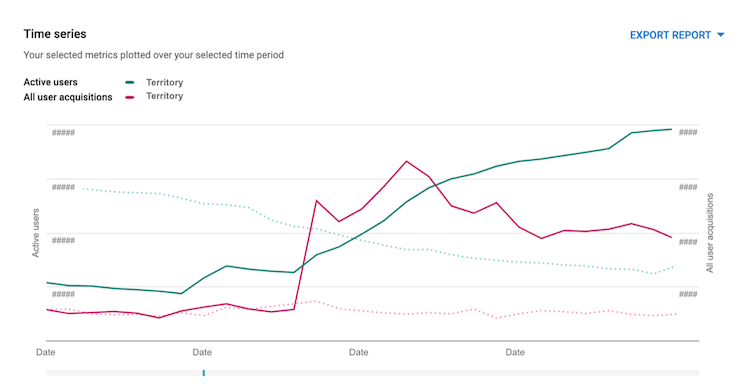
Eliminate variables
No app exists in a vacuum, as there are multiple factors that can influence your metrics month to month. In order to fully understand the impact of your ASO, you need to account for each of these variables.
For example, if you see a sudden drop in visibility, consider what might have caused that. Were you running advertising campaigns that recently ended? Was your app featured? Is seasonality involved? Are there new competitors? These factors can play a role in your rankings outside of your optimization.
You need to identify these factors and account for them when tracking changes. Look for trends and patterns within the larger changes; those will help you see the impact of your App Store Optimization regardless of outside forces.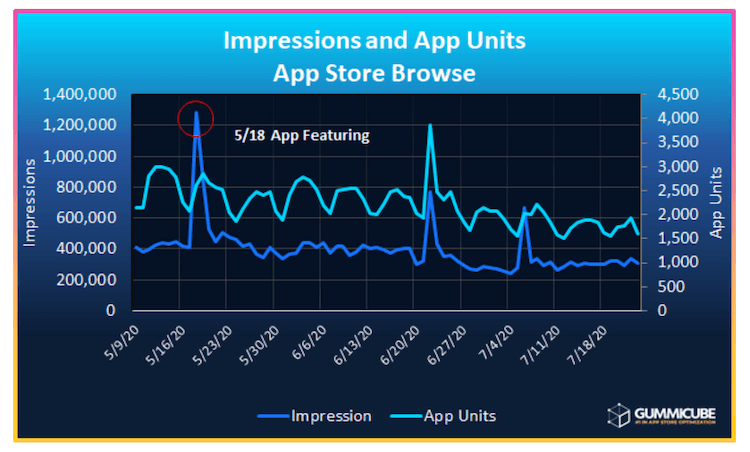
For instance, the above chart shows increases in App Store Browse Impressions during an App Featuring. It’s important to consider how this change on your Browse traffic is impacting, and impacted by, traffic across other channels.
Isolate deployments
Each ASO update can have distinct impacts that lead to your overall growth. To see the influence of every update, you can isolate your deployments.
For example, if you’re testing iterative changes, you can see what impact each new launch has on the overall trends. When you launch new metadata, you can see how your rankings have changed overall and how they have changed with each new update.
This can help you identify how effective changes are. A new creative set may result in new conversions but at a smaller growth percentage than the last, or it could accelerate growth even further.
Isolating deployments can provide cleaner impact reads, so you can see the full effect of each new update.
You can concentrate and enhance your whole approach by knowing how successful your App Store Optimization is. Because ASO is an iterative process, every modification builds on the accomplishments and lessons learned from the previous one. This implies that you must comprehend every update’s effects completely.
You can observe how your ASO is operating by tracking the increase of your KPIs, identifying patterns independent of variables, and understanding the complete impact of each change. This will help you make even better adjustments in the future and let you know that your investment in ASO is paying off.
Bottomline
In conclusion, App Store Optimization (ASO) became crucial to any successful mobile application marketing strategy. By improving your app’s visibility and increasing the number of downloads, you can boost your product’s chances of success and help it reach its full potential.
In this article, we have explored the various aspects of ASO, including:
- Ranking factors for both the Apple App Store and the Google Play Store
- Best practices for optimizing your app’s metadata
- How to improve visuals
- How to enhance user experience
- Popular tools and resources available
However, it is necessary to note that ASO is not a one-time process. It requires ongoing monitoring, testing, and optimization to ensure your application performs at its best. By staying up-to-date on the latest ASO trends and strategies and refining your app’s optimization over time, you can ensure that your mobile software product remains competitive in a crowded and constantly evolving marketplace.
As the world of mobile apps and games continues to evolve and expand, there are endless possibilities for developers and users alike. There is always something new and exciting to explore, from new technologies like augmented and virtual reality to the latest user experience and design trends.
Ultimately, the success of your mobile application depends on many factors, including the quality of your software, the value it provides to users, and the effectiveness of your marketing and promotion efforts. By incorporating ASO into your overall mobile application strategy, you can give your app the best possible chance of success and help it stand out.








Comments