
 By
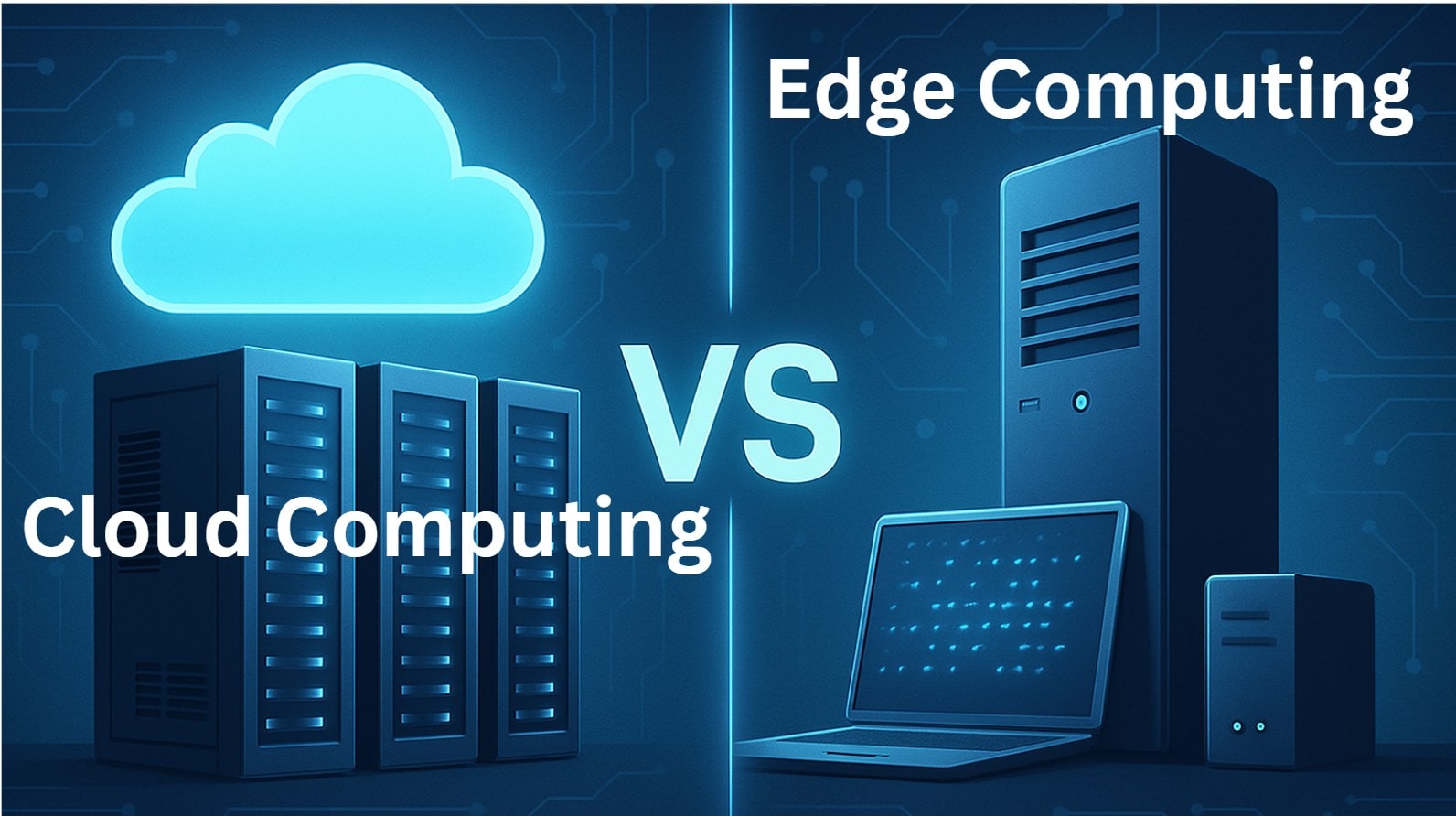
Edge computing processes data close to the data source, lowering latency and bandwidth requirements for real-time applications, whereas cloud computing centralizes data processing in remote data centers for large-scale, non-time-sensitive operations. The primary distinctions are in data location, latency, bandwidth, and processing power, which make them suitable for various use cases such as edge for IoT device control and cloud for big data analytics.
| Feature | Edge Computing | Cloud Computing |
|---|---|---|
| Data Location | Near the source of data generation (e.g., a factory floor, a retail store). | Centralized, remote data centers. |
| Latency | Very low, enabling real-time processing and quick responses. | Higher, due to data traveling over a network to a remote server. |
| Bandwidth | Requires less bandwidth as data is processed locally, reducing the need to send large amounts of data to the cloud. | Requires significant bandwidth to transfer data from the source to the cloud. |
| Processing Power | Limited to the resources available on the local edge device, which are typically not as powerful as cloud servers. | High-scale processing power available for large datasets and complex tasks. |
| Scalability | Less scalable on its own, as it relies on the capacity of individual edge devices. | Highly scalable, as resources can be dynamically adjusted up or down as needed. |
| Cost | Higher upfront costs for hardware but can save on long-term data transmission costs. | Lower upfront costs, but ongoing subscription fees can add up. |
| Best For | Applications needing real-time action, like autonomous vehicles, smart manufacturing, and video surveillance. | Applications that require large-scale processing, storage, and don’t need immediate responses, like big data analytics or long-term data storage. |
Edge Computing
Edge computing is a distributed computing architecture that moves compute and data storage closer to the source of data. Data processing occurs at the network’s edge, near the device that created the data, rather than a central point, such as a data center. Edge computing is intended to reduce latency and bandwidth requirements when transmitting huge amounts of data to a processing center. Edge computing enables real-time decision-making by processing data near to the edge and speeding up data transfers to and from the cloud.
IoT devices, driverless cars, and augmented reality/virtual reality (AR/VR) systems all demand low latency, which can be provided via edge computing. Applications that generate large amounts of data, such as those used in industry, video and image analysis, and intelligent.
Pros of Edge Computing
- Reduced Latency: Edge Computing makes it possible to process and analyze data more quickly at the point of origin, which cuts down on the time it takes for data to be transported to the cloud and back. Due to the huge reduction in latency, this is perfect for real-time decision-making applications like robotics, industrial automation, and automated cars.
- Increased Security: By enabling data processing and analysis close to the data’s origin and reducing the quantity of data that must be transferred to the cloud, edge computing can increase security. As a result, it is more difficult for hackers to hack the system because the attack surface and potential vulnerabilities are reduced.
- Greater Bandwidth Efficiency: By enabling local data processing and analysis, edge computing can lessen the quantity of data that needs to be transported to the cloud. Better bandwidth efficiency as a result can lower data transmission costs and enable quicker processing.
Cons of Edge Computing
- Low Processing Power: With compare to cloud computing infrastructure, edge computing devices often have less processing power and storage space. The types of apps that can be used on edge devices may be constrained as a result.
- Increased Complexity: Edge computing implementation can be trickier than standard cloud computing strategies. This is due to the requirement of edge computing, which can be difficult to manage and maintain, to install processing and storage resources closer to the source.
- Increased Costs: In terms of hardware and maintenance costs, edge computing can be more expensive than cloud computing. This is because Edge Computing necessitates the deployment of processing and storage resources across several numbers which can be more expensive to set up and maintain.
Cloud Computing
Cloud Computing is a model for delivering information technology services over the internet. Users can now access and use shared pools of reconfigurable computing resources, including as servers, storage, databases, OS, and applications, without worrying about maintaining the underlying infrastructure.
Read Also: Cloud-Based Data Lakes vs Data Warehouses
The way that organizations and people access and use computing resources has been changed by cloud computing. They can rent computer resources from a cloud provider like Amazon Web Services rather than purchasing and maintaining their own hardware and software. Scalability, cost savings, increased agility, improved reliability, and global access are a few advantages of cloud computing.
Pros of Cloud Computing
- Scalability: Without having to invest in pricey hardware, cloud computing enables businesses to effortlessly scale up or down their computer capabilities as needed. This enhances an organization’s agility and enables swift responses to shift business requirements.
- Cost-Effectiveness: For small and medium-sized organizations in particular, cloud computing can be more affordable than traditional computer methods. This is because economies of scale allow cloud companies to offer computing power at a reduced price.
- High Availability: Cloud computing is capable of providing high availability, and most cloud providers offer uptime guarantees of a specific standard. This makes it perfect for applications that need constant availability, such as online stores or banking services.
Cons of Cloud Computing
- Security Risks: Cloud computing can create additional security concerns, especially if the security precautions taken by the cloud provider are moderate. Data leaks, unauthorized access, and other cyber-attacks fall under this category.
- Dependent Internet Connectivity: Internet connectivity is necessary for cloud computing to access computing resources and data. If the internet connection is inconsistent or slow, this could be a drawback as it could result in lost productivity or stopped service.
- Restricted Control: The rate of control that companies have over their computing resources and data may be limited as a result of cloud computing. Because they depend on cloud service providers to manage and maintain their computer infrastructure, businesses may not be able to fully personalize and improve their systems.
Summary
| Parameter | Edge Computing | Cloud Computing |
| Definition | Edge Computing is a distributed computing architecture that brings computing and data storage closer to the source of data. | Cloud Computing is a model for delivering information technology services over the internet. |
| Location of Processing | Processing is done at the edge of the network, near the device that generates the data. | Data Analysis and Processing are done at a central location, such as a data center. |
| Bandwidth Requirements | Low bandwidth is required, as data is processed near the source. | Higher bandwidth is required as compared to edge computing, as data must be transmitted over the network to a central location for processing. |
| Costs | Edge Computing is more expensive, as specialized hardware and software may be required at the edge. | Cloud Computing is less expensive, as users only pay for the resources they actually use. |
| Scalability | Scalability for Edge Computing can be more challenging, as additional computing resources may need to be added at the edge. | Easier, as users can quickly and easily scale up or down their computing resources based on their needs. |
| Use Cases | Applications that require low latency and real-time decision-making, such as IoT devices, autonomous vehicles, and AR/VR systems. | Applications that do not have strict latency requirements, such as web applications, email, and file storage. |
| Data Security | Data security can be improved, as data is processed near the source and is not transmitted over the network. | Data Security is more challenging, as data is transmitted over the network to a central location for processing. |




Comments