
 By

AWS provides a diverse set of big data analytics technologies, including Amazon EMR for processing, Amazon Redshift for data warehousing, Amazon Kinesis for real-time streaming, and Amazon Athena for querying data lakes. These tools are used for a variety of purposes, including log analysis, producing business intelligence dashboards with Amazon QuickSight, developing machine learning models, and establishing a uniform platform for massive datasets.
Tools
- Amazon EMR (Elastic MapReduce): A managed cluster platform that simplifies running big data frameworks like Apache Hadoop and Spark to process vast amounts of data.
- Amazon Redshift: A fast, fully managed, petabyte-scale data warehouse service that makes it easy to query and analyze large datasets.
- Amazon Kinesis: A platform for streaming data. It can be used to ingest and process real-time data from sources like application logs.
- Amazon Athena: An interactive query service that allows you to analyze data directly in Amazon S3 using standard SQL, without needing to load it into a database.
- AWS Glue: A fully managed ETL (extract, transform, and load) service that helps with data preparation and integration, including crawling data catalogs and creating metadata.
- Amazon QuickSight: A scalable, serverless, machine learning-powered business intelligence service for creating and publishing interactive dashboards.
- Amazon OpenSearch Service: Makes it easy to deploy, operate, and scale OpenSearch for log analytics, real-time application monitoring, and more.
Use Cases
- Log and Clickstream Analysis: Analyzing application logs and website clickstreams to understand user behavior and performance.
- Business Intelligence and Visualization: Using services like QuickSight to create dashboards and visualizations from various data sources, including Redshift, S3, and other databases.
- Real-time Analytics: Using services like Kinesis to process and analyze streaming data as it arrives, enabling real-time dashboards and alerting.
- Data Warehousing: Building a central data warehouse with Redshift to combine structured and semi-structured data for business analysis.
- Machine Learning: Using services like Amazon Machine Learning or custom models on EMR to build and train models based on data stored in S3 or Redshift.
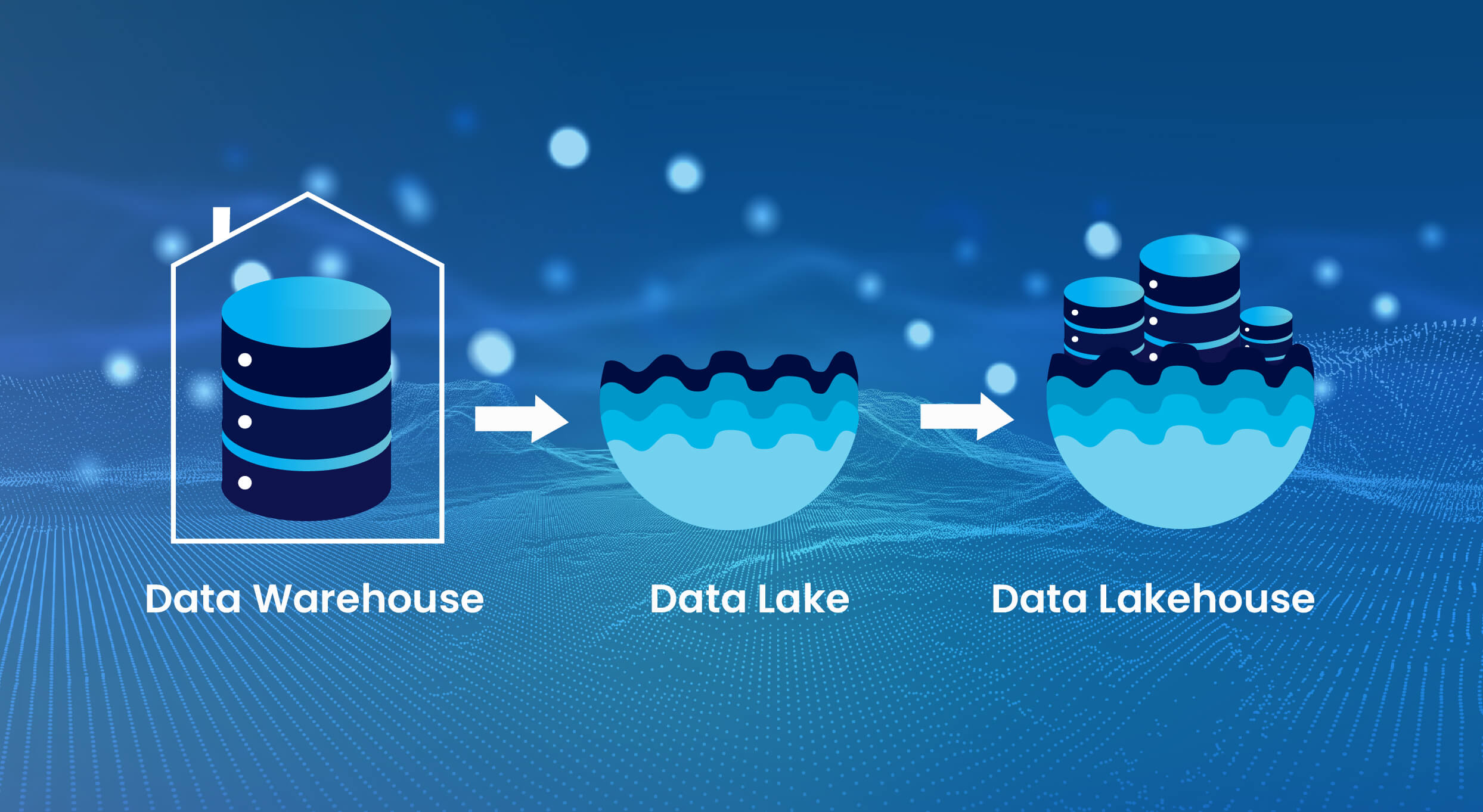
- Data Lake and Data Lakehouse Analytics: Using tools like Athena and Glue to query and manage data stored in a data lake or data lakehouse, often built on Amazon S3.
- ETL and Data Integration: Automating the process of extracting, transforming, and loading data from various sources using AWS Glue.
Big data techniques and technology offer numerous opportunities and challenges for efficient data processing. The importance of data analysis is seen in the benefits of improved understanding of client preferences and acquiring a competitive advantage. Candidates interested in pursuing a career in Big Data want to obtain the AWS Data Analytics certification to advance their careers.
Data management frameworks have evolved significantly from traditional data warehousing approaches to complex frameworks. Data management frameworks are being used for real-time and batch processing, as well as high-velocity operations. The next discussion will focus on the benefits of using AWS and Big Data. The article would also briefly touch on the many AWS products that assist in achieving big data goals.
Big Data on AWS
AWS provides a variety of managed services to help with the development, security, and smooth scalability of end-to-end big data applications. The speed and ease of development are significant advantages of AWS big data. Applications may have a variety of requirements, including batch data processing and real-time streaming. However, AWS provides all of the infrastructure and tools needed to handle big data projects.
Furthermore, AWS eliminates the requirement for hardware, as well as infrastructure upkeep and expansion. Furthermore, the large range of analytical solutions available through AWS provides an inherent advantage in their design. So, what other advantages do AWS and Big Data provide for businesses? The response to this question can serve as the foundation for this guide to working with Big Data on AWS.
The analysis of vast amounts of data may necessitate significant compute resources. Furthermore, compute capacity would vary depending on the amount of incoming data and type of analysis. As a result, big data workloads on AWS adhere to the pay-as-you-go paradigm that is the foundation of cloud computing.
Scalability on demand is not an issue with AWS Big Data Services. You do not need to wait for more hardware or investments to increase computing capability. Scaling on AWS takes little time and gives maximum efficiency, ensuring productivity while working with big data on AWS.
Furthermore, the different Availability Zones provided by AWS ensure that resources are always available. Furthermore, services like Amazon S3 (Simple Storage Service) can help with data storage, whilst AWS Glue can help with orchestration. The next key feature provided by AWS Big Data is the steady movement of data to the cloud.
Furthermore, using Big Data services on AWS requires the collection of data about mobile app activity. All of these capabilities demonstrate how Big Data with Amazon Web Services can be highly productive. So, the next item on our schedule is to cover the various AWS services for Big Data collection, processing, storage, and analysis.
Amazon Kinesis
The first AWS Big Data service is Amazon Kinesis, which is an excellent platform for streaming data to AWS. As a result, it allows you to create unique streaming data applications to meet your individual requirements. Kinesis can assist in inputting real-time data, such as application logs, into databases, data warehouses, or data lakes.
Read Also: Building Machine Learning Models on Google Cloud
Subsequently, the AWS Big data functionalities of Kinesis are obvious in the development of real-time applications based on Kinesis data. Kinesis’ real-time processing capabilities demonstrate that data can be processed and analyzed before it has been collected.
AWS Lambda
Another Amazon Big data offering is AWS Lambda. AWS Lambda enables code execution without the need for server provisioning or management. Users have to pay only for the compute time they use, and there is no payment for the time when code does not run. The use of Lambda allows code to execute on practically any sort of application or backend service without requiring administration.
All you have to do is upload the code and Lambda will take care of the rest. Other AWS services’ triggers demonstrate Lambda’s functionality. Lambda is widely used in the AWS big data landscape for real-time file and stream processing, as well as AWS event processing.
Amazon EMR
Amazon EMR is the next significant Amazon huge Data solution that works with huge data on AWS. It’s a highly distributed computing framework. The benefits of Amazon EMR include faster and more cost-effective data processing and storage.
Amazon EMR distributes and processes data using the open-source framework Apache Hadoop. EMR is also useful for using basic Hadoop tools like Hive, Spark, and others. EMR is an ideal tool for integrating big data with AWS because it supports big data processing and analytics.
The interesting component in this scenario is the deployment, management, and maintenance of infrastructure and software in the Hadoop cluster. Amazon EMR’s key uses are log processing and analytics, genomics, predictive analytics, ad targeting analysis, and threat analytics.
Amazon KMS (AWS Key Management) is a managed solution that works with a variety of other AWS services. You can use it in your apps to generate, store, and control encryption keys that encrypt your data.
AWS Glue
The next trusted AWS Big data tool is AWS Glue, a fully managed ETL service. ETL (extract, transform, and load) is suitable for data classification. Furthermore, it aids in the refinement, improvement, and secure migration of data between data storage locations. AWS Glue can significantly reduce the cost, effort, and complexity of creating ETL operations.
Because Glue does not rely on servers, the hassle of configuring and managing infrastructure is eliminated. AWS Glue automates data crawling and generates code for execution, data transformation, and loading procedures. It also interfaces well with other AWS services such as Athena, RedShift, and EMR, allowing for greater usage flexibility. The ETL code developed in AWS Glue is highly customizable and is portable, as well as reusable.
Amazon Machine Learning
This is perhaps the best of all AWS Big Data tools. The Amazon Machine Learning service facilitates the use of machine learning technologies and predictive analytics. Amazon ML can give excellent visualization tools and wizards to help with the process of developing machine learning models. After creating machine learning models, Amazon ML makes it simple to receive predictions for an application using API operations.
The good news is that you don’t need to write any custom code to generate forecasts. You are also not responsible for infrastructure management. Amazon ML integrates Big Data with Amazon Web Services by allowing you to create ML models from data stored on Amazon S3, RedShift, or RDS. The potential benefit of Amazon ML is the availability of built-in wizards that can help in interactive data exploration.
Amazon ML can also aid with training the ML model, as well as evaluating model quality and modifying outputs to align with corporate goals. Once a model is completed, users can obtain predictions via the real-time API or in batches. Amazon Machine Learning applications let you uncover numerous patterns in your data.
As a result, users can develop machine learning models to assist them make predictions from new datasets. For example, it assists applications in identifying and notifying on suspicious transactions. Amazon ML can also be used to personalize application content, predict user activity, listen to social media, and forecast product demand.
Additional Services
The other notable AWS big data tools which can contribute to the effective use of Big data on AWS are as follows.
- Amazon DynamoDB
- Amazon Elasticsearch Service
- Amazon Redshift
- Amazon Athena
- Amazon QuickSight
All of these services have specific applications for the utilization of Big Data on AWS. DynamoDB, for example, offers a NoSQL database service that is less expensive and easier to store and retrieve data. Amazon Redshift applications include numerous references to online analytical processing via current business intelligence tools.
Redshift is widely used for analyzing global sales data, analyzing social trends, and storing historical stock trade data. Subsequently, the Amazon Elasticsearch Service aids in querying and searching vast amounts of data. Amazon ES can be used to analyze activity logs as well as data stream updates from other AWS services. Amazon QuickSight offers business intelligence functionality by allowing users to create visuals to gain insights into data.
A modern data strategy is built with a set of technology building blocks that help you manage, access, analyze, and act on data. It also gives you multiple options to connect to data sources. A modern data strategy should empower your teams to:
- Use your preferred tools or techniques
- Use artificial intelligence (AI) to assist with finding answers to specific questions about your data
- Manage who has access to data with the proper security and data governance controls
- Break down data silos to give you the best of both data lakes and purpose-built data stores
- Store any amount of data, at low-cost, and in open, standards-based data formats
- Connect your data lakes, data warehouses, operational databases, applications, and federated data sources into a coherent whole
AWS offers a variety of services to help you achieve a modern data strategy.
Conclusion
Based on the findings made during the preceding discussion, AWS big data appears to be ready for use. It’s as if you don’t have to do anything because everything is served right at your table. You should seek for varied ways to use big data to your advantage using AWS’s unique functionalities.
The various AWS tools and services that assist in accomplishing big data functionality would necessitate extensive training. If you want to take your first step into big data on AWS, create a free tier account. Try out the various services described in this talk and see their functionality for yourself. As they say, learning and practice lead to mastery!









Comments