
 By

How do you shift from a scarcity mindset to a wealth-building mindset of multiplicity? Start by moving your attention from simply protecting the money you have toward systematically expanding your options: increase valuable skills, create multiple income opportunities, build emergency reserves, acquire productive assets, invest consistently and make financial decisions with a longer time horizon.
But changing your mindset does not mean pretending financial hardship is imaginary. Scarcity can be real.
The Federal Reserve reported that in 2024 only 63% of U.S. adults could cover a hypothetical $400 emergency expense entirely using cash or its equivalent, while 55% had savings sufficient to cover three months of expenses.
A useful wealth mindset therefore isn’t:
“There is unlimited money, so I don’t need to worry.”
It is:
“My resources may be limited today, but I can systematically create more options tomorrow.”
That is the shift from scarcity to multiplicity.
Scarcity vs Multiplicity Mindset
| Scarcity Thinking | Multiplicity Thinking |
|---|---|
| “I can’t afford anything.” | “How can I increase my capacity?” |
| One income source | Multiple potential income sources |
| Saving only | Saving + investing |
| Trading only time for money | Building assets and leverage |
| Avoiding every risk | Managing calculated risks |
| Short-term survival | Short + long-term planning |
| Competing for everything | Looking for value creation |
| Lifestyle first | Assets and resilience first |
| “What if I lose?” | “How do I protect downside and create upside?” |
Multiplicity doesn’t mean taking reckless risks or starting ten side hustles. It means creating more than one path forward.
What Is a Scarcity Mindset?
A scarcity mindset occurs when perceived shortages dominate attention. The shortage might involve:
- Money
- Time
- Food
- Opportunities
- Social connection
- Employment
Research summarized by the American Psychological Association describes how scarcity can consume mental resources and affect cognition and decision-making.
However, more recent research provides an important qualification.
A 2023 study reported by the APA found that people facing scarcity don’t necessarily make irrational decisions. They may prioritize immediate benefits because their circumstances make immediate needs genuinely more important.
That’s an important distinction.
Someone with $50 left until payday who prioritizes food over retirement investing isn’t suffering from defective psychology. They are responding to reality.
The goal is therefore not to shame short-term financial decisions.
The goal is gradually creating enough financial margin that long-term decisions become possible.
What Is a Multiplicity Mindset?
Multiplicity means recognizing that wealth can come from several interconnected resources. Think beyond:
Salary = Wealth
Instead:
Skills → Income → Savings → Assets → Returns → More Assets → Greater Options
A person might eventually have:
- Employment income.
- Freelance income.
- Business profits.
- Investment income.
- Digital assets.
- Intellectual property.
- Property or other productive assets.
You don’t need all seven. The psychological transformation occurs when you stop believing one paycheck is your only possible financial engine.
Wealth Is More Than Income
Someone earning $10,000 monthly but spending $10,500 isn’t necessarily building wealth. Someone earning $5,000, spending $3,500 and consistently acquiring productive assets may be moving in a stronger direction.
This is why the Consumer Financial Protection Bureau doesn’t define financial well-being solely by salary or net worth.
It describes financial well-being as having security and freedom of choice, including control over day-to-day finances, capacity to absorb financial shocks, progress toward goals and freedom to make meaningful choices.
In the CFPB’s words, financial well-being involves:
“financial security and financial freedom of choice”
in both the present and future. That is much closer to genuine wealth psychology than simply displaying expensive possessions.
Step 1: Build Financial Breathing Room
It is difficult to think long term when every unexpected bill creates a crisis. Your first wealth-building asset may therefore be cash reserves.
Federal Reserve data illustrates the difference financial cushions can make. In 2024, 69% of U.S. adults said they could cover at least a $500 expense using savings, but only 48% could handle an expense of $2,000 or more entirely from savings.
Read Also: Ten Top Tips to Improve Your Financial Management
Start by building progressively:
$100 reserve → $500 → $1,000 → One month of essential expenses → Larger emergency reserve
The appropriate target depends on your circumstances. The objective is to buy something extraordinarily valuable:
decision-making time.
Step 2: Replace “I Can’t Afford It” With Better Questions
This doesn’t mean purchasing things you genuinely cannot afford. Instead of stopping at:
“I don’t have $2,000.”
ask:
- “Would this create value?”
- “Could I earn the money rather than borrow it?”
- “Can I find a cheaper alternative?”
- “What skill would increase my income?”
- “Should I buy this at all?”
Good wealth psychology doesn’t eliminate the word no. It produces better reasons for saying either yes or no.
Step 3: Build Multiple Skills Before Multiple Businesses
One mistake is interpreting multiplicity as:
Start five businesses immediately.
That often creates distraction rather than wealth.
Start with a skill stack.
For example:
Writing + SEO + AI + analytics + sales
can become significantly more commercially useful together than any one skill in isolation.
Another combination:
Accounting + spreadsheets + automation + communication
could create opportunities in consulting, employment, digital products or business operations.
Skills create optionality. And optionality reduces dependence on one employer, client or industry.
Step 4: Convert Income Into Assets
The scarcity cycle can look like:
Earn → Spend → Earn → Spend
A wealth-building cycle looks different:
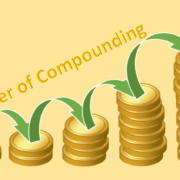
Earn → Save → Acquire Assets → Reinvest Returns → Acquire More Assets
Assets might include:
- Diversified investments
- Profitable businesses
- Digital products
- Intellectual property
- Productive property
- Websites
- Software
- Professional skills
The goal is eventually to make some of your money capable of producing more money. That is a fundamental psychological shift from consumption toward ownership.
Step 5: Stop Confusing Wealth With Visible Consumption
Luxury can create the appearance of wealth without producing financial security. A high salary financing:
expensive cars + large house + luxury holidays + consumer debt
may leave surprisingly little resilience.
The CFPB’s framework emphasizes control, financial-shock capacity, progress toward goals and freedom of choice rather than visible consumption.
Ask before major purchases:
Will this increase my freedom or increase my obligations?
Some purchases do both. Understanding the trade-off is what matters.
Step 6: Measure Wealth by Options
Imagine two people.
Person A
- One employer
- No emergency savings
- High fixed expenses
- Significant debt
- No investments
Person B
- Primary employment
- Six months of essential expenses saved
- Marketable freelance skill
- Investment portfolio
- Small digital product
- Manageable fixed expenses
Even if they currently earn identical salaries, Person B has more financial options. They can potentially withstand unemployment longer, change careers, invest in opportunities or reject unfavorable work.
That is multiplicity.
Wealth isn’t only what you own. It is also the number of financially sustainable choices available to you.
Step 7: Avoid Fake Abundance Thinking
A wealth mindset can become dangerous when it turns into:
- “Money always comes back.”
- “Debt doesn’t matter.”
- “Taking bigger risks creates bigger wealth.”
- “If I believe strongly enough, I’ll become rich.”
Those aren’t financial strategies. A genuine multiplicity mindset combines optimism with mathematics.
Track:
| Metric | Why It Matters |
|---|---|
| Income | Measures earning power |
| Savings rate | Creates investable capital |
| Emergency reserves | Creates resilience |
| Debt | Measures obligations |
| Assets | Builds ownership |
| Investment contributions | Supports compounding |
| Net worth | Tracks long-term progress |
The mindset matters. The numbers verify whether it is working.
Bottomline
The psychology of wealth isn’t believing that resources are infinite. It is believing that your current resources don’t necessarily define your future possibilities—and then building systems that expand those possibilities.
Scarcity says:
“Protect what little I have.”
Multiplicity adds:
“Protect what I need, then use the surplus to create more options.”
That distinction matters because financial insecurity is real. In the Federal Reserve’s 2024 survey, only 55% of adults reported having emergency savings sufficient to cover three months of expenses, while 30% said they couldn’t cover three months of expenses by any means.
Financial well-being therefore begins with resilience, not motivational slogans.
- Build your first emergency reserve.
- Develop a valuable skill.
- Increase income.
- Control unnecessary expenses.
- Acquire productive assets.
- Diversify gradually.
- Reinvest.
- Repeat.
Eventually, the psychological transformation becomes visible in your finances:
- One skill becomes several capabilities.
- One paycheck becomes several possibilities.
- Savings become assets.
- Assets create additional income.
- Additional income creates greater freedom of choice.
The CFPB’s research captures the destination well: financial well-being means having both security and freedom of choice. That is the essence of shifting from scarcity to multiplicity.
Wealth is not simply having more money. It is building more ways to create, protect and use value—so that one setback no longer controls your entire financial future.
FAQ
What is a scarcity mindset about money?
It is a state where limited resources dominate attention and can push financial decisions toward immediate concerns. Importantly, scarcity may reflect genuine financial circumstances rather than merely negative thinking. Research suggests people facing scarcity can rationally prioritize immediate needs when those needs are threatened.
What does multiplicity mean in wealth building?
Multiplicity means creating multiple financial options through skills, savings, assets, investments and potentially several income sources rather than depending entirely on one source.
Can changing your mindset make you rich?
Not by itself. Mindset can influence behavior, but wealth also depends on income, expenses, opportunities, economic conditions, investment performance, access to capital and many other factors.
How do I start thinking like a wealth builder?
Begin asking:
- “How can I create value?”
- “What can I own?”
- “What skill increases my earning power?”
- “How can today’s income create tomorrow’s income?”
Then connect those questions to measurable financial actions.









Comments