
 By

Learn how instagram and affiliate marketing combine to build real income, niche selection, bio setup, link placement, and weekly tracking tips.
You’ve got a decent Instagram following, but you’re not making a dime from it yet. Meanwhile, accounts your size seem to be pulling in commissions every time they post a product link. Instagram and affiliate marketing work well together because the platform was built for visual selling, and people already trust recommendations from accounts they follow.
If you’re wondering how to actually turn followers into commission checks, the answer isn’t just slapping a link in your bio and hoping. Successful affiliate marketing on Instagram requires the right account setup, a niche your audience actually trusts you on, and content formats (Reels, Stories, carousels) that drive clicks without feeling like ads. You also need to know which affiliate programs actually pay Instagram creators well and how to stay compliant with FTC disclosure rules.
This guide walks you through everything: eligibility requirements for affiliate programs, setting up your profile for conversions, picking products your followers will buy, and the specific tactics that separate creators earning real income from those still stuck at zero.
What you need before you start affiliate marketing on Instagram
Before you chase your first commission, get your account structure right. Instagram won’t let a personal profile access shopping features or detailed insights, so switch to a Business or Creator account in Settings under “Account type.” This unlocks analytics on reach, saves, and link taps, all data you’ll need to prove your value to affiliate managers later. Skip this step and you’re flying blind, guessing which posts actually convert.

Next, understand what affiliate networks actually check before approving you. Most programs don’t care about follower count as much as they care about engagement and niche relevance. A 3,000-follower fitness account with a 6% engagement rate often beats a 50,000-follower account full of bots, which is why learning how to boost engagement rates matters more than chasing followers.
An affiliate program would rather approve 3,000 engaged followers than 50,000 silent ones.
| Requirement | Why it matters | Typical minimum |
|---|---|---|
| Business/Creator account | Unlocks insights and shopping tags | Free, instant switch |
| Consistent posting history | Shows you’re active, not abandoned | 20+ posts |
| Niche-focused content | Proves you can influence buying decisions | 60%+ related posts |
| Working link-in-bio tool | Lets you host multiple affiliate links | Linktree, Beacons, or similar |
| FTC disclosure knowledge | Keeps you compliant and platform-safe | Required by law |
Tools that make tracking possible
Since Instagram only allows one clickable link in your bio (unless you qualify for link stickers in Stories), you’ll need a link-in-bio tool like Linktree, Beacons, or Milkshake to house multiple affiliate offers at once. Pair that with UTM parameters or the tracking links your affiliate network provides, so you know exactly which post, Story, or Reel drove a sale.
Compliance isn’t optional either. The Federal Trade Commission requires clear disclosure whenever you earn from a recommendation, so add “#ad” or “Affiliate link” directly in your caption, not buried in a hashtag pile. You can review the FTC’s endorsement guides to see exactly what compliant disclosure looks like.
Finally, decide which affiliate networks fit your niche before you apply anywhere. If you’re unsure where to start, our comparison of Amazon Associates vs Clickbank breaks down which platform pays better for different content types, something worth reading before you submit your first application.
Step 1. Choose a profitable niche and optimize your profile
Picking a niche isn’t about what you find interesting, it’s about what your audience will actually buy. Affiliate marketing for Instagram works best in niches with clear buying intent: fitness gear, skincare, budgeting apps, home organization, or side-hustle tools. Broad lifestyle accounts struggle because followers show up for inspiration, not purchase decisions. Narrow down to a specific problem you solve, like “budget meal prep for busy parents,” and the products you recommend feel like natural advice instead of ads.
Followers buy from accounts that solve one problem well, not ones that talk about everything.
Once you’ve locked in a niche, rebuild your profile around it, the same way you’d start branding for your business. Your bio has 150 characters, so use them to state exactly who you help and what you recommend, not a vague tagline. A profile that reads “Helping busy moms save $200/month | Budget tools & deals below” converts far better than “Wife, mom, coffee lover.”
Profile checklist before you apply to programs
- Profile photo: clear face shot, not a logo, builds trust faster
- Bio: state your niche and the benefit you deliver in the first line
- Highlights: create a “Deals” or “My Picks” highlight for saved product Stories
- Link-in-bio tool: already live and organized by category
- Content grid: at least 60% of recent posts should match your niche
Affiliate managers reviewing your application will scroll your grid before approving anything. If they see scattered content with no clear theme, they’ll assume your audience won’t convert either. A tight, niche-specific profile is your first real sales pitch, before you’ve even posted your first affiliate link.
Step 2. Join affiliate programs and networks that fit your niche
Once your profile is niche-focused, start applying to programs that match it instead of chasing every affiliate offer you find. Affiliate marketing with Instagram works best when the products you promote already fit what your audience expects from you, so a fitness account should skip random tech gadgets and stick to supplements, apparel, or workout equipment. Applying broadly wastes time and can get you rejected, since managers check whether your content history actually supports the products you’re requesting.
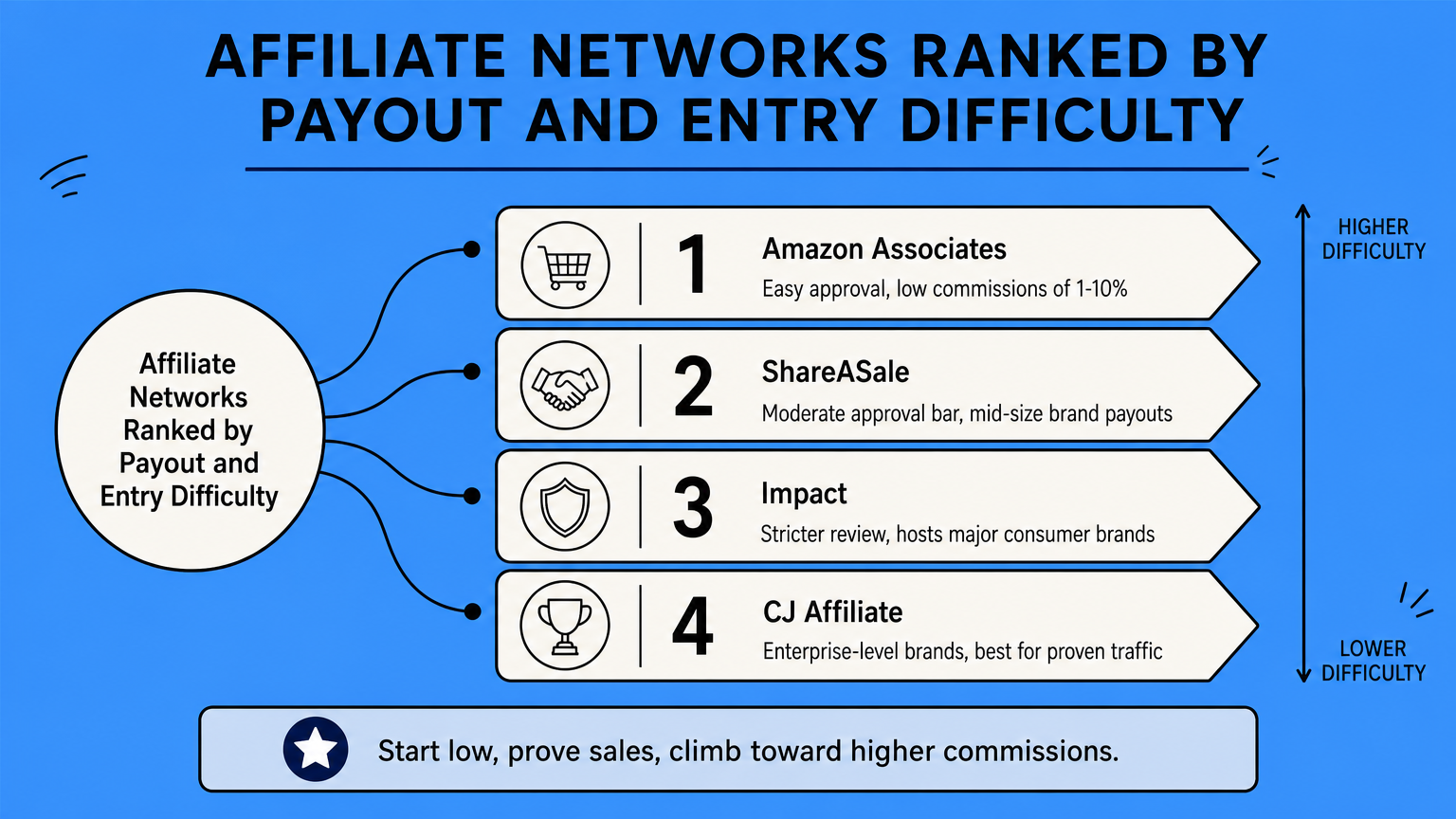
Start with networks that accept smaller creators, then move up once you have sales history to show. Amazon Associates approves almost anyone with an active account, making it a solid first stop even though commissions run low at 1-10%. ShareASale, Impact, and CJ Affiliate host individual brand programs with better payouts, often 15-30%, but they expect a working link-in-bio and clear niche content before approval.
Apply where your content already fits, not where the commission looks biggest.
Networks worth applying to first
- Amazon Associates: easy approval, huge product catalog, low commission rates
- ShareASale: mid-size brands, moderate approval bar, decent payouts
- Impact: hosts major consumer brands, stricter application review
- CJ Affiliate: enterprise-level brands, best for creators with proven traffic
- Direct brand programs: found in a brand’s bio or website footer, often the highest commissions
Don’t stop at one network. Diversifying across three or four programs protects your income if one shuts down a product line or drops its commission rate, something that happens more often than most new affiliates expect.
Step 3. Add and promote your affiliate links across Instagram
Now you actually put links in front of people, and where you place them matters as much as what you’re promoting. Affiliate marketing on Instagram lives or dies on link placement, since the platform limits clickable links to your bio, Stories link stickers, and whatever landing page your link-in-bio tool hosts, a quirk of selling through social platforms you have to design around. Captions can’t carry clickable URLs, so every post needs to direct people to “link in bio” or a specific Story highlight instead.
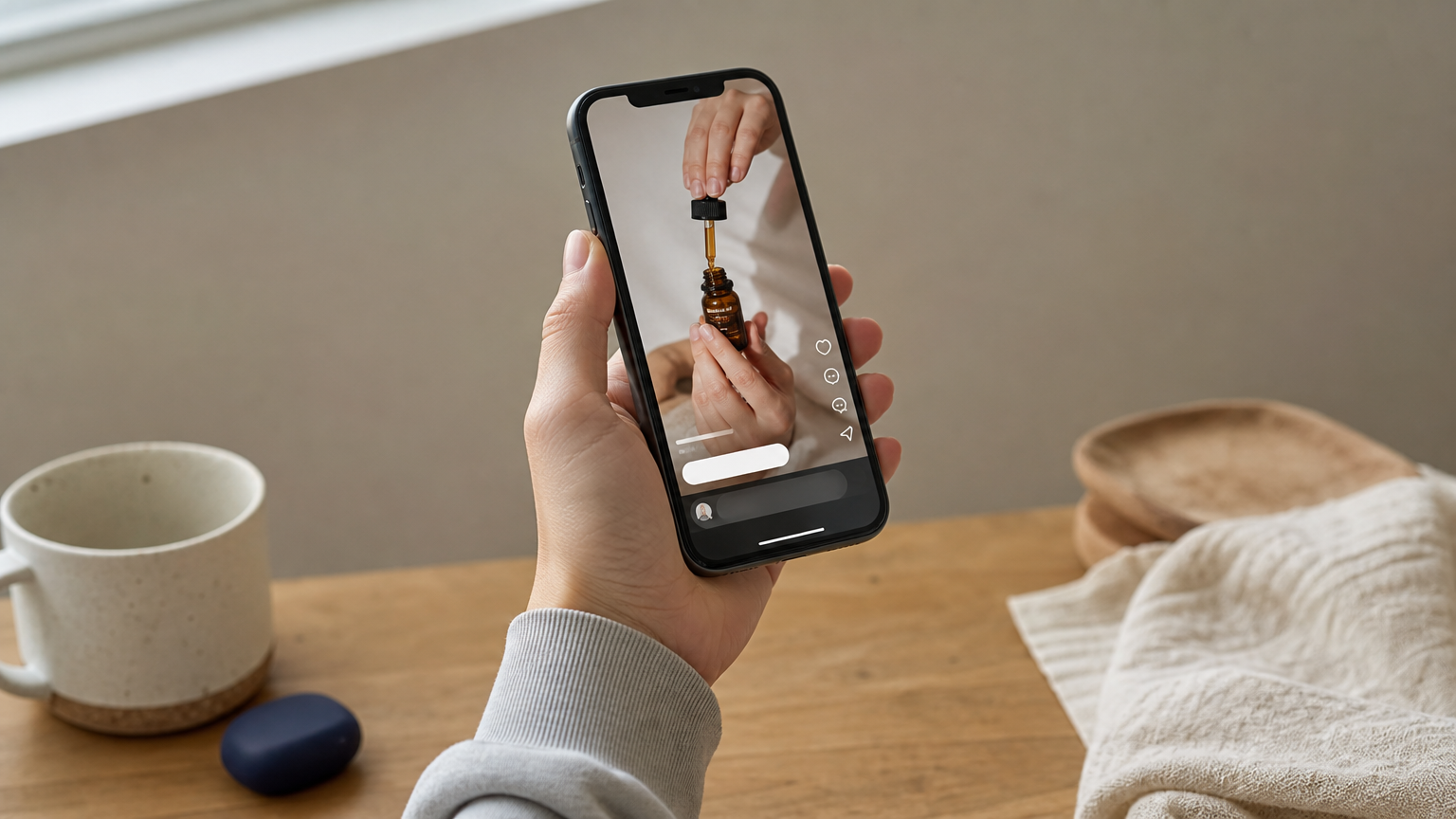
Where your links can actually live
- Bio link tool: your permanent hub, organized by category or product type
- Story link stickers: available once you hit 10,000 followers or have a verified account, and they convert far better than swipe-up ever did
- Highlights: save high-performing Story links so new visitors find them without waiting for a repost
- Pinned comments: reply to your own post with “link in bio” to keep it visible under the caption
Reels drive the most reach right now, so use them to demonstrate a product in action rather than just listing features, one of the simple rules that boost visual marketing ROI. Carousels work well for comparison content, like “3 budgeting apps I tried this month,” where each slide builds a case before you send people to the link. Stories fill the gap between big posts, letting you mention a product casually and tag it with a poll or question sticker to boost engagement before the link sticker appears.
A link buried in a caption gets ignored, a link demonstrated in a Reel gets clicked.
Give every affiliate link its own tracking tag so you know which format actually earned the sale, a habit that pays off the moment you start comparing performance in Step 4.
Step 4. Track your results and scale your affiliate income
Guessing which posts earn money is a fast way to waste months of effort. Instagram for affiliate marketing only becomes profitable once you treat it like a small business, checking numbers weekly instead of posting and hoping. Pull data from three places: Instagram Insights for reach and taps, your link-in-bio tool for click-through rates, and your affiliate network’s dashboard for actual conversions. Matching these three tells you whether a post got attention, got clicks, or got sales, and those are three very different problems, which is exactly how data-driven social media strategies for ROI work.
A post with thousands of views and zero sales isn’t a win, it’s a signal to change the offer.
Set up a simple tracking sheet so patterns show up fast instead of getting lost in your memory.
Weekly tracking checklist
- Post type: Reel, carousel, or Story link
- Product promoted: name and affiliate network
- Clicks: from your link-in-bio analytics
- Conversions: pulled from the affiliate dashboard
- Commission earned: total for that specific link
Once you spot which content format and product combination converts best, double down on it. If comparison carousels consistently outsell solo product Reels, make more comparison carousels and cut the formats that underperform. Reinvest early commissions into better tools, a decent ring light, a paid link-in-bio plan with deeper analytics, or scheduling software that frees up time to post more often.
Scaling also means renegotiating. Once you can show three or four months of consistent sales, email your affiliate managers and ask for a higher commission tier or a custom discount code for your followers. Networks reward creators who prove they move product, and that leverage only shows up once your tracking data backs it up.
Turning your Instagram presence into real income
None of this works overnight, and anyone promising instant commissions is selling you a fantasy, not a strategy. Affiliate marketing and Instagram reward the creators who treat their account like a real business: a tight niche, a profile built for trust, links placed where people actually click, and numbers checked every week instead of ignored. Skip any one of those pieces and you’ll stay stuck posting into silence while smaller, sharper accounts pull in commissions you’re missing.
Start with the profile audit from Step 1 this week. Don’t wait until your content feels “perfect,” because perfect never comes and momentum does more for your growth than polish ever will. Every account earning steady affiliate income today started exactly where you are now, just with a plan they actually followed through on.
For more practical breakdowns on building income streams beyond Instagram, dig into our full library of affiliate marketing guides and find the next strategy worth your time.
Article Summary
This guide explains how to turn an Instagram following into affiliate income through a structured, four-step process rather than simply posting a bio link. It starts with setting up a Business or Creator account to access analytics and shopping features, then emphasizes that affiliate networks value engagement and niche relevance over raw follower counts, recommending tools like Linktree for link management and reminding creators to follow FTC disclosure rules. Step one focuses on choosing a profitable, buying-intent niche and optimizing the profile’s bio, photo, highlights, and content grid to build trust before applying to programs. Step two covers joining affiliate networks that match the chosen niche, starting with easier options like Amazon Associates before moving to higher-paying networks like ShareASale, Impact, or CJ Affiliate, while diversifying across multiple programs. Step three details placing links strategically in bios, Story stickers, highlights, and pinned comments, using Reels and carousels to drive clicks naturally. Step four stresses tracking performance weekly across Instagram Insights, link-in-bio analytics, and affiliate dashboards to identify winning content and products, then scaling by doubling down on what works and negotiating higher commissions once consistent sales are proven.



Comments