
 By

Annual Recurring income (ARR) is the fundamental statistic for SaaS business planning, offering a consistent, normalized perspective of subscription income across a year. It allows for accurate revenue forecasting, supports smart resource allocation (hiring/marketing), and acts as an important sign of firm health for investors.
Key aspects of ARR in SaaS planning include:
- Predictable Forecasting: ARR filters out one-time fees, offering a stable baseline to project revenue and calculate long-term, multi-year growth targets.
- Growth Tracking: It measures the velocity of expansion through new, churned, and upgraded (net retention) revenue, indicating product-market fit.
- Strategic Decision Making: CFOs use ARR to determine operational burn rate, set sales quotas, and justify marketing spend.
- Investor Metrics: High or rapidly growing ARR is critical for company valuation, signaling stability and scalability to investors.
- Operational Focus: Tracking ARR encourages a focus on retention and customer success to prevent revenue erosion.
While ARR is not cash in the bank, it is the most critical KPI for mapping the trajectory of a subscription-based business.
What is Annual Recurring Revenue (ARR)?
Annual Recurring Revenue (ARR) is the lifeblood of any SaaS business. It’s the total recurring revenue normalized to a one-year period, giving you a clear picture of predictable income from subscriptions. Think of it as the heartbeat of your financial health, providing crucial insights into your current performance and future growth potential. ARR focuses solely on recurring revenue from subscriptions, excluding one-time fees or other non-recurring sources. This focus allows for accurate forecasting and a stable foundation for financial planning.
Why is ARR so vital for SaaS companies? Because predictable revenue is the key to sustainable growth. A healthy ARR allows you to confidently invest in product development, expand your team, and make strategic decisions about the future of your business. Investors also rely heavily on ARR to assess the stability and potential of SaaS companies. A consistent and growing ARR demonstrates a strong business model and attracts investment, fueling further growth.
Understanding your ARR is essential for accurate financial planning and informed decision-making. It helps you track growth, identify areas for improvement, and make data-driven decisions about pricing, customer acquisition, and customer retention. By focusing on ARR, you can build a more predictable and profitable business.
What is SaaS ARR?
Understanding your financials is key to making smart decisions for your business. For subscription-based companies, Annual Recurring Revenue (ARR) is one of the most important metrics you can track. This section breaks down what ARR is, why it matters, and how it differs from other revenue metrics.
Understanding ARR in SaaS
ARR is the total predictable income a subscription-based business expects yearly from its customers’ ongoing subscriptions. Think of it as the reliable heartbeat of your revenue stream. It’s a more stable indicator of a company’s financial health than monthly recurring revenue (MRR) because it smooths out month-to-month fluctuations, giving you a clearer picture of your overall revenue trajectory. For SaaS businesses, especially those with yearly contracts, ARR represents the bedrock of predictable income. This predictability is essential for long-term planning and growth.
Different Types of ARR
Understanding the nuances of ARR involves looking at its different forms. Each type provides a unique perspective on your revenue streams, helping you pinpoint areas for growth and improvement.
- Gross ARR
Gross ARR represents the total recurring revenue from all your subscriptions before accounting for any losses. It’s a high-level view of your revenue generation, calculated by multiplying the number of subscribers by their yearly subscription fee. For example, if you have 100 subscribers paying $1,000 annually, your gross ARR is $100,000. This metric is useful for understanding your overall revenue potential, but it doesn’t show the complete picture.
- Net New ARR
Net New ARR focuses solely on the revenue generated from newly acquired customers during a specific period. It’s a crucial indicator of your sales and marketing effectiveness. This metric helps you understand how well you’re attracting new business and the impact of your customer acquisition strategies. Strong Net New ARR signifies healthy growth and market penetration.
- Expansion ARR
Expansion ARR is the additional revenue generated from existing customers by upselling or cross-selling. This reflects the success of your customer success and account management efforts. For example, if a customer upgrades to a higher-tier plan or purchases add-on features, that increase contributes to your Expansion ARR. This metric highlights the potential for growth within your current customer base and the effectiveness of your strategies to increase customer lifetime value.
- Churned ARR
Churned ARR represents the revenue lost due to customers canceling their subscriptions. It’s a critical metric for understanding customer retention and identifying potential issues in your product or service. Monitoring churn is essential for maintaining a healthy revenue stream and making informed decisions about customer retention strategies. High churn rates can indicate underlying problems that need addressing. For businesses dealing with high transaction volumes, managing churn effectively is crucial for accurate revenue recognition. A robust automated revenue recognition solution can help streamline this process and ensure data accuracy.
- Contracted ARR
Contracted ARR (CARR) is the total value of annual recurring revenue from signed contracts, even if the service hasn’t started yet. It provides a forward-looking view of your revenue pipeline and helps with forecasting. This metric is particularly useful for businesses with longer sales cycles or implementation periods. While it doesn’t represent realized revenue, it offers valuable insights into future revenue potential.
How ARR Differs from Other Metrics
While total revenue reflects all income from all sources, ARR focuses solely on the predictable revenue stream from subscriptions. This distinction is important. One-time fees, professional services, or hardware sales aren’t included in ARR. For some large, slow-growing companies, the difference between ARR and total revenue might be minimal, making ARR less insightful.
Read Also: How to Calculate ARR: Formula and Examples
However, for most SaaS businesses, especially those experiencing rapid growth, ARR provides a much more focused view of the core subscription business. ARR offers a yearly perspective, while MRR provides a monthly snapshot. Use ARR for long-term planning and MRR for short-term adjustments and tactical decisions. Understanding these metrics helps you use each effectively for different aspects of your business.
Why ARR Matters for SaaS Companies
For SaaS companies, Annual Recurring Revenue (ARR) is more than just a number; it’s the heartbeat of your business. Understanding and tracking ARR offers crucial insights into your company’s health, stability, and potential for growth. Let’s explore why ARR is so vital for SaaS businesses.
How ARR Creates Financial Stability
ARR is the bedrock of financial planning for SaaS companies. Unlike one-time sales, recurring revenue from subscriptions provides a predictable income stream. This predictability makes it easier to forecast future revenue, which is essential for accurate budgeting and resource allocation. Knowing how much revenue you can expect allows you to make informed decisions about hiring, marketing spend, product development, and other key investments. This financial stability empowers you to confidently plan for the future and weather market fluctuations.
Does ARR Attract Investors?
Investors love SaaS businesses with healthy ARR. Why? Because recurring revenue demonstrates a sustainable business model and reduces the uncertainty associated with one-time sales. A strong ARR signals to investors that your company has a loyal customer base and a predictable income stream, making it a more attractive investment opportunity. Resources like Breaking Into Wall Street offer further insights into how investors use ARR to assess SaaS companies. In fact, ARR is often a key factor in determining a SaaS company’s valuation. The higher your ARR, the higher your potential valuation, which can be crucial for securing funding and achieving your growth objectives.
Using ARR to Measure Growth
ARR is a powerful indicator of growth and overall business performance. By tracking ARR over time, you gain a clear understanding of how well your company is acquiring and retaining customers. A growing ARR suggests that your customer acquisition strategies are effective and that your product or service resonates with your target market. Conversely, a stagnant or declining ARR can signal underlying issues with customer churn or sales performance.
Monitoring ARR allows you to identify these trends early on and take corrective action to improve your long-term financial stability. This article on ARR in SaaS provides a helpful overview of how to calculate and maximize this important metric. This data-driven approach to measuring performance is essential for making informed decisions and driving sustainable growth. You can also explore additional insights on maximizing your ARR on the HubiFi blog.
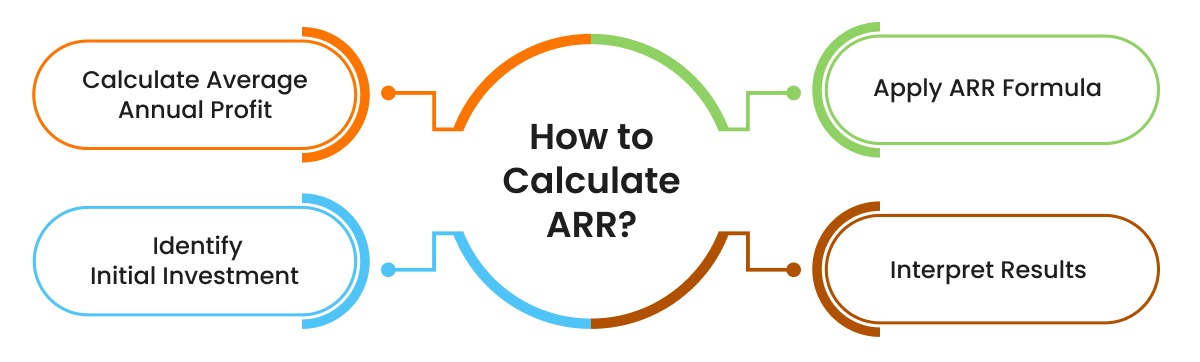
Calculating ARR: A Simple Guide
Calculating annual recurring revenue (ARR) is straightforward. Getting it right, however, requires a clear understanding of what to include, what to leave out, and how to apply the ARR formula correctly to your business.
The ARR Formula Explained
The basic formula for calculating ARR is:
ARR = (New subscription revenue) + (Existing subscription revenue) – (Lost subscription revenue) + (Upgrades/downgrades)
This formula captures the total recurring revenue normalized to a one-year period. Let’s break it down:
- New subscription revenue: The revenue generated from new subscriptions within the year.
- Existing subscription revenue: The recurring revenue from existing customers who continue their subscriptions.
- Lost subscription revenue: The revenue lost due to cancellations or downgrades. This is often referred to as churn.
- Upgrades/downgrades: The net change in revenue resulting from customers upgrading or downgrading their subscriptions.
Example ARR Calculation
Let’s say your SaaS business, “Gadget Co.,” offers three subscription tiers: Basic ($10/month), Premium ($50/month), and Enterprise ($100/month). At the start of the year, you have:
- 100 Basic subscribers
- 50 Premium subscribers
- 20 Enterprise subscribers
Throughout the year, Gadget Co. experiences these changes:
- Acquires 50 new Basic subscribers
- 20 Basic subscribers upgrade to Premium
- 10 Premium subscribers churn
- 5 new Enterprise subscribers sign up
Here’s how to calculate Gadget Co.’s ARR:
- Calculate initial ARR: (100 Basic * $10/month * 12 months) + (50 Premium * $50/month * 12 months) + (20 Enterprise * $100/month * 12 months) = $12,000 + $30,000 + $24,000 = $66,000
- Calculate new revenue: (50 new Basic * $10/month * 12 months) + (5 new Enterprise * $100/month * 12 months) = $6,000 + $6,000 = $12,000
- Calculate upgrade revenue: (20 Basic to Premium upgrades * $40/month difference * 12 months) = $9,600
- Calculate churn: (10 Premium churned * $50/month * 12 months) = $6,000
- Calculate total ARR: $66,000 (initial) + $12,000 (new) + $9,600 (upgrades) – $6,000 (churn) = $81,600
So, Gadget Co.’s ARR at the end of the year is $81,600. This example simplifies the calculation. Real-world scenarios often involve more complex subscription models and revenue streams. For a deeper dive into ARR calculations, explore HubiFi’s blog for additional resources and insights. Automating your revenue recognition can save you time and reduce errors. Consider exploring HubiFi’s automated solutions for a more streamlined approach.
What to Include in ARR Calculations
ARR should reflect predictable, recurring revenue. Think subscription fees, membership dues, and software licenses. It’s a valuable metric for understanding the financial health of your SaaS business. Here’s a clearer look at what should and shouldn’t factor into your ARR calculations:
Include:
- Recurring subscription fees: The core of your ARR, representing the predictable revenue stream from customer subscriptions.
- Recurring add-on fees: Revenue from any additional features or services customers subscribe to on a recurring basis.
Exclude:
- One-time fees: These might include setup fees, implementation costs, or training fees. Because they are not recurring, they don’t belong in your ARR calculation.
- Non-recurring services: Project-based revenue or professional service fees fall outside the scope of ARR.
- Discounts and promotions: While these impact your overall revenue, they shouldn’t be factored directly into your ARR calculation. Calculate ARR based on the standard subscription price. You can always analyze the impact of discounts separately.
Strategies to Boost your ARR Growth Rate
Here are some key strategies to accelerate your ARR growth:
Focus on customer retention
Customer retention is fundamental to sustainable ARR growth. By prioritizing customer satisfaction and loyalty, you can reduce churn and increase the lifetime value of your customers. Here are some effective strategies:
- Deliver exceptional customer support: Invest in a robust customer support team to provide timely and efficient assistance.
- Provide proactive account management: Regularly check in with your customers to understand their needs, identify potential upselling opportunities, and address any issues before they escalate.
- Roll out loyalty programs: Implement loyalty programs to reward loyal customers with exclusive benefits and discounts.
Leverage upsell and cross-sell opportunities
Upselling and cross-selling are powerful techniques to increase ARR from your existing customer base. Here are some tips:
- Identify upselling opportunities: Analyze your customer data to identify customers interested in upgrading to a higher-tier plan or purchasing additional features. Offer upsells and cross-sells during onboarding or renewal periods.
- Personalize your upsells: Tailor these offers to each customer’s specific needs and preferences.
- Create compelling offers: Develop attractive offers, such as limited-time discounts or bundled deals, to entice customers to upgrade or purchase additional products.
Expand into new markets
Expanding into new markets can greatly boost ARR by tapping into new customer segments. By targeting new regions or industries, you can diversify revenue streams and reduce reliance on a single market. Here’s how you can effectively expand your reach across borders:
- Do market research: Conduct thorough research to identify potential markets with high demand for your product or service.
- Localize your efforts: Collaborate with local distributors, resellers, or technology partners to adapt your product to cater to local preferences and cultural nuances.
- Leverage targeted marketing and sales strategies: Develop targeted marketing campaigns and sales strategies to reach your new target audience.
Streamline onboarding and customer success
A smooth onboarding experience and exceptional customer support can really improve customer satisfaction and retention. By streamlining these processes, you can reduce churn and increase customer lifetime value. Consider implementing these tactics:
- Simplified onboarding process: Create a user-friendly onboarding flow that guides customers through the initial setup process. Tailor the experience to individual needs and preferences.
- Prompt customer support: Offer timely and effective customer support to address issues and questions.
- Regular check-ins: Schedule regular check-ins with customers to ensure their satisfaction and identify upselling or cross-selling opportunities.
Implement flexible pricing plans
Offering flexible pricing plans can attract a wider range of customers and increase revenue. By providing options that cater to different customer needs and budgets, you can maximize your ARR. Here are some options to explore:
- Tiered pricing: Offer tiered pricing plans to cater to different customer needs and budgets.
- Usage-based pricing: Charge customers based on their actual usage of your product.
- Value-based pricing: Set prices based on the perceived value your product or service delivers to the customer. This approach can justify premium pricing for high-value offerings.
Here’s a bonus tip: You can also offer custom pricing plans for enterprise customers with industry-specific features to accommodate their unique requirements.
Key ARR Metrics and Benchmarks
Understanding key ARR metrics helps you assess your SaaS business’s health and make informed decisions. Let’s explore some essential benchmarks and their relationship to other vital SaaS metrics.
Understanding the “Rule of 40”
The “Rule of 40” is a popular benchmark in the SaaS world. It suggests a healthy SaaS company maintains a combined annual recurring revenue (ARR) growth rate and profit margin of at least 40%. Think of it as a balancing act: a high growth rate might offset a lower profit margin, and vice-versa. This metric provides a quick way for investors and stakeholders to gauge a company’s overall performance and potential.
Beyond the Rule of 40: Other Key Metrics
While the Rule of 40 offers a helpful snapshot of a SaaS company’s performance, it’s not the only metric that counts. To truly understand your business, you need a broader view. Let’s explore some other key metrics that add depth to your SaaS analysis.
- Customer Acquisition Cost (CAC)
Customer Acquisition Cost (CAC) shows you how much it costs to bring in a new customer. Calculate it by dividing your total sales and marketing expenses by the number of new customers acquired during a specific period. Knowing your CAC is essential for assessing the effectiveness of your marketing strategies. A high CAC can put a strain on your budget, while a low CAC indicates efficient customer acquisition.
- Customer Lifetime Value (CLTV)
Customer Lifetime Value (CLTV) projects the total revenue you can expect from a single customer throughout their entire relationship with your company. CLTV helps you understand each customer’s long-term value, which informs decisions about your acquisition spend. A higher CLTV compared to your CAC points to a healthy, sustainable business model.
- Net Revenue Retention (NRR)
Net Revenue Retention (NRR) measures the percentage of recurring revenue retained from existing customers over a specific period. NRR considers upgrades, downgrades, and churn, giving you a complete picture of your ability to retain and grow your revenue base. A high NRR shows you’re not just keeping customers but also increasing their value.
- Leading and Lagging Indicators
Leading indicators offer insights into future performance. Metrics like customer engagement and acquisition rates can signal future revenue growth. Lagging indicators, such as ARR and churn rate, reflect past performance. Using both types of indicators provides a balanced view of your business’s health and potential. This article discusses ARR’s impact on product growth and the interplay between leading and lagging indicators.
- AARRR Framework
The AARRR framework (Acquisition, Activation, Retention, Revenue, Referral) offers a structured way to optimize the customer lifecycle. It guides you through attracting, engaging, and retaining customers while maximizing revenue and encouraging referrals. This framework helps you zero in on key stages of the customer journey and pinpoint areas for improvement.
Best Practices for Managing ARR
Successfully managing and growing your annual recurring revenue (ARR) is crucial for the long-term health of your SaaS business. Here are a few best practices to keep in mind:
Building Successful Customer Programs
Customer success programs are key for maintaining and increasing ARR. When you focus on customer satisfaction and engagement, you can reduce churn and enhance customer lifetime value. These programs can also help identify at-risk customers and provide proactive support, ensuring clients get the most from your product. Think of it as an investment in your customers’ success, which directly translates into the success of your business.
Consider offering personalized onboarding, regular check-ins, and educational resources to help your customers fully utilize your software and achieve their desired outcomes. A happy customer is much more likely to stick around and contribute to your ARR growth.
Data-Driven ARR Optimization
Data analytics gives SaaS companies valuable insights into customer behavior and preferences. By analyzing usage patterns, you can identify opportunities for upselling and cross-selling, ultimately driving higher ARR. Data-driven decisions also allow you to refine your offerings and tailor your marketing strategies to better meet customer needs.
HubiFi can help you integrate and analyze your data to unlock these valuable insights. By understanding what features customers use most, how they interact with your product, and what challenges they face, you can make informed decisions about product development, pricing, and marketing efforts.
Creating an ARR-Focused Culture
Building a company culture that prioritizes ARR can significantly impact your growth trajectory. When all teams, from sales to customer support, understand the importance of ARR, they can align their efforts towards acquiring and retaining customers. This collective focus enhances operational efficiency and drives sustainable growth.
Regularly communicating ARR goals and progress to your team can help foster this culture. Consider implementing incentive programs tied to ARR growth to further motivate your team and create a shared sense of ownership. When everyone is working towards the same goal, the results can be powerful.









Comments