
 By
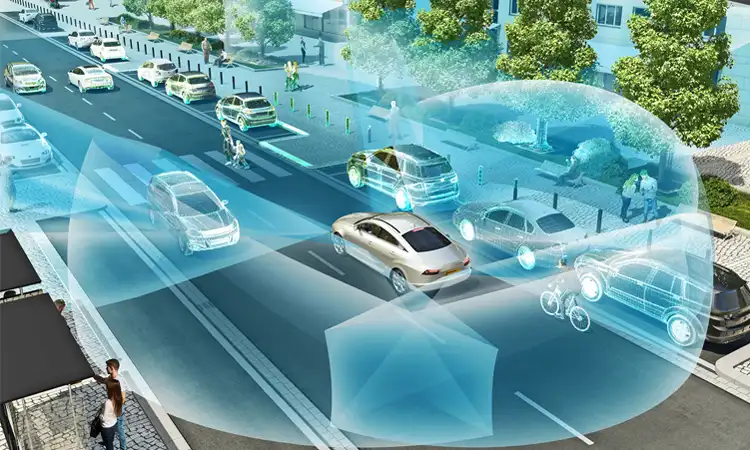
Both urban and rural locations provide unique problems for autonomous driving. While rural environments are hampered by inadequate infrastructure, a lack of lane markings, and insufficient connectivity, metropolitan areas face complex, high-density traffic, pedestrians, and irregular human behavior. Rural systems frequently suffer safety issues due to unmapped roads and lengthy emergency response times, while urban AI struggles with common sense in populated places.
Challenges in Urban Settings (High Density, High Complexity)
Urban environments are complex for AVs due to the sheer volume of unpredictable actors.
- Intense Traffic & Pedestrians: Constant interaction with aggressive drivers, cyclists, and pedestrians necessitates sophisticated AI for predicting human behavior.
- Unstructured Events: Construction zones, emergency vehicles, and double-parked cars require rapid, unpredictable navigation decisions.
- Infrastructure Complexity: High-density intersections, traffic lights, and complex multi-lane navigation require extremely precise HD maps and sensor reliability.
- Sensor Saturation: Too many inputs can lead to data overload, requiring massive, fast computing power to interpret surroundings safely.
Challenges in Rural Settings (Low Density, Poor Infrastructure)
While having less traffic, rural areas pose unique threats to sensor-driven navigation.
- Lack of Infrastructure: Missing lane markings, lack of sidewalks, and non-existent streetlights make lane-keeping and navigation difficult for cameras and LiDAR.
- Environmental Obstacles: Unpredictable animals, narrow roads, sharp turns, and harsh weather conditions (snow/fog) can blind or confuse sensors.
- Limited Connectivity: Weak or nonexistent cellular service hinders V2X (Vehicle-to-Everything) communication, which is crucial for safety and updating map data.
- Higher Speed Hazards: Higher speed limits in rural areas allow for less time to react to an obstacle, increasing the risk of accidents.
Summary of Differences
| Feature | Urban Challenge | Rural Challenge |
|---|---|---|
| Traffic Density | Extremely High (Crowded) | Low (Isolated) |
| Key Risk | Collisions with pedestrians/cars | Single-vehicle crashes/animals |
| Infrastructure | Complex, but well-mapped | Sparse, poorly maintained |
| Connectivity | Good (but high latency) | Poor/Non-existent |
| Primary Need | AI Object Recognition | Enhanced Long-Range Sensors |
Both environments face overarching challenges such as cybersecurity risks, high costs, and user trust.
How Autonomous Vehicles Could Change Cities
Autonomous driving could make urban travel safer, quicker, and cleaner with the correct modifications, but these new modes of mobility are set to disrupt city life and necessitate improvements to city streets and traffic infrastructure.
Reduce accidents and fatalities
Around 40,000 people die in traffic accidents each year in America, and roughly 90% of the fatalities are due to human error. People make mistakes because of drunk driving, tiredness, phone usage, or other factors that take their eyes off the road.
Autonomous vehicles have caused accidents, including fatal ones, due to issues like solar glare, camera malfunctions, software errors, and hardware failures. However, these risks are expected to cause far fewer deaths than those tied to human intoxication, exhaustion, or distraction. For all their possible flaws, computer-driven vehicles don’t get drunk, tired, or distracted, and as they become more common, the overall human toll on the roads is likely to drop significantly.
Decrease in levels of vehicle ownership
We are already seeing significant drops in vehicle ownership in urban areas, especially among young people. Many people living in central cities are unlikely to own vehicles, relying instead on ride-sharing services or taxis to meet their transportation needs. Autonomous vehicles are expected to accelerate this shift away from car ownership, helping to reduce traffic congestion and lessen the environmental impact of cars and trucks in major metropolitan areas.
As car ownership declines, cities will need fewer parking lots, gas stations, and even streets. In turn, urban planners will be able to shift their focus away from car-centric design and toward human-centered spaces like parks, pedestrian walkways, bike lanes, and entertainment zones.
Redesign streets for bikes, autonomous delivery, and commuting
With an increase in the number of autonomous cars, trucks, and buses, urban leaders can redesign streets for bikes, autonomous delivery, and commuting. There may be less need for streets in their traditional sense, allowing cities to think about urban designs featuring dedicated areas for autonomous vehicles and automated delivery systems or amenities such as bike lanes.
Streets could include designated cutouts for delivery vehicles, preventing vans and trucks from blocking traffic as they often do today. Without proper parking, deliveries frequently disrupt traffic flow, frustrating drivers and slowing commutes. By giving delivery vehicles a place to pull aside, cities could reduce congestion and make driving more efficient and pleasant.
Install dynamic traffic lights
Most cities today use static traffic lights that change on fixed timers, regardless of actual traffic conditions. As a result, drivers often sit at red lights even when no cross traffic is present. By integrating road sensors or using data from navigational systems that already track vehicle locations, cities could adopt dynamic traffic lights that adjust in real time. These smart signals would improve traffic flow and offer a more efficient, convenient alternative to current static models.
Read Also: Robotaxis: Will They Replace Traditional Taxis?
Open pedestrian walkways and entertainment zones
Autonomous vehicles will create opportunities to redesign cities with pedestrians—not cars—as the central focus. Contemporary cities devote vast amounts of space to streets, parking, gas stations and auto repair businesses. But with fewer personally owned vehicles and increased reliance on autonomous vehicles, city planners can explore more creative layouts that prioritize walkways, malls, and entertainment zones. These redesigned spaces could feature designated pickup and drop-off points for autonomous vehicles and ride-sharing services, reducing the need for expansive roadways and parking lots.
Reduce the importance of distance
In cities with widespread autonomous vehicle use, distance may become less of a barrier than it is today. Much like the expansion of railroads and subways once allowed people to move farther from city centers, autonomous vehicles could make long commutes more tolerable by transforming driving into a passive experience. Instead of battling traffic, passengers could work, relax with a movie, or connect with loved ones on the phone—arriving home refreshed as opposed to angry and exhausted. This shift could expand commuting zones and reduce the necessity of living in central urban areas.
Retrain drivers for other jobs
As autonomous technology gains steam, the demand for human drivers of trucks, taxis and ride-sharing services will decline. Cities will need to figure out how to retrain these workers for new jobs. Entry-level positions in taxi driving and ride-sharing will likely disappear, and urban leaders must ensure that transportation-sector workers aren’t left behind as this aspect of the digital revolution unfolds.
Use public education campaigns to increase public confidence in autonomy
Autonomy is advancing rapidly, and city planners must consider how the rise of self-driving cars and trucks will impact city operations, urban planning, and metropolitan design. They should recognize that past approaches will likely require significant revisions and develop new planning models that reflect these emerging transportation changes.
At the same time, leaders should work to increase public confidence in autonomous systems. Even though research demonstrates that autonomous vehicles are safer and cleaner than human-operated ones, many people remain wary and are reluctant to ride in them. A 2018 Brookings survey found that only 21% of Americans were willing to ride in autonomous vehicles, with many opposed citing safety and security concerns. As cities adopt these technologies, public education campaigns will be essential to address skepticism and reassure people about the safety and reliability of autonomous transportation.
Plan for unknown unknowns
As is often the case, there will be “unknown unknowns” that we cannot anticipate. When automobiles first appeared in cities, Tom Standage notes in “A Brief History of Motion” that New York City had over 150,000 horses, each producing about 22 pounds of manure and a quart of urine daily. Cars were considered “clean energy” compared to the waste produced by their equestrian predecessors.
Eventually, as the number of cars grew into the millions, their internal combustion engines created severe air pollution that required government intervention. City planners should expect some unexpected costs and benefits from autonomous vehicles and remain flexible in how they plan the future. The rule of unanticipated consequences will likely produce some surprises for urban leaders.








Comments