
 By

Robotaxis are poised to severely disrupt and, in many densely populated urban areas, eventually replace traditional taxis and ride-hailing services, albeit this shift will be gradual rather than abrupt. While they promise to be cheaper and safer in the long term, they only function in a few locations and face substantial regulatory, technical, and public trust challenges.
Here is a detailed breakdown of the future of robotaxis and their impact on traditional transport:
The Case for Replacement (Why They Will Succeed)
- Cost Efficiency: By removing the human driver, robotaxi operators can significantly reduce per-mile expenses. In some Chinese cities (e.g., Wuhan), robotaxis are already undercutting traditional fares by 30-60%.
- 24/7 Availability: Autonomous fleets do not need breaks, sleep, or shifts, allowing for constant, on-demand service.
- Safety Improvements: Data indicates that robotaxis, such as those operated by Waymo, are involved in fewer, less severe accidents per million miles compared to human-driven cars.
- High Demand in Cities: In crowded, high-wage urban areas where parking is expensive, robotaxis are expected to become the preferred, most economical choice for mobility.
Challenges and Limitations (Why They Won’t Replace Them Immediately)
- Slow Deployment and High Costs: Entering new, complex urban markets is expensive ($15–$30 million) and takes time. Covering an entire city can take 4-6 years.
- Public Trust and Skepticism: A 2025 survey indicated that only 13% of Americans trust self-driving vehicles, and only 30-35% of European/US consumers are willing to use them.
- Regulatory and Safety Hurdles: High-profile accidents can trigger regulatory backlashes. Furthermore, robotaxis struggled with complex urban scenarios, such as emergency vehicle interactions or unexpected road construction.
- Operational Limitations: Robotaxis still struggle in bad weather or complex, non-geofenced areas, where human drivers are superior.
The Future Outlook
- Hybrid Coexistence (Short Term): For the next few years, robotaxis will operate alongside human drivers, particularly as they enter new cities (e.g., in London and Los Angeles).
- Niche to Mainstream (Medium-Long Term): Experts suggest that by 2030, the cost per mile will drop significantly, making them highly competitive. They are expected to be the primary replacement for urban ride-hailing (Uber/Lyft) within a few years of full deployment.
- Not a Replacement for All Car Ownership: While they will replace taxis, they are not expected to eliminate personal car ownership entirely, especially in suburban and rural areas where personal vehicles are still preferred.
Robotaxis will likely make traditional taxis, as we know them, obsolete in major cities within 5-10 years, but they will not completely eliminate the need for human-driven, specialized, or personal transportation in the near future.
What Is a Robotaxi?
At its simplest, a robotaxi is a self-driving taxi you can hail on demand: no human driver up front. Think of the ride-hailing experience you already know, only the vehicle handles the driving itself.
How it Works
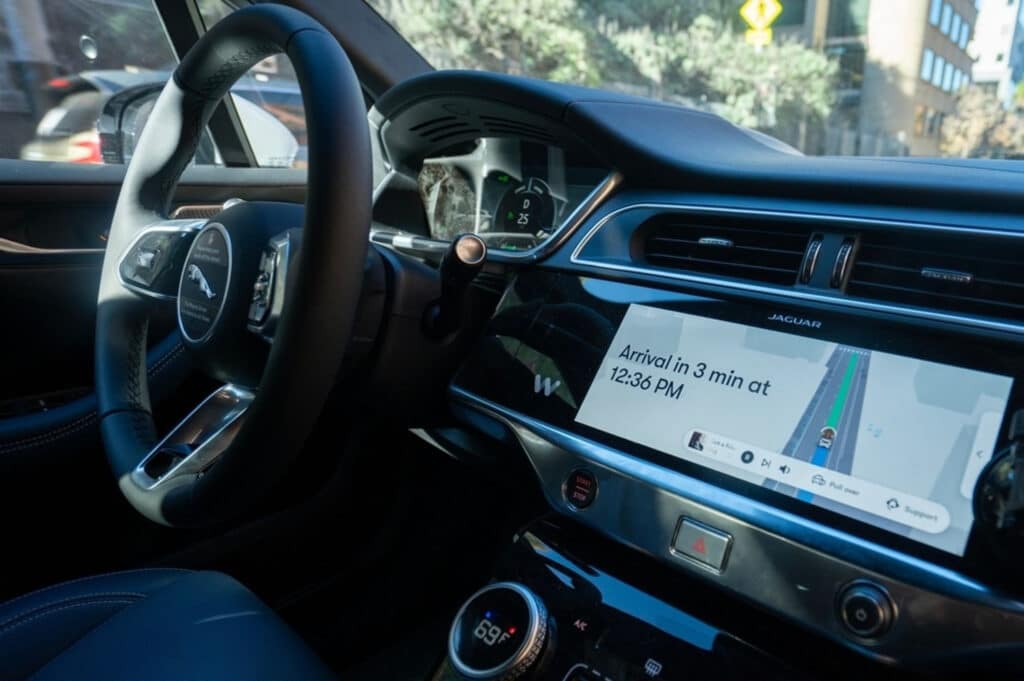
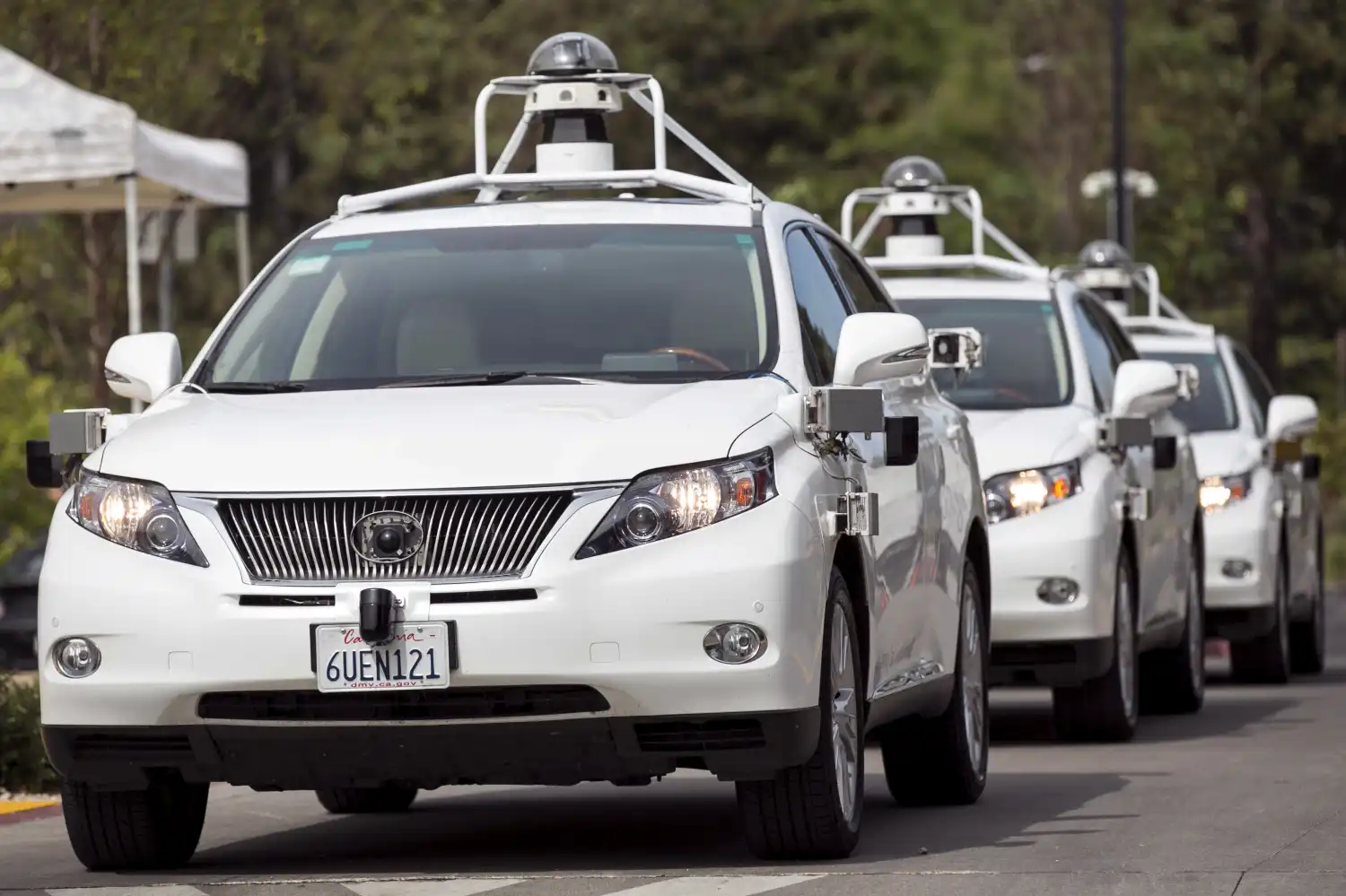
- Autonomous driving system: The car uses sensors (cameras, radar, sometimes lidar) plus onboard AI to perceive the road, make decisions, and navigate safely.
- Geofenced operating areas: Early deployments run inside defined zones (specific neighborhoods, airport corridors, or city districts) where mapping, rules, and conditions are well understood.
- Remote support when needed: If a situation gets tricky, trained staff can provide remote assistance. In newer programs, there may be no steering wheel at all; in others, a safety supervisor remains in the driver’s seat while the software does the work.
- Hailing is familiar: You request a ride through an app, watch the car approach on a map, and unlock the doors when it arrives (very similar to today’s ride-hailing experience).
How Much Will Robotaxis Really Reshape Cities?
While not the tsunami that was predicted a decade ago, the driverless vehicle (r)evolution has arrived. Forget the promise of practically all personal transport via robotaxis by 2030; the true shift will be more subtle, uneven, and ultimately more challenging for planners than driverless believers imagined.
Robotaxi adoption will be influenced by a variety of causes and circumstances. Each person who transitions from car ownership to reliance on robotaxis will have their own motivations.
Dominos
The first wave of serious robotaxi users, unlike the curious tourists posting Waymo joy-rides in San Francisco, are young urban professionals who already rely on rideshare services. They are the car-free city dwellers already tired of expensive, unreliable human-driven alternatives or long weary of undesirable public transit services.
Traditional taxis and ride-hailing services face extinction in second-wave robotaxi markets within a couple of years of launch in each local market. You can be sure that the push-back by the traditional taxi and ride-hail industry in New York City will be fierce, but the economics and expectations are brutal: no driver wages, 24/7 availability, greater privacy, and consistent service quality. A last few holdout taxi drivers will persist to serve niche customers who refuse to use robotaxis out of fear or on principle. This will eventually become irrelevant with the possible exception of special vehicles for the disability community.
Bus riders are next, but only after robotaxi prices fall considerably and as the availability of public transportation erodes in any particular city. SEPTA’s current struggles in Philadelphia offer a haunting preview. Public transportation death spirals will feed fresh business to robotaxi operators who drop prices to feed that spiral.
Current car owners will be the last to convert—they overvalue their cars, see them as a sunk cost, and have sticky-ownership habits. Most will purchase another car or two, and wait until robotaxi services are a fluid, reliable service—Comfortable, Affordable, Fast, and Instant (CAFI)—in all circumstances. They will also be much slower to abandon ownership, waiting until they become empty-nesters, retire or move.
Public transit
Here’s where predictions get murkier. Robotaxis will surely capture some bus ridership, but many governments may resist letting essential public transportation services collapse. Instead, some may subsidize multi-passenger robotaxi access for low-income residents—a more efficient solution than maintaining underutilized bus routes in some areas.
Where dropping robotaxi prices begins to siphon off ridership, transit agencies risk irrelevance if they do not adapt. Complete elimination of public transportation? Unlikely. Political realities and equity concerns will keep some form of public mobility alive, however dramatically it must be rethought. Incorporating subsidized, multi-passenger robotaxis as new forms of public transportation is one kind of rethinking that has been bouncing around for the past decade.
S-Curve
The robotaxi transformation will follow a classic S-curve over a generation or more. The first few years will see adoption among users who do not already own personal vehicles and instead rely on taxi and ride-hail. The real disruption happens in the middle years, as robotaxi networks erode public transportation, achieve critical mass, costs decline significantly, and convenience reaches a tipping point that makes using robotaxis as natural as keeping a car parked out front. In the latter years of this transformation, the market will approach saturation and margins will be minimized, and ownership will plateau to a new equilibrium.
This new equilibrium will differ regionally. Critical factors mean many will not abandon car ownership. Families with children under 16 (25% of households in North America and Europe) are often motivated to maintain at least one vehicle—robotaxis can’t guarantee child seats or cleanliness standards that parents demand. Tradespeople need vehicles for tools and equipment. Many rural areas lack the density to make robotaxi networks viable. These constraints create a natural floor for car ownership that pure economic thinking often ignores.
North America and Australia (35-45% ownership decline): Suburban sprawl limits robotaxi efficiency, but urban cores could see 60%+ drops in car ownership. High parking costs and insurance expenses create strong economic incentives to abandon personal vehicles.
Europe (40-50% ownership decline): Dense cities, excellent public transit, and punitive car ownership costs accelerate adoption. Countries like Netherlands and Denmark could lead in abandoning ownership.
Asia and Middle East (ownership slowdown and lower peak): Rising middle classes that are still buying their first cars will purchase personal vehicles faster than robotaxi optimization can reduce demand. The growth story will likely overwhelm the efficiency story, at least initially.
South America (ownership slowdown and lower peak): Improving infrastructure and urbanization may support higher adoption. Economic constraints remain significant.
Africa (ownership slowdown and lower peak): With the current lowest per capita ownership, vehicle sharing is highest in Africa. It is possible that robotaxi systems may allow a majority of African citizens to leapfrog the automobile ownership phase in a repeat performance of Africa’s uptake of cellular technology over land lines.
Who’s Building Robotaxis
Several players are shaping the landscape:
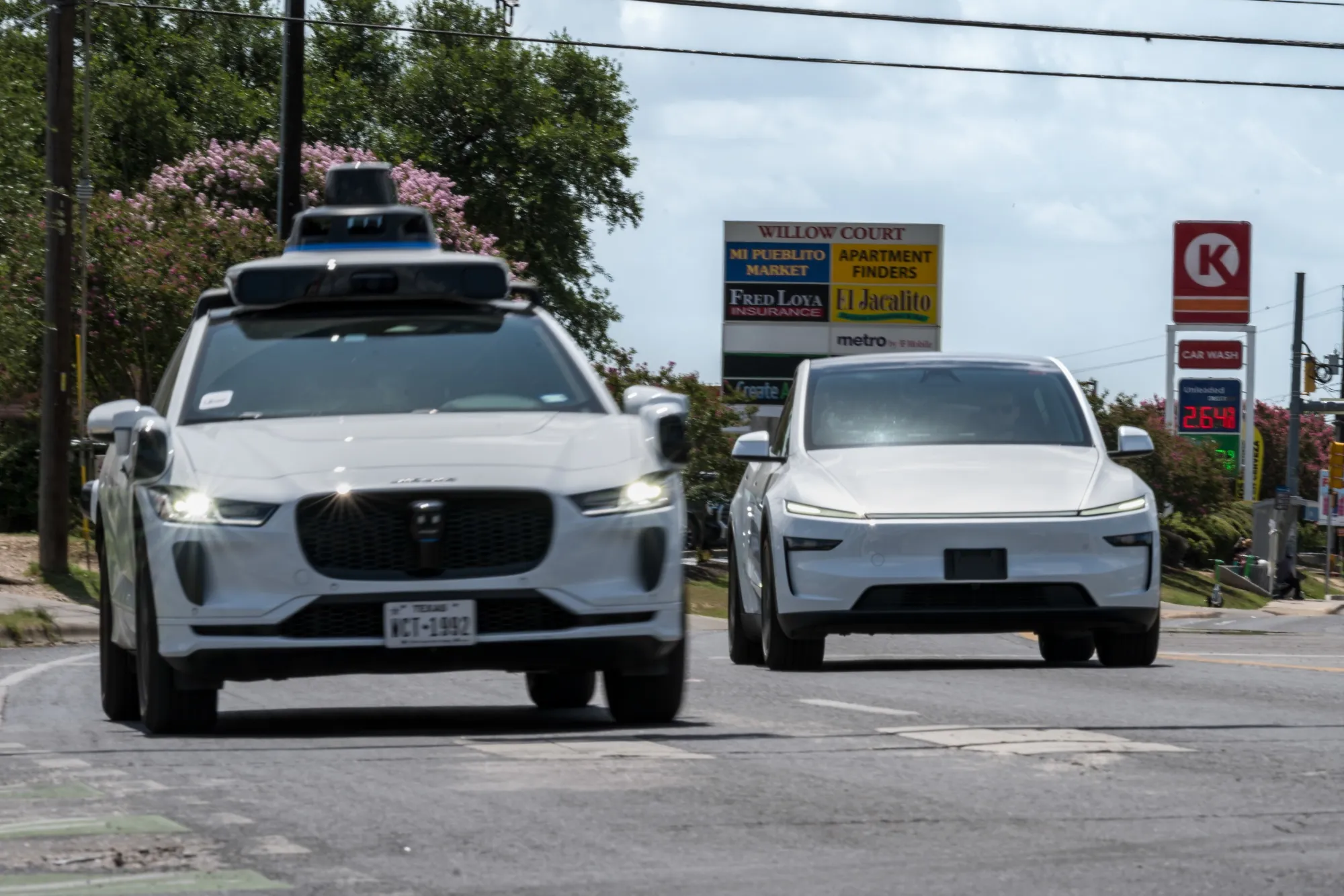
- Waymo with fully driverless services in select U.S. cities.
- Tesla, developing a dedicated tesla robotaxi concept (often nicknamed Cybercab) while testing supervised autonomy today.
- Zoox (Amazon), Cruise (retooling after setbacks), and a wave of Chinese operators scaling quickly across major metro areas.
- Platform partnerships matter, too; think Uber robotaxi integrations that plug autonomous fleets into big, existing customer bases.
Where They Operate Today
- U.S. pilots have clustered in places like San Francisco and Phoenix, with airport connectors emerging and additional corridors being mapped in other cities.
- Europe is preparing limited driverless pilots in major capitals, with safety frameworks, insurance models, and municipal playbooks being built out.
- Expect the next phase to look less like a single “on” switch and more like a patchwork of expanding urban service zones.
What a Robotaxi Ride Feels Like
- Quieter, more predictable: The vehicle follows the rules strictly, no sudden lane dives or rolling through stop signs.
- Clear instructions: You’ll get guidance in-app (where to wait, how to unlock, when to buckle up), and interior screens often display the car’s intentions.
- Sometimes slower: Because the system obeys the law to the letter and yields conservatively, trips can take a bit longer during heavy traffic or complex merges.
The Near-Term Economics (What Riders Notice)
- Pricing: In many U.S. deployments, rides can be 20–40% more expensive than comparable human-driven trips today. In some Chinese pilots, fares have undercut conventional taxis as operators chase scale. Local conditions (power costs, depot rent, insurance, and utilization) heavily influence price.
- Availability: Service windows and coverage areas can be limited at first, expanding as operators gain confidence and regulatory approvals.
Why This Matters for EDOs
Robotaxis don’t just change rides, they change where mobility jobs, suppliers, and investment land. Depot sites need power and zoning. Training programs must seed new roles (EV/AV technicians, fleet ops, tele-assist staff). City teams need curb management and safety protocols. The regions that prepare early can pitch a credible, investor-ready story to the companies building the future of urban mobility.
The Global Robotaxi Network
What started as a handful of pilot programs is quickly becoming a global race.
Read Also: Autonomous Trucks and the Future of Logistics
In just a few years, robotaxis have shifted from controlled trials to commercial rollout, with more than two dozen cities worldwide now hosting operational or near-operational services.
Robotaxis in the U.S.
San Francisco remains the testing ground for the industry in the US. Waymo’s fleet now completes tens of thousands of fully autonomous rides each week, while Tesla gears up for its Robotaxi Network launch. Other U.S. cities like Phoenix, Austin, and Miami are also granting driverless permits as infrastructure and regulation catch up.
Robotaxis in China
China is scaling faster than anyone. Operators like Baidu’s Apollo Go and WeRide already serve major metro areas including Beijing, Wuhan, and Shenzhen — some with 24/7, fully autonomous service. By 2035, analysts project the country’s fleet could exceed half a million self-driving taxis, underpinned by supportive policies and lower hardware costs.
Robotaxis in Europe and the Middle East
The European and Middle Eastern robotaxi rollout is more measured but gaining pace. London, Munich, and Paris are in active testing phases, while Dubai has announced plans to introduce Tesla robotaxis and other autonomous fleets within the decade. These early steps are as much about regulatory learning as they are about public readiness.
What Expansion Looks Like
Early robotaxi zones tend to cluster around airports, dense business districts, and innovation corridors, and other areas that combine clear mapping data with reliable demand. Over time, those “geofenced” zones expand outward, creating connected corridors that link city centers, suburbs, and industrial parks.
The takeaway? The robotaxi economy is forming, piece by piece. As these companies grow, their expansion decisions will be driven by factors that municipal governments can control. Cities that align their zoning, power capacity, and policy frameworks now will be first in line when operators go looking for new expansion markets.
Robotaxis aren’t just a technological leap, they’re a new layer of economic infrastructure. The shift from human-driven fleets to autonomous networks will reshape local job markets, industrial supply chains, and investment priorities in every city they touch.
Job Creation and Transformation
The first misconception is that automation eliminates jobs. In practice, it shifts them.
Robotaxi ecosystems create demand for new roles in fleet operations, remote monitoring, software maintenance, and EV infrastructure management. Mechanics become technicians. Dispatchers become data analysts. Cities with strong workforce development programs and local training partnerships will attract more of these next-generation mobility jobs.
Cost and Accessibility
Today, robotaxis remain more expensive than traditional ride-hailing services (typically 20–40% higher in U.S. cities) but the economics are changing fast. Without driver salaries or traditional shift limits, per-mile costs will continue to fall. In markets like China, autonomous rides are already undercutting conventional taxi fares by up to 30%, signaling where this is headed once fleets scale.
Market Potential
Analysts forecast the global robotaxi economy to exceed $100 billion by 2035, with major growth hubs in the U.S., China, and Europe. That growth isn’t limited to transport; it extends to software firms, mapping providers, charging infrastructure, AI data centers, and advanced manufacturing.As these supply chains mature, expect new clusters of investment activity around logistics corridors, innovation zones, and airport hubs, all of which depend on local readiness.
The EDO Opportunity
For economic developers, this moment is similar to the early EV boom or the onset of smart manufacturing. The goal isn’t to chase a single project but to prepare your ecosystem: workforce pipelines, real estate, and regulatory predictability. The cities that do will be first to attract suppliers, R&D teams, and pilot programs.
ResearchFDI team helps economic developers translate fast-moving global trends (like autonomous mobility and the rise of the robotaxi economy) into actionable strategies that drive real investment. They combine data-driven market intelligence with decades of on-the-ground experience in site selection, lead generation, and investment attraction.
Whether you’re planning for autonomous fleets, electrification corridors, or supplier readiness, they can help you identify which opportunities fit your region, and how to position your community as an investment destination of choice.
Infrastructure Readiness: Power, Policy, and Place
Every emerging industry needs groundwork, and for the robotaxi economy, that groundwork is literal. The transition from pilot projects to city-wide adoption hinges on three fundamentals: power capacity, public policy, and place-based planning.
Power and Charging Readiness
Electric fleets demand dependable, scalable energy. A single autonomous-vehicle hub can require megawatts of load for charging, data centers, and fleet maintenance. Cities that have already invested in EV-ready grids and renewable-energy corridors hold a clear advantage. EDOs should identify high-capacity industrial zones and transit hubs where charging infrastructure can expand without disrupting local supply.
Policy and Regulation
Robotaxis don’t just plug into charging ports; they plug into policy, too. Permitting, data-sharing frameworks, and safety oversight all determine whether a market moves or stalls. Regions that develop transparent approval processes and pilot-friendly regulations are the ones attracting early investment. That means aligning municipal transportation plans, zoning rules, and public-private partnerships to balance innovation with accountability.
Place and Planning
Autonomous fleets need more than charging points; they need strategically located staging areas, maintenance depots, and AI mapping centers. These clusters often emerge near airports, industrial parks, and university innovation districts. Identifying such “mobility-ready” real estate, where logistics, data, and talent intersect —can turn an underused parcel into an economic anchor.
Partnerships & Ecosystem Development
Robotaxi networks can’t scale in isolation. They depend on an ecosystem of partners, from AI firms and utilities to real estate developers, transit authorities, and telecom providers. Economic developers who understand this web of relationships can help their regions become indispensable to the mobility supply chain.
Building the Right Partnerships
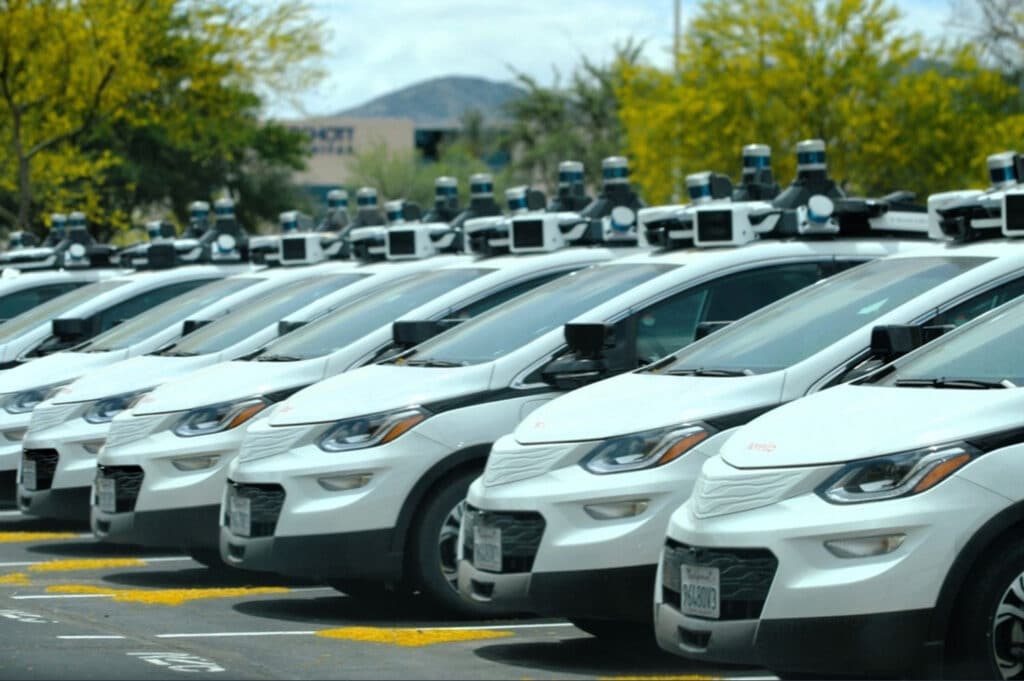
Success starts with collaboration.
Public agencies must work alongside technology operators, fleet service firms, and universities to create testing zones and real-world learning environments. The goal isn’t just to attract a pilot but to embed research, workforce training, and supplier development in the same region.
Creating an Innovation Cluster
Mobility ecosystems grow where data, infrastructure, and talent intersect. Establishing partnerships between robotics startups, OEMs, and EV infrastructure firms can help regions build credibility as innovation hubs. The best EDOs act as connectors — bringing the private sector, academia, and government to the same table to align incentives and accelerate implementation.
Positioning for FDI
Robotaxi operators and their suppliers are expanding globally, often looking for partners to establish assembly sites, mapping centers, or AI R&D offices. By showcasing a region’s workforce readiness, energy reliability, and zoning clarity, EDOs can attract these long-term investments before competitors do.
What EDOs Can Do to Prepare
You don’t have to be first to win, but you do have to be ready.
- Assess Infrastructure Gaps Identify where your grid, zoning, and broadband capacity fall short of supporting autonomous fleets. These audits are often the foundation for early-stage investment discussions.
- Engage the Right Stakeholders Early Bring utilities, transit planners, universities, and local employers into the same conversation. The earlier you align around shared goals, the faster you can act when opportunities appear.
- Leverage Pilot Projects Even small test corridors or charging depots can put your region on the map. They create visibility and demonstrate regulatory openness, key signals to global investors.
- Market Readiness with Data Create a public-facing “mobility readiness” portfolio: maps, incentive outlines, and workforce stats that make your story tangible to foreign investors.
- Plan for Inclusivity Position autonomous mobility as a tool for better access, not just for early adopters. Partner with local organizations to ensure deployment supports underserved communities and equitable outcomes.
Conclusion
The emergence of robotaxis is transforming not just how people move, but also how cities evolve. The regions that view autonomous mobility as an economic strategy rather than a novelty will be the ones to benefit from the new jobs, suppliers, and innovation clusters that emerge.
Economic developers have a clear mission: foresee the shift, align infrastructure, and form partnerships to transform technology into a local advantage. Because when fleets go mainstream, who benefits the most will depend on readiness rather than luck.








Comments