
 By

With countless websites competing online in every industry, it can often be a challenge to successfully market a new website in 2022-2025. If your startup brand is ready to launch its online presence, you need to work hard to generate consistent visitor traffic and gain a foothold in the marketplace.
Unlike in the early days of the internet when companies were less digitally savvy and there were fewer websites online, in 2022 there is plenty more to consider. Branding, content and targeted campaigns are crucial to your ongoing business success.
Designing and then launching a website is only one part of the journey. If you are to meet your business goals and attract a steady stream of targeted visitors, it is important to blend traditional marketing concepts with newer digital approaches.
That said, there are numerous examples of website startups that have gone on to achieve positive results. U.K. “fintech” company Wise (formally TransferWise) launched with a vision of transforming the way people send and receive money.
Their approach? Take on the banks by offering cheaper prices to send money abroad. Wise knew that banks had a poor reputation with the public and leveraged this in their marketing campaigns. By focusing on consumer needs, they grew rapidly.
The same can be said for the U.S. shaving company, Harry’s. By focusing on clever branding and a subscription-based pricing model, the company cracked the lucrative shaving market largely dominated by mega-brands like Gillette.
- What is The Best Way to Market a New Website?
- What Are The Online Marketing Tips and Trends for 2022
- What Will Marketing Look Like in 2025?
- What Are The Marketing Trends For 2022?
- What Are 5 Future Trends in Digital Marketing?
- How do I Bring Traffic to my Website?
- What Are The Tools to Promote a Website?
- What Will Marketing be Like in 2030?
- What is The Future of Online Marketing?
- How Can I Increase my Website Content?
- How do I Get More Sales on my Website?
- How do I Add SEO to my Website?
- What Does SEO Stand For?
- How do You Market a Website?
- How Can I Improve my Website 2022?
- How do I Make my Website Look Professional?
- What Should I Add to my Website?
- What Words Attract Customers?
What is The Best Way to Market a New Website?
Below are several tips on how to give your website startup the best chance of success in 2022.
1. Build a unique and memorable brand image
Creating a memorable, unique brand image is essential, especially if sites in your industry have similar traits. Setting yourself apart from others will often work in your favour and help you stand out in a crowded market. Communicate your business values clearly and don’t be afraid of setting your own course. Use a unique logo, color scheme and design, and have clear product differentiation.
2. Search is the cornerstone of your online campaign
It is no secret that most people use search engines like Google to find websites online. Search is vitally important if you are serious about attracting targeted traffic to your website. You should invest in SEO, even if you operate on a low budget.
Read Also: Make Money Online Building Mobile Websites
For faster results, pay-per-click advertising is also well worth considering. PPC can help you increase revenue quickly while you work on your organic-search campaign.
3. Don’t just rely on digital-marketing methods
While digital marketing is typically the most accessible approach for startup firms, never discount the power of traditional marketing methods. Depending on your product or service, consider direct mail, radio, TV, billboard advertising, sponsorship, networking and even PR stunts. Traditional approaches can often work well if you operate in a city or county, or when you have a large advertising budget to spend.
4. Social media is important for most industries
The widespread use of social media equals multiple new channels to market your brand. But before you begin, be sure to plan your social strategy. Think about your product or service. Which platforms do your customers use, if any? Engage with prospects and provide useful, compelling content. This will enable you to extend your reach, increase website traffic and, ultimately, drum up new business.
5. Strive for local and national media attention
Every business should strive to achieve publicity in the media. For your startup firm, a media appearance can skyrocket your brand from obscurity to fame. Mentions in high-quality digital publications and newspapers also help boost your SEO campaigns and bolster your credibility. Consider both local and national media outlets to target. And be sure to have a newsworthy story to pitch.
6. Utilize content that best represents your brand
You may have a cutting-edge design, but if your content is lacking, your website will never achieve its full potential. A content-marketing strategy that fits in with your core customer base is vital to remain competitive online. Think about what information your prospects want to see. Experiment with different content marketing campaigns and use a variety of content types, including written, video and photography.
7. Analyze your progress and make adjustments
Continually monitoring and assessing the effectiveness of your marketing campaigns is key to your long-term success. Use any data you have to fine-tune and explore new ideas for future marketing campaigns.
Decision-making based on real data can help you understand the bigger picture, enhancing your competitiveness. Don’t be afraid to change or make adjustments as you see new patterns emerging.
What Are The Online Marketing Tips and Trends for 2022
Whether you’re a full-time digital marketer or whether you’re a small business owner who is looking to grow their online presence, here are eight online marketing tips and trends to keep in mind as you brace for 2022.
1. Use paid social media ads
It should come as no surprise that experts are continuing to encourage the use of paid social media ads heading into 2022.
Today, social media advertising can be used for various objectives across all types of industries. Increase the visibility of your silent auction with social media ads. Drive local traffic to your contracting website. Get sign-ups for a lead magnet-perhaps a free online course that you are offering.
The options are virtually endless. What’s more, advertising on social media is often more affordable than advertising via Google in terms of cost-per-click (CPC).
Particularly on a platform as large as Facebook, taking advantage of paid advertising allows you to tap into a similarly large network at a discounted rate. Yet, despite the platform’s immense popularity and the cost-effectiveness of its advertising feature, only 24% of Facebook businesses use paid ads.
Get ahead of the curve by using Facebook ads and paid advertising features across as many social media platforms as your business finds relevant!
2. Make sure you have a Google My Business listing
Google is by far the most popular search engine worldwide, so it’s critical for every business to have a Google My Business listing that shows up in local search results, Google maps, and other Google services.
If you don’t already have a listing, you can create one in minutes. Simply sign in to Google My Business, fill out the digital form, and publish your new listing. If you see that there is already a listing for your business that you didn’t create, simply claim it and make sure that all information is current.
Update your listing whenever information about your business changes-whether it’s your office hours, address, phone number, or website. This will ensure that customers never have trouble finding your business.
Beyond helping customers find you online, Google My Business allows you to add photos of your business, collect reviews, and add call-to-action (CTA) buttons that compel potential customers to take action.
3. Adopt a mobile-first approach
Over the past decade, mobile browsing has continued to gain ground on desktop browsing.
In the first quarter of 2021, mobile devices generated 54.8% of all website traffic. Now that mobile traffic has officially eclipsed desktop traffic, it’s critical that you or your business optimizes your website for mobile devices.
Fortunately, the majority of website builders have adapted to the need for mobile-first browsing and are able to automatically format your website for mobile devices. This can often eliminate the need to hire an outside website developer to reformat your website.
Of course, mobile browsing goes far beyond your business’s website as well. In 2022, you should ensure that all of your videos, content, pages, and marketing campaigns are formatted with your mobile visitors in mind.
4. Be more personal
In a world where customers are wooed from every perceivable direction, it can be difficult for your business to wade through the noise and make an impression. Given the lack of genuine connections that exist in today’s digital marketing landscape, a little personalization can go a long way.
This starts with data. If you hope to address a customer by name, speak to their pain points, and engage them in a more meaningful way, you will first need to learn something about them. You can start with a name and email address, but you can also collect data about a person’s interests and activities.
With that said, a customer is unlikely to provide you with this information for free. The reality is that you may need to provide something of value-whether it’s a piece of content, a giveaway, or another offer-before you can hope to personalize your marketing efforts.
Beyond using data to make more personal connections, you can also take a more personal approach to your online marketing efforts simply by employing more conversational language. This can assure the customer that they are interacting with a human instead of artificial intelligence.
5. Become a thought leader in your industry
Given the level of competition that your business might be facing online, it can be difficult to stand out and prove to users that you have an advantage over similar types of businesses.
One way to establish a greater sense of authority online, however, is to position yourself as a thought leader within your industry. You can start building credibility by launching a business blog.
With your own blog, you’ll be able to share thoughts and ideas with customers who may be interested in learning more about your business, its services, and your unique methods.
What’s more, you’ll be able to provide potential customers with value before they ever work with your business or make a purchase. This can go a long way toward establishing a sense of trust between the two parties.
Finally, adding content to your website’s blog allows you to increase your search visibility online. Local customers who may be searching for businesses similar to yours are more likely to find you in online searches. This can generate significant organic website traffic for your business!
6. Increase your blog length
It’s no secret that consistently publishing well-crafted blog content to your business’s website can increase your search engine optimization (SEO) efforts and increase your visibility online.
As a result, you’re likely to generate more organic traffic for your site. Not to mention, frequently sharing your thoughts and ideas can help generate leads for your business and establish you as an authoritative voice within your industry.
While there is clear value in maintaining a blog, there is also constant debate surrounding SEO practices. In particular, businesses, marketers, and writers are often divided on whether blog posts should be shorter or longer.
Heading into 2022, it appears that longer blog posts offer greater SEO value. According to a SearchMetrics study, the average word count of Google’s top-ranked content is 1,140 – 1,285 words.
While there is no doubt that all types of blog posts can offer value to prospects, leads, and customers, keep in mind that publishing blogs that land around the 1,200-word mark can help increase your site’s visibility in search engines.
7. Fine-tune your content marketing strategy
Many businesses have a general content marketing strategy but not all businesses have content that is relevant to every prospect that encounters their brand. All too often, a brand new prospect will be asked to make a decision, or a warm lead will be given rudimentary information about the brand and its products.
As you look to improve your business’s content marketing strategy in 2022, aim to craft new content for each stage of the buyer’s journey-awareness, consideration, and decision.
For prospects that are in the awareness stage, you should be creating content that provides an overview of your business and industry, as well as some of the different problems that your business can address.
For prospects that have become leads and are entering the consideration phase, you should be looking to establish a sense of trust. You can achieve this by offering solutions that address the lead’s unique pain points, and by providing your credentials and industry experience.
For warm leads that are ready to make a decision, you should be creating content that showcases your products or services, makes an irresistible offer, and compels the person to take action.
By creating content for each stage of the buyer’s experience, you’ll be able to effectively move leads through your marketing funnel and constantly drive them towards a sale.
8. Retarget your prospects
Very few customers make a purchase after a first encounter. In fact, one study shows that 92% of consumers who visit a business’s website for the first time aren’t yet ready to buy.
The reality is that many businesses will settle for the 8% who are willing to buy and continue targeting new prospects. Smarter businesses will harness the power of retargeting.
Retargeting, or remarketing, is the process of putting your brand and your products in front of the same potential customers multiple times. This is most often achieved by using “cookies” to track visitors across the web and then setting up Google ad and social media ad campaigns to display the products or services they took interest in.
Particularly in the retail industry, this can be a highly effective method of keeping a certain product top of mind and increasing the desire for that product over time. Rather than wasting resources on filtering through new targets, retargeting can help you close more deals with prospects that are already interested!
What Will Marketing Look Like in 2025?
It’s expected that by 2025:
- customer lifetime value will become priority number one
- lead generation will be much less of a focus
- marketing will become a technology hub, and
- general marketing skills will fall almost entirely out of fashion.
Priorities
Today, the top three key performance indicators (KPIs) for marketing are customer retention, lead generation and customer lifetime value. By 2025, marketers expect customer retention to drop to second place and lead generation to drop down to sixth priority. Customer lifetime value will be the main KPI in 2025.
Why the drop in lead generation? Marketers believe the KPI will decline as the relationship with consumers switches from transactional to experiential. This expected fall is steepest in smaller companies – 65% of marketers in small companies for whom lead generation is a top priority today, don’t think it will be in 2025. That shift is one of the biggest changes in the survey.
Skills
Huge changes are predicted in the area of marketing skills. Many niche and emerging marketing skills beginning to gain importance today will lead teams in 2025, while a few current tasks will decline or be “automated into oblivion”.
Marketing will become a technology hub. In-demand skills will cover analytics, data, insights, CX, UX, AI and machine learning, to name a few.
The fastest growing skills in terms of expected importance are AI and neuromarketing. Today, 6% of marketers say they need AI capabilities for machine learning, and 60% say they’ll need it in 2025. Neuromarketing leaps from 8% to 52% on the same scale. Sophisticated data analytics, the foundational technology behind these two trends will be the most important skill in the marketing team in 2025, according to respondents.
Generalist marketing skills are expected to fall entirely out of fashion. Today, 65% of respondents list generalist marketing as a skill their team has, while only 13% believe it will be one of the most important in 2025.
Technology
Today’s top three tools used by marketers are email marketing, social media marketing and CRM. None of these make 2025’s expected top three. The ‘dream’ technology stack in 2025 is:
- Data analytics/visualisation
- AI/machine learning for content delivery, and
- CX management.
CRM fell to fifth place, while email and social media marketing did not make the top 10. Email and social will still form part of this dream mix, but marketers predict it will be led by AI. Advanced micro-segmentation, VR and chatbots are also on the rise.
“The jury’s still out,” says a marketing leader from a big four bank who completed the study. “New technologies and channels appear at an ever-faster rate. Machine learning and AI will undoubtedly be growth areas but I’m not so sure that email and social media is what they will replace – rather they might enhance them.”
What Are The Marketing Trends For 2022?
When it comes to 2022 global marketing trends, these six represent some of the most innovative and dominating examples poised to make a major impact this year and beyond.
1. Lead with Brand Purpose
These days, consumers are pickier than ever when it comes to choosing what brands they do business with. Much of that is due to market saturation, an abundance of choice, and the expansion of digital marketing that allows people to connect with brands well outside their geographic area.
One of the best ways a brand can stand out from this crowded pack is to develop and lead with a strong, confident brand purpose that is authentic, mission-forward, and values-centric.
A clear, powerful mission statement serves as the foundation for every brand. It governs how a brand positions itself to its audience and customers and thus shapes brand equity, or the public’s perceived valuation of the brand. An example of this is investing time into corporate social responsibility (CSR), where businesses contribute to broader societal causes.
LEGO is one brand that tackles CSR with aplomb. By partnering with the World Wildlife Fund, LEGO has committed to reducing their overall carbon footprint and is working toward 100% renewable energy by 2030. By leaning into eco-friendly practices, LEGO’s brand purpose is defined by sustainability and helps it win huge favor among consumers who care deeply about environmental causes.
2. Leverage User-Generated Content
Brands don’t have to overextend themselves and produce all of their marketing collateral and content on their own. A great way to lighten the workload on marketing teams while highlighting customers is to leverage user-generated content (UGC).
UGC is more authentic and trustworthy because it comes from a brand’s customers and advocates. In fact, 90% of users trust UGC to inform their purchasing decisions.
By tapping into UGC, brands can effectively start to shape brand perception and sentiment by highlighting content from invested, loyal customers. This sort of content is also highly effective at boosting user engagement and interaction, especially on social media, while driving increased conversions and revenue—ads with UGC reap click-through rates five times greater than average.
GoPro does a fantastic job of leveraging UGC photos and videos taken by its product users to highlight their features and quality in a way that feels less self-serving and promotional.
3. Elevate Customer Experiences
Brands need to provide a unique and exciting customer experience in order to thrive against competitors. The importance of good customer experience cannot be understated. Customers today base their loyalty to a brand on the experience it provides more than anything else. Case in point: a whopping 86% of buyers are willing to pay more for a great customer experience.
Brands looking to elevate their customer experience should consider the thoughtful application of technologies such as AI, machine learning, and augmented/virtual reality. These technologies make the customer experience smarter, faster, more efficient, and open up new opportunities for customers to interact and engage with brands.
For example, Nordstrom recently opened up a new flagship store in New York that includes an experience called “Beauty Stylist Virtual Mirror” which allows shoppers to “try” out makeup trends facilitated by AR technology before buying products. Tactics like these, centered around revolutionizing a typical in-store customer experience, go a long way in a highly competitive industry like retail which is struggling to attract foot traffic.
4. Implement Conversational Marketing
In general, the dominating marketing trends today are those that are highly focused on brands adopting a more conversational and personal tone. This is what’s better known as conversational marketing, which strives to establish a one-on-one, real-time connection between customers and those marketing to them.
The goal of conversational marketing is to enhance customer interaction and experience by providing instant solutions, resulting in higher levels of customer loyalty and satisfaction.
Adopting this more conversational, approachable tone in their marketing efforts has paid off for finance software company Ellie Mae. By employing bots designed to facilitate conversational marketing, they increased their daily demo requests by 165%.
These were leads that had never gone to the trouble of filling out a demo request form until they were presented with an alternative that was more direct, human, and instantaneous regarding their needs.
5. Adopt Programmatic Advertising
When it comes to display advertising and marketing, things are turning increasingly programmatic. Programmatic advertising is essentially nothing more than real-time bidding. This technique of automatic ad buying helps brands reach larger audiences across the world in a faster, more efficient manner. What results is higher conversions and lower acquisition costs.
Programmatic advertising is becoming such an effective marketing practice that eMarketer estimates more than 86% of digital display ads will be programmatic by this year. Audi has already seen great success with programmatic advertising.
To bolster the launch of their new customizable vehicle, Audi adopted programmatic advertising to personalize its marketing strategy to discover new users whose behaviors online projected interest in potentially buying a new vehicle. The end result of buying ads programmatically was a conversion rate four times higher than traditional buying methods.
6. Develop an Answers-based Content Marketing Strategy
Lastly, brands should consider developing an answers-based content marketing strategy in 2020, rather than a traditional knowledge and promotional based content strategy. The impetus for this is that last year, zero click searches accounted for more than half of all Google search queries.
This means that when users search for something in Google, a majority didn’t click on anything after executing their search to get what they were looking for.
Brands need to develop content that directly answers a query without searchers necessarily having to click on a link to find it. This is due to the rise of newer Google search results like featured snippets and knowledge maps, which present content and answers outright rather than providing links to resources.
Brands focused on finance, health, and DIY have seen great success over most other industries with getting featured snippet content placed. However, by refocusing content strategy and production on answering questions and solving problems rather than simple information regurgitation, any brand in any industry has the opportunity to win high-ranking SERP positions.
What Are 5 Future Trends in Digital Marketing?
Let’s take a look at some of the most important trends in 2022 that will shape your approach to digital marketing and help you make informed decisions when it comes to using technology for business or personal purposes:
1. The Rise of AI in Digital Marketing
Artificial Intelligence (AI) is now used by many companies across all sectors including retail, banking, healthcare, and more.
AI is being used as an effective tool for marketing purposes too.
AI not only automates basic tasks like reporting on website traffic but can also recommend keywords to optimize a company’s organic search ranking or even predict what customers are likely to buy in the future based on their past purchases and browsing history.
This means that by 2022 it will be important to use AI in conjunction with SEO and other digital marketing strategies if you are looking to rank higher on search engines like Google.
AI is revolutionizing the way marketers approach digital marketing and businesses should consider using this technology as well.
2. Chatbots and Voice Assistants
Digital assistants like Google Assistant and Amazon’s Alexa are becoming more popular by the day.
According to industry projections, the market value of voice-based shopping will reach 40 billion by 2022, and consumer spending via voice assistants is also projected to reach 18%.
Many businesses have started using chatbots to help automate customer service needs for better efficiency when handling customers’ inquiries on social media channels, email marketing, and other online platforms.
Chatbots can answer customer questions with little to no human involvement from a company’s side.
Chatbot dialogue is typically powered by artificial intelligence (AI) which gives the chatbot an actual personality – this makes it more fun for customers to interact with companies using chatbots as opposed to simply communicating through social media.
Chatbots are an excellent way to provide customers with a personalized and enjoyable experience so they will want to interact more often with your company!
In 2022, businesses of all sizes need to have chatbots integrated into their digital marketing strategy to increase customer interactions on the web.
3. The Transition to Mobile-First Marketing
As more people are using smartphones and tablets instead of desktops, businesses need to create mobile-friendly content that will rank higher in search engines.
Mobile marketing strategies can be as simple as optimizing your website’s design so that it automatically adapts for smaller screens or creating a separate app with your company’s information to be downloaded on mobile phones and tablets.
In 2022, it is important to use a responsive design for your website or app that will allow customers with any device type to easily access the content you offer.
AMP (accelerated mobile pages) is another option that makes content load faster on smartphones and tablets.
Mobile-first marketing will be the most important trend for businesses in 2022 so it’s essential to start now!
4. Multichannel Marketing For Connected Digital Experience
Connecting with customers today means using multiple channels of interaction. The days of just relying on websites and cold-calling are over!
Multichannel marketing can involve creating a blog, website, social media, and Whatsapp group presence in addition to hosting webinars/events or attending conferences!
It’s not enough for businesses to focus on just one channel – they need an integrated approach that will allow them time to create content for each platform while still maintaining their brand voice.
In 2022, businesses need to create a strong customer base by using as many channels of marketing and communication as possible!
5. Digital Tasks and Marketing Automation
As technology continues to advance, marketing automation tools are becoming more and more popular.
Marketing automation makes it possible for marketers to automate repetitive tasks in real-time, using a variety of marketing channels.
Some tasks that can be automated are saving time researching and compiling data, managing social media posts by scheduling them in advance, or sending out prewritten email templates to customers who have not opened your emails within the last few days!
In 2022, automation will become more important for businesses as it allows marketers to spend more time on higher-level and strategic tasks.
How do I Bring Traffic to my Website?
Many businesses struggle to come up with new and innovative ways to increase website traffic. There’s a lot of misinformation online about how to attract more visitors, which can lead to using the same tired strategies over and over and not seeing positive results.
If you’re looking to increase website traffic with both organic and paid ways, here are 5 methods that are proven to yield results.
1. Perform Keyword Research
Always include relevant keywords in your content. Keywords should be used naturally, not stuffed into the content so much that they detract from the main idea or distract the reader. It’s important to use keywords throughout the content, like the meta description, the page title, the URL, headers and a few times throughout the piece.
To conduct keyword research, you can use tools like Moz, Ahrefs and SEMrush. These sites show what keywords competitors are using, how often people search for keywords, how expensive the keyword is for pay-per-click ads, related keywords and much more valuable information to guide keyword strategy.
Hiring an SEO agency is always an option, as well, as they can offer valuable insights and perform audits to identify issues that may be keeping your site from being shown in search engines.
2. Create Memorable Content
It’s not enough just to post content; you need to create content that’s memorable and cuts through the noise. In fact, useful and memorable content is one of the top ways to increase website traffic.
People use Google to find specific, thorough and accurate answers for their questions, and your content should be there to provide those answers. In fact, websites featuring blog content generate 434% more search engine-indexed pages than those without it. In addition, sites that release more than 16 posts per month receive nearly 3.5 times more traffic than those that publish zero to four articles.
The bottom line is that when you care about the content you produce, post regularly and research what your audience wants to see, web traffic should improve.
3. Write Guest Posts
Guest posting for other websites is an effective way to generate backlinks, boost referral traffic, and increase search engine results page (SERP) rankings. You should always thoroughly research websites within your industry to pitch.
First, look at a website’s content and make sure it’s high quality, check its domain authority and study their guest posting guidelines. Also, ask the publication if they’ll promote the post on social media and if they’ll tag you.
4. Keep Active Social Media Pages
Social media is huge for attracting visitors. Here are some ways it should be used to increase website traffic:
- Post content (blogs, e-books, white papers, infographics, videos, etc.) across your social media platforms
- Interact with followers by replying to them, reposting their content and tagging them
- Use relevant hashtags
- Update the link in your bio to promote new content when it comes out
- Change a cover photo to promote new content
- Tag influencers who may be interested in the content
- Include enticing information from the content to encourage people to click the link to it
- Reply to other people looking for answers with links to your content
5. Use Advertising to Increase Website Traffic
Advertising through paid search, social media and display ads can be an efficient way to increase website traffic. Each option comes with its upsides and downsides — for instance, users can block display ads and the average cost per click for Google Ads on the search network is between $1 and $2 per click — so it’s important to set budgets and goals before investing a ton of money into it.
For instance, when doing pay per click (PPC) ads, it’s critical to start with one campaign and a few different ad groups containing the keywords you want to target most. Once campaigns begin, see how audiences behave with various keywords. Maybe one keyword only resulted in impressions, which didn’t increase website traffic, while another resulted in clicks and conversions.
What Are The Tools to Promote a Website?
A successful social media marketing campaign takes a bit of time and a lot of practice, but this approach also demands you to use the right tools at the right time. Don’t worry; you don’t have to start experimenting with random tools to find the right ones.
The list below will save you from trial and error, so check out these online tools and start using the ones that fit your strategy.
1. Viralheat

Viralheat is a crucial element of a successful social media marketing strategy since it enables you to find out what the communities at Foursquare, YouTube, Google+, Twitter, Facebook, and other sites are talking about your brand. Once you get that information, you can emphasize the good things and work on the aspects that received some criticism.
The tool provides measurement and metrics for your business, and it also helps you manage the workflow and curate engaging content. When you realize that social media influencers have been mentioning your site, you can contact them to ask for their engagement in your promotional campaign.
2. Canva

Canva is a free, cloud-based graphic design tool that caters to a great number of design types. Its library is home to thousands of premade templates and illustrations that can be easily customized according to the user’s preference. With Canva, you can quickly design an eye-catching Facebook post in just mere seconds
3. ManageFlitter

Each tweet you post on the official profile of your website is a potential magnet for thousands of clicks. Are you using or wasting that potential? ManageFlitter is a tool that helps you get the most out of your activity on this social media network. First of all, it helps you manage multiple accounts with ease, so you’ll see all people you follow in a simple interface.
ManageFlitter is one of the best tools that help you find relevant users to follow. You can easily discover the influentials and connect with them by responding to their tweets or attracting them with the content you publish and promote. The tool also allows you to schedule tweets at optimal times, so you won’t have to worry about time zones and activity peaks.
4. Onalytica

We mentioned influentials quite a few times in this article, didn’t we? That’s because they are important and they have the power to make other people visit and like your website. When you reach out to the people who attract the most attention on social media, your website will immediately start getting more visits.
Onalytica is a tool all marketers and website owners love – it helps them identify and engage with social influencers whose activity is relevant to the niche they are focused on. All you need to do is a link to any piece of content at your site and let the algorithm do its job. Then, you’ll get a list of 25 social influencers who can help you promote the website to a large audience.
5. Hootsuite

Managing all social media accounts on Twitter, LinkedIn, Google+, Facebook, Foursquare, and other networks takes a great deal of time, which is why most website owners decide to pick up to three networks and maintain their presence there. You don’t have to limit yourself that way. Thanks to Hootsuite, you can manage all social networks from a single dashboard.
This platform will enable you to see the mentions on different platforms, the posts to your pages, and your own posts. Plus, it enables you to post updates and comments, so you’ll engage with your entire audience much more easily.
6. Followerwonk

This is a tool for discovering the right people to follow on Twitter and optimizing your account for social growth. There are several tools that help you dig through Twitter analytics, but this one is unique because it informs who your followers are, where they are located, and what they tweet. However, it also enables you to compare different users.
This means that you can compare your social graph to the one of a competitive website, so you’ll easily understand what you’re doing right and where you can make some improvements. You can use the comparing feature for another great purpose: to compare Twitter accounts to find overlaps, so you can expand your audience by targeting more relevant users.
7. EdgeRank Checker

With the reports you get from this tool, you will understand how your Facebook followers interact with your posts. The algorithm will evaluate the rank of each post, so you’ll easily identify the content that leads to success. You’ll see which pages of your website got the most attention when you shared them via Facebook, and you’ll realize what style of expression your audience prefers.
Thanks to EdgeRank Checker, you can experiment with the way you use Facebook and you’ll adapt your strategy when you realize what works and what drives the audience away. You can monitor each post in real time, so make sure to do that when you have some free time on your hands.
8. Rival IQ

Your goal of promoting the website via social media is tightly related to beating the competition. You have to understand the competitors’ campaigns before you can come up with something that will attract the same audience and make them prefer your website over the rest. Rival IQ is a tool you can use for gaining critical insights on your competition’s activity across social media. It also gives you hints on their SEO campaigns and website content strategy.
You can use Rival IQ to get a list of the top 50 posts related to your niche, so you’ll see how the audience engaged with the profiles of competitive websites. When some of the pages you’re monitoring launch an unusually successful update on LinkedIn, Facebook or Twitter, the tool will send you an alert, so you can check what all the fuzz is about.
9. Tagboard

Hashtags are really effective for your promotional campaign. Social media users love them, so it would be cool for you to think of a witty hashtag that will get them engaged. However, it’s hard to keep track of all those conversations if you just search for the hashtag on different social media platforms.
Tagboard makes that easy for you. It will collect the information you need, and it will give you a full list of the latest mentions on Twitter, Vine, Google+, Facebook, Instagram, and Flickr. If you want to see the mentions on a single platform, you can use the filter. That’s not all; you’ll also get the number of average posts per minute under that hashtag, the trend, and the sentiment (positive, negative, or neutral) of the hashtag.
10. WooRank

Here is another tool that enables you to compare your achievements with the success of competitive websites. You can use WooRank to get a comparative social shareability report with three of your competitors. You’ll discover what keywords your competitors are targeting, so you’ll be able to attract the same audience by using the same phrases in better ways.
It also gives you an in-depth analysis of your website, which will help you implement new strategies to improve its rankings and visibility on social media. Finally, WooRank will give you a list of actionable tips that you can implement in order to optimize your website.
What Will Marketing be Like in 2030?
If, in 10 years, hundreds of billions of advertising dollars shifted from one form of advertising to another, what can happen in the next ten years or even five years?
Perhaps no major shift will happen. Or, perhaps once again, new technologies will emerge and swipe our business and advertising models right from under our feet.
Here is another fascinating insight. The number of marketing technology solutions grew from 150 in 2011 to 8,000 in 2020. That’s 5,233 percent growth in 9 years. Below is a map of the current marketing technology solutions as of 2020. It’s a scary beast. To think how this can further evolve in the next ten years is an exciting yet overwhelming thought.
So, with that said, here are nine ways we expect marketing to evolve and shift by 2030.
Many of the below speculations are, well, speculations. However, data, science and logic can give us a level of certainty that they can materialize.
Brain interface advertising
Elon Musk and the team of scientists at Neuralink are building tools that communicate with the brain. And their website says, ‘With the right team, the applications for this technology are limitless.’
If that doesn’t sound disruptive, I don’t know what is.
The neural implants they are developing allow humans to interface with computers and devices. Micron-scale threads are inserted into areas of the brain that control movement. Each thread contains many electrodes and connects them to an implant, the Link.
By 2030, this technology will be a lot more viable, advanced, commercialized and widely adopted. And perhaps, advertising directly to the brain will become a reality. If that happens, brands and advertisers will look for ways to interface with the human brain to advertise and get instant feedback on their products.
We don’t know what this will exactly look like and the ethical and privacy implications of such technology. But if it becomes a reality, the world will be once again flipped on its head.
Location-based and AR-based advertising
Experts predict the world to have 41 billion IoT devices by 2027.
Between 5G networks, the evolution of AI, and the exponential growth in the Internet of Things (IoT), the world will be hyper-interconnected.
New advertising methods based on physical location and the presence of people will become a lot more effective and feasible.
Imagine waking up one day and searching for a new dress. You see an ad, you go to the website and consider buying. Later on, that day, you drive to pick up your kids from their martial arts school. There is a digital screen they use to share news and updates, but it also circulates ads. The screen instantly pops up an ad about that very dress you browsed in the morning.
Or better, you walk into a shopping centre, and there is an augmented reality (AR) booth that lets you check products via AR technology and as soon as you walk in, they show you the dress you browsed before.
And that’s just one example of how location-based re-targeting can evolve.
Businesses will leverage offices, hospitality venues, public transport and all types of facilities to personalize their advertising based on users’ behaviour, time and location.
Bot optimised marketing
Your content and marketing copy won’t be just addressing people. You will be addressing and selling to bots. That’s right. Bots.
People will have less and less time to spend on doing the essential routine activities and decision making, such as ‘what to buy for my cousin’s birthday party’, instead, a bot will be doing that for them.
Whether it’s grocery shopping or buying gifts, people will have AI-based shopping Apps that do shopping for them based on their criteria and shopping behaviour.
Businesses and brands will need to adapt and optimize their advertising and content to interface with personal shopping AI tools to maximize their sales and ROI.
Cut-through-the-clutter marketing
Attention is the most crucial currency in marketing. According to various sources, we now see up to 5,000 ads a day, or even more. Regardless of what that number actually is, one thing we can all agree on is that it’s gone significantly higher over the last few decades.
So, how can your advertising be effective when you’re fighting for the attention of your target audience with thousands of other advertisers?
Advertising that’s based on storytelling and long advertising copy will be less effective than it is today. Not because people don’t like stories or long-form content, but because we no longer have time or hear a long story.
People will want to know the value proposition right away to decide if it’s what they wish to buy or not.
If your video ads are 60 seconds long today, they’ll probably need to be 45 seconds by 2030. Figuring out how to deliver powerful advertising messages in shorter ads will be a challenge and opportunity for brands.
Content quality and originality
AI will be capable of writing content for all different types and purposes. Whether for SEO or social media posts, a bunch of intelligent software will create content in a blink of an eye. And some of this content will be good. And soon, these tools will flood the market and be widely accessible and cheap enough to be adopted by most businesses.
But would that content be good enough? Will we be able to tell if the content is bot written? Will we care?
Who knows.
My bet is people will want to see originality, creativity and authenticity in content a lot more than they do today. Businesses and brands will need to invest more in original and unique content and tap into a higher level of creativity.
Personalized products marketing
Drop-shipping will be dead. What was once a cool and trending way of starting an eCommerce business will no longer be practical or financially sound.
Technology will enable us to give more value to buyers in ways we didn’t imagine.
Instead of mass production, manufacturing automation, ‘production-shipping’ –which is essentially manufacturing personalized products at scale – will be possible. The buyer will dictate what they want, and their specs will be put to production the minute they make an order. And that model will be financially feasible for many sectors.
Ecommerce will be more about personalized products rather than mass production and mass sale. Fashion brands will produce and sell items that are specific to buyers’ measurements and tastes.
Car and vehicle-based advertising
A lot of vehicles by 2030 will be self-driving and automated. On top of that, cars will be a lot more interconnected to most devices.
If cars are self-driving, what are we doing whilst we’re in them? Perhaps we’ll be watching a movie, talking to a client or listening to music.
Radio is still somewhat an effective advertising channel for those who drive and commute in vehicles. But when we no longer need to drive because our cars can take care of that, will we be tuning into our favourite radio channel, or will we check our phones, tablets and PCs?
What if next-generation cars have smart embedded screens and devices that advertisers can leverage to display ads whilst you’re on your way to work?
Audio and visual car advertising will become an effective way to reach people and generate sales.
Try before you buy marketing
Virtual reality (VR) based content marketing will be huge. Instead of going to a restaurant and risking not liking the atmosphere or the setting, imagine being able to feel how it feels to be there without actually going. Many industries and sectors will leverage VR and AR-based experiences and content to allow customers to get a taste of the experience before making full time and financial commitment.
Marketing channel diversification
Diversification won’t be optional. It will be the only reality.
Businesses will have a marketing channel mix that’s a lot more diverse than today. There will be a shift in focus and mindset. Rather than focusing on advertising platform, brands will focus a lot more on advertising through people.
If you look at the marketing mix of most businesses and especially SMEs, you’ll find that they have two to three main channels of focus. Perhaps they focus on Facebook Advertising or Google Ads primarily and run content marketing initiatives as a secondary channel to generate sales.
By 2030, marketing efforts will become a lot more fragmented and diversified. Even Startups and SMEs will realise they need to invest seven to 10 marketing initiatives/channels to compete and thrive.
What is The Future of Online Marketing?
Digital and online marketing see an abundance of change every year as technology evolves. Between now and the year 2022, online marketing trends will be heavily impacted by mobile phones and digital personal assistants. Both have begun to change not only the method by which we will market but how we need to write our content as well.
Generation Z
Over the next few years, the top marketers will shift their focus from Millennials to Generation Z. Two years from now, Gen Z will account for 40% of all consumers. This group put their priorities on education, careers, and savings. They watch significantly more YouTube videos than they do TV, and are more realistic than their predecessors.
Gen Z never knew life before smartphones, internet, and social media, so they have developed what some professionals call the ‘8-second filter.’ This is an evolved method that Gen Z-ers use to get to the content they care about rather than wasting any time.
Fast Company, a leading business media brand, recommends that you provide them with engaging and immediately beneficial experiences to keep their attention. Keep in mind that this generation has begun the need for mobile-first everything so if you’re not compatible, you will not be successful.
Content Marketing
Viral-worthy content that is witty and relatable is going to be the heart and soul of your marketing effort this year. There will also be a major shift to video marketing. According to Ofcom Communications Market research, YouTube actually ranks higher than Google Search in unique audiences on mobile Google apps by 2 million! Remember that 8-second filter?
A video is a great way to engage your Gen Z population. Falcon.io reports, “By 2019, video will account for 80% of all consumer internet traffic” and the majority will be on mobile devices. Because of this, it’s important to increase mobile video budgets in the coming years.
When planning your video content in the next year, keep in mind, users watch Facebook Live videos significantly longer than pre-recorded ones and tend to get more comments. Be sure to read up on regulations, as there will be stricter codes of conduct on many platforms to reduce the risk of the ever-popular ‘fake news’ complaint.
Due to the controversy during the 2016 presidential election, Facebook and other platforms will be increasing regulations. Google has also announced an addition of ad-blockers for those using Chrome. Do not to get your content excluded from search due to pop up ads or unapproved content.
Mobile Shopping
The future of e-marketing and e-commerce has been significantly affected by those on Pinterest. Pinterest uses visual influence to market products and ideas. 93% of the people on Pinterest say they use the platform to plan or make purchases.
Therefore, the ability for consumers to purchase directly from your Pinterest boards may prove useful in the next few years.
Stories!
Snapchat’s story feature was added in late 2013 and boomed for quite a while. However, it’s time to say, step aside! Instagram and WhatsApp stories have come into play and dominated.
In fact, 50 million more people post Instagram stories than Snapchat every month and predictions say the switch will be double that by the end of 2021. Posting to your business pages’ story can be a great way to influence your consumers in the future and get them more familiar with your brand.
Customer Service and Artificial Intelligence(AI)
In addition to e-commerce, customer service seems like it will be taking a shift to social as well. The AI-powered chatbots within different messaging apps or websites offer a way to solve consumer issues without the need for an employee on the other end.
Social media users prefer to engage with brands via messaging apps because it provides fast response times and doesn’t illicit full attention the way a phone call does. Falcon.io says 85% of all consumer interaction will happen with chatbots by the year 2020, so you better hop on that bandwagon soon.
Personal Assistants
Another form of AI includes the growing use of Personal Assistants(PAs) such as Amazon Echo or Google Home. Because they read pages out loud, there are fewer results they can use. Rather than focusing your content to just rank, it needs to be able to talk too.
You now need to focus on Personal Assistant Search Optimization (PASO) in addition to SEO. Wordlift describes PASO as using SEO techniques to make your content the answer of questions asked of PAs. Because PAs only give one result, the competition is stiff. Ways you can boost your PASO include:
- Knowing where the Personal Assistants are getting their information
- Transcribing video information to text
- Making sure your pages can be read out loud
- Continue to use keywords
- Keep your introductory paragraph fairly short, around 45 words
Virtual Reality (VR) and Augmented Reality (AR)
You may have seen a few 360 photos pop up on your Facebook feed lately, but get ready for a whole lot more; 2022 is the year for virtual and augmented reality. VR technology became a more common household item in 2017 with many phone packages including attachable headsets. So far, it’s been most popular in gaming, but it looks like social hangouts will be the new thing.
Houseparty is an app that has recently exploded with popularity among Gen Z. It is essentially a multi-player version of FaceTime, or group video chat. Facebook is taking this to a new level with Facebook Spaces.
Using the Oculus Rift or HTC VIVE, players can use their photos to customize an avatar’s appearance. When you enter Spaces, you become your avatar in the VR world and can interact with your friends, play games, and go on adventures.
How Can I Increase my Website Content?
No matter what types of products or services your company offers, you can’t afford to be boring when billions of websites are competing for traffic. If you want to stand out from the competition, here are six ways to take your content from flat to fabulous:
1. Get organized.
Even if your content is packed with useful information, no one will read it if it is disorganized. Make sure your content is user-friendly and easy to navigate. Headers are a great way to break up your content so that users can skim the page and easily find what they are looking for. Bullet points and numbered lists are also great tools to use when you want to draw your visitors’ eyes to specific information.
2. Make it visual.
The saying, “A picture is worth a thousand words” holds particularly true with web content. Even the most tedious information and data can grab a reader’s attention if it is organized into a compelling visual chart, graph or image. Rather than explaining complicated information in lengthy paragraphs, consider an infographic.
An infographic uses pictures, images, charts, graphs and other visual elements to present information and data. Infographics are an effective way to help your readers visualize and quickly understand complex concepts.
3. Tell a story.
Storytelling is an easy way to bring your products and services to life. Stories and anecdotes not only make your content more compelling; they also give you an opportunity to connect with your readers. Whether you create a fictional story or convey a real-life account such as a client testimonial, stories can go a long way in helping you draw in visitors and convert them into clients.
4. Add excitement.
Use dynamic, attention-grabbing words to convey what your company has to offer. Instead of using bland language or complex technical jargon that most readers will glaze over, use everyday language that engenders trust and makes your readers (and potential customers) feel comfortable with your company.
5. Provide solutions.
Most people who are searching the internet have questions or are struggling in some way. Whether your visitors are seeking general information on a topic or more specific advice, provide the support, guidance and advice they need. Make sure your content is positive, conveys a clear understanding of the problem, answers common questions and provides the solutions your target market seeks.
6. Keep it current.
Nothing will turn a visitor away from a website faster than outdated content. Regularly review your website to remove old and irrelevant information. If you feature blogs and articles on your site, aim to produce new content on a weekly or even daily basis.
Publishing articles that cover hot topics in the news or on social media channels is a great way to attract visitors, establish authority and keep readers coming back to your site.
How do I Get More Sales on my Website?
We found that as with most digital marketing methods, it can often take a little time to see results. However, you can implement these 5 tips on your website today and simply sit back and watch as they go to work for you.
1. Keep Your Home Page Simple, and Don’t Overwhelm Your Audience
This may be surprising to some of you, as many people assume you’re better off offering as many products as possible on your homepage to give your visitors a range of options.
Entrepreneur, however, suggests that offering fewer products on your page with more text describing a specific topic will actually increase overall sales. This works because it allows your company to focus in on one or two specific products and answer any possible questions visitors may have.
Once great example of a simple, yet effective home page comes from Electronic Arts. Though they offer thousands of gaming titles, you’ll often only find a few recent titles mentioned on their home page.
2. Add Videos to Your Key Conversion Pages
Mashable claims that adding videos to some of your top landing pages can result in an increase in conversions averaging at 86 percent! Our brains process visual information about 60,000 times faster than text, which means that any visitors to your site absorb information in videos better than they would by reading text. Learning about your product or service will be much more effective through video than text.
3. Create Ways to Capture Email Addresses
Email marketing is still a very viable method of digital marketing and produces one of the top ROI across all marketing methods. However, you can’t do any email marketing without email addresses, right? By creating methods to capture a visitor’s email address, you create an opportunity to invite them back to your website through email marketing campaigns.
Forbes suggests that one of the top ways to capture email is to offer them something of value, such as a digital download, that won’t cost your company.
4. Build Trust with Testimonials, Associations, and Case Studies
Many companies already understand the importance of social proof, but if you don’t currently have a way to promote customer trust on your website, then you’re missing out on its rewards. Things such as testimonials, images of your staff, and case studies about your products or services can go a long way to convince a visitor to choose you.
Marketingdonut also suggests that you get as much accreditation as possible to help boost your online reputation, especially if face-to-face contact with your customers is limited or even non-existent.
5. Create Content That Targets Key Market Segments
Creating quality content is a surefire way to increase both traffic and conversions to your website, but you should also spend some time targeting different market segments. Writing content specific to certain market segments helps you to draw in different customers, and it gives you the opportunity to express your expertise in their industry. It’s a win-win!
How do I Add SEO to my Website?
To start, you need to boost the SEO on your website to draw more traffic.
The following steps will set you up for SEO success. You can then turn your focus to conversions while continuing to update and release new content.
1. Analyze all of your website data
One piece of data by itself might not tell you anything, but when you collect lots of data, you start to notice patterns.
If a few people visit your site and fail to click on your CTA, you might not have a problem.
However, if a large percentage of visitors ignore your CTA, you might need to make some adjustments.
User behavior reports and Google Search Console traffic data help paint a clear picture. User behavior reports, for instance, show you how people behave once they land on your site, while GSC data tracks key metrics, such as number of sessions, number of unique sessions, bounce rate, and more.
Analyze the data for specific patterns. Referral sources can tell you a lot about your audience. How are people finding your site? Look for pages that get more traffic and more conversions than others. Reverse-engineer that page’s success to replicate it across your site.
2. Conduct thorough keyword research
Years ago, you could pick a keyword out of thin air, write a 300-word article, and rank for that keyword the next day. SEO doesn’t work like that anymore.
Tools like Ubersuggest help you find keywords related to your business and niche. Use it to find long-tail keywords that fit with your prospective customers’ user intent. Think about why they would search for a particular keyword and what they would hope to find on a page about it.
Start with a broad keyword. For instance, maybe you offer dog boarding, so you begin with a keyword like “dog kennels.”
Ubersuggest will provide you with a list of keywords that you can filter in several ways. You’re looking for long-tail keywords you can use to attract a specific audience.
Do this over and over again as you create more pages for your site. Write long, in-depth articles that provide as much information on the topic as possible.
3. Produce long and value-rich content
According to Buffer, the ideal length for a blog post is 1,600 words. That’s just a starting point, though.

Before you decide on the optimum length for your content, Google your primary keyword and visit the top 10 result in the SERPs. Are some of those pages longer than 1,600 words? Then yours should be, too.
Length isn’t everything. However, it sends a signal to Google that you’re providing more information. If lots of people spend a long time on that page — reading to the very end — you’re more likely to rank higher.
4. Optimize for on-page SEO
On-page SEO tells you how to optimize your website when you’re building specific pages. Factors like headlines, subheadlines, URL slugs, and meta tags fall into this category.
Use your primary keyword in your headline, preferably as close to the beginning as possible. It should also appear in the slug and at least one subheadline. Throughout the body copy, aim for .5 percent to 2.5 percent. Try not to go over the higher end to avoid looking like a keyword stuffer.
Sprinkle your primary and related keywords throughout your body copy, subheadlines, and image alt text. Include plenty of context for each so Google accurately understands what you’re talking about.
5. Optimize for off-page SEO
Off-page SEO — also called off-site SEO — refers to the ways in which you optimize your website via external means. Guest blogging, social media activity, influencer marketing, and brand mentions can all improve your site’s SEO.
We’ll talk specifically about backlinks a little later, but links in general can make a big difference in SEO. You don’t want to get links from small, low-authority sites. They won’t help (and they can hurt). Instead, you want to target well-respected publications when researching backlinks.
6. Optimize the website for mobile
With more and more people accessing websites via mobile devices, you don’t want to leave those potential conversions out in the cold. Furthermore, Google has launched the mobile-first index, which means you might rank better if you focus on mobile friendliness.
Responsive design offers the easiest solution. You can download free and premium WordPress themes that have responsive design built in, which means you don’t have to worry about adding any extra code.
7. Speed up the pages
Page speed matters when it comes to both SEO and conversions.
If you visit a website that takes forever to load, you’ll likely click the “back” button and look for something else. Similarly, if you’re filling out a form that refuses to submit due to slow speed, you’ll eventually give up.
Google’s PageSpeed Insights gives you valuable insight into how fast your site loads across all devices and what specific things you can fix to make your site faster.
8. Get quality backlinks
Backlinks are a prime factor in helping your website rank better.
When high-quality sites link to yours, Google interprets the link as a signal of your site’s credibility. As you build a solid backlink profile, your pages will climb up the ranks.
Getting quality backlinks takes effort, but you’ll see results. Consider emailing influencers and other blogs in your niche. Share your article with them and point them to a page where you’ve shared a piece of their content.
What Does SEO Stand For?
SEO is an acronym that stands for “search engine optimization,” which is the strategic optimization of website pages and other types of digital content (i.e., blog articles) so they can be found by people searching for relevant topics via search engines like Google and Bing.
Search engine optimization (SEO) is one of the most critical disciplines a digital marketer can master — or, at the very least, they need to make friendly with an SEO specialist, while still maintaining an understanding of the basics.
That’s because search engine optimization is how digital marketers and website owners quite literally optimize or tailor their website pages and other types of digital content (like blogs, podcast show notes, and so on), so search engines like Google and Bing can index it and serve it up in search results to relevant queries by actual people.
Search engines use proprietary algorithms to constantly map, index, and rank content for display in search results for users.
How do You Market a Website?
Here are seven website promotion tips you need to follow to get your page up to the top of the search engines.
1. Focus on Website SEO
Before you begin working on your website content, you need to know the SEO tools that will go into it. Use the Google keyword tool planner to help you find the best keywords for your niche market. Remember to focus on long-tailed keywords versus short keywords as you can struggle to rank for a broad keyword.
Focus on the keywords that have low competition and high search frequency to help you create blog posts that are compelling, and will get noticed. Using the right SEO strategy will help you as you focus on promoting your site. The keywords you select must be added to the title, headings, content, and Meta description.
If you add images, remember to include the keyword in the picture title tag and the alt tag. Promoting your website by using traditional SEO is one of the best ways to gain natural traffic and a higher ranking.
2. Social Media Marketing
The world of social media has completely changed online marketing. Creating a social media account, and interacting with the customers often is the best way to promote a website. You will be able to create connections with the customers, and you can gain instant results as a result of your communication with them.
Different social media accounts provide businesses with an excellent platform to advertise their business to the right audience. The promotion of websites on social media accounts can have branded imagery.
Consider running contests and giveaways with unique landing pages to gain new “likes” and customer contact information. Facebook and Twitter remain the dominant forces of social media, but Pinterest and Instagram are starting to catch on with businesses as other ways to promote a website.
3. Search Engine Listing
A simple way to start getting traffic to your website is by using search engines. Submit new content to the search engine directories like Google, Yahoo!, Bing etc, so it can be indexed. The major search engines offer this free service, and you can acquire it with smaller search engine directories as well. This is one of the first things you need to do to promote a website if you are adding fresh content weekly.
4. Signature Branding
Your brand image is how people will recognize your company. Spend some time working on making your brand easy to recognize, and compelling enough to get people’s attention. Create a signature for your email account, text messages, and forums that include your website URL. This is a great way to get people to recognize your brand, and it will get people to click on the URL.
It is vital to have a mobile-friendly website if you choose to add your URL to text messaging and other mobile advertising options. If you want to learn more about how to promote a website using mobile services, consider working with Outbrain. They have unique mobile marketing strategies to help your business gain more exposure.
5. Reciprocal Linking
One way to show the search engines your website is trusted is by having other websites link to your site. If you want a promotion, website options include; guest blogging, forum posting, link exchange, and news articles. Do not start linking your site to a number of low-ranking, low-quality sites.
The search engines want to reward you with a higher website ranking when they see your website is linked to higher ranking, authority sites. Focus on creating links that are relevant to the readers, and use quality keywords or phrases to gain a link.
Inbound links are an important part of the SEO world, but you must be careful in the way you create them. If you do too many at once, your website can be banned from the search engines. Slow and steady is the best way to go when you are working on quality inbound links to your website.
6. Focus on Quality Content
Out of all the website promotion ideas, you will read about online, the best one is to focus on quality. Why are you writing blog posts for the readers? Are you giving them the information they want, or are you only focused on getting something “fresh” on your website? Creating quality content is vital to your website, and to your overall ranking.
Write the kind of content that other people want to read and promote on their own blogs/websites and on social media. When you create a company blog, use Google Authorship to help you gain visibility. This will link all your articles together, and it will rank higher in Google.
Send out new social media messages each time you upload a new article to the blog. Monitor the blog to find out what is working, and what you can ditch if it’s not moving traffic up.
7. Use Google Local Business
To gain a local audience, submit your site to Google Local Business. Not only will Google provide website promotion ideas, they will allow every business to register their information for free. You can add pictures, include promotional offers, and even submit mobile ads.
The great part of the Google Local Business page is how the information is displayed. It will show up right above the rest of the normal search result information, giving your business a larger online presence. Google even provides directions to your location, and they allow customers to call right from their mobile device.
How Can I Improve my Website 2022?
1. Get Rid Of Unnecessary Things From Your Website
There are probably certain elements within your website that are responsible for weakening the value of your website and the message it’s trying to convey. This includes stocky website pictures, long content, complex animations, or broken links.
Since website visitors have a short attention span, you need to grab their attention for longer than eight seconds before they move on to the next thing. In order to do that, your first impression should be great enough to get the main point across regarding your website.
This is possible with short but powerful content sections and applicable images plus icons, which are sectioned off by appropriate headers. Once you are done with that, make sure to review it in order to see if it contains any jargon or unclear vocabulary, since all that will not only confuse the website visitors, it will also clutter your content.
Moreover, if your website has been around for a while then it has probably accumulated a couple of broken links that you might not be aware of. This consists of the links or pages throughout your website that have stopped working. That is why you need to evaluate your website in order to find those broken links. There are different online tools you can use in order to do that.
2. Incorporate Follow And Social Share Buttons
What’s the point of adding great content on your website if your viewers aren’t able to share it? If you still don’t have any social share buttons on your website, then it is time to add some. Lack of social share buttons means you are missing out on all the social media traffic. Social sharing buttons allow website visitors to share your content on their social media pages, whether it is Facebook, Snapchat, Instagram, and so on.
These buttons are usually located on the top or the bottom of posts and consist of the icons of the social media website where the visitors can share them on. You can either pick all the social media websites to share your content or pick selected ones. However, the more your content is shared on different platforms, the more traffic you will get on your website.
3. Improve The Quality And Credibility Of The Images You Use
Not all images are fitting for the message you are trying to convey to your audience. Luckily, there is a plethora of options to choose from, and some of them are also free. However, there are some individuals who clutter their websites with unnecessary stock photographs.
A stock image won’t necessarily look genuine enough to create the visitor’s trust in your website, especially if you are a business or a company. In this case, you should be using images that showcase photos of actual people who work with you and within your offices, instead of using stock photos.
If you absolutely have to use stock photographs, then you need to pick the ones that don’t look fake. You can use different techniques in order to achieve that. This is going to make your brand look more realistic, as long as the images you chose match your personality and what your website’s content is trying to explain.
4. Mobile Optimization
According to a study, at least 80% of people who use the internet have a smartphone. Plus, 61% of those users will not return to a website that is causing issues and making it harder to access it through their phone. That is why it is important to make sure that anyone can easily access your website through their smartphones, without facing any glitches and bugs.
For instance, you would need to focus on the font, images, button size, the ability to navigate, the outlook of your website on phones, and so on.
You need to make sure that your website fits the wants and needs of your visitors. Hence, you would need to put yourself in your visitors’ shoes and ask yourself the following questions:
- Why would anyone need to visit my website on their phone?
- What are the things they would be looking for?
- Does my website currently allow the visitors to navigate it easily in order to look for what they want?
5. Have A Good SEO Strategy
You want a website that would appear on the first page of the search result if you are looking to create a significant online presence. In order to do that, you need to have a good SEO strategy, which includes the search terms your audience would normally search for. This strategy will help in creating content that is relevant to your visitors’ needs. Some examples of content that can make this possible are e-books, blog articles, videos, and so on.
Moreover, you would need to properly identify the correct keywords your audience is really searching for, so you can target the right people towards your website.
How do I Make my Website Look Professional?
While there are no fixed rules, there are some simple ways to create a good impression and keep visitors on your site for longer. Here are seven simple web design strategies to ensure your business is seen in the best possible light.
Select the Right Font and Background
A font can set the tone for your whole website. Cheap-looking fonts will give the impression that your products and services are also cheap, and hard-to-read fonts will send your bounce rates through the roof.

Sans serif fonts (without the curly bits) are easier to read on a computer screen, and black or dark grey fonts on a white or off-white background are easy on the eye.
Also take inspiration from big-brand sites that use a lot of white space around text to create a sense of luxury and clarity.
Upload a Favicon
Favicons are the little icons that show up by your website name in the browser tab and to the left of the website name for a bookmarked website.

As well as strengthening your brand’s image, they help your website stand out when someone bookmarks your site.
Use Larger Images
Apart from text, it’s images that can turn an ordinary-looking page into something more special and memorable.
The growing trend of larger images on business websites tells a story; consumers today are more engaged when they see clear imagery that is aligned to a brand’s overall message. The Apple site is an excellent example of this.
If your budget allows, instead of using stock images, team up with a professional photographer.
It’s a worthwhile investment when you consider how this could impact your credibility in the eyes of potential clients.
Keep It Simple
Having a professional-looking website doesn’t mean you need to add flashy elements to the site. In fact, as with many high-end designs, less is more.
Just take a look at any luxury retail store; compared to a budget store, there is usually less on display and plenty of space to draw attention to the valuable products on offer.
The same principle can be applied to websites.
Keep it organized and clutter-free to convey a sense of professionalism. It will also help to direct the visitor’s attention to the things that really matter on each page.
Choose Your Colour Scheme Carefully
Much like fonts and backgrounds, colour schemes can have a huge impact on brand image and the immediate appeal of your website.
Many quality brands avoid vibrant colours and high-contrast colour combinations. Subtler shades tend to look more professional and less “cheap”.
If you want to browse through various colour schemes or create your own, free online tools such as Adobe Kuler are perfect for professional and amateur designers.
Don’t Forget Small Screens
Catering to the mobile consumer is more important than ever before, especially since mobile friendliness is now a ranking factor for Google.
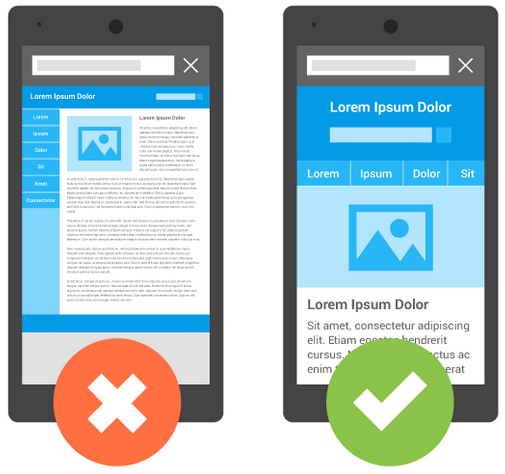
With many more people accessing the Internet via smartphones, mobile responsive designs are crucial in the battle for consumer attention.
If your site doesn’t look good on small screens, you’ll simply look old-fashioned and unprofessional.
Work With the Right Design Agency
Unless you’re a professional, making design changes to a website can be tricky. One small mistake in the coding can wreck a whole page. Thankfully there are many tools out there, such as WordPress, that make site creation a possibility for an amateur.
However, if you really want to engage your audience, it may be worth investing professionally designed site that people will want to stay on for longer and return to in the future.
When choosing an agency, make sure they listen to your business goals and check out their portfolio for previous work.
While it may cost more initially, a professional design could benefit your business in the long run and you can have a website that you can be proud of.
What Should I Add to my Website?
The Web is full of horrendous sites, and we’re not just talking about bad design. There are many other elements besides how your website looks that go into making it customer-friendly — not to mention something that inspires them to actually do business with you.
From thorough contact information to customer testimonials, here are the essentials that every small business website should have for it to effectively help you do business.
1. A clear description of who you are
Someone who stumbles upon your website shouldn’t have to do investigative work to figure out what, exactly, it is that you do. That means clearly stating your name and summing up your products or services right on the homepage, says John Zhuang, of Web-design and SEO-optimization firm Winning Interactive.
“Tell people this is the right website that they have been searching for,” he says. “[A clear description] will attract the visitor’s attention immediately within 2-3 seconds, and encourage them to stay on your website longer.”
2. A simple, sensible Web address
Don’t make things complicated.
“Your domain name is like your brand. It should be easy for a user to type it into a Web browser or an e-mail address,” says Ron Wright, the founder of business Web design and online marketing firm Accentix.
He adds: “I always recommend the .com domain as users are conditioned to type that extension when they enter a Web address. For non-profits or organizations, I usually recommend using a .org domain for branding purposes, but also recommend having a .com version of the domain in case a user accidentally types the .com address.”
Wright also suggests avoiding dashes (which can cause SEO headaches) and numbers (which can cause confusion for customers).
3. An easily-navigated site map
Clear links to the most important pages, and a site map, are crucial for guiding visitors to the information they’re looking for.
“Be sure your navigation is clearly laid out. I always recommend using dropdowns in the navigation menu so the visitor can see the content under every heading from virtually any page. You want to make it very easy for your visitors to find what they are looking for, or what you want them to know,” Wright suggests.
4. Easy-to-find contact information
You wouldn’t want to lose a customer to a competitor just because you made it difficult for them to get in touch with you.
“Not every online visitor has the patience to click through every page on your website to find the contact information,” says Zhuang.
“The best place for the contact information is the top left or top right corner of the home page,” he recommends. “It is also a good practice to include contact information in every page of the website in the footer or side bar or even in top right corner, which helps the visitors to find it more easily.”
You should also be sure to include several ways for them to contact you — phone, e-mail, and a standard contact form, are all good options. Forbes also suggests including your address, and even a link to your location in Google maps.
“One of the biggest mistakes business owners make is to force only one way to reach them,” says Wright. “The point is to make it very easy for users to communicate with you on their terms.”
5. Customer testimonials
Honest words from others help make your products or services more tangible to customers who are visiting you online.
“They help your potential customers to build trust in you, especially if you are new,” Zhuang says. “[And they] help shoppers to confirm whether the product [or] services meet their needs.”
“People love to hear stories from real people,” he adds. “They help people [find out] other things you haven’t said [on] your website.”
6. An obvious call to action
“Tell the online visitors literally what you want them to do with clear tones of commend,” says Zhuang. “For instance, you may want them to call you now for free quote, or sign up to your exclusively online coupons, or add products to the online shopping cart, etc.”
And, he adds, call attention to your suggestion — by using special buttons or highlighting the text, for example.
7. Know the basics of SEO
Your website won’t do you as much good if no one can stumble upon it. Become familiar with the SEO basics to make it more accessible by search engine.
“You don’t need to employ mysterious, ninja, black hat SEO types to rank well on the search engines. Simply make sure your website is coded correctly,” Wright says.
That means using the correct keywords throughout your text, putting in plenty of links, naming your page titles and URLs correctly, and employing the magic of images and videos.
8. Fresh, quality content
For many businesses, your website is your first impression on a customer. You want to give them what they’re looking for, and perhaps even give them a reason to keep coming back.
Wright says, “The user is looking for something. Make sure you give it to them…. [and be] sure your content is original, well written and valuable.”
Fresh content is a goldmine for SEO, as well. You can keep your content from getting stale (and give your company some personality, too) by incorporating a regularly-updated blog or connecting in your social media feeds.
9. A secure hosting platform
Having your online information hijacked is a nightmare, and, should it happen to your business, it could cost you customers.
“It is imperative that you have a secure, trustworthy hosting company to keep the bad guys out and your content up and running,” says Wright. “It is also very important to keep your content management system updated in order to stay one step ahead of the hackers.”
10. A design and style that’s friendly to online readers
As Forbes puts it, “Web surfers have the attention spans of drunken gnats.”
Read Also: How To Sell Gold For Cash
Zhuang describes it in more detail: “Online visitors often scan through a Web page to sample the content first when they open a new Web page. If they feel like they are on the right page, they will slow down to read the full story. To enhance user’s experience on your small business website, you need to organize the content for scanning.”
What Words Attract Customers?
You need good copywriting and catchy lines to attract customers to your store. Used frequently by top copywriters, these phrases are surefire terms that create interest and desire among customers. They’re expressions that turn customers’ wants into needs. If you want to make your ad copy pop and excite customers, use these top 10 retail marketing phrases:
1. Beautiful in Its Simplicity
Customers hate complexity and love simplicity, viewing it as a form of good customer service. When you make things simple, you create a smooth customer experience.
2. Artistically Inspired
This phrase demonstrates your sense of fashion. In the customer’s mind, it shows you are forward thinking. Remember, form is often more important than function.
3. Enhance Your Life
Customers always look for ways to make life better. Use this expression as an alternative to the common phrase “new and improved.”
4. Enhance Your Beauty
Customers also look for ways to be and feel more beautiful, and this phrase is especially key in the fashion industry. Where you can enhance beauty, you can often eliminate a customer’s price restrictions.
5. Looks so Good on the Outside, It’ll Make You Feel Good Inside
This phrase compliments the buyer on a decision they’ve made or one they’re about to make. It affirms their choices, making them feel good about what they’ve purchased.
6. Never Looked so Good
This is another form of “new and improved.” It communicates that the product is the latest model or the hottest on the market, triggering positive customer responses.
7. Simply Awesome
In ad copy and everyday speech, “awesome” is the new “great” or “wonderful.” When paired with “simply” (again conveying simplicity), these words create a powerful phrase.
8. Perfect From Beginning to End
This phrase demonstrates that you pay attention to the details. But make sure you show continuity and alignment. If you use this phrase, your store design and merchandising must be impeccable, down to the detail.
9. Get Noticed
Customers love to be complimented (and by complimenting customers, you increase your likeability). This phrase is a classy way of telling the customer that the product will draw attention to them.
10. Exceptional Value
The world cares about value, but if you ask people to define “value,” they never seem to be able to do it. When you add the word “exceptional,” you help define that value in the mind of the customer.
Summary
Marketing a new website startup in 2022-2025 can be challenging, especially in a hotly contested marketplace. Careful planning is crucial, as is creating a memorable and unique brand image to act as the foundation for your marketing efforts.
Understanding your core customer base is equally important if your campaigns are to deliver positive ROI. Showcase your USPs and solve customer problems. If you can achieve this, your targeted campaigns have the best opportunity for success.









Comments