
 By
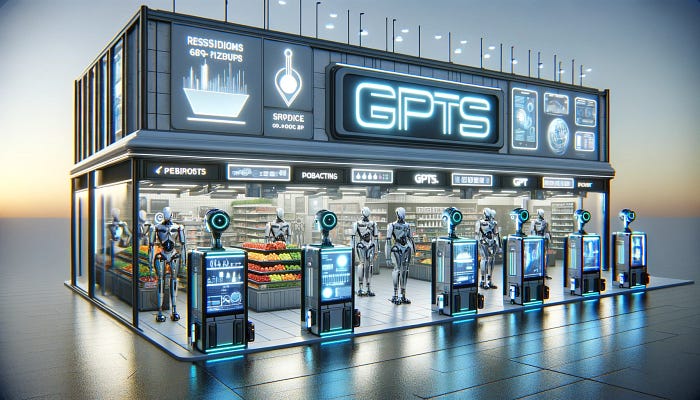
Artificial intelligence is moving from general-purpose chatbots toward specialized AI custom bots designed to solve specific business and consumer problems.
Instead of asking a general AI assistant to do everything, users increasingly want an AI tool that understands a particular industry, workflow, audience, or task. This shift is creating an opportunity for entrepreneurs, developers, consultants, and AI creators to build specialized GPTs and sell access to them through custom marketplaces, websites, SaaS platforms, communities, and business channels.
The market opportunity is substantial. Gartner forecasts worldwide end-user spending on AI platforms and models to reach $64.3 billion in 2026, representing 63.4% growth from 2025. Spending on domain-specific language models and specialized generative AI models is forecast to grow even faster—210% in 2026, reaching approximately $4.9 billion.
That growth points to an important trend: the future of AI custom bots is increasingly specialized rather than purely general-purpose.
What Are Specialized GPTs and AI Custom Bots?
A specialized GPT is an AI assistant configured to perform a defined set of tasks for a particular audience. A custom bot can combine:
- Detailed instructions.
- Specialized knowledge.
- Reference documents.
- Conversation starters.
- External tools.
- API connections.
- Business rules.
- Output templates.
- Evaluation and quality-control processes.
OpenAI describes GPTs as customized versions of ChatGPT that can combine instructions, knowledge, and selected capabilities for specific purposes. Depending on the environment, they can also use external actions or connected apps.
For a creator, this means the product isn’t simply “a chatbot.” The product is a packaged solution to a specific problem.
For example, instead of creating “MarketingGPT,” a creator could build:
- E-commerce Product Description GPT.
- Real Estate Listing Assistant.
- Restaurant Social Media GPT.
- Startup Pitch Deck Coach.
- SEO Content Brief Generator.
- Customer Support Response Assistant.
- Job Interview Preparation Coach.
- Financial Report Summarizer.
The narrower the problem—and the clearer the value—the easier it can be to position the bot as a commercial product.
Why Specialized AI Bots Are Becoming More Valuable
General-purpose AI models are becoming increasingly capable. Paradoxically, that can make specialization more valuable.
Businesses don’t necessarily want employees spending time figuring out how to prompt a general AI model. They want a system that already understands the organization’s workflow.
Gartner forecasts that more than half of generative AI models used by enterprises will be domain-specific by 2027, compared with roughly 1% in 2024.
This is a major market signal. It suggests the AI economy is moving from:
“Here is a powerful AI model. Figure out what to do with it.”
toward:
“Here is an AI system configured specifically for your job.”
Specialized versus general-purpose AI
| Feature | General-purpose AI | Specialized GPT/custom bot |
|---|---|---|
| Target audience | Broad | Specific |
| Knowledge | General | Domain-focused |
| Workflow | Flexible | Predefined |
| User experience | User-directed | Guided |
| Monetization | Platform subscription | Product/service/subscription |
| Differentiation | Model capability | Expertise + workflow |
| Business value | Broad | Targeted |
| Competitive advantage | Limited for creators | Potentially higher |
This specialization is one reason custom AI bots can become viable digital products.
What Makes a Specialized GPT Worth Paying For?
Not every custom GPT deserves a price tag. Creating a bot takes relatively little time compared with building traditional software. That creates a major problem: low barriers to entry mean enormous competition.
A commercial AI custom bot needs differentiation.
A useful framework is:
Value = Expertise + Workflow + Knowledge + Reliability + Convenience
A bot becomes more valuable when it can perform a task better, faster, or more consistently than a user working with a generic AI model.
Five characteristics of a sellable AI bot
- Solves a specific problem
- Targets a clearly defined audience
- Produces consistent outputs
- Contains useful specialized knowledge
- Saves users meaningful time or money
For example, “AI Writing Assistant” is broad and difficult to differentiate.
“Amazon Product Listing Optimizer for Nigerian E-commerce Sellers” is much more specific.
The second product immediately communicates:
- Who it serves.
- What it does.
- Where it applies.
- Why someone might need it.
The Best Niches for Specialized GPTs
The strongest opportunities generally exist where users repeatedly perform structured tasks. Potential niches include:
| Industry | Specialized bot opportunity |
|---|---|
| Marketing | Campaign planning and content |
| SEO | Keyword research and content briefs |
| E-commerce | Product listings and customer support |
| Real estate | Property descriptions and lead responses |
| Education | Study plans and tutoring |
| Recruitment | Job descriptions and candidate screening |
| Finance | Report analysis and summaries |
| Legal | Document organization and research assistance |
| Healthcare | Administrative workflows |
| Sales | Lead research and outreach |
| Customer service | Support-response generation |
| Small business | Operations and business planning |
Highly regulated sectors require additional caution. A bot should not make unsupported professional claims or substitute for qualified legal, medical, financial, or other professional advice where human oversight is required.
How to Research a Profitable AI Bot Niche
Before building anything, research the problem. Don’t start with:
“What GPT can I create?”
Start with:
“What expensive or frustrating problem can an AI bot solve?”
Step 1: Identify repetitive tasks
Look for activities people perform repeatedly:
- Writing.
- Summarizing.
- Researching.
- Classifying.
- Formatting.
- Analyzing.
- Planning.
- Responding.
- Generating reports.
Step 2: Identify users with purchasing power
A large audience is not automatically a profitable audience. A smaller professional audience may be more valuable if the problem directly affects revenue or productivity.
Step 3: Study competing products
Search existing AI marketplaces, app stores, directories, Reddit communities, social media, freelance platforms, and industry forums.
Look for:
- Frequently requested features.
- Negative reviews.
- Missing functionality.
- Pricing complaints.
- Poor user experience.
- Underserved industries.
Step 4: Validate demand
Before investing significant time, create a basic prototype and put it in front of potential users.
Ask:
- Would you use this?
- How often?
- What would you replace?
- What result matters most?
- Would you pay for it?
- What would make it indispensable?
How to Build a Specialized GPT
Once the niche has been validated, build the bot around a clearly defined workflow.
OpenAI’s current GPT documentation identifies several important configuration components, including instructions, conversation starters, knowledge, capabilities, apps, and actions.
1. Define the bot’s role
Give the AI a precise identity.
For example:
“You are an e-commerce conversion specialist helping online retailers improve product pages.”
The role should establish the bot’s expertise and intended audience.
Read Also: Profitable Micro-niches Dominating Custom Merchandise Marketplaces
2. Create detailed instructions
Instructions should define:
- What the bot does.
- How it reasons through tasks.
- What information it requests.
- What output format it uses.
- What it should avoid.
- When it should acknowledge uncertainty.
- When it should ask for clarification.
OpenAI recommends using explicit steps for multi-stage workflows and clear headings and lists when configuring GPT instructions.
3. Add specialized knowledge
Knowledge files can transform a generic chatbot into a domain-focused assistant. Depending on the use case, these could include:
- Company manuals.
- Product catalogs.
- Style guides.
- Industry terminology.
- Standard operating procedures.
- Training materials.
- Frequently asked questions.
- Brand guidelines.
OpenAI currently allows up to 20 files per GPT, with individual files up to 512 MB, subject to applicable product limitations.
4. Add tools and integrations
Some bots become substantially more valuable when they can interact with external systems. Potential integrations include:
- CRM systems.
- Databases.
- Business APIs.
- Search tools.
- Internal knowledge bases.
- E-commerce platforms.
- Scheduling systems.
OpenAI’s current GPT framework supports actions for connecting GPTs to external APIs, although available capabilities and publishing requirements vary by account and workspace.
How to Monetize Specialized GPTs
Creators have several possible business models.
One-time purchase
Customers pay once for access to a bot, templates, instructions, or related resources.
This works best for relatively stable products.
Subscription
Customers pay monthly or annually.
This model is more attractive when the bot provides continuously updated knowledge, integrations, premium features, or ongoing support.
Freemium
Offer a basic version for free and charge for advanced capabilities.
Custom implementation
Instead of selling a standardized bot, build customized AI assistants for individual businesses.
Licensing
Businesses pay to use your specialized bot across their organization.
Consulting + bot
Sell implementation, training, customization, and maintenance alongside the AI product.
| Model | Revenue pattern | Best for |
|---|---|---|
| One-time purchase | Transactional | Simple tools |
| Subscription | Recurring | Continuously useful bots |
| Freemium | Conversion-based | Large audiences |
| Licensing | Recurring/contractual | Businesses |
| Custom development | Project-based | Enterprise clients |
| Consulting | High-ticket | Complex workflows |
Selling Through Custom AI Marketplaces
A marketplace can provide distribution, discovery, and social proof. However, creators should not depend entirely on a single marketplace.
A strong distribution strategy can include:
- AI marketplace listing.
- Personal website.
- SEO content.
- YouTube demonstrations.
- LinkedIn posts.
- Industry communities.
- Email marketing.
- Affiliate partnerships.
- Direct business outreach.
- Free version or interactive demo.
This creates an important distinction between building a bot and building an AI product business.
The bot is the product. Distribution is the business.
Important Changes to the GPT Marketplace Landscape
Creators should pay close attention to platform rules because marketplace access and publishing policies can change.
As of OpenAI’s current documentation, new GPT creation and publishing are not available on personal ChatGPT accounts, while creation, editing, and publishing remain available in eligible Business, Enterprise, and Edu environments subject to workspace permissions.
That means entrepreneurs considering a GPT marketplace strategy should verify the current eligibility and publishing requirements of the platform they intend to use. It also reinforces the importance of building an independent audience rather than relying entirely on marketplace discovery.
Common Mistakes AI Bot Creators Should Avoid
- Building a generic bot
If thousands of similar bots exist, differentiation becomes difficult.
- Focusing on prompts instead of outcomes
Customers care about what the bot accomplishes, not how clever its instructions are.
- Skipping testing
Inconsistent AI outputs can quickly destroy customer trust.
- Overloading the bot with knowledge
More documents don’t automatically produce better results. Knowledge needs to be organized, relevant, and maintained.
- Ignoring distribution
A technically excellent bot can fail commercially if nobody discovers it.
- Making unrealistic claims
Don’t promise guaranteed revenue, legal outcomes, medical diagnoses, or other results the system cannot reliably deliver.
- Depending on one platform
Marketplace policies, model availability, pricing, and publishing requirements can change.
The Future of AI Custom Bots
The long-term opportunity is moving beyond simple prompt-based GPTs toward specialized AI products.
Gartner forecasts that spending on specialized GenAI models will grow 210% in 2026, substantially faster than the overall AI platforms and models market.
At the same time, enterprises are moving toward AI agents and more deeply integrated workflows. Gartner reported that 42% of surveyed CIOs and technology executives expected their enterprise to deploy AI agents within the following 12 months in its 2025 benchmark research.
This suggests that today’s specialized GPT could evolve into tomorrow’s:
- AI agent.
- Vertical SaaS product.
- Industry-specific copilot.
- Business automation platform.
- AI-powered marketplace product.
The winning creators will therefore be those who think beyond “building a GPT.”
They will think in terms of building an AI business around a valuable workflow.
Conclusion
Building specialized GPTs to sell through custom marketplaces represents an accessible entry point into the growing AI custom-bot economy.
The technology barrier is relatively low, but commercial success requires much more than writing clever instructions. Creators need to identify valuable problems, specialize their AI systems, provide reliable knowledge, test outputs, create a compelling user experience, and build distribution.
The market signals are encouraging. Gartner forecasts the AI platforms and models market at $64.3 billion in 2026, while spending on specialized GenAI models is projected to grow 210% during the year. Enterprise use of Custom GPTs and Projects is also expanding rapidly, demonstrating that organizations increasingly value AI assistants tailored to specific workflows.
The biggest opportunity is therefore not simply to sell “a GPT.”
It is to build a specialized AI solution that saves a particular customer time, reduces costs, increases productivity, or helps generate revenue.
In an increasingly crowded AI market, specialization can become the moat.
The future of custom AI bots belongs to creators who combine AI capabilities with domain expertise, workflow design, testing, and strong distribution.
FAQ
What are specialized GPTs?
Specialized GPTs are AI custom bots designed for specific industries, tasks, or audiences. They can use tailored instructions, knowledge, workflows, and tools to provide more focused results than general-purpose AI.
Can you make money selling custom GPTs?
Yes. Creators can monetize specialized GPTs through marketplace sales, subscriptions, licensing, custom development, consulting, or premium AI services.
What makes an AI custom bot worth buying?
A valuable custom bot solves a specific problem, saves users time or money, provides reliable results, and offers specialized knowledge or workflows that generic AI tools may not provide.
How do I build a successful specialized GPT?
Choose a profitable niche, identify a specific customer problem, build and test the bot, add relevant knowledge and workflows, and market it through AI marketplaces, websites, social media, and direct business outreach.
Source: linkedin.com






Comments