
 By
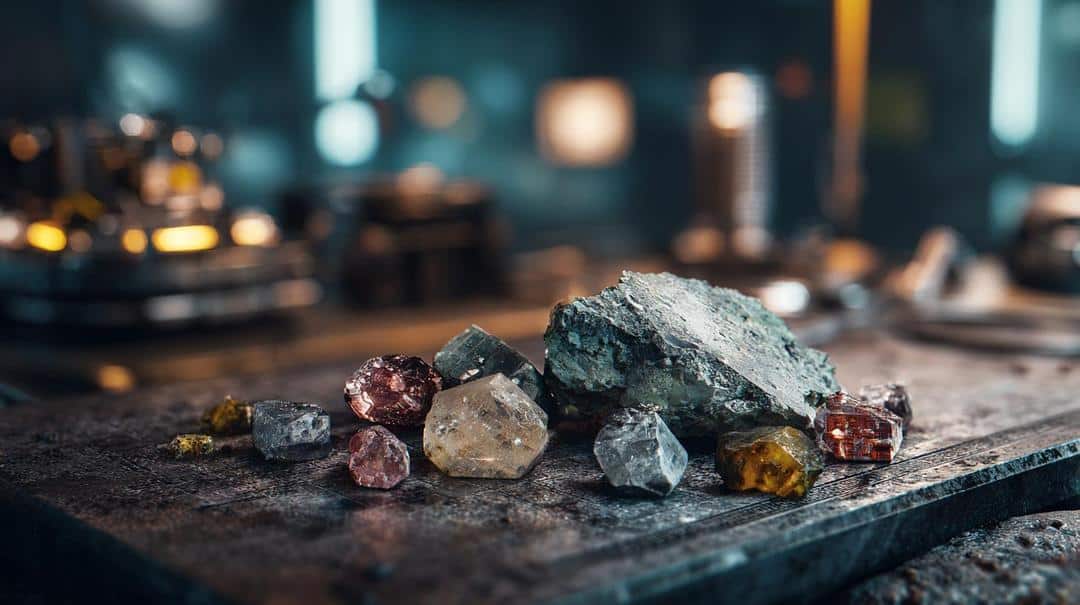
Investing in rare-earth elements, a subset of critical minerals, and critical minerals themselves are worthwhile. Since these drugs are thought to be essential to the economic and national security interests of the United States, demand for them should keep rising. (There are 17 rare-earth elements, 50 minerals on the U.S. critical minerals list, and 54 on a draft for an updated list.)
These compounds are required for the production of numerous high-growth, innovative technologies, such as semiconductors, electric vehicles (EVs), renewable energy, and the defense industry.
The United States does not have a reliable supply chain for these minerals, which are primarily mined and processed in China. And China has prohibited or restricted the export of several of these minerals to the United States. So the United States government is spending a lot of money to build a more reliable critical minerals supply chain.
The Trump administration has even purchased stakes in numerous publicly traded US corporations that it views critical to the country’s national security. This contains three mineral firms (Lithium Americas, Trilogy Metals, and MP Materials), together with semiconductor producer Intel.
What are Rare Earth Stocks?
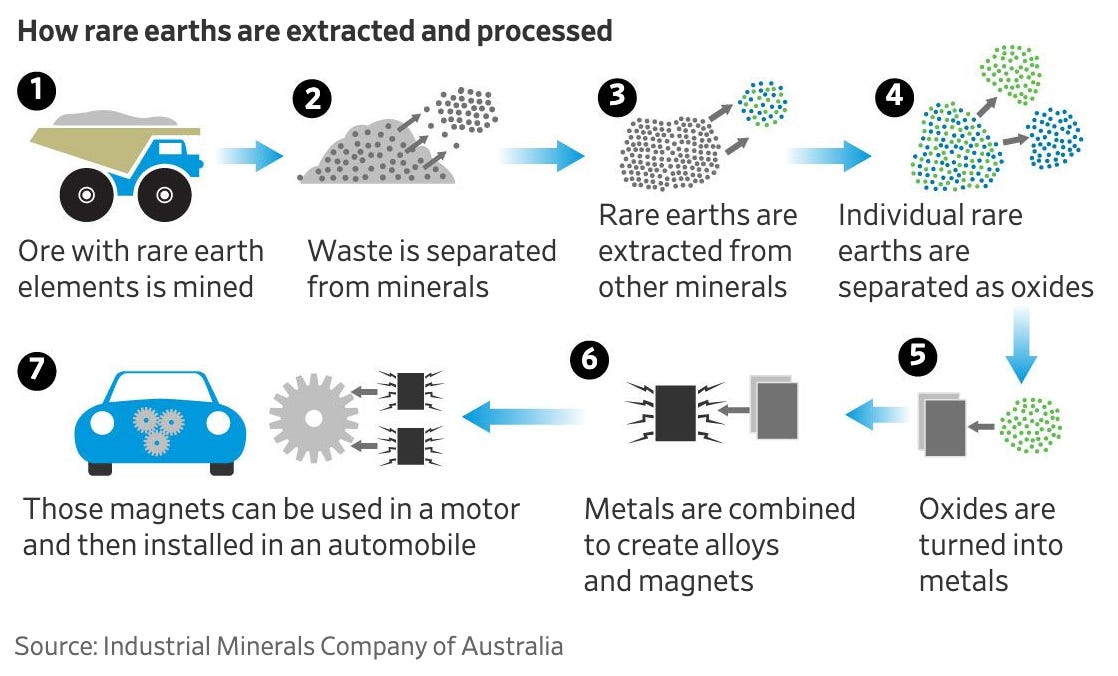
Rare earth stocks are shares of publicly-traded companies involved in the mining and processing of rare earth elements and other strategic metals.
Strictly speaking, the term “rare earth elements” refers to a set of 17 heavy metals whose chemical properties make them useful in advanced technologies such as electric vehicle motors, lasers, large batteries, nuclear reactors and fuel cells. Most of the actual rare earth elements are pretty obscure, though you might have heard of neodymium if you’re really into magnets.
But in common parlance, “rare earth stocks” can also refer to mining companies that produce other valuable metals with high-tech applications, such as lithium, copper and cobalt. These technically aren’t rare earth elements — the more accurate term is “strategic metals” — but in the investing world, they’re often lumped in with the true rare earths due to their similar use cases in advanced manufacturing.
Top 10 Stock Holdings
| HOLDING NO. | COMPANY AND HEADQUARTERS | MARKET CAP | PROFITABLE ON A TTM BASIS? | WEIGHT (% OF PORTFOLIO) | YTD 2025 STOCK RETURN | 5-YEAR STOCK RETURN |
|---|---|---|---|---|---|---|
| 1 | Lynas Rare Earths (LYSDY4.54%), Australia | $12.7 billion | Yes | 7.52% | 220% | 524% |
| 2 | Pilbara Minerals (OTC: PILBF), Australia | $6.8 billion | No | 7.18% | 58.7% | 631% |
| 3 | MP Materials, U.S. | $12.5 billion | No. Wall Street expects it to be profitable next year. | 7.14% | 354% | 430% |
| 4 | Albemarle (ALB+2.39%), U.S. | $12.4 billion | No. Wall Street expects it to be profitable next year. | 7.01% | 24.9% | 16.1% |
| 5 | Lithium Americas (LAC+2.51%), U.S. | $1.7 billion | No. Not yet in the commercialization stage. | 6.89% | 126% | N/A |
| 6 | China Northern Rare Earth Group, China | 185 billion yuan = approx. $26 billion | Yes | 6.49% | 141%* | 388%* |
| 7 | Liontown Resources, Australia | $2.4 billion | No | 5.14% | 133% | 325% |
| 8 | Iluka Resources, Australia | $2.2 billion | Yes | 5.07% | 60.3% | 156% |
| 9 | Ganfeng Lithium, China | $17.2 billion | No | 5.00% | 128% | |
| 10 | Sociedad Quimica y Minera (SQM), Chile | $12.9 billion | Yes | 4.76% | 25.3% | 49.3% |
| Total top 10 | N/A | N/A | N/A | 62.20% | N/A | N/A |
| Overall ETF | N/A | Total net assets of $1.38 billion | N/A | 100% | 88.4% | 97.3% |
| N/A | S&P 500 Index | N/A | N/A | N/A | 16.7% | 111% |
Data sources: VanEck Rare Earth and Strategic Metals ETF, Yahoo! Finance, and YCharts.
Best Rare Earth Stocks to Watch Globally
Investors can choose between single-company plays for targeted exposure or ETFs for broad diversification. The right pick depends on whether you want to back mining, separation, or magnet-making capacity.
Upstream and integrated leaders
- MP Materials (NYSE: MP): U.S. mine-to-magnet leader with Mountain Pass and Texas facilities. Supported by the U.S. Department of Defense.
- Lynas Rare Earths (ASX: LYC): Largest producer outside China, with operations in Australia and Malaysia.
- Iluka Resources (ASX: ILU): Advancing Australia’s first fully integrated refinery with government financing.
Midstream and magnets
- Neo Performance Materials (TSX: NEO): Direct play on European magnet supply; Estonia plant supplying Bosch and Schaeffler.
- Energy Fuels (NYSEAMERICAN: UUUU; TSX: EFR): Produces separated NdPr and is progressing into heavy rare earths.
Project torque and specialty exposure
- Arafura Rare Earths (ASX: ARU): Nolans project with binding offtakes from Hyundai, Kia, and Siemens Gamesa.
- Ucore Rare Metals (TSXV: UCU): Building U.S. refining capacity in Louisiana with DoD support.
- NioCorp (NASDAQ: NB): Elk Creek project in Nebraska, combining niobium, scandium, and rare earths.
- USA Rare Earth (NASDAQ: USAR): New entrant with a Stillwater magnet plant targeted for 2026 and the Round Top project in Texas. High-beta, but levered to U.S. onshoring.
ETF option
The VanEck Rare Earth & Strategic Metals ETF (REMX) offers a diversified basket of miners, refiners, and magnet makers. Many investors use REMX as a core holding and add one or two single names for extra torque.
Read Also: Rare‑Earth Prices in 2025: Trends, Forecasts, and Market Drivers–data-driven Analysis
Types of Rare Earth Companies
Rare earth companies are typically divided into three categories based on their stage of development and business focus. This classification helps investors understand how each company contributes to the supply chain — whether they are actively producing rare earths, still in the exploration phase, or involved in a broader range of mining activities beyond rare earth elements.
- Primary rare earth companies focus directly on mining and processing rare earths.
- Junior mining companies are smaller, early-stage firms that focus on exploration and development.
- Diversified mining companies produce a range of minerals, with rare earths making up only part of their portfolio.
1. Primary rare earth companies
Primary rare earth companies are those that directly participate in the mining or refining of rare earth elements. There are just 15 to 25 available globally, with these companies serving as popular investment options.
- MP Materials (NYSE: MP) – U.S. MP Materials Corp produces the most rare earth materials in the Western Hemisphere as the owner of the only rare earth mining site, the Mountain Pass Rare Earth Mine and Processing Facility.
- Lynas Rare Earths (ASX: LYC) – Australia. Formerly known as Lynas Corporation Limited, Lynas Rare Earths Limited is a publicly-listed company that mines and produces rare earth materials like lanthanum, neodymium, and gadolinium in Australia and Malaysia.
- Iluka Resources (ASX: ILU) – Australia. Formerly known as Westralian Sands Limited, Iluka Resources Limited mines and processes mineral sands like zircon, monazite and ilmenite in Australia, Asia, Europe and the Americas.
- China Northern Rare Earth Group (SSE: 600111) – China. Formerly known as Inner Mongolia Baotou Steel Rare-Earth (Group) Hi-Tech Co., Ltd., China Northern Rare Earth (Group) High-Tech Co., Ltd handles the product and sale of rare earth metals, rare earth salts and rare earth oxides in Asia, Europe and the Americas.
2. Junior mining companies
Junior mining companies are smaller companies that focus more on exploration than the actual mining or production of rare earth elements. With more than 50 options globally, these companies are often speculative, offering potential upside with viable deposits or secure funding.
- Vital Metals (ASX: VML) – Australia. Vital Metals Limited is a mineral exploration and development company with full interest in the Nechalacho Rare Earths project in Yellowknife, Northwest Territories.
- Rare Element Resources (OTCQB: REEMF) – U.S. Rare Element Resources Ltd. explores mineral properties in the U.S. and Canada with 100% interest in the Bear Lodge property,
- Arafura Rare Earths (ASX: ARU) – Australia. Previously known as Arafura Resources Limited, Arafura Rare Earths Limited explores and develops rare mineral properties like neodymium-praseodymium in Australia.
3. Diversified mining companies
Some rare earth companies take a diversified approach with multiple services and products beyond just rare earth elements. For this reason, they are not generally included in pure rare earth stock and ETF lists.
Conclusion
Rare earths are at the heart of the renewable energy and military transformation, but they are also a hotly contested battleground in the US-China trade conflict. Companies who can convert ore into magnets will emerge victorious, thanks to policy tailwinds and binding offtakes.
For most investors, a sensible method is to begin with REMX for diversified exposure and then add selected operators such as MP for US onshoring, Neo for EU magnets, Lynas for scale outside of China, or Iluka/Ucore for midstream leverage. Returns will ultimately be based on one metric above all: magnet tons shipped.






Comments