
 By
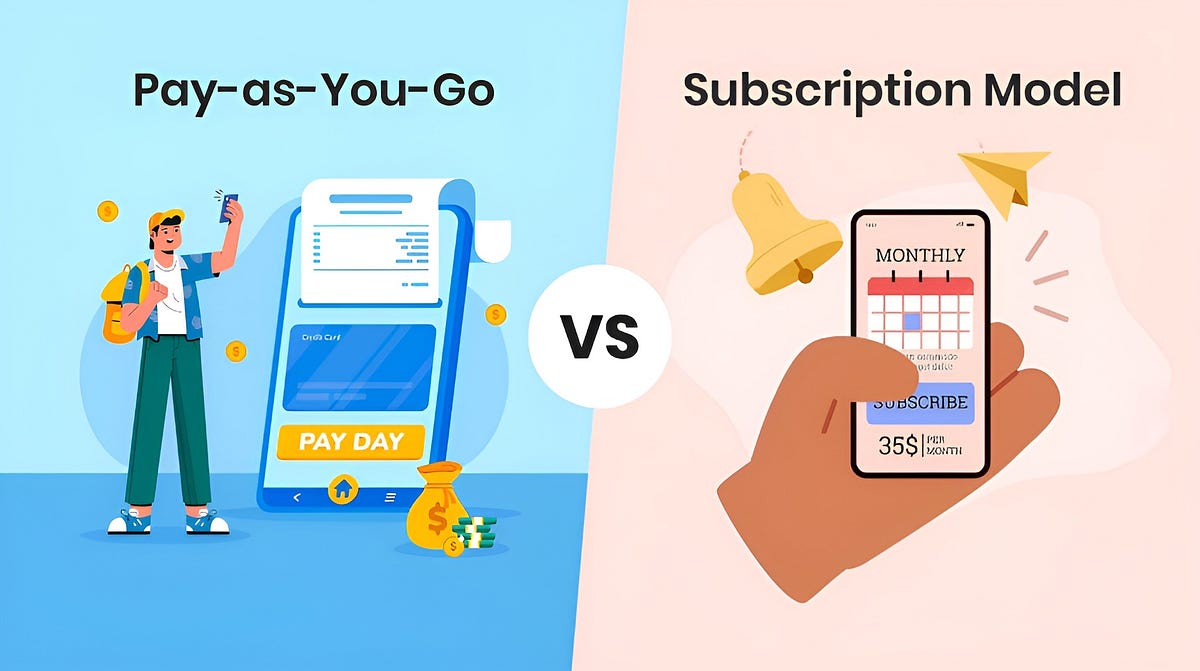
Subscription models generate higher, more predictable revenue through regular payments and enhanced customer lifetime value (CLV). However, usage-based (pay-per-use) models are becoming more competitive, with research indicating that usage-based SaaS companies achieve 50% greater valuation multiples and 38% higher year-over-year growth than traditional subscriptions due to better alignment with consumer value.
What is Subscription vs Pay-Per-Use?
Subscription and pay-per-use are two distinct monetization models that businesses use to charge customers for their products or services.
- Subscription Model: Customers pay a recurring fee (monthly, quarterly, or annually) to access a product or service. This model is widely used in industries like software (SaaS), entertainment (streaming platforms), and even physical goods (subscription boxes).
- Pay-Per-Use Model: Customers are charged based on their actual usage of a product or service. This model is common in industries like utilities (electricity, water), cloud computing (AWS, Azure), and transportation (ride-sharing apps).
Both models cater to different customer preferences and business objectives, making it essential to understand their nuances before implementation.
Key Components of Subscription vs Pay-Per-Use
Subscription Model:
- Recurring Revenue: Predictable income streams from regular payments.
- Customer Retention: Focus on long-term relationships and loyalty.
- Tiered Pricing: Offering multiple subscription levels to cater to diverse customer needs.
- Automatic Renewals: Simplified payment processes to ensure continuity.
- Value Proposition: Continuous delivery of value to justify recurring payments.
Pay-Per-Use Model:
- Usage-Based Pricing: Charges based on consumption or activity.
- Flexibility: Customers pay only for what they use, offering greater control.
- Scalability: Easily adaptable to varying customer demands.
- Transparency: Clear pricing tied to measurable usage metrics.
- On-Demand Access: Instant availability without long-term commitments.
How Subscription vs Pay-Per-Use Drives Revenue Growth
Subscription Model:
- Predictable Cash Flow: Recurring payments create a steady income stream, enabling better financial planning.
- Upselling Opportunities: Tiered pricing allows businesses to upsell premium features or services.
- Customer Lifetime Value (CLV): Long-term subscriptions increase the overall value of each customer.
- Reduced Churn: Continuous engagement strategies help retain customers over time.
Pay-Per-Use Model:
- Revenue Scalability: Income grows proportionally with customer usage, making it ideal for high-demand services.
- Attracting Cost-Conscious Customers: Customers who prefer flexibility are more likely to opt for pay-per-use.
- Market Expansion: Easier entry for customers who may hesitate to commit to subscriptions.
- Dynamic Pricing: Ability to adjust rates based on demand or resource availability.
Long-Term Advantages of Subscription vs Pay-Per-Use
Read Also: How to Choose the Right Monetization Strategy for Your Audience
Subscription Model:
- Brand Loyalty: Regular interactions foster stronger customer relationships.
- Data Insights: Continuous usage data helps refine offerings and improve customer experience.
- Scalable Growth: Easier to forecast and scale operations based on predictable revenue.
- Cross-Selling Potential: Opportunity to introduce complementary products or services.
Pay-Per-Use Model:
- Operational Efficiency: Aligns costs with actual usage, reducing waste.
- Customer Empowerment: Transparency and flexibility enhance customer satisfaction.
- Innovation Opportunities: Encourages businesses to innovate based on usage patterns.
- Global Reach: Easier to attract international customers with diverse needs.
Identifying Potential Pitfalls
Subscription Model:
- Customer Churn: High churn rates can erode revenue and profitability.
- Overhead Costs: Managing subscriptions requires robust systems for billing, renewals, and customer support.
- Value Perception: Customers may cancel if they feel the service doesn’t justify the recurring cost.
- Market Saturation: Intense competition in subscription-based industries can limit growth.
Pay-Per-Use Model:
- Revenue Volatility: Income fluctuates based on customer usage, making financial planning challenging.
- Complex Pricing Structures: Determining fair and transparent usage rates can be difficult.
- Customer Hesitation: Some customers may prefer predictable costs over variable charges.
- Operational Strain: Scaling to meet on-demand usage can strain resources.
Overcoming Obstacles in Subscription vs Pay-Per-Use
Subscription Model:
- Retention Strategies: Implement loyalty programs, personalized offers, and proactive customer support.
- Value Communication: Regularly highlight the benefits of the subscription to customers.
- Churn Analysis: Use data analytics to identify and address churn causes.
- Competitive Differentiation: Offer unique features or pricing to stand out in the market.
Pay-Per-Use Model:
- Transparent Pricing: Clearly communicate usage rates and billing methods.
- Usage Caps: Introduce maximum charges to reassure customers about cost predictability.
- Resource Optimization: Invest in scalable infrastructure to handle fluctuating demand.
- Customer Education: Provide tutorials or guides to help customers understand the pay-per-use model.
Best Practices for Subscription vs Pay-Per-Use Implementation
Subscription Model:
- Customer Onboarding: Simplify the sign-up process and provide clear instructions.
- Engagement Campaigns: Use email marketing, social media, and in-app notifications to keep customers engaged.
- Flexible Plans: Offer customizable subscription tiers to cater to diverse needs.
- Feedback Loops: Regularly collect customer feedback to improve offerings.
Pay-Per-Use Model:
- Usage Tracking: Implement robust systems to monitor and report customer usage.
- Dynamic Pricing Models: Adjust rates based on demand, seasonality, or resource availability.
- Scalable Infrastructure: Ensure systems can handle spikes in usage without compromising service quality.
- Customer Support: Provide responsive support to address billing or usage concerns.
Tools and Resources for Subscription vs Pay-Per-Use
- Subscription Management Platforms: Tools like Chargebee, Zuora, and Recurly streamline billing and renewals.
- Usage Analytics Software: Platforms like Google Analytics and Mixpanel help track customer behavior and usage patterns.
- CRM Systems: Tools like Salesforce and HubSpot enhance customer relationship management.
- Payment Gateways: Solutions like Stripe and PayPal facilitate secure transactions.
Emerging Innovations in Subscription vs Pay-Per-Use
- AI-Driven Personalization: Using AI to tailor subscription plans and usage-based pricing.
- Blockchain for Transparency: Leveraging blockchain to enhance trust in pay-per-use billing.
- Hybrid Models: Combining subscription and pay-per-use for greater flexibility.
Predictions for the Next Decade
- Increased Adoption: More industries will adopt subscription and pay-per-use models.
- Sustainability Focus: Businesses will integrate eco-friendly practices into their monetization strategies.
- Global Expansion: Subscription and pay-per-use models will drive international growth.
Last Words
So, which option generates more revenue: subscription billing or one-time payment?
In most recurring-use categories, a well-executed subscription model outperforms one-time sales in the long run because it captures ongoing demand, smoothes cash flow, and boosts customer lifetime value. However, this is only true when the product warrants continuing commitment and payment procedures are developed enough to keep churn and billing issues under control.
One-time payments remain the best option for infrequent, high-value purchases and brands that emphasize simplicity and speed. Their disadvantage is not that they “don’t work,” but that they require a steady stream of new consumers and a tenacious marketing engine to keep growing.
The most intelligent e-commerce enterprises are increasingly looking beyond the binary question. They create revenue models that match how their consumers actually buy, and they invest in payment systems that ensure both one-time and recurring revenue is consistent.
In other words, revenue does not track the trend. It is based on the alignment of your product, your customers’ behaviors, and the quality of the payment infrastructure that discreetly powers every transaction behind the scenes.








Comments