
 By

A high-converting digital offer clearly identifies a specific customer’s problem, promises a credible outcome, explains exactly what the buyer receives, reduces perceived risk, provides trustworthy evidence, and makes purchasing simple.
The strongest strategy can be summarized as:
Specific problem + Desirable outcome + Clear value + Credible proof + Low friction + Strong call to action
Whether you’re selling an e-book, online course, template, membership, software tool, coaching program or digital download, creating the product is only half the job. You also need to package it into an offer customers understand and value.
Shopify reports that the median landing-page conversion rate across industries is around 6.6%, although actual performance varies considerably by industry, traffic source, price and purchase intent.
That means attracting visitors isn’t enough. Your offer must give the right visitors compelling reasons to act.
What Makes a Digital Offer Convert?
| Element | Question It Answers |
|---|---|
| Target customer | Who is this for? |
| Problem | What does it solve? |
| Outcome | What will I gain? |
| Product | What exactly do I receive? |
| Differentiation | Why this solution? |
| Proof | Why should I believe you? |
| Price | Is the value worth the cost? |
| Risk reduction | What if it isn’t right for me? |
| CTA | What should I do next? |
| Checkout | How easily can I buy it? |
1. Start With the Problem, Not the Product
One of the biggest mistakes digital creators make is building something first and searching for customers afterward. Reverse the process.
Start by asking:
- What problem does my audience repeatedly mention?
- What result are they actively trying to achieve?
- What have they already tried?
- Why haven’t those solutions worked?
- Would solving this problem be valuable enough to pay for?
Suppose you create a 100-page guide called:
“Everything I Know About Freelancing.”
It may contain excellent information, but the outcome is vague.
Compare it with:
“A Step-by-Step System for Finding Your First Five Freelance Clients.”
The second offer communicates a specific outcome.
Customers don’t primarily buy the number of pages, videos or downloadable files. They buy the result those resources may help them achieve.
2. Create a Clear Value Proposition
A visitor should quickly understand three things:
- What is it?
- Who is it for?
- Why should I care?
Shopify identifies a clear value proposition as one of the best practices for effective landing pages and describes a landing page as a page focused on getting visitors to take one specific action.
Compare these offers:
Weak
“The Ultimate Business Course — 47 Videos Included.”
Stronger
“Learn how to create, price and launch your first digital product without building a complicated online store.”
The first describes content. The second communicates an outcome and audience problem. Features still matter, but connect them to benefits.
| Feature | Customer Benefit |
|---|---|
| 20 templates | Start without creating documents from scratch |
| Video lessons | Follow the process visually |
| Checklist | Reduce the chance of missing steps |
| Calculator | Make pricing decisions faster |
| Lifetime access | Revisit lessons when needed |
| Updates | Keep information more current |
3. Increase Perceived Value Without Adding Random Bonuses
A high-converting offer doesn’t necessarily need more content. It needs more relevant value. Imagine selling a $99 course on freelance client acquisition.
You could package it with:
Core course + Proposal template + Client questionnaire + Pricing calculator + Follow-up email scripts
Each bonus addresses a problem the customer is likely to encounter while pursuing the main outcome. That’s stronger than adding unrelated bonuses merely to make the offer appear larger.
A useful formula is:
Core solution + Obstacle removers = Stronger offer
If your course teaches people how to obtain clients, templates help them execute that process. Every component should have a reason to exist.
4. Use Pricing to Communicate Value
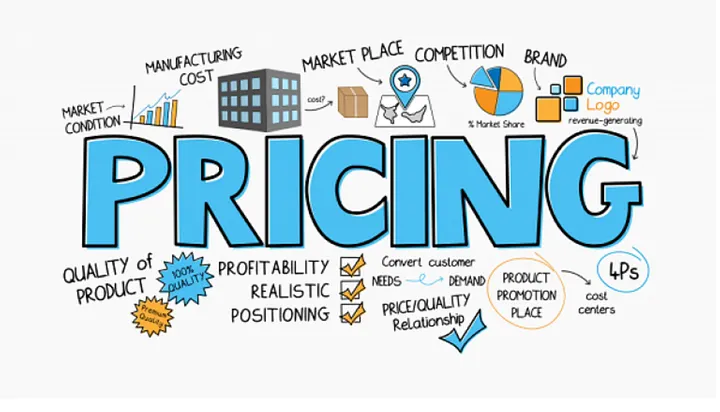
Pricing affects both profitability and positioning. Suppose you sell a template bundle for $49.
At 100 sales:
100 × $49 = $4,900 gross revenue
At $79:
100 × $79 = $7,900 gross revenue
But raising prices doesn’t guarantee customers will continue buying at the same rate.
Consider the entire equation:
Revenue = Traffic × Conversion rate × Average order value
Imagine 10,000 qualified visitors.
At a 2% conversion rate and $50 average purchase:
10,000 × 2% × $50 = $10,000
Improve conversion to 3%:
10,000 × 3% × $50 = $15,000
Increase average order value to $70 as well:
10,000 × 3% × $70 = $21,000
These hypothetical examples show why offer optimization can matter as much as generating additional traffic.
5. Build Trust With Genuine Proof
Customers naturally ask:
“Will this actually work for someone like me?”
Proof can reduce that uncertainty.
Examples include:
- Genuine customer testimonials.
- Verified reviews.
- Case studies.
- Demonstrations.
- Screenshots of relevant results.
- Product previews.
- Professional credentials.
- Transparent methodology.
But social proof must be genuine.
The U.S. Federal Trade Commission says:
“Claims in advertisements must be truthful”
and cannot be deceptive or unfair.
The FTC also requires appropriate disclosure of material relationships involving endorsements and has specific rules concerning consumer reviews and testimonials.
Read Also: Creating Digital Assets That Pay You for The Next 10 Years
Don’t invent testimonials, exaggerate customer results or present exceptional outcomes as though everyone should expect them.
Credibility converts better than manufactured hype over the long term.
6. Reduce Purchase Risk
Every purchase contains uncertainty.
Customers may wonder:
- Is this legitimate?
- Will I understand it?
- Is it suitable for beginners?
- Is my payment secure?
- What exactly happens after purchase?
- What is the refund policy?
- Are there hidden charges?
Your offer page should answer reasonable objections before checkout. Risk reduction might include:
Clear product previews + Detailed descriptions + FAQs + Transparent pricing + Appropriate refund terms + Secure payment options
Importantly, don’t promise a refund policy you cannot honor or make guarantees about results you cannot substantiate. The objective is to make the transaction understandable, not to eliminate every possible risk through exaggerated promises.
7. Remove Checkout Friction
A great offer can still lose sales during checkout. Baymard Institute’s checkout research puts the average cart-abandonment rate at approximately 70.19%.
Some abandonment is unavoidable because shoppers are simply browsing. But Baymard’s 2026 data identify several preventable sources of friction. Among surveyed U.S. shoppers, additional costs were a major reason for abandonment; forced account creation and overly complicated checkout processes also contributed.
For digital sellers, the lesson is straightforward:
Don’t make purchasing unnecessarily difficult.
Where appropriate:
- Show the real price early.
- Avoid unnecessary form fields.
- Explain taxes or fees clearly.
- Offer convenient payment methods.
- Make checkout mobile-friendly.
- Don’t force unnecessary account creation.
- Explain what happens after payment.
Your sales page and checkout are parts of the same offer.
8. Use One Strong Call to Action
A high-converting landing page should guide visitors toward a clear next step. Examples include:
- Download the Template
- Start the Course
- Get Instant Access
- Join the Membership
Shopify recommends focusing landing pages around a single call to action rather than distracting visitors with competing objectives. The CTA should also match the product.
“Submit” communicates almost nothing.
“Get the Template” tells the visitor what happens next.
Clarity usually beats cleverness.
9. Create Ethical Urgency
Urgency can encourage action, but only when it is genuine. Legitimate examples include:
- Enrollment closes Friday
- Early-bird pricing ends September 30
- Live workshop limited to 100 participants
Artificial scarcity damages trust.
Avoid endlessly resetting countdown timers or claiming “only two remaining” for an unlimited digital download. The FTC’s advertising principles require marketing claims to be truthful and evidence-based where applicable.
Real deadlines can help customers make decisions. Fake deadlines manipulate them.
10. Test Instead of Guessing
You won’t know the highest-converting version of an offer purely through intuition. Test important elements such as:
- Headlines.
- Price.
- Product positioning.
- Page structure.
- CTA wording.
- Product images.
- Testimonials.
- Bundles.
- Checkout experience.
Shopify specifically recommends A/B testing landing pages, including elements such as headlines, forms and calls to action.
Suppose version A converts at 2%.
Version B converts at 2.6%.
With 10,000 qualified visitors:
- Version A = 200 customers
- Version B = 260 customers
That’s 60 additional customers from the same traffic. Optimization can therefore create growth without necessarily buying more advertising.
A Simple High-Converting Digital Offer Formula
A strong sales page can follow this structure:
1. Headline
Communicate the primary outcome.
2. Problem
Demonstrate that you understand the customer’s situation.
3. Solution
Introduce your digital product.
4. Benefits
Explain what changes for the customer.
5. What’s Included
Clearly show the deliverables.
6. Proof
Use genuine testimonials, demonstrations or evidence.
7. Price
Make the cost transparent.
8. Risk Reduction
Explain guarantees, refunds and purchase terms accurately.
9. FAQ
Address important objections.
10. Call to Action
Give customers one obvious next step. The sequence moves the prospect from:
Problem → Solution → Value → Trust → Decision
Final Thoughts
The strategy behind crafting high-converting digital offers isn’t about finding one psychological trick that forces people to buy. It’s about aligning five things:
Right customer + Right problem + Right solution + Right value + Right buying experience
- Start with a problem people genuinely want solved.
- Build the simplest product capable of helping solve it.
- Package that product around the desired outcome rather than the number of files or videos included.
Then strengthen the offer with credible proof, transparent pricing, relevant bonuses, clear terms and a friction-free purchase experience.
The importance of the final point shouldn’t be underestimated. Baymard’s research places average cart abandonment at roughly 70%, while its research also identifies avoidable checkout problems such as unexpected costs, forced account creation and complicated checkout processes.
At the same time, responsible conversion optimization requires truthful marketing. The FTC states that advertising claims must be truthful, non-deceptive and supported by evidence where required.
A sustainable digital offer therefore isn’t:
Maximum hype + Maximum bonuses + Maximum pressure
It’s:
Maximum clarity + Relevant value + Credible evidence + Minimum unnecessary friction
Build that foundation, measure what customers actually do, and continuously test improvements.
That’s the strategy behind turning a digital product into a high-converting digital offer.
FAQ
What is a high-converting digital offer?
A high-converting digital offer packages a product around a clearly defined customer problem and desired outcome while providing sufficient value, credibility and purchasing simplicity to persuade qualified prospects to buy.
What digital products work well for online offers?
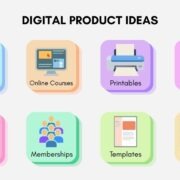
Common options include courses, e-books, templates, memberships, software, digital planners, design assets, research products and downloadable toolkits.
Do bonuses increase conversions?
They can, but bonuses should remove obstacles or complement the primary product. More content doesn’t automatically create more value.
Should digital products use discounts?
Discounts can support legitimate promotions, but constantly discounting a product can weaken its positioning. Improving the offer’s relevance and perceived value can be more sustainable.
What’s a good landing-page conversion rate?
There is no universal target because performance varies by industry, price, traffic source and visitor intent. Shopify cites a 6.6% median landing-page conversion rate across industries in its 2026 guidance.
Source: boldare.com







Comments