
 By
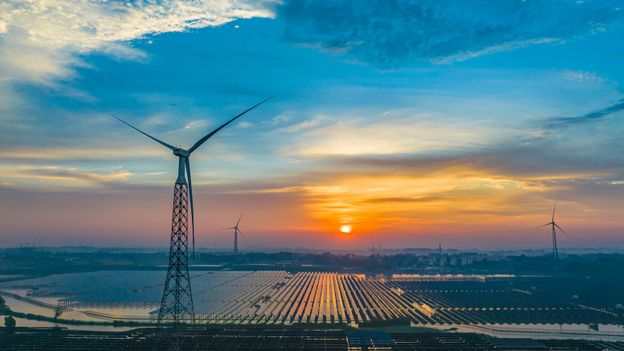
The demand for Rare Earth Elements (REEs) is skyrocketing in clean energy due to their critical role in powerful permanent magnets for wind turbine generators and electric vehicle (EV) motors, as well as in batteries and solar panels, enabling the shift from fossil fuels to sustainable power; REEs provide unique magnetic and electrochemical properties essential for high-performance, efficient, and compact green technologies, driving a massive surge in demand that the International Energy Agency (IEA) predicts could quadruple by 2040.
Why REEs are Indispensable:
- Exceptional Magnetic Properties: REEs like Neodymium (Nd) and Dysprosium (Dy) create the super-strong permanent magnets needed for efficient EV motors and large offshore wind turbines, making them smaller, lighter, and more powerful.
- Energy Storage & Conversion: They are vital in batteries for EVs and grid storage, and in the phosphors for energy-efficient LED lighting.
- Catalysts & Other Uses: REEs also serve in catalysts and other high-tech components for clean energy systems.
How Each Technology Drives Demand:
- Electric Vehicles (EVs): Motors in EVs rely heavily on REE permanent magnets, making EVs the largest consumer of REEs alongside batteries, displacing consumer electronics.
- Wind Turbines: Direct-drive wind turbines, especially offshore models, use massive NdFeB (Neodymium-Iron-Boron) magnets for efficient power generation, requiring significant amounts of Nd and Dy.
- Solar Panels (PV): While less direct than motors, REEs are used in various components within solar energy systems, contributing to overall demand.
Market Impact:
- Massive Demand Growth: The clean energy sector is rapidly becoming the dominant driver for critical minerals, with REE demand expected to increase exponentially to meet climate goals.
- Supply Chain Concerns: REEs are geographically concentrated, primarily in China, creating geopolitical risks, supply chain volatility, and a global race to secure new sources and processing capabilities.
In essence, the clean energy transition’s success hinges on securing a stable supply of these unique elements, making them a strategic resource for the future.
These elements are found in modern technology ranging from cell phones and televisions to LED light bulk and wind turbines. Unfortunately, there is no known equal substitute for REEs at this time.
REEs are crucial in various high-tech applications:
– Neodymium is used to create powerful magnets essential for wind turbines and electric vehicles.
– Europium and terbium are used in phosphorescent applications, such as in LED lights and screens.
– Lanthanum is used in catalytic converters in cars to reduce emissions.
As our technology needs increase, so does the demand for rare elements. This has resulted in a significant global shortage, which is currently hindering the growth of renewable technology. The annual demand for REEs has doubled over the past 15 years and is expected to grow significantly by 2030. The uptake of green technologies, such as electric vehicles and renewable energy systems drives this surge in demand.
What Are Rare Earth Elements?
The fifteen lanthanides on the periodic table, together with scandium and yttrium, which share similar characteristics and are frequently found in ores and deposits, make up the group of seventeen metallic elements known as rare earth elements (REEs). Based on their atomic weights, these elements are separated into two groups:
– Light Rare Earth Elements (LREEs): These include lanthanum, cerium, praseodymium, neodymium, samarium, and europium.
– Heavy Rare Earth Elements (HREEs): These include gadolinium, terbium, dysprosium, holmium, erbium, thulium, ytterbium, lutetium, scandium, and yttrium.
Abundance and Distribution
While most of these elements are not rare in terms of their abundance in the earth’s crust, they are rarely found in economically viable concentrations. This means that although they are relatively plentiful, they are often dispersed and not concentrated enough to be mined profitably.
Production and Supply
The global production of REEs is dominated by China, which accounts for about 70% of the world’s supply. This concentration of supply poses risks to global supply chains, especially given geopolitical tensions and export restrictions. Efforts are being made to diversify sources, including recycling and extracting REEs from unconventional sources like coal ash.
Recent studies have shown that coal ash, a byproduct of coal combustion, contains significant quantities of REEs. For example, research led by the University of Texas at Austin found that the national coal ash supply in the United States could significantly bolster the national supply of REEs without any new mining. This discovery highlights the potential for “trash to treasure” approaches in addressing REE shortages.
Rare earth elements (REEs) are key components in many electronic devices that we use in our daily lives and various industrial applications. These elements are crucial for the functionality and efficiency of numerous high-tech products, including:
- Smartphones: REEs like neodymium are used in the tiny, powerful magnets found in speakers and vibration units.
- Digital Cameras: Lanthanum is used in camera lenses to improve clarity and reduce distortion.
- Computer Hard Disks: Neodymium magnets are essential for the read/write heads in hard drives.
- Fluorescent and LED Lights: Europium and terbium are used in phosphors that produce bright, energy-efficient lighting.
- Flat-Screen Televisions and Monitors: Yttrium, europium, and terbium are used in the production of vivid colours on screens.
Applications in Clean Energy and Defense Technologies
In addition to consumer electronics, large quantities of some REEs are also found in clean energy and defence technologies. For example:
- Neodymium: This silvery metal is very important in renewable energy. When combined with iron and boron, it makes powerful magnets that are crucial for developing wind generators and electric vehicles.
- Dysprosium: Used in conjunction with neodymium to create magnets that can withstand high temperatures, essential for electric vehicle motors and wind turbines.
- Lanthanum: Used in the production of nickel-metal hydride batteries, which are commonly used in hybrid vehicles.
- Copper: Found in anything with an on-off switch, copper’s incredible ability to conduct electricity makes it indispensable in electronic devices.
- Lithium: Crucial for all rechargeable batteries, lithium is needed for building massive renewable energy infrastructure for storage capacity.
Rare earth elements are vital for many green technologies, which are essential for reducing carbon emissions and combating climate change:
- Electric Vehicles (EVs): REEs like neodymium and dysprosium are used in the motors of EVs, making them more efficient and powerful.
- Wind Turbines: Neodymium-iron-boron (NdFeB) magnets are used in the generators of wind turbines, which convert wind energy into electricity.
- Solar Panels: REEs are used in various components of solar panels to improve their efficiency and durability.
What Is The Demand For Rare Earth Elements?
According to the International Energy Agency (IEA), the demand for rare earth elements (REEs) has doubled over the last 15 years. This increase is mostly caused by the adoption of green technologies like renewable energy systems and electric cars. According to the IEA, demand may rise to over 280,000 tons by 2030 because to the increasing use of REE-dependent technologies including wind turbines, electric cars, and different electronic gadgets.
Read Also: Eco-Tourism: How to Travel Responsibly
With the expansion of NdPr oxide in Neodymium Iron Boron (NdFeB) magnets used in EVs, China is expected to maintain its dominance of global markets by fortifying its supply chain and expanding the use of REEs in e-mobility.
The market for NdFeB magnets is anticipated to expand dramatically, mostly due to the electric car industry. From 2024 to 2034, the market is expected to develop at a compound annual growth rate (CAGR) of 7.9%. The demand for NdFeB magnets is rising due to the growing number of electric cars and the infrastructure needed for charging them. For instance, NdFeB magnets are used in Tesla’s electric vehicle motors, which enhance the vehicles’ excellent performance and efficiency.
The market for rare earth elements is projected to rise at a compound annual growth rate (CAGR) of 4.19% from its anticipated 175.03 kilotonnes in 2024 to 214.89 kilotonnes by 2029. This growth is driven by the high demand from emerging economies and the dependency of green technology on REEs.
Are Rare Earth Elements Sustainable?
How can we recycle products that contain REEs to make this a more sustainable process given the demand for REEs?
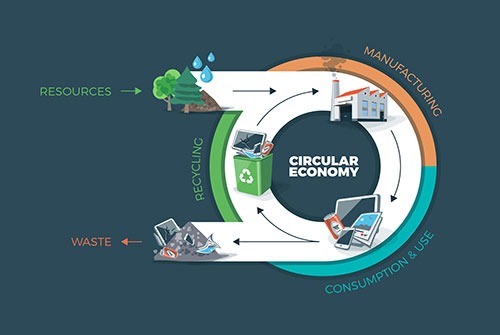
Recycling is still the most sustainable way to lower primary demand, as hundreds of thousands of tons of REE-containing items are generated annually. Recycling lessens the environmental impact of mining and processing new REEs in addition to aiding in the conservation of these vital resources.
Opportunities in Battery Recycling
The demand for battery metals, such as cobalt, lithium, nickel, and manganese, can be significantly decreased by recycling metals from batteries that have reached the end of their useful lives. Lithium-ion battery recycling, for example, can recover precious ingredients needed to make new batteries. This procedure reduces the environmental risks associated with battery disposal while simultaneously conserving resources.
Reusing and recycling current rare-earth magnets is a perfect way to lower the demand for REEs in the electric vehicle (EV) and wind power industries. Because their magnets are quite large and easily recoverable, retired wind turbines and EV motors are great sources for reclaimed REEs. Large magnets can occasionally be directly reused without going through the recycling process.
Many EV and battery manufacturers have been proactive in establishing recycling initiatives and improving the efficiency of battery technologies. For example, companies like Tesla and BMW are investing in closed-loop recycling systems to recover REEs and other critical materials from used batteries. These initiatives are crucial for creating a sustainable supply chain and reducing reliance on new mining.
Enhancing Efficiency in Solar PV
Improving the efficiency of materials used in solar photovoltaic (PV) systems can also reduce the primary demand for REEs. The solar industry has already made significant strides in minimising the demand for materials, improving performance, and reducing costs. However, further engagement in recycling is needed to avoid future waste streams and recover more REEs from the process.
Current Recycling Processes and Future Prospects
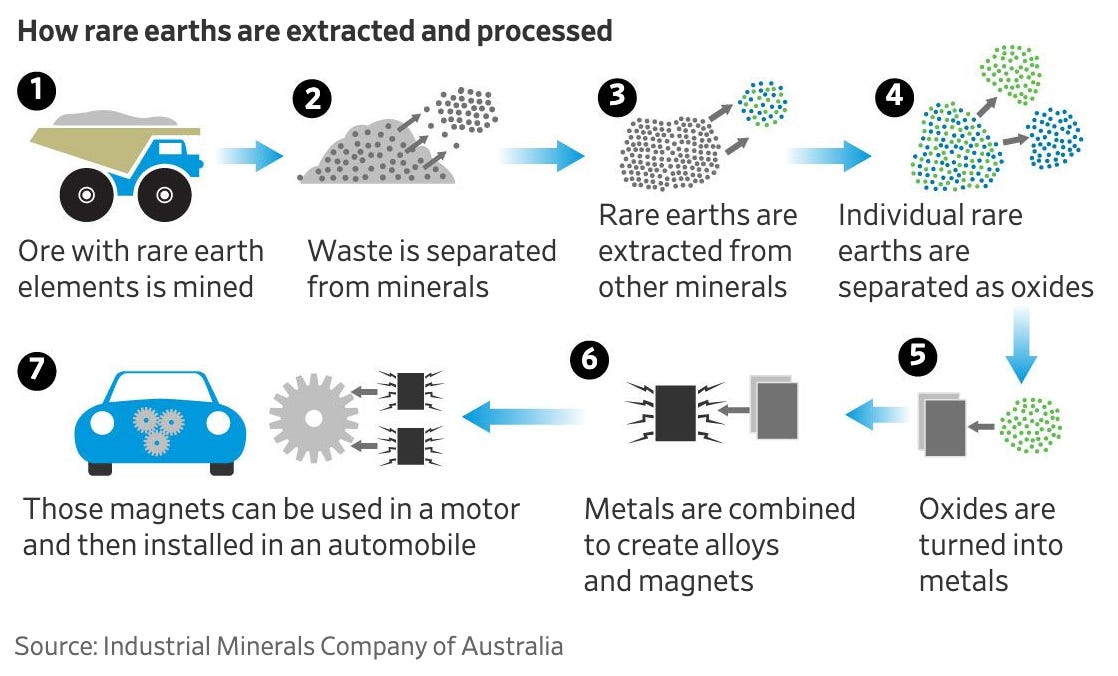
Currently, recycling REEs remains a lengthy process that involves demagnetisation, crushing, and roasting, followed by a leaching process and a separation method before a final roasting to produce a mixed rare earth oxide. This process is resource-intensive and requires significant energy input.
Innovative recycling techniques are being developed to make the process more efficient and sustainable. For example, researchers are exploring bioleaching methods that use bacteria to extract REEs from waste products. This approach is more environmentally friendly and could significantly reduce the cost and complexity of recycling REEs.
As our understanding of REEs increases, we hope to streamline the recycling process to make it more efficient and sustainable in the long term. By investing in recycling technologies and improving material efficiency, we can reduce the primary demand for REEs and support the growth of green technologies.
Summary
Rare-earth elements (REEs) are fundamental to the 2026 clean-energy market because they enable high efficiency, lightweight designs, and maximum performance in renewable technologies. Global demand for these minerals is projected to rise by more than 50% by 2026 for use in electric vehicles and wind turbines alone.
Why Clean-Energy Technologies Drive Demand
- Electric Vehicles (EVs): High-performance permanent magnets, typically made of neodymium (Nd) and dysprosium (Dy), are essential for efficient EV motors. Over 90% of current EVs utilize these magnets because they deliver higher torque and energy density in a compact size, directly extending the vehicle’s driving range.
- Wind Power: Large-scale offshore and direct-drive wind turbines rely on powerful neodymium-iron-boron (NdFeB) magnets to generate electricity without heavy gearboxes. This reduces maintenance and allows for electricity generation even at low wind speeds. By 2026, major manufacturers like Siemens Gamesa have already secured hundreds of tons of rare earths to meet turbine production needs.
- Solar Energy: While solar panels use fewer REEs than turbines or EVs, elements like lanthanum, yttrium, and zirconium are increasingly utilized in specialized solar tracking systems and high-efficiency photovoltaic cells to improve energy conversion and durability.
Strategic & Market Dynamics in 2026
- Mineral Intensity: Clean-energy technologies are significantly more mineral-intensive than traditional systems; an average EV requires six times more minerals than a conventional car, while onshore wind turbines demand up to nine times more resources than gas-fired power plants.
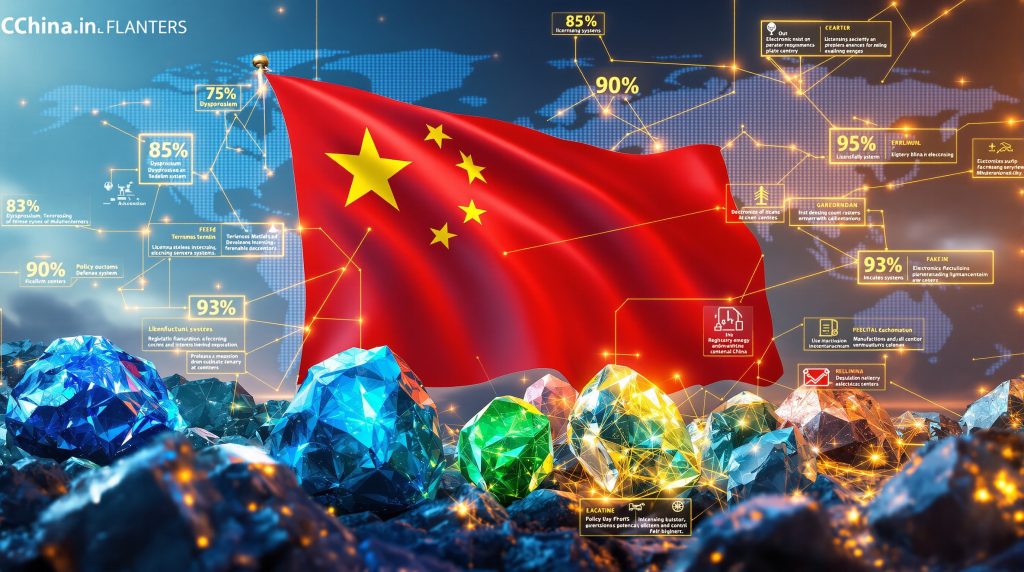
- Supply Security: China currently controls approximately 60% of global REE production and 85% of refining capacity, making supply chain security a strategic priority for governments in 2026.
- Sustainability & Recycling: Rising demand is spurring a shift toward “green finance” and circular economy initiatives. In 2026, companies like Tesla and BMW are actively investing in closed-loop recycling systems to recover rare earths from used magnets and batteries, reducing the need for new mining.




Comments