
 By
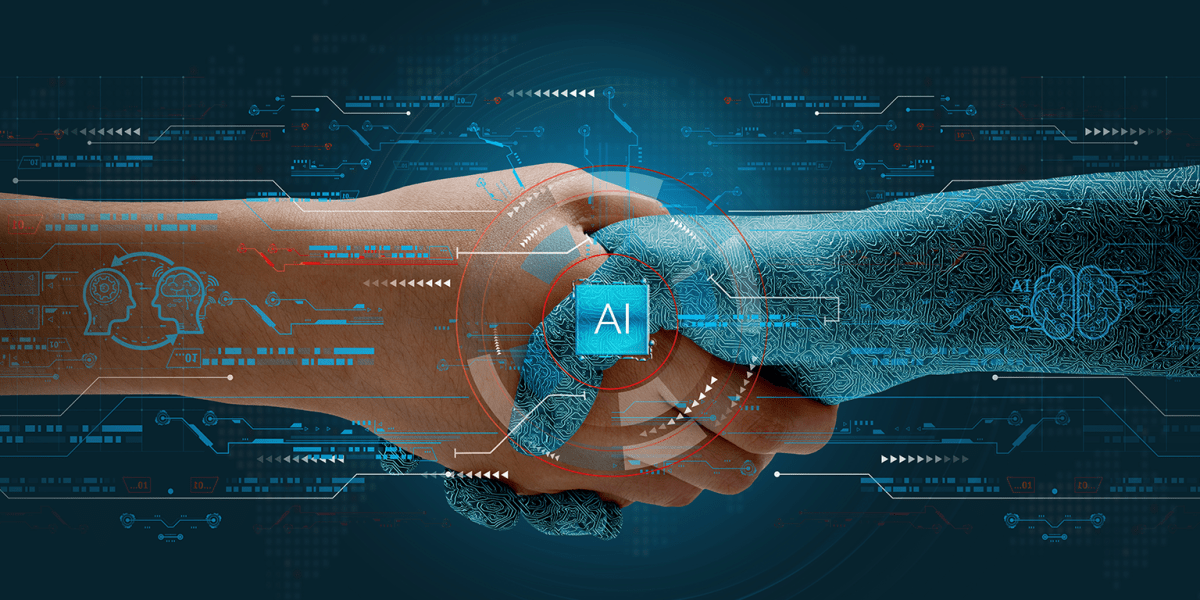
The main ways that artificial intelligence (AI) promotes economic growth are through increased productivity, faster innovation, and better decision-making in a variety of industries. However, there are also major obstacles to its adoption, such as the possibility of job displacement and the expansion of inequality, which call for strong governmental solutions to guarantee equitable and sustainable growth.
Key Mechanisms of Economic Growth
AI acts as a general-purpose technology (GPT), much like electricity or the internet, with far-reaching applications and the ability to foster complementary innovations. Its primary contributions include:
- Productivity and Efficiency Gains: AI automates repetitive and data-intensive tasks, allowing human capital to focus on more complex, creative, and strategic work. This has led to substantial cost reductions and efficiency improvements in industries such as manufacturing, logistics, and customer service.
- Fostering Innovation: AI accelerates research and development (R&D) in knowledge-intensive fields like drug discovery and materials science by analyzing vast datasets and identifying patterns beyond human capabilities. This speeds up innovation cycles and enables the creation of new products, services, and business models.
- Enhanced Decision-Making: By leveraging advanced data analytics, AI provides deeper insights and more accurate forecasts for businesses and governments. This leads to better resource allocation, improved risk management, and more informed strategic planning across all levels of the economy.
Sector-Specific Impacts
AI is integrated across a diverse range of sectors, transforming traditional activities:
- Finance: AI is used for risk assessment, fraud detection, algorithmic trading, and personalized financial services (robo-advisors), enhancing efficiency and security.
- Healthcare: Applications range from precision medicine and AI-powered diagnostics to telemedicine platforms, improving patient outcomes and reducing costs.
- Manufacturing: The integration of AI into “Industry 4.0” enables smart factories with predictive maintenance, optimized supply chains, and automated quality control, leading to higher output and reduced waste.
- Agriculture: In developing nations, AI tools can boost agricultural productivity through precision farming, providing real-time information on weather and soil health.
Challenges and Policy Implications
While the potential benefits are significant (some estimates project a 7% boost to global GDP over a decade), challenges must be addressed to ensure inclusive growth:
- Labor Market Transformation: Automation can displace workers in routine-based jobs, necessitating large-scale reskilling and education programs to bridge the emerging skills gap. Policymakers need to facilitate the creation of new, human-centric job opportunities where creativity and critical thinking are valued.
- Inequality and the Digital Divide: Wealthier nations and larger corporations are better positioned to invest in AI infrastructure and talent, potentially widening the gap with developing economies and smaller businesses.
- Ethical and Regulatory Concerns: Issues regarding data privacy, algorithmic bias, and accountability require robust regulatory frameworks to foster public trust and ensure responsible AI use.
By proactively investing in digital infrastructure, human capital development, and sound governance, nations can harness AI as a powerful catalyst for sustained and inclusive economic prosperity.
By 2030, AI is expected to add a stunning $15.7 trillion to global GDP, with $6.6 trillion from enhanced productivity and $9.1 trillion from consumption effects.
Artificial intelligence (AI) has quickly emerged as a revolutionary force, not just in technology breakthroughs but also as a vital driver of economic growth across multiple sectors around the world. Its numerous applications have had a huge impact on sectors, encouraging innovation, efficiency, and productivity in previously imagined ways.
Revolutionizing Industries:
- Manufacturing and Automation:
AI-driven automation has revolutionized manufacturing, optimizing processes, reducing downtime, and enhancing precision. Predictive maintenance, powered by AI algorithms analyzing vast datasets, minimizes equipment failure, ensuring uninterrupted production lines and cost savings.
- Healthcare Innovations:
AI-driven diagnostics and personalized medicine have redefined healthcare. From early disease detection through image analysis to treatment recommendations based on patient data, AI has elevated the accuracy and efficiency of medical care, improving patient outcomes and reducing healthcare costs.
- Financial Services and Decision-Making:
In the financial sector, AI algorithms analyze market trends, predict risks, and automate trading, optimizing investment decisions. Chatbots and virtual assistants in banking have improved customer service while reducing operational costs.
Driving Productivity and Efficiency:
- Enhanced Decision-Making:
AI-enabled analytics process vast amounts of data, providing businesses with valuable insights for informed decision-making. This data-driven approach helps companies streamline operations, target audiences better, and adapt to market demands swiftly.
- Efficient Resource Allocation:
Through machine learning algorithms, AI optimizes resource allocation by identifying patterns and trends. This results in reduced waste and improved resource utilization, benefiting both businesses and the environment.
Read Also: AI Startups to Watch in 2026
Fostering Innovation and Entrepreneurship:
- Facilitating Research and Development:
AI expedites research and development across industries. Its ability to process and analyze data accelerates innovation cycles, leading to the creation of new products, services, and solutions.
- Enabling Start-ups and Small Businesses:
AI tools and platforms have lowered entry barriers for start-ups and small businesses. Access to AI-powered services for marketing, customer engagement, and operational efficiency has leveled the playing field, allowing smaller entities to compete effectively.
Evolution of AI:
- Advancements in Machine Learning:
The evolution of machine learning algorithms and neural networks continually expands AI capabilities. From image and speech recognition to natural language processing, these advancements widen AI’s applications, fueling its integration into various sectors.
- Edge Computing and AI:
The convergence of edge computing and AI enables real-time data analysis and decision-making at the point of action, revolutionizing industries like IoT, manufacturing, and autonomous vehicles. This fusion enhances efficiency and responsiveness, further boosting economic growth.
Global Impact and Collaboration:
- International Collaboration and Competition:
Countries worldwide are investing heavily in AI research and development, recognizing its potential to drive economic growth. Collaborations between governments, academia, and the private sector are fostering innovation and competitiveness on a global scale.
- Addressing Societal Challenges:
AI’s role extends beyond economic growth to addressing societal challenges like healthcare accessibility, climate change, and resource management. AI-powered solutions are pivotal in devising sustainable strategies to tackle these issues, thereby contributing to long-term economic stability.
Challenges and Opportunities:
While the potential for economic growth through AI is immense, certain challenges need addressing. These include ethical considerations, data privacy concerns, and the need for upskilling the workforce to adapt to AI-driven environments.
Conclusion:
Artificial Intelligence stands as a catalyst for economic growth, transforming industries, amplifying productivity, and fostering innovation. Embracing AI technologies while addressing associated challenges can pave the way for sustained economic advancement, reshaping the global economic landscape in the years to come.
The trajectory of AI’s impact on economic growth is on an upward curve, poised to redefine industries, enhance productivity, and address societal challenges. Embracing AI’s potential while navigating ethical considerations and ensuring inclusive growth will be pivotal in maximizing its benefits for economies worldwide.
As AI continues to advance, its responsible integration into various sectors holds the key to unlocking unprecedented economic growth, ushering in an era of innovation, efficiency, and sustainable development.
How Artificial Intelligence Can Contribute to Economic Growth in Africa
There are already a number of applications of Artificial Intelligence in Africa, especially towards health, water supply, clean energy forecasting, climate change predictions, economics and finance, as well as governance.
1. The adoption of AI and related technologies in Africa could have the potential to significantly impact the achievement of the United Nations Sustainable Development Goals (SDGs). By driving economic growth, improving access to quality education and healthcare, and promoting sustainable agriculture, AI can play a crucial role in addressing some of the continent’s most pressing challenges.
2. As Artificial Intelligence can be pivotal in improving global health and wellbeing, it can also be used to forecast water demand to enable water supply entities to provide adequate supply of clean and safe water to meet consumer needs. This is essential to ensuring human rights to water and sanitation, and SDG 6. AI enables the monitoring of water quality to detect contaminants, pollutants, and alterations in water quality. Early detection may be beneficial in the prevention of waterborne diseases and the protection of water supplies.
3. Accelerating clean energy adoption requires accurate modelling of renewable energy supply to meet rising demand. Studies have used Artificial Intelligence to forecast wind speed for energy harvested using windmills to ensure accurate measurements of wind power supply. This forecasting will go a long way in managing renewable resources and ensuring steady and affordable clean energy supply towards achieving SDGs 7 and 13.
4. Climate science can also make use of AI to support weather predictions. This can be useful for predicting water levels and the risk of flooding or, conversely, the risk of drought and desertification. Detecting flooding and drought is particularly important for agricultural planning. Accurate predictions can support adaptation measures and help government officials and policymakers to plan and prepare in order to minimise the negative impacts. AI has the potential to facilitate the creation of climate models that simulate the complex interactions that can impact climate change in Africa.
5. AI has redefined aspects of economics and finance, enabling complete information, reduced margins of error and better market outcome predictions. In economics, price is often set based on aggregate demand and supply. However, AI systems can enable specific individual prices based on different price elasticities. This reduces market information asymmetries and supports market competition for better price equilibrium outcomes and better choices to support economic growth and SDG 8.
6. Governments require accurate predictions to plan ahead and make good governance choices. An area that has benefitted from the use of AI, is in predictions of the outbreak of war and conflict based on risk and other variables. This intelligence can result in measures to prevent conflict or minimise the spread and damage caused.
7. In our globalised and ever-digitalising world, Artificial Intelligence is relevant and utilised under several aspects of international relations, such as trade, international finance, technological transfer, human rights, as well as power and international politics.
8. Despite its vast potential, the adoption and implementation of Artificial Intelligence (AI) in Africa faces several challenges, including a lack of relevant technical skills, inadequate basic and digital infrastructure, insufficient investment in research and development, and a need for more flexible and dynamic regulatory systems.
9. There is a fear that the growth of AI and automation will lead to a displacement of jobs as it continues to impact the future of work. However, there is a general consensus that it is impossible to reverse this trend. Instead, we need to adopt them [AI technologies] into production value chains to increase productivity and strengthen production. We need to capacitate ourselves to be able to play this role.
10. Artificial intelligence presents a unique opportunity for Africa to leapfrog into the Fourth Industrial Revolution and drive large-scale transformation. To fully harness the potential of Artificial Intelligence, Africa must address the challenges above. It is important to incentivise the adoption of technologies in Africa to ensure the continent participates in the Fourth Industrial Revolution. At the same time, these technologies must be understood, including their drawbacks.










Comments