
 By
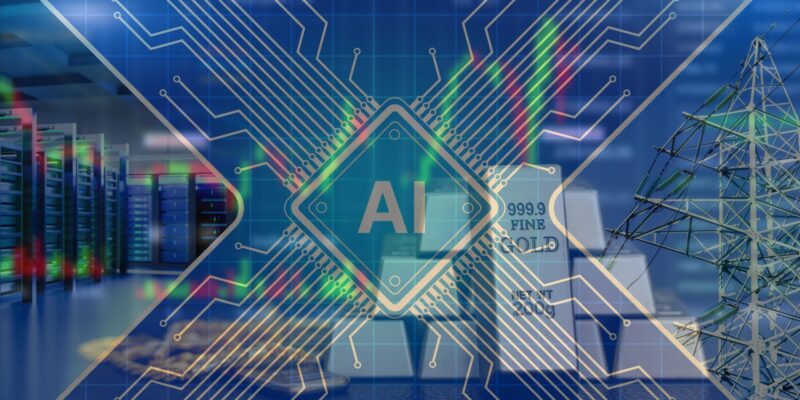
AI infrastructure is the new digital gold rush because software applications compete for volatile consumer markets, while the underlying physical compute, power grids, and specialized data centers get paid every time a model runs. Like the historic rush where the most reliable fortunes went to the merchants selling shovels, today’s greatest compounding value sits at the foundational layer of hardware and energy.
The “Shovel Sellers” Win
- Guaranteed Revenue: Software startups rise and fall, but every single AI query, training run, and agentic task requires underlying compute that must pay for usage.
- The Hardware Monopoly: Scarcity of specialized processing units and components gives hardware makers and cloud providers immense pricing power.
- Ecosystem Lock-in: Developers and enterprises build their workflows around specific foundational compute frameworks, making it hard to switch once integrated.
The Physical Bottlenecks
- Giga-Scale Power Needs: Modern AI facilities consume immense amounts of electricity, turning energy grids and power generation into strategic assets.
- Specialized Real Estate: Traditional server rooms fail under high-density AI workloads, requiring purpose-built campuses with advanced liquid cooling and high-speed networking.
- Capital Intensity: Building frontier clusters costs tens of billions of dollars, restricting the playing field to well-funded hyperscalers and institutional investors.
Global spending on artificial intelligence infrastructure is expanding rapidly, with market sizes projected to exceed $900 billion by 2029 and major technology firms scaling capital investments in chips, specialized servers, and next-generation data center capacity.
Market Size and Spending Growth
- Market Projections: The global AI infrastructure market is valued between $75 billion and $101 billion, with forecasts expecting growth up to nearly $500 billion to $810 billion by the early 2030s.
- Global Spending Forecast: Worldwide spending on AI infrastructure is on pace to surge past $900 billion by 2029.
- Hardware Dominance: Hardware components (such as GPUs, specialized accelerators, and high-performance compute systems) account for roughly 54% of total market revenue.
- Cloud vs. On-Premises: Cloud and shared environments represent roughly 84% of total deployments as organizations lean on external compute capacity for heavy AI workloads.
Why AI Infrastructure Matters
Every AI application depends on several critical components:
- High-performance semiconductors
- Graphics Processing Units (GPUs)
- Data centers
- Cloud computing platforms
- Networking infrastructure
- Data storage systems
- Energy infrastructure
- Without these foundational elements, advanced AI systems simply cannot function.
- As AI adoption accelerates globally, demand for these resources is increasing at an unprecedented pace.
- Organizations are investing billions of dollars to expand computing capacity and support next-generation AI workloads.
This is transforming AI infrastructure into one of the fastest-growing segments of the technology industry.
The Semiconductor Opportunity
At the heart of AI infrastructure are semiconductor chips. Modern AI models require enormous processing capabilities, making advanced chips essential for training and deployment.
Demand is rising for:
- AI accelerators
- GPUs
- Specialized AI processors
- Memory chips
- Networking chips
- As AI models become larger and more complex, semiconductor manufacturers are experiencing significant growth opportunities.
- Beyond chip manufacturers themselves, suppliers of semiconductor equipment, materials, and fabrication technologies are also benefiting from this trend.
This creates a broad ecosystem of investment opportunities across the semiconductor value chain.
Data Centers: The Digital Factories of the AI Age
Data centers have become the backbone of the modern digital economy. AI applications require vast computing resources and storage capacity.
As a result, companies worldwide are building larger and more sophisticated data centers to meet growing demand.
These facilities house:
- Servers
- Networking equipment
- Storage systems
- Cooling technologies
- Power infrastructure
- The rise of generative AI has significantly increased data center requirements.
- Many industry experts believe AI-driven demand could trigger a multi-year investment cycle in data center construction and expansion.
For investors, businesses supporting data center growth may benefit from long-term structural demand.
Cloud Computing: Powering AI at Scale
Cloud platforms play a critical role in AI adoption. Many organizations lack the resources to build their own AI infrastructure. Instead, they rely on cloud providers to access computing power on demand.
Cloud computing offers:
- Scalability
- Flexibility
- Cost efficiency
- Global accessibility
- As AI workloads increase, cloud infrastructure spending is expected to grow substantially.
The integration of AI services into cloud platforms is creating new revenue opportunities and strengthening the importance of cloud ecosystems.
India’s AI Infrastructure Opportunity
India is emerging as an important player in the global AI ecosystem.
Several factors support this opportunity:
- Growing digital economy
- Strong technology talent pool
- Expanding data center capacity
- Government support for digital infrastructure
- Rising enterprise AI adoption
India’s focus on digital transformation is creating demand for:
- Data centers
- Cloud services
- Semiconductor manufacturing
- AI-enabled infrastructure
The country’s large internet user base and rapidly growing technology sector position it well to participate in the global AI infrastructure boom.
Read Also: How Cloud Computing Powers Artificial Intelligence
The Energy Challenge
One often overlooked aspect of AI infrastructure is energy. AI models consume enormous amounts of electricity. As AI adoption increases, energy demand from data centers is expected to rise significantly.
This creates opportunities in:
- Renewable energy
- Power generation
- Energy storage
- Grid modernization
- Cooling technologies
- The future AI economy will require both computing power and energy infrastructure to operate efficiently.
Companies solving these challenges may become critical contributors to the AI ecosystem.
Networking & Connectivity
AI systems rely on fast and reliable data transmission. This has increased demand for:
- Fiber-optic networks
- High-speed connectivity
- Advanced networking equipment
- Edge computing infrastructure
- As AI becomes more integrated into everyday operations, network performance becomes increasingly important.
Businesses providing digital connectivity solutions may benefit from long-term growth trends driven by AI adoption.
Why Investors Are Paying Attention
Historically, infrastructure providers often benefit regardless of which individual applications or companies ultimately succeed.
During the internet boom:
- Telecom providers
- Network equipment companies
- Data infrastructure businesses captured significant value.
- Similarly, in the AI era, infrastructure providers may benefit from broad industry adoption.
- Investors increasingly view AI infrastructure as a way to participate in AI growth without relying solely on individual software applications.
This approach can offer exposure to long-term structural trends.
Risks and Challenges
Despite strong growth potential, investors should also recognize the challenges.
- High Capital Requirements: Infrastructure projects often require significant investment.
- Technological Change: Rapid innovation can make existing technologies obsolete.
- Regulatory Issues: Data privacy, security, and AI governance continue evolving.
- Competition: As opportunities grow, competition may intensify across the ecosystem.
- Valuation Concerns: Popular AI-related investments may experience periods of overvaluation.
Careful analysis remains essential.
The Next Decade of Opportunity
The AI revolution is still in its early stages. As adoption expands across industries, demand for supporting infrastructure is likely to increase dramatically.
Future growth areas may include:
- Advanced semiconductors
- AI-ready data centers
- Cloud infrastructure
- Renewable energy integration
- Edge computing
- Quantum computing support systems
- AI networking solutions
The businesses enabling these developments could become key beneficiaries of one of the most significant technological transformations in modern history.
Final Thoughts
- While much of the excitement around artificial intelligence focuses on applications and software, the real foundation of the AI revolution lies in the infrastructure that powers it. Semiconductors, data centers, cloud platforms, networking systems, and energy infrastructure are becoming the essential building blocks of the emerging AI economy.
- As governments, corporations, and technology leaders invest billions into expanding AI capabilities, the demand for supporting infrastructure is expected to grow exponentially. For investors, this represents an opportunity to participate in a long-term structural trend that extends far beyond individual AI products or applications.
- Just as roads enabled commerce and the internet enabled the digital economy, AI infrastructure is set to become the backbone of the next technological era. The race to build this foundation has already begun, and those positioned within this ecosystem may help shape — and benefit from — the future of global innovation.
FAQ
Is AI a goldrush?
Yes, artificial intelligence is widely described as the new gold rush. It features massive capital inflows, a rush for raw resources like data and chip infrastructure, a scramble for specialized human talent, and a widespread “fear of missing out” among both major corporations and individual speculators.
Why does AI need infrastructure?
AI infrastructure is the specialized hardware, software, and networking required to train and run machine learning models. It is necessary because traditional IT systems lack the parallel processing power, massive data throughput, and low latency needed for heavy AI workloads like large language models.
How is gold used for AI?
Gold is used in AI hardware as a physical conductor and connector in microchips, processors, memory modules, and servers. Its superior electrical conductivity and resistance to corrosion ensure fast, reliable data transmission and component longevity under the intense workloads required by artificial intelligence.
Who got the richest from the gold rush?
The people who got the richest during the California Gold Rush were not the miners, but the merchants and business owners who sold them supplies. They made steady profits by selling high-priced food, tools, and clothing.
Source: linkedin.com









Comments