
 By
Companies frequently require a talent infusion but aren’t ready to make a permanent hire. This is where staff augmentation fits in: a flexible outsourcing model that enables the scaling of teams quickly and easily while maintaining complete control over the project.
So let’s dive into what staff augmentation is, how it works, and why businesses of all sizes, from startups to enterprises, are looking to augment their development capacity.
What Is Staff Augmentation?
Staff augmentation is a hiring approach in which organizations engage external specialists to work with the in-house team for a time or project, of course. Rather than hiring out the entire project to a partner, you are extending your team with highly qualified experts who will fit right in.
Think of it as on-demand talent. You rent experienced team developers, designers, QA engineers or project managers from a partner company and they work as hard as your internal one, using your processes, tools, and communicating in the same culture.
A fintech startup building a mobile banking app, for example, may have a small core team in place but require additional mobile developers and UX designers to accelerate delivery. With staff augmentation, they can rapidly deploy vetted experts in weeks and onboard them within days, with no need to hire or train specialized employees.
How Does Staff Augmentation Work?
The process usually includes the following stages:
Defining your needs
First, you need to discover which skills and roles your team is lacking. For example, you’re in the market for a React Native developer to build an app or a DevOps engineer to manage cloud infrastructure. Knowing what you need technically and business-wise will allow the vendor to match you with the right specialists.
Selecting candidates
After defining your requirements, the staff augmentation firm will present you with profiles of the candidates matching them. You review resumes, interview candidates and hire the professionals that fit your culture and technical stack.
This is how you keep people comfortable and in control of adding them to your team.
Onboarding and integration
Once accepted, the new team members join your project. They get access to your tools (e.g., Jira or Slack, GitHub, Trello) and begin working alongside your in-house team members. They do what you tell them to, they work your way and they seem as if they were there all along.
Collaboration and management
It’s you who directly oversees the augmented staff, assigning both tasks and priorities, and due dates. The vendor takes care of the administrative side: contracts, payroll, HR and employee benefits, so you can concentrate on software development. This arrangement affords you the flexibility of freelancers with the reliability and commitment.
Scaling up or down
You can very conveniently change the team size as you see your project evolving. When a product goes into maintenance mode, you can cut headcount. If a new feature or product launch needs extra staff, you can re-scale.
You can very conveniently change the team size as your project evolves. When a product moves into maintenance, you can reduce the team, and when a new feature requires more capacity, you can scale again. This model gives you predictable control over talent without the overhead typical for outsourcing vs in house development decisions. It also helps teams deliver faster by adding exactly the skills they need at the right moment.
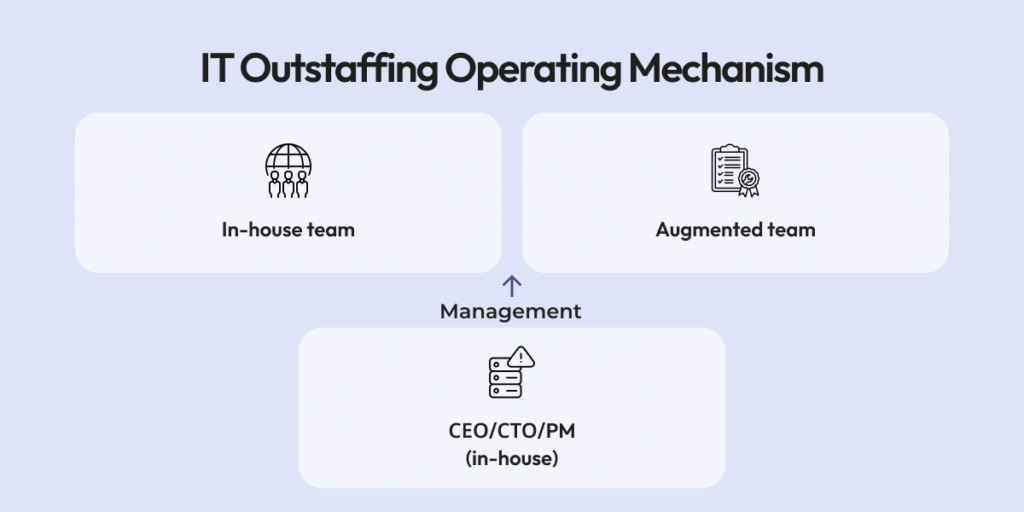
This setup keeps full management on your side, with your CTO or PM directing both the in-house and augmented team as one unified workflow.
Why Businesses Use Staff Augmentation
Companies opt for staff augmentation due to a number of reasons, but flexibility, cost saving and speed sit at the top.
Access to global talent
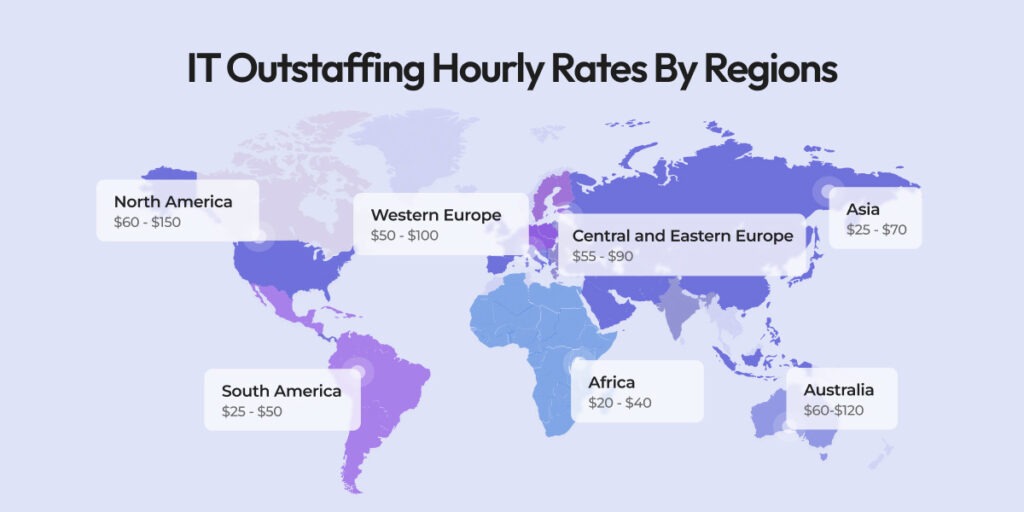
It can take months to hire talented local software engineers. The global talent remote staffing, allows you to feasibly reach the global talent market, whether it’s Central and Northern European developers, Latin American UX designers or Asian data scientists.
For instance, a state-side healthtech company could work with developers in Europe to gain access to niche AI skills for medical imaging software.
Faster hiring
The traditional recruitment process can range from 8–12 weeks. Staff augmentation cuts that down to a few days. The seller has a trusted pool of talent waiting to enter into projects right now. This allows you to react more quickly to market conditions and customer needs.
Cost-effective scaling
Hiring full-time employees has expenses: salaries, benefits, training and infrastructure. Those costs are eliminated in an augmented team model because the provider pays for them. You only pay for the hours, or months, you actually need.
A SaaS startup, as an example, can grow development resources at times when hiring is in high demand and then scale down later, meet product quality needs without paying out-of-control prices.
Knowledge retention and control
This allows you to maintain control, whilst benefiting from additional project staffing resources. You manage workflow, protect intellectual property, and keep knowledge within your company. This makes it perfect for long-life products where high-value quality and vision count.
Types of Staff Augmentation
You have a couple options for staff augmentation, depending on your requirements:
- Short-term increase: For short-term skills shortages or peak workforces.
- Permanent increase: Suitable for recurring projects that require long-term qualified external support.
- Skill-based boost: Aims to fill jobs; it could be specialized, say AI engineers or data analysts or cybersecurity pros.
For example, a logistics company adopting IoT tracking may add a few embedded system engineers in the long run to support devices and an e-commerce website provide hiring short term front end developers for revamping checkout experience.
How It Differs from Outsourcing
Under outsourcing, the service provider assumes responsibility for the project end-to-end, from design through to delivery. Yes, you get results but also less control. You work with external experts on your team about staff augmentation. You keep managing the project, and have total control and visibility.
Staff augmentation is the best idea for your company in case it already has a properly organized workflow and tech leadership.
Final Thoughts
Staff augmentation is not merely a hiring shortcut; it’s part of a holistic strategy for the creation of agile, scalable and top-performing teams. It allows businesses to scale rapidly, remain adaptable, create new products at a faster pace and avoid risks and costs associated with traditional hiring.
Whether you are a startup speeding up product maturity or an enterprise looking to add the necessary capabilities, staff augmentation will allow you dive into innovation as you countercheck recruitment and admin through your committed partners.










Comments