
 By
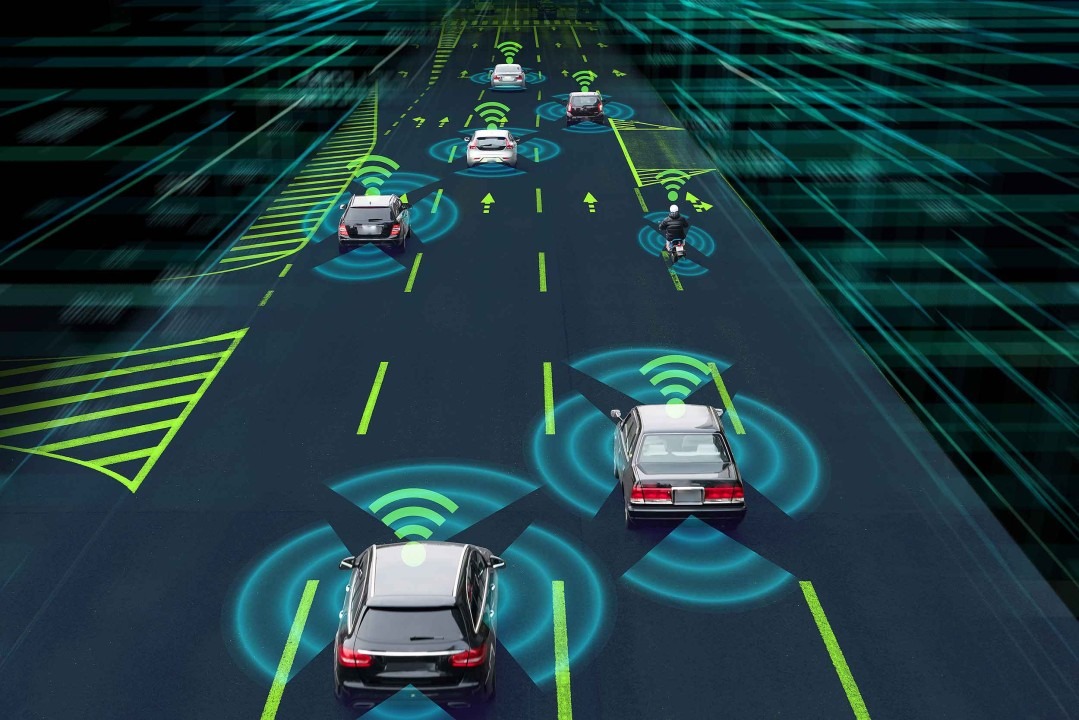
5G is crucial for autonomous vehicles (AVs) by providing ultra-low latency, high-speed data transmission, and massive IoT connectivity, enabling real-time Vehicle-to-Everything (V2X) communication. It facilitates instantaneous data exchange between vehicles, infrastructure, pedestrians, and clouds, enhancing safety, situational awareness, and cooperative driving while enabling cloud-based AI processing.
Key roles of 5G in connected autonomous vehicles include:
- V2X (Vehicle-to-Everything) Communication: 5G acts as the backbone for V2X, allowing vehicles to share data on speed, location, and potential hazards with other vehicles (V2V), infrastructure (V2I) like traffic lights, and pedestrians (V2P).
- Ultra-Low Latency (URLLC): 5G provides ~1-millisecond latency, which is critical for instantaneous decision-making in high-speed, dynamic driving scenarios, reducing accident risks.
- High Bandwidth & Data Processing: 5G supports massive data transmission, allowing AVs to process high-definition (HD) maps, sensor data, and camera feeds in real time for improved environmental perception.
- Edge Computing Integration: By enabling edge computing, 5G reduces the load on the vehicle’s onboard computer, allowing for faster, local, and decentralized decision-making.
- Increased Safety and Efficiency: 5G reduces traffic congestion, lowers fuel consumption, and improves traffic flow by enabling vehicles to coordinate movements, such as in platooning or passing through intersections without traffic lights.
- Reliability and Connectivity: 5G ensures a stable, highly reliable connection, which is crucial in dense urban canyons or complex traffic environments.
5G enables a shift from isolated, sensor-only autonomous vehicles to cooperative, connected, and safer intelligent transportation systems.
The transportation industry is undergoing a significant transformation as urban populations grow, traffic congestion worsens, and safety concerns rise, all while sustainability necessitates cleaner and more efficient transportation options. In this setting, autonomous driving has emerged as a disruptive innovation, with self-driving cars, trucks, and buses providing safer roads, improved traffic flow, and more convenience. These vehicles, however, rely on more than just superior sensors and artificial intelligence; they also require seamless, high-speed connectivity to work properly.
This is where 5G technology comes into play—its ultra-low latency, tremendous bandwidth, and ability to link huge numbers of devices make it the foundation of autonomous driving and the cornerstone of the smart transportation age.
Core Features of 5G
To understand the role of 5G in autonomous driving, it is important to explore its technical strengths:
- High Data Rates: 5G delivers gigabit-level speeds, enabling vehicles to process and share large volumes of data, such as high-definition maps or real-time video streams.
- Ultra-Low Latency: Response times as low as 1 millisecond make real-time decision-making possible, a critical factor for accident prevention.
- Massive Device Connectivity: 5G supports one million devices per square kilometer, allowing vehicles, roadside infrastructure, and sensors to connect seamlessly.
- Network Slicing: 5G networks can allocate dedicated bandwidth to mission-critical applications like autonomous driving, ensuring uninterrupted service even during network congestion.
These capabilities make 5G uniquely suited to meet the communication requirements of autonomous driving.
The Role of 5G in Autonomous Driving
Autonomous vehicles (AVs) are often described as “data centers on wheels.” Each car is equipped with cameras, lidar, radar, and onboard computers that generate terabytes of data daily. While local processing handles many tasks, seamless communication with other vehicles and infrastructure is equally essential.
Here is how 5G supports autonomous driving:
- Vehicle-to-Vehicle (V2V) Communication: Cars share information about speed, location, and hazards in real time, reducing accidents and improving traffic flow.
- Vehicle-to-Infrastructure (V2I) Communication: AVs receive updates from traffic lights, road sensors, and smart signs, allowing dynamic route adjustments.
- Remote Monitoring and Control: Fleet operators and safety authorities can monitor vehicles remotely and even intervene if necessary.
- High-Precision Maps and Positioning: 5G enables continuous updates to digital maps and integrates with GNSS/RTK positioning for centimeter-level accuracy.
In short, 5G ensures that autonomous vehicles not only “see” their environment but also “talk” to everything around them.
Applications of 5G in Connected Vehicle Ecosystems
1. Autonomous Driving
Current self-driving machines heavily rely on accurate real-time information as they are self-driven vehicles. 5G facilitates this by providing:
• Seamless V2V and V2I Communication: They can transmit other important data, including speed, location, and condition on the road in real-time.
• Edge Computing Integration: 5G allows automotive applications to transfer computationally intensive tasks to the edge servers localized in the 5G network lowering the number of onboard hardware components and increasing their processing speed.
2. Advanced Driver Assistance Systems (ADAS)
Cognitive driving aids like adaptive cruise control and lane keeping assist are the advantages of 5G. The low latency is useful for real-time response to various and constantly changing driving conditions, while the high bandwidth is useful for heavy processing of high-definition sensor data.
Read Also: The Evolution of Self-driving Cars: Past, Present, and Future
3. Enhanced Infotainment Systems
It is agreed that connected vehicle mainly targets passenger’s experience. With 5G, vehicles can offer:
• Buffer-Free Streaming: Occupants are able to stream full ultra-high-definition video content and play cloud-based games.
• Personalized Content: The use of real time analysis could present entertainment options that are most preferred by the passengers.
4. Traffic Management
Smart cities rely on connected vehicles for efficient traffic management. 5G enables:
• Real-Time Traffic Updates: Vehicles can be updated on real time traffic and the fastest route to take.
• Coordination with Smart Infrastructure: This means that traffic lights, sensors and other components of the traffic infrastructure can be variable with respect to the flow of traffic.
5. Predictive Maintenance
Connected vehicles generate vast amounts of diagnostic data. 5G ensures this data is transmitted quickly to predictive maintenance systems, which can:
• Identify Potential Failures: Identify problem areas as they occur before they grow ugly.
• Schedule Timely Repairs: Reduce downtime and cut all related costs to achieve the optimal results throughout the implementation of all business processes.
Challenges in Implementing 5G for Connected Vehicles
1. Infrastructure Development
The use of 5G is associated with the need for additional investments in Amount s such as towers, edge nodes and fibre lines. It may take some time for the development of nano technology to get adopted in the rural and less developed regions.
2. Cybersecurity Risks
With the improvement of the connectivity there is the increased exposure to the potential cyber threats. It is therefore of vital importance to secure car networks from hacking and data theft.
3. Regulatory and Standardization Issues
As for the V2X communication facilitated by 5G, there is a standard that is constant across the global. Lack of homogeneity can reduce compatibility and thus widespread implementation is hampered.
4. Cost Implications
Introducing 5G-compatible parts to automobiles and structures requires a lot of money in some cases, which may make their availability narrow among enterprise and buyers.
E. The Road Ahead: Future Implications of 5G in Automotive
a. Emergence of Smart Cities
The role of connected vehicles in smart city projects is impossible to overstate the importance of 5G. By integrating with urban planning systems, these vehicles can:
• Optimize Traffic Flow: Cut down traffic density and pollution.
• Enhance Public Transportation: Support real time monitoring and change in path.
b. Collaborative Mobility Models
The transport industry including ride-sharing, car-sharing services will be among the biggest beneficiaries of 5G. To enhance connectivity is to improve the availability of vehicles, cut back on the waiting time and correct pathways.
c. Cross-Industry Collaborations
The integration of 5G in connected vehicle ecosystems will spur automotive, telco and technology industry. These collaborations may bring innovation and also increase the size of the market.
d. Environmental Impact
When it comes to vehicle control and traffic flow optimization, 5G stands to help curb greenhouse gas emissions hence be part of the solution in the quest for world sustainability.
Bottomline
As a result, 5G is critical to supporting the rapid development of connected vehicle ecosystems. This article describes how 5G can transform driving by employing ultra-reliable low-latency communication to improve driving safety, automate the driving experience while increasing passenger comfort, and reorganize metropolitan traffic.
throughout this role, current opportunities and technical breakthroughs are paving the way for more efficiency and fewer frictions throughout the automotive value chain. Any firm and its stakeholders who decide to embrace this transition today will be well-positioned to dominate the future mobility era.








Comments