
 By

Finding a market need, coming up with a novel idea, creating a strong business plan and branding, sourcing premium materials, and collaborating with reputable manufacturers are all necessary steps in designing and launching a top-selling fashion product. Create powerful images and establish sales channels after that, concentrating on creating pre-launch hype to develop an audience prior to releasing your superior goods.
It has never been easier to launch your own fashion brand. It only takes a few minutes to set up an online store, and there are more resources available than ever before to get you going. Nevertheless, more people than ever are attempting to start clothing lines. How can you stand out from the competition and ensure that your brand is seen in a crowded market?
We’ve compiled this list of the top 7 things that will help you design and launch your fashion product.
1. Create your identity & choose a direction
While coming up with a name for your clothing line is crucial, many individuals overlook the next most crucial step, which is establishing your brand in a particular market. Knowing your target audience can help you stay focused and on course. It wouldn’t make sense to sell one shirt with a cat on it if your entire apparel line is dinosaur-themed.
Very regular clothing lines occasionally incorporate one or two unusual patterns just because the designers happen to enjoy a particular animal, bike, critter, etc. People must be able to identify your brand if you want them to become familiar with it.
Thus, maintain your reputation as a leader in your field while being consistent and displaying your talent in a classy manner.
Johnny Cupcakes is a terrific model to follow if you want to change things up a bit without losing your personality. To further cement brand familiarity, their name or logo appears on every shirt like the example below. For this range, they have managed to combine indicators that communicate to their core buying audience, yet taking a more whimsical approach than is typical for the brand. The key takeaway from this is to always keep your audience in mind.
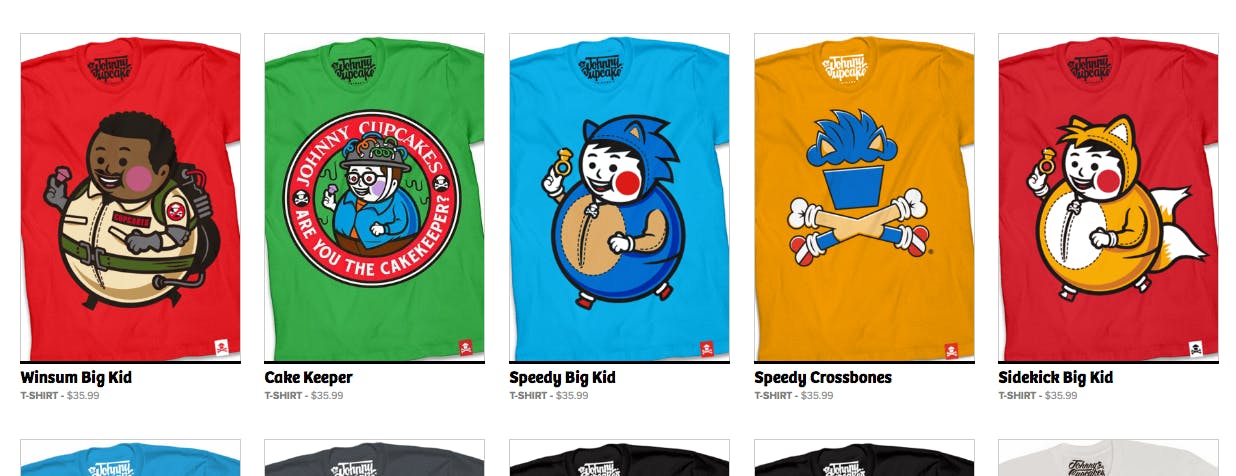
(Photo credit: http://johnnycupcakes.com/)
Ugmonk is yet another outstanding illustration of brand identification and consistency. Despite their individuality, their designs are all based on the principles of minimalism, simplicity, and crisp design. They are excellent at creating unique designs that are also clearly their own.
2. Know your audience
Knowing what you are designing for is the first step. Does it have a cause? Is it a sport? Is there a movement? Is it a pastime? Make it a long-term endeavor that you are enthusiastic about. The next step is to decide for whom you are designing.
Knowing who will purchase your goods is the best method to market it. “Who is my target market?” should be your first query if you’re unsure about the route you want to take with your design or product. A market for t-shirts from a fishing apparel company might have distinct preferences for fit and feel than a group of high fashion enthusiasts.
There are several factors to take into account, such as age range, gender, interests or pastimes, trends they are drawn to, how quickly they adopt new designs, if they are willing to spend a lot or little money, where they currently shop, etc. Custom t-shirts and other printed clothing are frequently purchased by people who are trying to express who they are by using your designs.
All of these are crucial issues to answer while developing and expanding your brand. Your clothing brand is not necessarily bound to that market just because you begin with it in mind. As your line grows and changes over time, this could alter. Therefore, find out what kind of shirt your audience could like by asking inquiries. They will always invest in you if you know and cater to the proper audience.
3. Choose the right shirt
People won’t wear your clothing if it’s not enjoyable. Therefore, you must choose something that will please both visually and tactilely.
There are a variety of styles, colors, weights, fabric blends, and even t-shirts with tear-away tags. If you’re new to the custom tee game, there are enough of options to make you feel overwhelmed!
You will have your own sales data to use once your line has been in circulation for a while. For example, if you sold five times as many heavyweights as lightweights the previous year, you can probably bet that heavyweight is the best category to invest in this year. However, you don’t have that information when you’re just starting out. How do you come to such decisions?
There are a few general guidelines that ought to simplify matters.
First and foremost, be sure you understand your spending plan so that you can maintain healthy profit margins and provide your customers with high-quality shirts!
Second, we advise against going overboard with style. Every crew cut, tank, long sleeve, and hoodie in the market doesn’t need your design! Before you put all your eggs in one basket, be sure your design works and pick no more than one or two designs.
Generally speaking, we discover that having more designs than styles is preferable. Having said that, remember the seasons. It’s probably not a good idea to introduce your new line of bespoke tanks during the winter.
4. Research, research, research
Do more, more, more research! Know your product instead than just selling it. You don’t want to undercut yourself by choosing a single style because you didn’t take the time or make the effort to consider other imaginative possibilities that produce diverse results because there are so many options available when it comes to t-shirt printing.
Spend some time learning about the various screen sizes and print options, the distinctions between plastisol and water-based ink, the various shirts that are available and their fabric compositions, and specialized add-on services such as hem tags and custom printed tags. Your client will be interested in every detail, including the look, feel, and delivery method.
This is why selecting the appropriate printer may be so important. Not every printer was made equally.
This is your brand, your apparel line, your company. As you navigate this voyage, make sure the printer you choose will accompany you. Your reputation is in their hands if they are not meticulous about quality and dedicated to perfection. Select the printer with whom you can establish a strong rapport, who will serve as your resource center, and who will join you in celebrating your significant victories!
5. Know your numbers
The initial investment
It can be costly to design retail-quality shirts with all the extra features that elevate your brand, but there are ingenious methods to keep expenses down. Knowing is power, therefore based on the initial investment you choose to make in your clothing line, determine which t-shirts are the most economical. There are several excellent bargain options available, so if you’re on a tight budget, you might not want to choose the priciest blank garment available.
Read Also: The Power of Influencer Collaboration in Fashion Branding
It’s not necessary to begin at the top. Make your way up! At the same time, you want to deliver a high-quality product, so don’t choose a less-than-ideal shirt because it’s less expensive. The buck stops there as no one will wear it. How can your brand develop if no one is wearing it? This is why your brand’s early success depends so much on your research and your choice of printer.
If you’re going all out and quitting your job to launch this clothing line, it’s crucial to understand that most companies don’t pay their founder for the first year at the very least. Before you plunge, be sure you can handle living expenses, which include things like insurance, medical bills, and so on. As an alternative, think about operating on credit, but be advised that doing so puts a lot of strain on you and that obtaining a company loan for a new venture is extremely difficult.
You will have far less pressure if you choose to operate your new clothes start-up as a side business. When you have less time to dedicate to your business, you will need to exercise self-discipline in how you spend it.
Selling your shirts
You’ll also want to decide how much you want to sell your shirts for. A few things to keep in mind:
– How much did you pay for each one?
– Are you seeking to make a profit or just break even?
– How will you order more shirts if you are breaking even or making less that what you charged for them?
Again, know your audience, understand their budget, research what other similar clothing lines are selling their shirts for and make a decision.
6. Market your shirts
All right, your clothes are here. What comes next? You now need to market them aggressively. To create momentum for the release, it’s actually preferable to have an action plan in place before the shirts arrive. You could even want to pre-promote them before they go on sale. Have you given your marketing plan any thought?
You will struggle otherwise.
Marketing strategy considerations
Before you try to sell your shirts, spend some time considering the answers to questions like:
- Are you promoting on social networks?
- How have you been growing your social following?
- Did you do any pre-sales?
- How will people know that the shirts are ready for purchase?
- Are you going to run ads?
- Are you going to sell your merchandise at events?
- How will you determine the price?
- Are you going to sell online?
- Did you line up stores to sell your shirts in?
- How are you going to package your shirts?
- What impression do you want to make when someone receives it?
Looking at that list, it may seem like a lot to consider. But figuring out a marketing plan that 1) you can afford and 2) will convert will save your business from stalling on the runway.
Choose where to sell
You can sell your shirts in a variety of ways. Some of our clients sell in-store, online, or both. Establishing an internet store is now easier than ever, as we mentioned earlier, so there’s really no reason not to have one. Additionally, think about exhibiting at events. Events are a fantastic way to truly get in front of people and give them a chance to see and feel your goods, whether it’s a local pop-up shop or a larger conference.
Additionally, take the time to present your t-shirts in a visually appealing manner while selling them online. Make sure the designs, prices, and sizes are all displayed because people are purchasing the designs, not the names. Keep in mind that you want your brand and shirts to be the main attraction. Less is more is a well-known but straightforward maxim to bear in mind. Adding features to your website to make it entertaining and engaging is acceptable, but don’t sacrifice functionality in the process.
Regardless of the path you choose, keep in mind that marketing is a continuous process that begins the moment consumers learn about you and concludes long after they receive the first package containing your goods. Therefore, if you want to expand quickly, make investments in all aspect of the purchasing process, from packaging to marketing messaging.
7. Create options, see what sells
It takes more than just selling one item to figure out how to launch a profitable clothing company. Since selling numerous shirts entails providing options, keep in mind that not everyone may want to wear the same design, style, etc. This allows you to track which shirts sell the best over time and which ones don’t sell at all.
Since it can be challenging to launch an entire line of t-shirts at once, if you’re on a tight budget, consider starting with two or four different designs. You can then replace the underperforming t-shirts with something fresh after examining what works and what doesn’t. Long-term success depends on experimentation, therefore don’t be scared to try new things.
Your own business activities will provide you with the most important information you will ever have. Knowing which of your designs sells the best gives you the knowledge you need to increase your earnings.
Get rid of the designs that didn’t sell, reprint the favorites, and add something new! It’s likely that some of your designs will be the biggest hits, and they may not be the ones you expected.
Continue printing those! Avoid the error of putting them on sale if there is demand. There is no justification for reducing your earnings. Do yourself a favor and maintain the worth of products because the market is oversaturated with “everything is on sale.” Additionally, lowering prices might make a product appear less valuable to customers. If you are having a sale, save it for a special occasion.
It’s best to set up an inventory management system that keeps track of your products’ performance, quantity left, etc. In order to know how to proceed, you must be aware of what is and is not functioning.









Comments