
 By

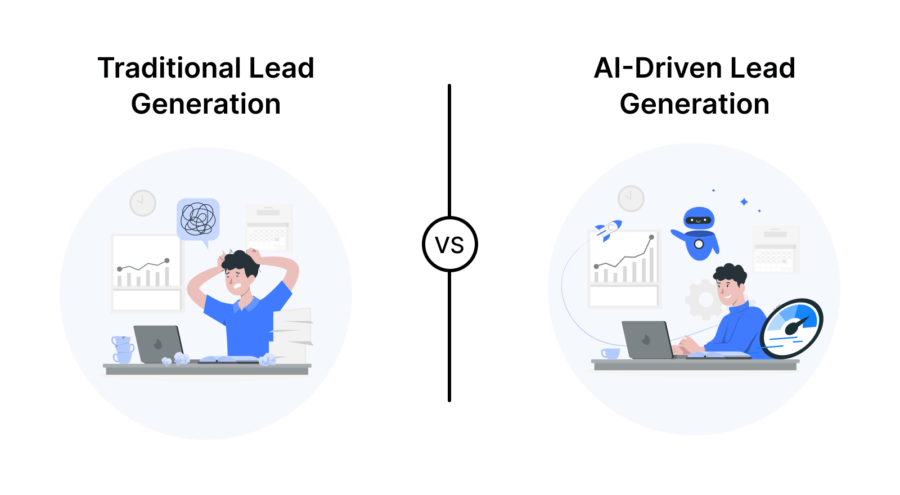
AI is shifting lead generation services from manual, high-volume “spray-and-pray” to accurate, data-driven, and tailored operations. By combining artificial intelligence (AI), machine learning (ML), and natural language processing (NLP), these services shift the emphasis from simply generating more leads to generating higher-quality leads, allowing businesses to reduce sales cycles and increase conversion rates by up to 50% or more.
Here is how AI is transforming specific areas of lead generation:
1. Advanced Lead Identification and Research
AI has eliminated the need for manual, time-consuming research by scanning billions of data points to find potential customers.
- Ideal Customer Profile (ICP) Refinement: AI analyzes historical CRM data and web behavior to identify patterns, allowing for the creation of dynamic, precise buyer personas.
- Predictive Intent Data: Tools (e.g., 6sense, Demandbase) detect “digital body language” to identify companies actively researching solutions, even before they fill out a form.
- Automated Data Enrichment: AI tools automatically fill in missing contact details, such as email addresses, phone numbers, and job titles, ensuring records are accurate and up-to-date.
2. Intelligent Lead Scoring and Qualification
Instead of static, rule-based scoring, AI uses machine learning to dynamically rank leads based on their real-time likelihood to convert.
- Behavioral Scoring: AI monitors interactions (page visits, content downloads, email opens) to instantly prioritize high-intent leads for sales teams.
- Reduced Manual Work: By automating the initial vetting process, AI reduces manual labor by up to 40%.
- Predictive Forecasting: AI analyzes pipeline data to predict which leads will close and when, improving sales forecasting accuracy.
3. Hyper-Personalization at Scale
AI enables tailored outreach that feels one-to-one, rather than one-to-many.
- Generative AI in Outreach: Tools like ChatGPT are used to draft personalized, context-aware emails and LinkedIn messages, moving beyond simple “Dear [Name]” templates.
- Dynamic Content Creation: AI adjusts website copy, calls-to-action (CTAs), and product recommendations in real-time based on the visitor’s industry or previous behavior.
- AI-Powered Video Prospecting: Platforms (e.g., Heygen, Synthesia) enable the creation of personalized video messages at scale.
4. 24/7 Engagement with Conversational AI
Modern, AI-powered chatbots have moved beyond simple FAQ responders to become sophisticated, autonomous agents.
- Real-Time Qualification: Chatbots engage visitors, answer complex queries, and qualify leads on the spot, 24/7.
- Immediate Appointment Scheduling: AI bots can book meetings directly on a sales representative’s calendar, reducing the speed-to-lead from hours to seconds.
5. Automated Multi-Channel Nurturing
AI coordinates complex, multi-channel campaigns to ensure consistent messaging.
- Optimal Timing and Channel: AI determines the best time and channel (email, LinkedIn, SMS) for outreach based on engagement data.
- AI Agents for Workflows: Advanced AI agents (e.g., Sales Development Reps or “SDRs”) can autonomously manage entire outreach sequences, handing off to humans only when a lead is ready to buy.
6. Paid Advertising Optimization
AI maximizes ROI for paid marketing efforts.
- Real-Time Bidding: Tools (e.g., Google Ads, Facebook Ads) use machine learning to adjust bids and audience targeting in real-time.
- Creative Testing: AI autonomously tests different ad variations to identify high-performing content.
Summary of Impact
| Feature | Traditional Lead Gen | AI-Powered Lead Gen |
|---|---|---|
| Data Research | Manual, slow | Automated, real-time |
| Targeting | Broad, generic | Hyper-personalized |
| Lead Scoring | Static, rule-based | Predictive, dynamic |
| Outreach | “Spray-and-pray” | Contextual, multi-channel |
| Availability | 9-5 (Human hours) | 24/7 (AI chatbots) |
While AI dramatically improves efficiency, industry experts highlight that human oversight remains essential for complex, high-value deals to maintain brand voice and build trust.
In the competitive world of digital marketing, lead generation is essential for every business. Even the best products and services can struggle to expand if they do not receive a consistent stream of qualified leads. Enter Artificial Intelligence (AI), a groundbreaking technology that is changing the way organizations approach lead generating. From automating mundane operations to providing hyper-personalized experiences, AI is enabling businesses to attract, engage, and convert prospects like never before.
In this article, we will look at how AI may help with lead creation, what tools you can utilize, and effective tactics for using AI in your organization, as well as the benefits and features of AI lead generating.
What is AI in Lead Generation?
AI for lead generation refers to the use of artificial intelligence to automate and optimize the process of finding, qualifying, and nurturing leads. More importantly it’s about deploying AI agents that work autonomously or as copilots to handle prospecting workflows while maintaining the human relationship-building that drives deals forward.
With a strategic combination of data-driven insights, automation, and hyper-personalization across all channels, AI lead generation tools speed up the entire sales process.
When powered by unified data architectures, AI can tap into both first-party engagement signals and third-party intelligence. It quickly analyzes buyer behavior, prioritizes leads, and deploys personalized outreach across email, LinkedIn, and voice channels.
Organizations using AI-powered lead scoring systems are experiencing conversion rate improvements, while companies with AI implementation report a higher likelihood of revenue growth.
In 2026, the real advantage comes from unified AI platforms, not disconnected point solutions that slow teams down and splinter data.
How AI Improves the Lead Generation Process
Let’s explore how AI agents actually deliver these outcomes through sophisticated workflow automation and intelligence.
Building targeted lead lists with AI agents
Finding qualified prospects without intelligent tools is often tedious.
AI agents transform this process by analyzing datasets that include engagement signals, firmographic data, and intent intelligence. Instead of manual research, AI can segment audiences based on industry, job title, engagement history, and real-time buying signals.
Smart Data Enrichment capabilities enable this by providing pre-built connectors to external data providers, eliminating integration issues while ensuring AI agents work with complete prospect information.
Automating outreach with intelligent personalization
Here’s where AI agents truly shine: autonomous outreach that maintains human relevance. AI-powered systems achieve increased head-to-booking rates by deploying contextual messaging across multiple channels simultaneously.
Outreach’s AI Prospecting Agent handles automated outreach by researching prospects and accounts, then crafting content for sellers or deploying a fully autonomous sequence with a hand-off to the seller when the prospect is ready. That way, sellers can be in control of how much or how little supervision they’d like with an automated outreach sequence.
Personalization Agent now extends beyond email – it can craft custom LinkedIn messages and call scripts as well, ensuring every interaction feels contextual regardless of channel.
Providing data-driven insights for deal acceleration
AI doesn’t just help you find leads; it helps you understand them to improve your sales strategy. By analyzing customer interactions, buying patterns, and engagement metrics, AI provides actionable insights that can shape your strategy.
These insights can show you what’s working, what’s not, and how you can improve your approach. Outreach’s AI sentiment analysis helps sales teams understand which emails are driving positive outcomes, how well a team handles objections, and what techniques are most effective in turning objections into positive outcomes.
What are the Benefits of AI in Lead Generation
You might be wondering how much better AI can really be for lead generation. Traditional sales tactics have worked well enough for a long time. But here’s the key: what worked “well enough” in the past isn’t cutting it in today, where deals take longer and buying committees are more cautious.
Buyers expect more relevant, actually useful solutions to their problems. People are inundated with sales pitches, so the approach that recognizes specific problems and offers actionable solutions through intelligent personalization across all touchpoints is going to stand out.
AI agents can now craft this relevance at scale, but only when powered by comprehensive data about your prospects and their companies.
Let’s go over the other major benefits of adopting AI for lead generation.
1. Enhanced efficiency through AI agents
AI agents function like virtual assistants that never sleep. Unlike basic automation, modern AI agents can handle complex prospecting workflows—researching accounts, identifying decision-makers, and crafting personalized outreach sequences.
A Research Agent, for example, can save hours of manual account research by pulling insights from web searches, email communications, and past interactions to populate account plans. This frees up sellers to focus on relationship building and closing deals.
2. Improved lead quality with predictive intelligence
Chasing unqualified leads wastes time and prevents your best reps from working on deals that matter. AI changes the game by deploying predictive analytics that achieve high precision in conversion predictions. Instead of spray-and-pray approaches, AI helps you focus on prospects most likely to convert.
Read Also: The Evolution of Lead Generation Companies in the Digital Age
Deal acceleration becomes possible when AI agents, like Outreach’s Deal Agent, can identify buying signals, stakeholder engagement patterns, and optimal timing for outreach. The combination of a qualified lead, perfect timing, and a skilled sales rep is what turns opportunity into revenue.
3. Hyper-personalization across all engagement channels
AI agents, such as a Prospecting Agent, can provide personalized messaging across email, LinkedIn, and even call talking points, taking the guesswork out of crafting relevant touchpoints.
Modern AI analyzes data points like past interactions, industry trends, customer preferences, and real-time intent signals.
AI-powered LinkedIn message personalization brings those social selling tasks into standard workflows, while AI call talking points ensure every phone conversation feels contextual. The result: higher response rates and stronger relationships across every channel.
4. Scalability without complexity
Scaling your lead generation efforts usually means adding more people to your team—or burning out the ones you already have.
But with AI, you can scale without the headache. AI lead generation software can handle a high volume of leads, manage outreach campaigns, and track engagement metrics, all without breaking a sweat. That means you can grow and manage your pipeline without overwhelming your team.
The advantages of incorporating AI into lead generation are manifold. AI-powered lead generation tools offer businesses the ability to:
- Automate Manual Tasks: By automating repetitive tasks such as data entry and lead scoring, AI tools free up valuable time for sales teams to concentrate on building relationships and closing deals.
- Enhance Targeting Accuracy: AI analyzes extensive datasets to identify patterns, enabling businesses to target their efforts more precisely and reach the right audience.
- Boost Sales Team Efficiency: With high-quality leads and automated follow-up tasks, sales teams can operate more efficiently and effectively.
- Personalize Outreach Efforts: Machine learning algorithms analyze customer behavior and preferences, allowing for highly personalized and relevant outreach.
- Improve Conversion Rates: Predictive analytics help identify the most promising prospects, increasing the likelihood of converting leads into customers.
By leveraging these benefits, businesses can significantly enhance their lead generation strategy, making their efforts more effective and their sales process more streamlined.
How is AI Making a Difference in Lead Generation?
AI is not just a buzzword—it’s a practical solution that addresses many of the challenges businesses face in lead generation. Here’s how AI is making a difference:
1. Automates Repetitive Tasks
One of the biggest challenges in lead generation is the time-consuming nature of manual tasks like data entry, lead scoring, and follow-ups. AI lead generation tools automate these processes, freeing up your team to focus on building relationships and closing deals.
Example: AI-powered tools like Zapier and HubSpot can automatically capture leads from your website and add them to your CRM, eliminating the need for manual data entry.
2. Improves Lead Scoring and Qualification
Automated lead scoring ensures not all leads are created equal. AI helps businesses prioritize high-quality leads by analyzing data like website behavior, email engagement, and social media activity. This ensures your sales team focuses on the most promising opportunities.
Example: Platforms like Salesforce and Pardot use AI to assign lead scores based on factors like job title, company size, and engagement level.
3. Enhances Personalization
Personalization is key to successful lead generation. AI analyzes customer data to deliver tailored content, product recommendations, and messaging that resonates with individual leads. The right AI lead generation software can further enhance this process by automating lead qualification and improving personalized outreach.
Example: AI tools like Dynamic Yield and OneSpot can personalize website content in real-time based on a visitor’s browsing history and preferences.
4. Predicts Customer Behavior
AI uses machine learning to analyze historical data and predict future customer behavior, making it essential to select an AI tool that integrates seamlessly with existing technology. This allows businesses to anticipate needs, identify potential leads, and tailor their marketing strategies accordingly.
Example: Predictive analytics tools like Infer and Lattice Engines can identify which leads are most likely to convert based on past interactions.
5. Optimizes Ad Campaigns
AI helps businesses get the most out of their advertising budgets by optimizing ad targeting, bidding, and creatives in real-time. This ensures your ads reach the right audience at the right time.
Example: Google Ads and Facebook Ads use AI to analyze user behavior and adjust campaigns for maximum ROI.
6. Provides 24/7 Engagement with Chatbots
AI-powered chatbots are revolutionizing lead generation by engaging website visitors 24/7. They can answer questions, collect contact information, and even schedule appointments, ensuring no lead slips through the cracks.
Example: Tools like Drift and Intercom allow businesses to create chatbots that feel natural and conversational, improving the user experience.
7. Analyzes Competitor Strategies
AI tools can monitor your competitors’ online activities, from website changes to ad campaigns. This helps you identify gaps in your own strategy and attract leads who may be dissatisfied with your competitors.
Example: Platforms like Crayon and SEMrush use AI to track competitor data and provide actionable insights.
How to Implement AI for Lead Generation in 2026
You’re sold on the power of AI for lead generation, you’ve got a strong vision for your sales team in 2026, and now it’s time to make it happen. Picking the shiniest tool might seem tempting, but there’s more due diligence needed when building a smart approach to integrating AI into your sales process. Here’s a step-by-step breakdown to get you started:
1. Assess your needs and goals
Before implementing AI tools, evaluate your current lead generation process through the lens of contemporary challenges.
Where do deals stall in your 1-2 quarter sales cycles? What manual tasks consume time that could be spent on relationship building? What specific workflow bottlenecks could AI agents address?
Consider platform consolidation opportunities: many revenue teams manage 4-6 disconnected tools that create data silos and workflow friction. AI works best when powered by unified data architectures rather than fragmented point solutions.
2. Choose unified AI platforms over point solutions
Not all AI tools address the comprehensive challenges facing revenue teams in 2025. When evaluating options, prioritize platforms that offer:
- AI agent capabilities that can work autonomously or as copilots depending on your preferences
- Unified data architectures that eliminate manual integration and data reconciliation
- Multi-channel personalization across email, LinkedIn, and voice interactions
- Enterprise-grade controls for compliance and governance at scale
3. Train teams on AI-augmented workflows
AI tools are only as good as the people using them. But no one wants to spend hours learning a new tool that throws off their entire workflow. That’s why it’s so important to pick tools that fit into your existing process and sales workflow.
Once you’ve got a tool in the queue, set up regular training sessions with your sales team for at least the first few months. Offer office hours or set up knowledge leaders who support each other with questions. The best way to get your team to adopt a new tool is to make the transition and onboarding as painless as possible.
Tip: Have your superstar users share tips and tricks when they’ve mastered an exciting capability of the AI lead gen tool.
4. Measure and optimize for deal velocity
Track metrics that reflect contemporary revenue challenges: lead quality, deal velocity, multi-stakeholder engagement, and pipeline progression through extended sales cycles.
AI enables optimization based on what’s actually driving deals forward rather than just activity metrics.
Practical Ways to Use AI for Lead Generation
Now that we’ve covered the benefits, it’s crucial to evaluate your current lead generation process to identify any bottlenecks and inefficiencies before implementing AI solutions. Let’s dive into practical ways you can use AI to supercharge your lead generation efforts:
1. Deploy AI Chatbots on Your Website
Chatbots are one of the easiest ways to integrate AI into your lead generation strategy. They can engage visitors, answer questions, and collect contact information—all without human intervention.
Pro Tip: Use chatbots to qualify leads by asking targeted questions about their needs and budget.
2. Implement Predictive Lead Scoring
Use AI to analyze your existing data and predict which leads are most likely to convert, enhancing your lead qualification process. This ensures your sales team focuses on high-value prospects.
Pro Tip: Start by defining your ideal customer profile (ICP) to train the AI effectively.
3. Personalize Email Campaigns
AI can help you craft personalized email campaigns at scale. Tools like Mailchimp and ActiveCampaign use AI to optimize send times, subject lines, and content based on recipient behavior.
Pro Tip: Segment your email list using AI to ensure the right message reaches the right audience.
4. Leverage Social Media Listening Tools
AI-powered social media tools can monitor conversations and identify potential leads. By tracking keywords, hashtags, and user interactions, you can engage prospects who are actively discussing topics related to your business.
Pro Tip: Use LinkedIn’s Sales Navigator to find decision-makers and engage with them directly.
5. Optimize Your Ad Spend
AI can analyze your ad performance and adjust targeting, bidding, and creatives in real-time to maximize ROI.
Pro Tip: Use AI tools like AdEspresso or WordStream to automate A/B testing and identify the best-performing ad variations.
6. Analyze and Improve with AI Analytics
AI analytics tools like Google Analytics 4 and Mixpanel provide deep insights into your lead generation efforts. They track metrics like conversion rates, bounce rates, and customer journeys, helping you identify areas for improvement.
Pro Tip: Set up custom dashboards to monitor key performance indicators (KPIs) and make data-driven decisions.
The Future of AI in Lead Generation
The global market for sales and marketing AI automation is projected to grow from $1.7 billion in 2023 to $9.5 billion by 2030, signaling widespread enterprise adoption.
Here are some key developments to keep an eye on for 2026 and beyond:
- Advanced AI agent capabilities: Expect AI agents that handle increasingly complex workflows autonomously, from initial research through deal handoffs, while maintaining compliance and governance requirements.
- Conversational AI integration: Enhanced conversation intelligence capabilities, including real-time chat, translation, and meeting assistance across mobile and desktop experiences, will enable prospect engagement regardless of channel or location.
- Predictive deal acceleration: Deal Agents will become increasingly sophisticated at identifying optimal timing, stakeholder engagement patterns, and intervention points that accelerate deals through long sales cycles.
- Unified platform consolidation: Organizations will continue moving away from fragmented point solutions toward comprehensive platforms that eliminate data silos.
Finally
AI is no longer a future concept; it is a practical technology that is revolutionizing lead generation for businesses of all sizes. By automating monotonous processes, enhancing lead scoring, and providing personalized experiences, AI enables organizations to attract, engage, and convert high-quality leads more efficiently than ever before.
Whether you’re just getting started with AI or want to improve your current strategy, now is the moment to embrace this technology and take your lead generation efforts to the next level.






Comments