
 By
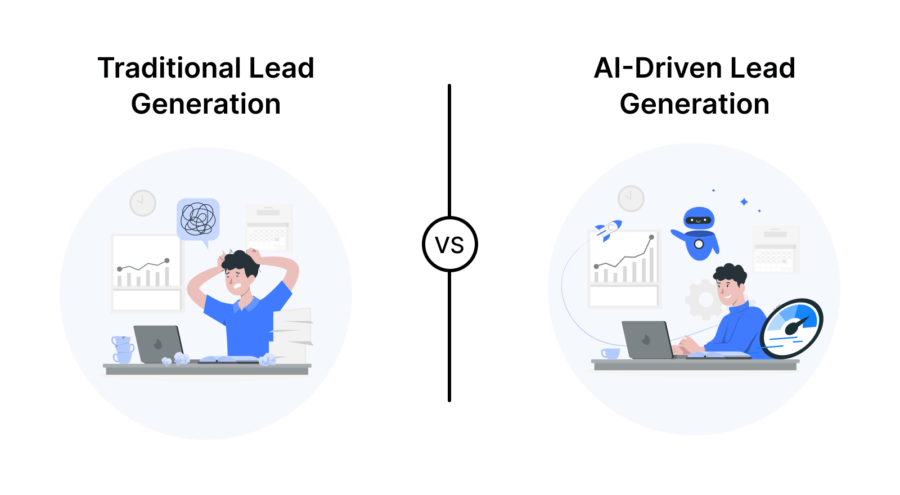
Traditional lead generation relies on outbound “interruption” strategies to reach a large, often untargeted audience, whereas newer (digital/AI-driven) approaches prioritize inbound, highly-targeted, and data-driven ways to contact individual prospects who are already investigating solutions. While conventional tactics excel in generating initial brand awareness and trust, newer ways are more scalable, measurable, and cost-effective.
Traditional Lead Generation Approaches
- Tactics: Cold calling, direct mail, print advertising, trade shows, and TV/radio ads.
- Approach: Outbound, disruptive, and seller-centric (pushing messages to potential customers).
- Pros: Builds high trust, effective for local audiences, and offers physical, tangible, or face-to-face interaction.
- Cons: Expensive, time-consuming, difficult to measure ROI, and hard to target specific demographics.
- Best for: Local businesses, high-value, relationship-dependent sales, and older or less tech-savvy demographics.
Modern Lead Generation Approaches
- Tactics: SEO, content marketing, social media advertising, email automation, AI-driven prospect research, and webinars.
- Approach: Inbound, customer-centric (attracting prospects already looking for solutions), and data-driven.
- Pros: Highly targeted, cost-effective, real-time metrics for ROI, and easy to scale.
- Cons: High competition, rapid technological changes require constant learning, and data privacy concerns.
- Best for: Companies requiring high-volume leads, digital products/services, and global targeting.
Key Comparison Metrics
| Feature | Traditional Lead Gen | Modern/Digital Lead Gen |
|---|---|---|
| Methodology | Outbound/Interruptive | Inbound/Attraction |
| Targeting | Broad, less precise | Highly targeted (data-driven) |
| Cost | High (fixed, per campaign) | Lower (scalable) |
| Measurability | Low/Difficult | High (real-time analytics) |
| Relationship | One-way communication | Two-way/Interactive |
| Sales Cycle | Longer, manual | Faster (due to automation) |
Modern, high-growth companies often combine both methods to maximize results. For instance, using digital insights to identify the right prospects (modern) and then using personalized direct mail or face-to-face meetings (traditional) to close the deal.
Companies that generate B2B leads must choose between old and creative ways in an ever-changing landscape. Even while traditional methods have succeeded in the past, new strategies take advantage of cutting-edge technology and shifting consumer behaviors.
Companies can develop a plan that meets their objectives and allows them to adapt to changes in the business world. You can accomplish this by understanding these methods.
This article examines both traditional and innovative methods for acquiring new company clients. It intends to assist businesses make wise decisions in today’s competitive economy.
Traditional Approaches
Traditional approaches to B2B lead generation include time-tested techniques that have historically played an important part in corporate growth. Traditional tactics remain significant and are frequently combined with new lead-generation strategies in the digital age. Here are some important conventional approaches:
Cold Calling and Direct Mail
Cold calling and direct mail are two traditional marketing strategies that involve reaching out to ideal customers without prior contact or permission. Pros and cons exist in different methods, and their success relies on the industry, audience, and execution.
- Cold Calling
Cold calling is when a salesperson reaches out to people or businesses who haven’t shown interest in the product or service. “Cold” refers to the individual not having prior knowledge or acquaintance with the salesperson or the company. During a cold call, the salesperson talks to a potential customer without any previous contact or information request.
Advantages
- Allows for immediate communication and feedback.
- Enables a direct and personal connection with the prospect.
- The salesperson can adjust the pitch based on the prospect’s responses.
Disadvantages
- People may perceive cold calling as intrusive and disruptive.
- It often has a low success rate, as many people may reject or ignore unsolicited calls.
- It may require a significant amount of time and resources.
- Direct Mail
Direct mail is a way of promoting things. It means sending physical ads directly to a specific group of people. The postal service or other delivery methods send these ads.
Companies use direct mail to reach possible customers and get them to do something, like buying something, learning more, or going to a store.
Advantages
- Physical materials can leave a lasting impression and are tangible.
- Allows for precise targeting based on demographics and geographic location.
- Offers creative opportunities for design and messaging.
Disadvantages
- This can be expensive, including printing, postage, and mailing list costs.
- Physical mail generates waste and has environmental implications.
- Tracking responses can be more challenging compared to digital methods.
- Networking Events
Networking events are gatherings where like-minded people meet to connect, exchange information, and potentially collaborate. These events can be things like conferences, seminars, trade shows, workshops, or casual meetups. Networking is crucial for career and business growth, and attending events offers many benefits.
Benefits of Networking Events
- Going to events where you can meet other professionals in your field or similar areas.
- Creating meaningful connections that have the potential to result in collaboration, partnerships, or recommendations.
- Learning from experts in seminars, workshops, and discussions.
- Staying up-to-date on what’s new in your industry and the best ways of doing things.
- Learning about possible job opportunities, chances to grow in your career, or new business possibilities.
- Connecting with people who hire, potential bosses, or customers.
- Showing off what you’re good at and building your personal or professional reputation.
- Attracting the attention of more people, including potential clients or customers.
- Having interesting conversations that make you think creatively and solve problems.
- Sharing your projects, ideas, or challenges and getting feedback.
Print Advertising
Print advertising involves using physical materials for promotion, such as newspapers, magazines, brochures, flyers, posters, and direct mail. Print ads are still important in B2B marketing, even with digital ads being more common. They offer unique advantages and characteristics.
Read Also: How AI Is Transforming Lead Generation Services
Here are the types of print advertising:
- Newspapers: Newspaper ads reach lots of people and are published often.
- Magazines: Full-page or half-page ads in magazines catering to specific interests, industries, or demographics.
- Brochures and Flyers: Printed materials are often used for events, promotions, or information.
- Posters and Billboards: Large-format print advertising for outdoor spaces to capture the attention of passersby.
- Direct Mail: Sending physical promotional materials directly to individuals through the postal service.
- Business Cards: Compact cards that include essential contact information and branding.
Referral Marketing
Referral marketing is when a business asks its current customers to spread the word about their products or services. It counts on people talking to each other and personally recommending things to bring in new leads and customers. Referral marketing depends on happy customers telling others, creating a group of supporters for a business. Here are the key elements of referral marketing:
- Referral Program: Create a clear referral program that explains how customers can recommend others. This program might offer rewards for both the person making the referral and the new customer.
- Incentives: Give rewards or bonuses to customers who tell others about your business. This could be in the form of discounts, credits, free products or services, or special access to promotions.
- Clear Communication: Let your current customers know about the referral program. Explain to them the functioning, the benefits, and the process of becoming a part of it.
- Customer Satisfaction: Make sure that your current customers are happy with what you offer. When customers are pleased, they’re more likely to suggest your business to others.
- Ease of Referral: Simplify the referral process for customers. Provide easy-to-use tools, such as referral links, email templates, or social media sharing options.
Modern Approaches
Being creative and trying new things is super important for moving forward and staying competitive in today’s business world. Innovation is about thinking differently, questioning the usual ways, and finding new solutions to solve problems and seize opportunities. Here are some ways to be innovative:
Content Marketing
Content marketing is a plan that makes and shares important pieces of content to get and involve a certain audience. The goal of content marketing is to build trust, establish authority, and drive profitable customer actions, such as lead generation, conversions, and brand loyalty. Here are the benefits of content marketing
- Increased Brand Awareness
- Establishing Trust and Credibility
- SEO Improvement
- Lead Generation
- Enhanced Customer Engagement
- Cost-Effective Marketing
- Long-Term Value
Search Engine Optimization (SEO)
SEO is a digital marketing strategy of making websites appear higher and more often when you search online. Obtaining complimentary traffic to a website is akin to tailoring it to meet the preferences of search engines. Good SEO makes a website more important and trusted, increasing its chances of appearing at the top of search results. Here are the main parts of SEO:
- Keyword Research: Figure out the words and phrases that people might type when they’re searching for things on a website. This is the starting point for making the content better.
- On-Page Optimization: Make each web page friendlier for search engines. Do this by using specific words people might search for in the title, description, headings, and content. Also, ensure that you set up the images well and organize the web page’s address.
- Content Quality and Relevance: Make exceptional, useful, and fitting content that greatly helps the people you want to reach. Search engines like content that meets what users are looking for.
- Technical SEO: Fix the technical parts of a website so that search engines can understand and explore it better. This means making the site faster, fixing mistakes, creating a search engine-friendly map, and organizing data neatly.
- Mobile Optimization: Make sure your website works well on phones and tablets. Search engines prefer mobile-friendly websites. Ensuring a positive customer experience on phones is crucial.
- Link Building: Build a network of high-quality inbound links from reputable websites. Backlinks from authoritative sources signal to search engines that the content is trustworthy and valuable.
- User Experience (UX): Provide a positive user experience by optimizing website navigation, improving page load times, and ensuring easy access to information. User-friendly websites are more likely to rank well.
- Local SEO: To improve local search, you can do the following: Create and enhance a Google My Business profile. Encourage customers to leave good reviews. Ensure that your business information is consistent across online directories.
Marketing Automation
Marketing automation means using software and technology to do marketing tasks automatically. It helps businesses save time, organize their marketing better, and give personalized experiences to their audience. With marketing automation platforms, technology takes care of tasks like finding new customers and keeping existing ones. Here are some of the key elements of marketing automation:
- Lead Generation: Automate lead generation processes, such as lead scoring, tracking website interactions, and capturing contact information through forms.
- Email Marketing Automation: Create and send targeted and personalized email campaigns based on user behavior, preferences, and segmentation. Automation helps nurture leads through the sales funnel.
- Lead Nurturing: Execute drip marketing strategies and automated processes to cultivate potential customers with pertinent content at various phases of the purchasing journey.
- Customer Segmentation: Segment the audience based on demographics, behavior, and other criteria to deliver more personalized and relevant content.
- Social Media Automation: Schedule and publish social media posts, monitor social media engagement, and automate social media advertising campaigns.
Supercharge your marketing automation game with B2B Rocket’s AI Agents! Effortlessly identifying and validating qualified leads, our agents deliver personalized content and intelligently nurture prospects based on behaviors.
Comparative Analysis
Comparing things is like doing a test to find similarities, differences, strengths, weaknesses, opportunities, and difficulties. In this context, we are examining both conventional and modern methods of accomplishing tasks.
Cost-Effectiveness
Doing things the usual way can sometimes be more expensive, like spending money on travel for meetings or printing things to mail. But trying new ways, especially using digital methods, is often cheaper and gives more value for the money you put in.
Real-Time Engagement
Using social media and marketing automation helps businesses connect with customers and promptly respond to their inquiries. But old-fashioned methods, like cold calling, might not be as fast and responsive as what today’s customers are looking for.
Precision Targeting
Digital methods are exceptionally good at aiming for specific groups using data and insights. But regular ways might find it harder to aim at certain types of people with the same accuracy.
Scalability
Innovative approaches, particularly those leveraging automation and AI, are highly scalable. Traditional methods may face limitations in scalability due to manual processes.
Final Thoughts
The choice between traditional and creative tactics can have a substantial impact on an organization’s growth. As we end our examination of these diverse ways, it becomes clear that change is taking place. The ability to adapt is critical for effective lead creation.
Finally, tactics must be tailored to the audience’s and industry’s unique requirements. We urge that organizations take a balanced approach. This strategy should leverage the qualities of both approaches. This allows businesses to maintain their performance in the ever-changing B2B lead generation market.









Comments